
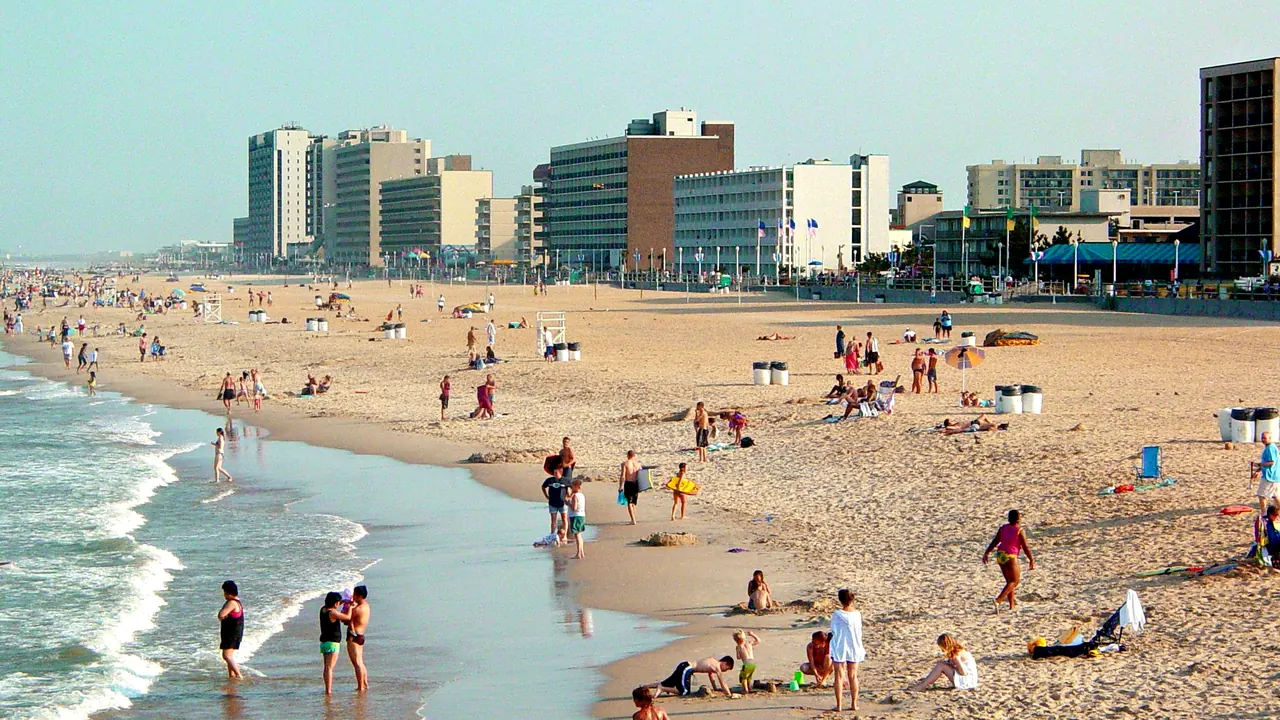
Photos: St. Augustine by Farragutful, CC BY-SA 4.0, cropped; Virginia Beach by SchuminWeb, CC BY-SA 3.0, cropped.
St. Augustine or Virginia Beach?
Our verdict in twelve categories, each scored against the same fixed benchmark cities, and the climate month by month, so you can choose for your trip.
Choose St. Augustine for
- culture and sights
- getting around
St. Augustine suits travellers who want history they can walk through. The Spanish quarter, the coquina fort on the bayfront and Flagler's Gilded Age hotels all sit a few minutes apart, and the Anastasia Island beaches are a short drive away. Its mild winters also make it the choice for the cooler months, when Virginia Beach is too cold for the beach.
Choose Virginia Beach for
- day trips
- families
- beaches
For a summer beach vacation with children, Virginia Beach is the better pick. The boardwalk, the aquarium and the calm bay beaches keep a family busy. The car you need anyway takes you to Colonial Williamsburg, Jamestown and Yorktown, which make better day trips than anything within reach of St. Augustine. Expect a resort rather than a historic town.
Scoreboard
Twelve categories on one fixed scale from 0 to 100. The shaded stretch is the gap between the two.
Your match
Pick a travel style or drag the sliders, and both match scores follow your weighting.
Too close to call, 2 points apart
Wins on culture and sights and getting around with your weighting.
Wins on day trips and families with your weighting.
What matters to you?
Category by category
What the scores mean for a trip.
Beaches & swimming
Both towns face the Atlantic with wide, pale sand, but Virginia Beach is built around its beach in a way St. Augustine is not. It has a lifeguarded Oceanfront with a boardwalk, surfing by the fishing pier, calm bay water near First Landing for small children and the dunes of Sandbridge for a quieter day.
St. Augustine's beaches run from the dunes of Anastasia State Park down to Crescent Beach. They are very good, but they are a drive from the old town, and most visitors give them half their time rather than all of it. In return, the water is warmer and stays swimmable well beyond Virginia Beach's short summer season.
Food & drink
Seafood comes first in both towns, but the local flavours differ. St. Augustine's comes from its Minorcan settlers: the fiery datil pepper goes into hot sauces, a spicy tomato clam chowder and pilau, and there are a few chef-driven places around the old town and San Marco.
Virginia Beach is Chesapeake country, with Lynnhaven oysters, crab cakes and she-crab soup. These are best eaten at the dockside places around Lynnhaven Inlet rather than on the chain-heavy resort strip. Neither town has much range, and keen eaters drive to Jacksonville or Norfolk.
Culture & sights
This is where the two towns differ most. St. Augustine is a Spanish town founded in 1565, with the Castillo de San Marcos on the bayfront and the walled gardens and lanes of the Spanish quarter behind it. Flagler College and the Lightner Museum add a second layer of Gilded Age grandeur, enough for two or three full days.
Virginia Beach has Cape Henry, where English colonists landed in 1607, along with the old lighthouse and the Adam Thoroughgood House. Together they fill a morning. For serious history you go up the peninsula, which is a day trip rather than a walk.
Nightlife
Neither town is a place for clubbing, but Virginia Beach has more going on in summer. The bars along Atlantic Avenue and the boardwalk fill with vacationers and sailors from the navy bases. Beach bars, rooftop decks and sports bars keep it loud and casual, and Town Center has calmer cocktail lounges.
St. Augustine's evenings are smaller and have more character. Courtyard pubs and taverns around St. George Street and the bayfront mostly wind down well before the small hours, with Flagler College students adding some life in term time. It suits a quiet drink after dinner better than a long night.
Nature & outdoors
Both are flat, watery coasts of marsh, dunes and maritime forest, with dolphins to spot from a kayak. Virginia Beach has a little more space to explore: the cypress swamp trails at First Landing, the long, empty spit of Back Bay and False Cape that you reach on foot or by bike, and a real surfing tradition.
St. Augustine's outdoors is gentler and more about the water behind the coast. You can paddle the lagoon in Anastasia State Park or walk and watch birds in the Guana Tolomato Matanzas reserve. Midsummer heat pushes most of it into the early morning.
Day trips
Virginia Beach has the stronger list. Colonial Williamsburg, Jamestown and Yorktown are about an hour away and make one of the best history days in the country. Norfolk's battleship and waterfront, Kitty Hawk on the Outer Banks and Richmond add more.
From St. Augustine, the outings involve more driving for less reward. The choices are Jacksonville's museums and gardens, Victorian Fernandina Beach, or two-hour runs to Kennedy Space Center and the Orlando parks. In both towns nearly every outing needs a car.
Good for families
St. Augustine keeps children busy with alligators and cannon fire, while Virginia Beach is a whole resort arranged around families. In St. Augustine, the Alligator Farm, open since 1893, has every kind of crocodilian and a zipline course, and the ramparts and cannon demonstrations at the Castillo make history an adventure for older children. Roller coasters mean a two-hour drive to Orlando.
Virginia Beach has more close at hand and more for the very young. There is the Virginia Aquarium with its sea turtles and otters, a water park, mini-golf, bike rental on the boardwalk and calm bay beaches for toddlers. Hotels and rental houses are set up for families, and a large amusement park near Williamsburg is about an hour away.
Getting around
St. Augustine is the easier of the two without a car, but only because its sights are packed into a walkable core. The fort, St. George Street, Flagler College and the bayfront are minutes apart on flat streets, and sightseeing trolleys loop past them, so most visitors park once and spend the day on foot. Beyond the old town it is a car town all the same. The local buses are of little use, and the island beaches, the lighthouse and every outing further afield mean driving, cycling or a taxi.
Virginia Beach has no such core. If you stay at the Oceanfront, you can walk or cycle the boardwalk and take the summer trolley along Atlantic Avenue, but the rest of the city is low-rise sprawl of highways and shopping centres. Sandbridge, First Landing and Town Center all need a car, summer traffic into the resort can be heavy, and the buses are too sparse and slow to plan around.
Shopping & style
Browsing in St. Augustine means the art galleries, antique dealers and small craft shops of Aviles Street and the lanes around it. In Virginia Beach it means a regional mall, the national chains of Town Center and the Oceanfront surf shops, which have deep local roots.
The souvenirs differ too. St. Augustine's datil-pepper sauces are a genuinely local thing to take home, while St. George Street itself is mostly fudge and T-shirts. Virginia Beach's equivalent is a surfboard or surf gear rather than anything made locally.
Affordability
Both charge normal American tourist prices with tipping on top, and both are cheaper away from peak weekends. The difference is in when savings come. St. Augustine's historic inns near the old town stay in demand, so you save by staying in a highway motel or going midweek. At Virginia Beach, oceanfront rooms fall sharply once summer ends.
In either town the beaches and the walking are free, but the car you need adds to the bill.
Live music & performing arts
Each town relies on an outdoor amphitheatre for touring rock and country acts. St. Augustine's sits in the woods on Anastasia Island, and Virginia Beach's has free concerts on boardwalk stages alongside it. For anything more serious you drive in both cases. From Virginia Beach, Norfolk is only half an hour away and has the Virginia Opera, the Virginia Symphony and the spring Virginia Arts Festival.
Wellness & relaxation
Neither town has a spa culture beyond hotel treatment rooms and a few day spas, so rest comes from the pace. In St. Augustine that means B&B verandas, courtyard gardens and evening walks along the bayfront seawall, best midweek. Virginia Beach is calmest on the boardwalk early in the morning and in spring and autumn, but in high summer it is crowded and loud.
When should you go?
Pick your month. The climate figures are measured averages, not a forecast.
St. Augustine in July
Virginia Beach in July
Daytime high, °C
Rainfall in the month, mm
Where the figures come from
St. Augustine has no rain gauge within 25 km of the centre, so its rainfall comes from a gridded climate dataset read at the city rather than from a gauge further away.
St. Augustine's sunshine is measured 73 km from the centre, at Jacksonville International.
Temperature and rainfall are climate normals, averaged over the years shown. St. Augustine: 2006-2020 (sunshine 1991-2020, rainfall 1991-2020) normals, St Augustine / Kingsley Mobile Home Park (7.6 km from centre). Virginia Beach: 1991-2020 (sunshine 1981-2010) normals, Virginia Beach / Gatewood Park (5.7 km from centre).
St. Augustine is warm almost all year. The sea is good for swimming from May to October and reaches about 28°C at its peak. Summer is hot and the wettest time of year, with afternoon storms from June to September and close to 170mm of rain in the wettest month. That makes spring and late autumn the best seasons for walking the old town. Winter highs of around 18°C are comfortable for sightseeing, though the sea is too cool for most swimmers. Spring and early summer are noticeably sunny.
Virginia Beach has a much sharper change of seasons. January highs are only about 10°C and the sea is far too cold, so the beach season is really June to September, when the water reaches about 25°C. July and August bring heat and the most rain. May, September and early October are the pleasant months for being outdoors without the summer crowds on the sand.
Which traveller are you?
On a culture and arts trip, St. Augustine is the clear choice. The Castillo de San Marcos, the Spanish quarter and Flagler's Gilded Age buildings give you several days of sightseeing on foot. Most of Virginia Beach's history is an hour away in Williamsburg.
On a family trip with children, Virginia Beach does more. The aquarium, water park, boardwalk and calm bay beaches are close at hand. Williamsburg adds costumed tradespeople and a large amusement park, while St. Augustine's theme parks are two hours away.
For a short city break, St. Augustine works better. Its compact, flat old town puts the fort, the cathedral, Flagler College and the bayfront within a few streets of each other. Virginia Beach is a spread-out resort where almost everything beyond the boardwalk needs a car.
Before you go
| Measure | St. Augustine | Virginia Beach |
|---|---|---|
| Currency | US Dollar (USD) | US Dollar (USD) |
| Sockets | AB120 V, 60 Hz | AB120 V, 60 Hz |
| Driving side | Right | Right |
| Time zone | UTC-5, UTC-4 in summer | UTC-5, UTC-4 in summer |
| Emergency number | 911 | 911 |
| Elevation | 152 m | 7 m |
| Main airport | Jacksonville International Airport (JAX)76 km from centre48 non-stop destinations | Norfolk International Airport (ORF)20 km from centre44 non-stop destinations |
| Public holidays this year | 11 days | 13 days |
By the numbers
| Measure | St. Augustine | Virginia Beach |
|---|---|---|
| City population | 14,329 | 459,470 |
| People per km² | 433 | - |
| Museums within 10 km | 12 | 2 |
| UNESCO World Heritage sites within 50 km | 0 | 0 |
| Swim season, months above 21 °C | 8 months | 4 months |
Where else could you go?
Every comparison below shares a destination with this one, so you can follow St. Augustine or Virginia Beach somewhere new.
- Daytona Beachvs St. Augustine
- Orlandovs St. Augustine
- Cocoa Beachvs St. Augustine
- Ocean City, Marylandvs Virginia Beach
- Bethany Beachvs Virginia Beach
- Rehoboth Beachvs Virginia Beach