
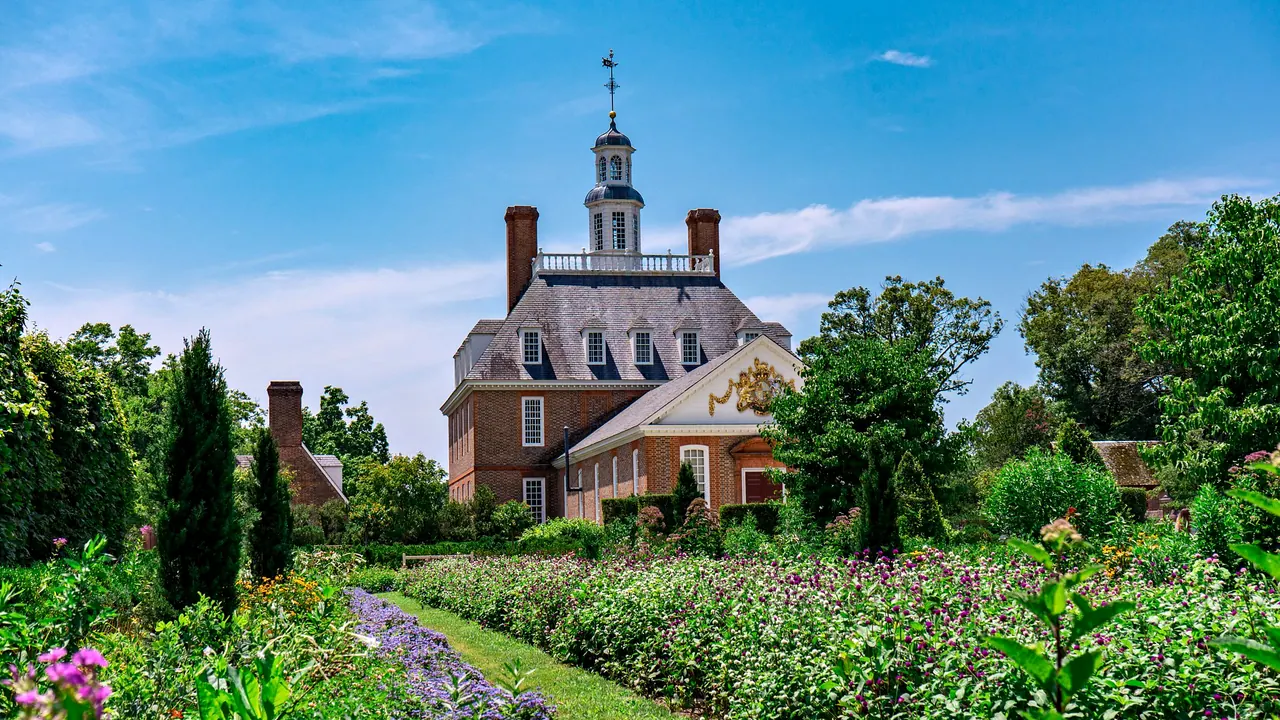
Photos: St. Louis by Holly Cheng, CC BY 2.0, cropped; Williamsburg, Virginia by Brian Magill, Pexels License.
St. Louis or Williamsburg, Virginia?
Our verdict in twelve categories, each scored against the same fixed benchmark cities, and the climate month by month, so you can choose for your trip.
Choose St. Louis for
- live music and the arts
- food and drink
- nightlife
St. Louis suits travellers who want a real city with evenings to fill. Its strengths are a symphony orchestra with a long history, Broadway tours at the Fox, musicals under the stars at the Muny and blues bars in Soulard. Add toasted ravioli on the Hill, Bosnian grills on South Grand and free museums in Forest Park, and it works well for adults who travel for music, food and a varied mix of sights.
Choose Williamsburg, Virginia for
- beaches
- wellness
- culture and sights
Williamsburg is the better pick for a focused trip built around early American history, especially with children. The restored colonial capital, Jamestown and Yorktown all sit within a short drive. Busch Gardens and a water park are on the doorstep and a bay beach is close enough for an afternoon. Evenings are quiet and the food is simple, so it rewards daytime plans more than nights out.
Scoreboard
Twelve categories on one fixed scale from 0 to 100. The shaded stretch is the gap between the two.
Your match
Pick a travel style or drag the sliders, and both match scores follow your weighting.
Too close to call, 2 points apart
Wins on live music and the arts and food and drink with your weighting.
Wins on beaches and wellness with your weighting.
What matters to you?
Category by category
What the scores mean for a trip.
Beaches & swimming
Williamsburg is not a beach town, but the water is close enough for an outing. There is a calm strip of sand at Yorktown, the bay beach at Hampton and the long Atlantic shore at Virginia Beach about an hour away. One drawback is that sea nettles can drift into the bay in high summer.
St. Louis has nothing comparable. Its rivers are working waterways with dangerous currents, so cooling off means a pool or a long drive to the Ozark lakes.
Food & drink
St. Louis is clearly the better place to eat. It has a set of local dishes found nowhere else, including Provel-topped pizza, toasted ravioli and gooey butter cake. On top of that come rib joints, old Italian trattorias on the Hill and a mix of Bosnian, Ethiopian and Vietnamese cooking on South Grand. The Soulard Market and the city's brewing history round it out.
Williamsburg's table is narrower and more regional, with ham biscuits, peanut soup, crab cakes and oysters from the bay. Its candlelit colonial taverns are more about the setting than the cooking, and much of Richmond Road caters to theme-park crowds with pancake houses and chains.
Culture & sights
Williamsburg offers the deeper experience, though on a single subject. The whole eighteenth-century capital has been restored around Duke of Gloucester Street, with costumed tradespeople at work, the Governor's Palace, the Capitol and the Wren Building of William & Mary. It is a re-creation rather than an untouched old town, but a thorough one, and the folk and decorative art museums add real depth.
St. Louis covers more ground but less intensely. The sights include the Gateway Arch and its museum of westward expansion, the Old Courthouse where the Dred Scott case began and the mosaics of the Cathedral Basilica. The free art and history museums in Forest Park and the early skyscraper of the Wainwright Building add architecture and fine art that Williamsburg does not try to match.
Nightlife
St. Louis gives you a proper night out, even if it is split across several districts. You can choose between blues taverns in Soulard, dance bars on Washington Avenue, the Grove's late LGBTQ+ strip, the student bars of the Delmar Loop and riverboat casinos. You will often need a taxi to get from one to the next.
In Williamsburg the evening usually ends with a ghost walk or a pint near the college, and anyone wanting more drives to Norfolk or Richmond.
Nature & outdoors
St. Louis has more varied country within reach. The wooded Ozark foothills begin within an hour, with river bluffs and caves at Castlewood and Meramec. Further south are the granite boulders of Elephant Rocks and the rocky pools of Johnson's Shut-Ins, and the Katy Trail heads west for long bike rides. Forest Park is also a large green space right in the city.
Williamsburg's Tidewater is flat and gentle: marsh, pine forest and wide estuaries, best seen by kayak on the Chickahominy or by bike along the quiet Colonial Parkway. Both places see bald eagles in their season, but Williamsburg has no hills at all and is known for its summer mosquitoes.
Day trips
Both bases offer a good choice of outings, and in both you need a car. The difference is in how they are spread out. Williamsburg's best trips are very close and tell one connected story: Jamestown and Yorktown are each about a quarter of an hour away, with the James River plantation houses and Richmond's Civil War sites further out.
St. Louis spreads its outings wider and across more periods of history. It has a UNESCO site twenty minutes away in Cahokia Mounds, the remains of a great pre-Columbian city. Beyond that come French colonial houses in Ste. Genevieve, German wine towns along the Missouri, Mark Twain's Hannibal and Lincoln's Springfield.
Good for families
Williamsburg is built around family vacations. A large European-themed park with coasters and gentle rides sits beside its own water park. In the colonial town and at Jamestown, history becomes something children can do, such as marching with the fife-and-drum corps or exploring replica ships. Motels with pools line every main road.
St. Louis also does well for children. The City Museum's climbing maze is unlike anything else, and the zoo and Science Center in Forest Park are free. Its attractions are more scattered across a large metro area, though, so you spend more time in the car between them.
Getting around
Getting around is much the same in both places: walkable pockets with long drives in between. St. Louis has the advantage of MetroLink light rail from the airport through Forest Park to downtown. Its neighbourhoods are far apart, however, and the Hill, Soulard and South Grand need a car or taxi.
Williamsburg has no rail transit of that kind. What it does have is a compact, car-free historic core you can cross on foot in about 20 minutes, with an Amtrak station close by. Everything outside that core, from the theme parks to Yorktown, means driving.
Shopping & style
Williamsburg has a slight edge because its shopping has a clear character. Shops in the Historic Area sell reproduction pewter, pottery, tin and hand-printed books, Merchants Square has Virginia gifts, and a big outlet centre sits out on Richmond Road.
St. Louis is better for browsing for oddities. It has antiques and vinyl on Cherokee Street and independent shops on the Loop, but most of its big-name fashion is in suburban malls.
Affordability
Overall costs are much the same, but they come from different places. In St. Louis the big museums, the zoo and the Science Center cost nothing, and eating out is cheap by American standards. Most of the extra cost is the hire car or taxis between neighbourhoods.
In Williamsburg rooms are easy to find at fair rates outside peak summer weeks. The admission tickets are what add up: the colonial town, Jamestown, Yorktown and the theme parks each charge separately, so a combination pass deserves some planning.
Live music & performing arts
This is where the two differ most. St. Louis has one of the oldest orchestras in the country, playing in the ornate Powell Hall. It also has touring Broadway shows at the Fox, the Muny's huge outdoor summer musicals and an acclaimed early-summer opera festival. It is part of the history of the blues too, as the city of Chuck Berry and of W.C. Handy's famous song, and live blues still plays in Soulard and downtown.
In Williamsburg, performance mostly means candlelit period recitals, fife-and-drum marches and student shows at the college.
Wellness & relaxation
Neither place has a spa tradition, but Williamsburg is the easier place to slow down. The historic inn and the golf resorts along the James River have proper spas, and early mornings on the empty colonial greens or a drive down the wooded Colonial Parkway are calm.
St. Louis offers little beyond day spas in Clayton and the Central West End. Its best quiet hours are in the Missouri Botanical Garden's Japanese garden.
When should you go?
Pick your month. The climate figures are measured averages, not a forecast.
St. Louis in July
Williamsburg, Virginia in July
Daytime high, °C
Rainfall in the month, mm
Where the figures come from
Williamsburg, Virginia's sunshine is measured 60 km from the centre, at Richmond International Airport.
Temperature and rainfall are climate normals, averaged over the years shown. St. Louis: 2006-2020 (sunshine 1981-2010, rainfall 1991-2020) normals, Cahokia / Maplewood Park (7.2 km from centre). Williamsburg, Virginia: 2006-2020 (sunshine 1981-2010, rainfall 1991-2020) normals, Williamsburg / Kingspoint (3.6 km from centre).
St. Louis has proper seasons. January is cold, around 5°C, though winter is its driest stretch. Spring is pleasant for temperature but is also the wettest time of year, with rain peaking in May at about 123mm. July and August are hot and humid in both places, heavy going for walking between St. Louis neighbourhoods or round the Historic Area. For St. Louis the best months are September and October, when the days are warm or mild, the rain eases and there is still plenty of sun.
Williamsburg's year runs the other way round. Winters are milder, with January days near 10°C and more sunshine than St. Louis in every month. April and May are its best months for sightseeing, warm and fairly dry, before the rain builds through summer to about 151mm in August and stays heavy into October. The water warms to about 26°C in July and August, so swimming is pleasant from June to September. In short, choose Williamsburg in spring and St. Louis in autumn.
Which traveller are you?
For a food and nightlife trip, St. Louis is the clear choice. It has its own local dishes, serious barbecue, Bosnian and Vietnamese cooking on South Grand and a deep beer culture. Blues bars, dance bars and late-night strips keep evenings going, while Williamsburg winds down after a tavern dinner.
On a beach and sun trip, Williamsburg is the only real option of the two. The Chesapeake Bay and the Atlantic resort beaches are within an hour, the water is warm in high summer and the sunshine is generous. St. Louis is hundreds of kilometres from any coast.
On a family trip with children, Williamsburg has the edge. It has a big theme park and a water park, plus colonial streets where children watch musket firings and climb aboard replica ships. St. Louis answers with the City Museum and a free zoo, but these are more spread out.
Before you go
| Measure | St. Louis | Williamsburg, Virginia |
|---|---|---|
| Currency | US Dollar (USD) | US Dollar (USD) |
| Sockets | AB120 V, 60 Hz | AB120 V, 60 Hz |
| Driving side | Right | Right |
| Time zone | UTC-6, UTC-5 in summer | UTC-5, UTC-4 in summer |
| Emergency number | 911 | 911 |
| Elevation | 149 m | 15 m |
| Main airport | St. Louis Lambert International Airport (STL)20 km from centre64 non-stop destinations | Newport News Williamsburg International Airport (PHF)24 km from centre1 non-stop destination |
| Public holidays this year | 14 days | 13 days |
By the numbers
| Measure | St. Louis | Williamsburg, Virginia |
|---|---|---|
| City population | 301,578 | 15,425 |
| People per km² | 1,764 | 656 |
| Museums within 10 km | 18 | 8 |
| UNESCO World Heritage sites within 50 km | 1 | 0 |
| Swim season, months above 21 °C | - | 4 months |
Where else could you go?
Every comparison below shares a destination with this one, so you can follow St. Louis or Williamsburg, Virginia somewhere new.
- Virginia Beachvs Williamsburg, Virginia
- Washington DCvs Williamsburg, Virginia
- Ocean City, Marylandvs Williamsburg, Virginia
- Bethany Beachvs Williamsburg, Virginia
- Rehoboth Beachvs Williamsburg, Virginia
- Baltimorevs Williamsburg, Virginia