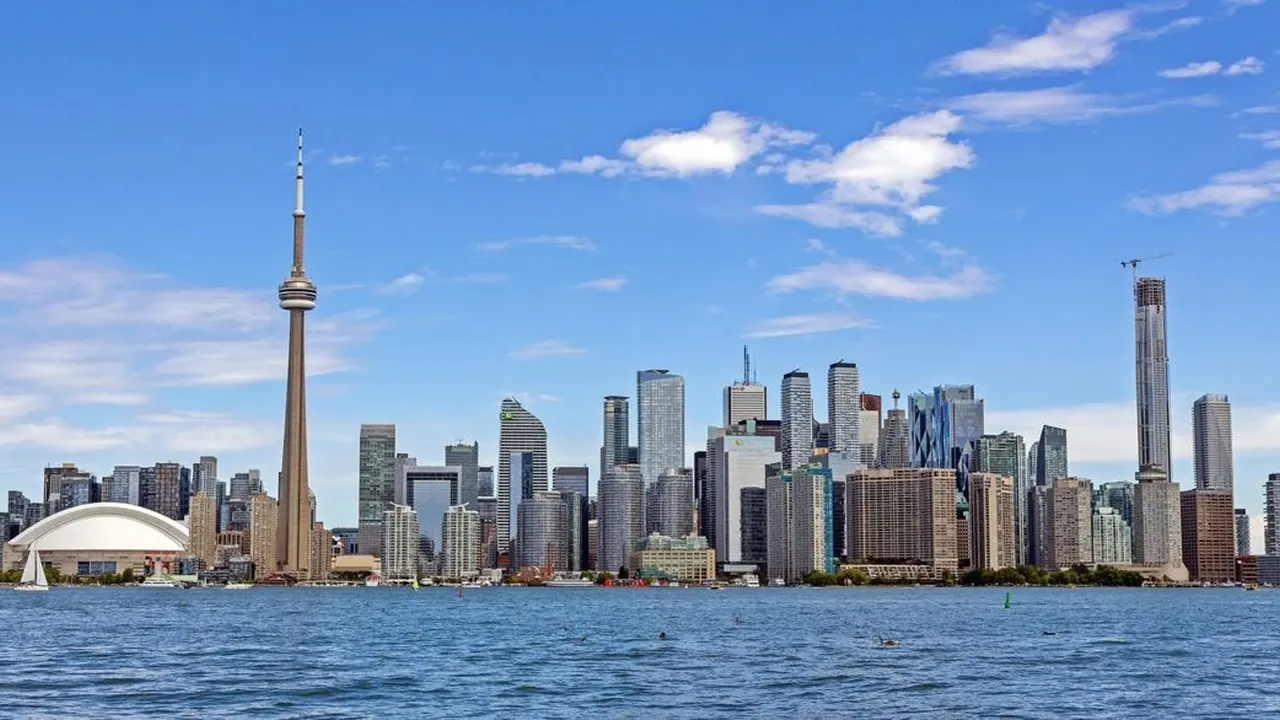
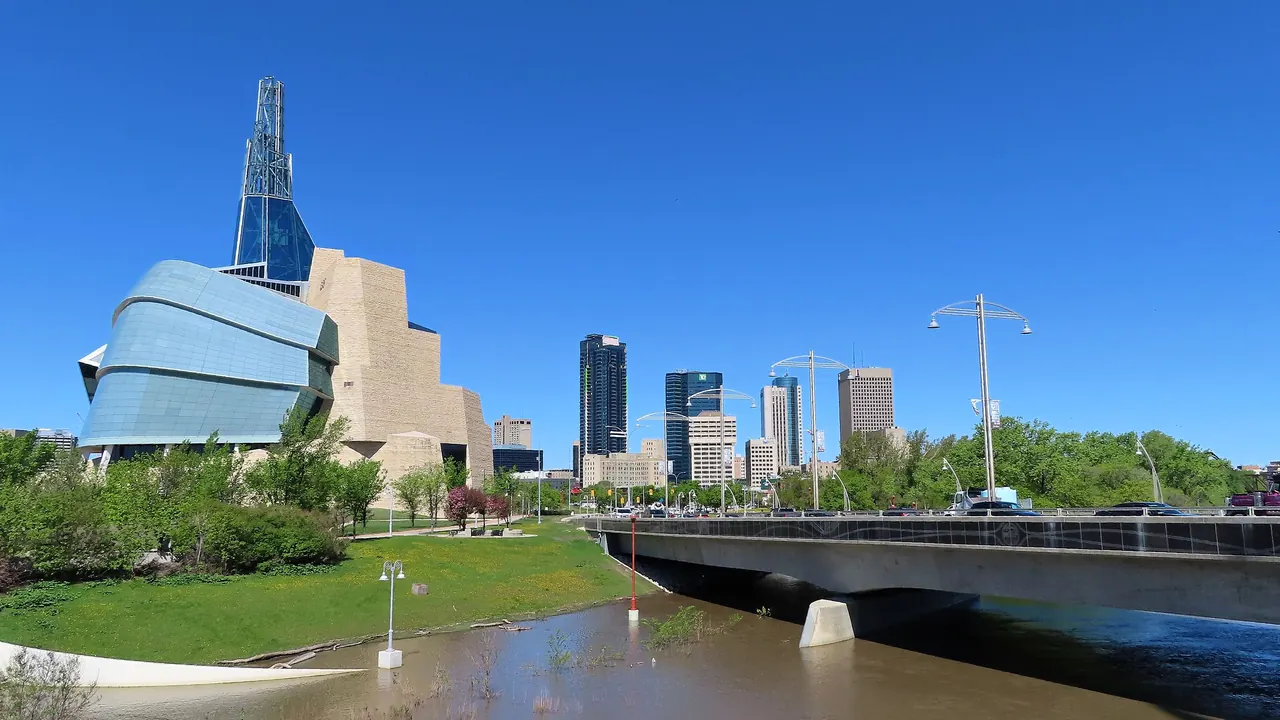
Photos: Toronto by Dillan Payne, CC BY-SA 4.0, cropped; Winnipeg by Dennis Sylvester Hurd, CC BY 2.0, cropped.
Toronto or Winnipeg?
Our verdict in twelve categories, each scored against the same fixed benchmark cities, and the climate month by month, so you can choose for your trip.
Choose Toronto for
- shopping
- nightlife
- food and drink
Toronto is the better choice for a full city trip with plenty to fill the days. It eats from dozens of immigrant traditions, runs a large theatre and live music scene, and has bar strips, shopping streets and Niagara within reach. It costs more, but the centre is walkable and the subway and streetcars take you to most neighbourhoods.
Choose Winnipeg for
- prices
- wellness
Winnipeg suits a slower, cheaper visit for someone curious about the prairies. You can see its sights in a few days: the human rights museum, the Inuit art collection and the Exchange District warehouses. It has a Nordic spa that is at its best in deep winter and summer festivals that fill the streets. Bring a car, low expectations of nightlife, and an interest in a place few visitors know well.
Scoreboard
Twelve categories on one fixed scale from 0 to 100. The shaded stretch is the gap between the two.
Your match
Pick a travel style or drag the sliders, and both match scores follow your weighting.
Wins on shopping and nightlife with your weighting.
Wins on prices and wellness with your weighting.
What matters to you?
Category by category
What the scores mean for a trip.
Beaches & swimming
Neither city is a beach destination, and both give you only a short summer swimming season. Toronto's sand is right by downtown. Centre Island and Ward's Island are a short ferry ride away with the skyline behind you, and Woodbine Beach has a boardwalk in the east end.
Winnipeg's best beach is better looking. Grand Beach has white sand and dunes on Lake Winnipeg, but it is more than an hour away by car, and algae can spoil the water late in the season. Toronto's lake is the less reliable to swim in, because a change of wind can chill it overnight.
Food & drink
Toronto is the far richer place to eat. You can work through Chinatown on Spadina, the Danforth's Greek tavernas and the Korean places on Bloor, then head to the suburban plazas of Scarborough and Markham for some of the best Cantonese and Caribbean cooking in the country. It also has chef-driven restaurants and Ontario wine lists.
Winnipeg's table is narrower and homelier: perogies, cabbage rolls and farmer sausage from its Ukrainian and Mennonite settlers, honey dill sauce and late-night diners. It is good to try for a meal or two, but it is not the reason to choose the city.
Culture & sights
The two cities are evenly matched, but their sights tell different stories. Toronto's strength is its big general museums, the Royal Ontario Museum and the Art Gallery of Ontario with its Group of Seven paintings, set in a mostly modern city with little old fabric.
Winnipeg is more focused and more distinctive. It has the national human rights museum, a world-leading collection of Inuit art and the Exchange District, a whole quarter of grain-boom warehouses that has a stronger historic feel than anything in central Toronto. Each city needs two or three days.
Nightlife
Toronto has far more going on after dark. Each strip has its own character: wine and cocktail bars on Ossington, dressed-up clubs on King West, the gay village on Church Street and a looser crowd in Parkdale.
Winnipeg comes down to two areas, the Exchange District's craft-beer bars and Osborne Village's pubs, plus a few clubs. On a winter night it often means a single warm bar. Both cities are at their best on summer patios.
Nature & outdoors
The two cities are fairly close here, with Toronto a little ahead because it has more within easy reach. Its wooded ravines along the Don and Humber run right through the city, the Scarborough Bluffs rise above the lake, and the Bruce Trail's waterfalls are about an hour away.
Winnipeg's outdoors is flatter and more seasonal. There are bison at FortWhyte Alive, migrating geese at Oak Hammock Marsh and the granite lakes of Whiteshell for canoeing. Its special season is winter, when skating trails open on the frozen rivers. In summer, expect a lot of mosquitoes.
Day trips
Toronto has one excellent day out. You can see Niagara Falls and Niagara-on-the-Lake with its wineries in a long day by train or car, and Stratford's Shakespeare season is about two hours away.
Winnipeg's choices are small and all need a car. You can visit the stone fur-trade post at Lower Fort Garry, the Icelandic fishing town of Gimli or the Mennonite village at Steinbach. They are pleasant but modest, and none is worth planning a trip around.
Good for families
Toronto has more to keep children busy. There is the shark tunnel at the aquarium, the CN Tower's glass floor, a zoo big enough for a whole day, the little Centreville amusement park on Centre Island, and Canada's Wonderland's roller coasters within a short drive.
Winnipeg is smaller but easy going. The polar bears swimming overhead at the Assiniboine Park Zoo are the highlight, and the children's museum at The Forks is well done. In both cities winter pushes families indoors, and Winnipeg's colder months are harder going.
Getting around
Toronto is much easier without a car. The flat downtown grid is walkable, the UP Express links the airport to Union Station, and the subway and red streetcars reach most neighbourhoods, though slowly. Under the core, the PATH keeps you out of the cold.
Winnipeg's compact centre has skywalks for the cold, but beyond it the city is built around the car and served only by buses. FortWhyte, the beaches and every day trip need a car, so most visitors end up hiring one.
Shopping & style
Toronto offers much more. It has designer shopping along Bloor Street in Yorkville, the glass-roofed Eaton Centre, and independent designers and vintage on Queen West and Ossington. Kensington Market is good for a rummage.
Winnipeg has malls for everyday needs and a handful of independent shops in the Exchange District and Osborne Village. Its best purchase is Inuit and First Nations art from the specialist galleries. That is also the more meaningful thing to take home from Toronto.
Affordability
Winnipeg is the easier city on your wallet, mainly because downtown rooms cost noticeably less than Toronto's. Toronto's hotels get especially expensive in summer and during the September film festival.
The gap narrows once you go out and about. Sit-down meals and bar drinks add up in both cities, because tax and tip come on top. Toronto's cheap suburban food courts and flat transit fare save money, while in Winnipeg the car hire or taxis you need to leave the centre cost extra.
Live music & performing arts
Toronto is the bigger stage. Long-running musicals fill the Royal Alexandra, the Canadian Opera Company and National Ballet perform at the Four Seasons Centre, and Massey Hall and the Queen West clubs have live music most nights.
Winnipeg is impressive for its size. The Royal Winnipeg Ballet is the country's oldest ballet company, and there is French-language theatre in St Boniface. In summer the Fringe takes over the Exchange District and the Folk Festival fills Birds Hill Park. On a short visit, though, Toronto gives you far more to choose from.
Wellness & relaxation
Winnipeg is the better place to slow down. Its large Nordic spa sits among trees within the city, and soaking in steaming outdoor pools in deep frost is one of the most memorable things to do here. The city's calm, uncrowded pace helps too.
Toronto has hotel spas around Yorkville and some Korean bathhouses in the suburbs, but for the outdoor hot-and-cold experience you have to drive into the countryside. In the city, a walk through the ravines or an afternoon on Ward's Island is the closest you get to rest.
When should you go?
Pick your month. The climate figures are measured averages, not a forecast.
Toronto in July
Winnipeg in July
Daytime high, °C
Rainfall in the month, mm
Temperature and rainfall are climate normals, averaged over the years shown. Toronto: 1991-2020 normals, Toronto City (1.1 km from centre). Winnipeg: 1991-2020 normals, Winnipeg The Forks (0.9 km from centre).
Both cities have short, warm summers. July reaches about 27°C in each, and June to September is the easy season for walking, patios and parks. Toronto's lake gets warm enough to swim in July and August, at around 20°C, and Winnipeg's lakes to the north warm up over the same weeks. Summer is also the wettest time in both, with rain from short downpours rather than grey weeks.
Winter is where the two cities differ. Toronto stays around freezing from December to February, which is cold but manageable if you use the underground PATH. Winnipeg drops to about -10°C by day in January, with colder nights, and walking around the city becomes a short dash between heated buildings. Its winters are dry, though, with clear, crisp days that suit skating on the river and the outdoor hot pools. Spring and autumn are mild in Toronto. In Winnipeg they are short and cooler.
Which traveller are you?
For a food and nightlife trip, Toronto fills several days. Plan each around one neighbourhood: a peameal bacon sandwich at St Lawrence Market for lunch, Little India for dinner, then College Street's bars until last call at 2am. Summer is the time to go, when the patios are open.
On a tight budget, Winnipeg goes further. Hotel rooms cost noticeably less than in Toronto, and the main sights are moderately priced. Remember the car hire: anything beyond the walkable centre needs wheels, so stay downtown and keep outings few.
For a relaxing and wellness trip, Winnipeg makes a good slow winter weekend. Go in January or February, plan each day around a long soak at the spa, and add a gentle skate once the river trails open. In summer, Assiniboine Park's English garden is a good place for a quiet afternoon.
Before you go
| Measure | Toronto | Winnipeg |
|---|---|---|
| Official language | French, English | French, English |
| Currency | Canadian Dollar (CAD) | Canadian Dollar (CAD) |
| Sockets | AB120 V, 60 Hz | AB120 V, 60 Hz |
| Driving side | Right | Right |
| Time zone | UTC-5, UTC-4 in summer | UTC-6, UTC-5 in summer |
| Emergency number | 911 | 911 |
| Elevation | 76 m | 238 m |
| Main airport | Toronto Pearson International Airport (YYZ)20 km from centre191 non-stop destinations | Winnipeg / James Armstrong Richardson International Airport (YWG)7 km from centre41 non-stop destinations |
| Public holidays this year | 11 days | 10 days |
By the numbers
| Measure | Toronto | Winnipeg |
|---|---|---|
| City population | 2,794,356 | 749,607 |
| People per km² | 4,434 | 1,670 |
| Museums within 10 km | 32 | 30 |
| UNESCO World Heritage sites within 50 km | 0 | 0 |
| Swim season, months above 21 °C | 1 month | - |
Where else could you go?
Every comparison below shares a destination with this one, so you can follow Toronto or Winnipeg somewhere new.