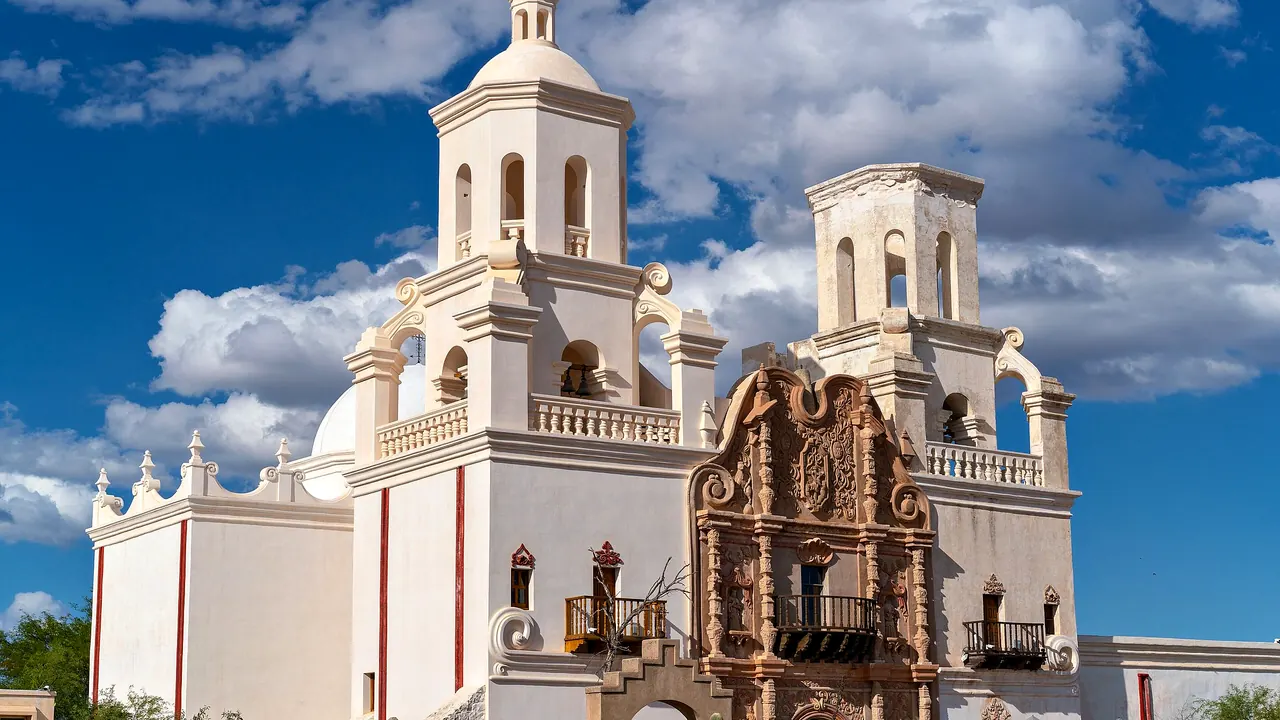
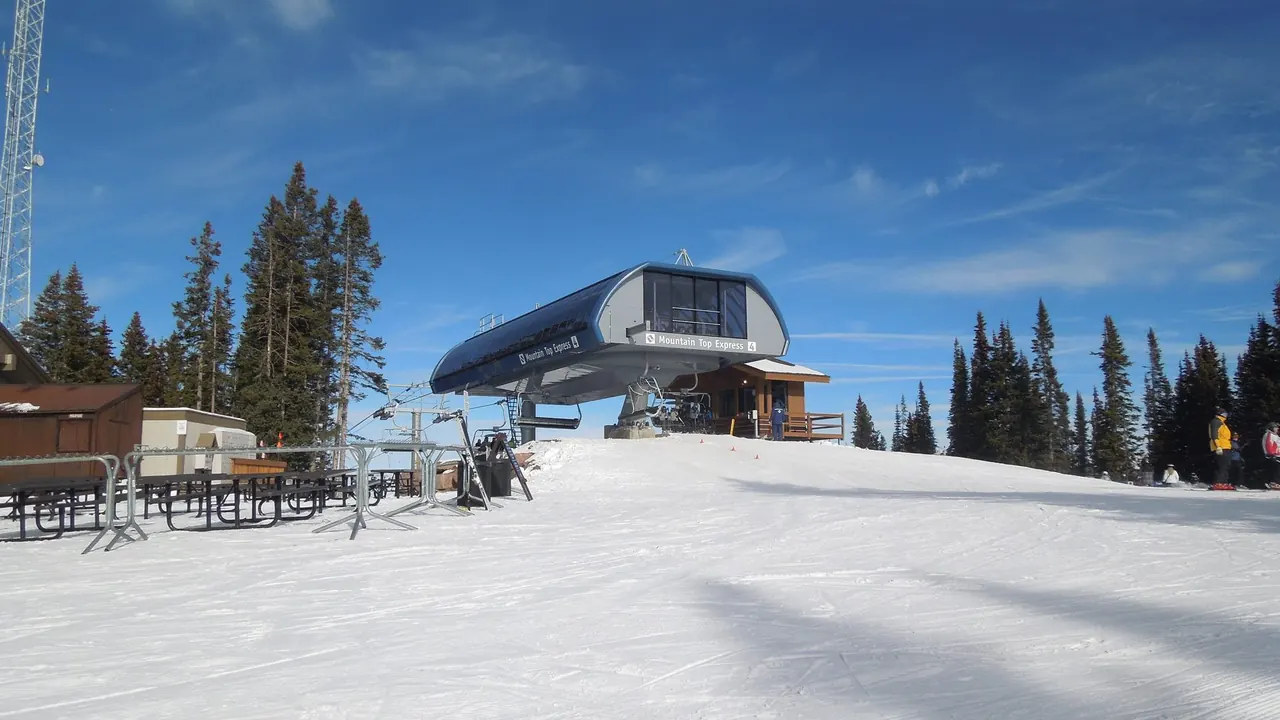
Photos: Tucson by Steve and Kimberly Rader, CC BY-SA 4.0, cropped; Vail by DReifGalaxyM31, CC BY 3.0, cropped.
Tucson or Vail?
Our verdict in twelve categories, each scored against the same fixed benchmark cities, and the climate month by month, so you can choose for your trip.
Choose Tucson for
- prices
- culture and sights
- food and drink
Tucson suits travellers who want a warm, sunny winter break with plenty to do on the ground. It has the deeper food culture, built on Sonoran Mexican cooking in the old barrios, more history to see, from San Xavier del Bac to the adobe streets of Barrio Viejo, and destination spas in the foothills. It also costs far less. Desert hiking and cycling are excellent from autumn to spring, but you will need a hire car for almost everything.
Choose Vail for
- getting around
- nature and the outdoors
Vail is for people whose trip is the mountain itself. Its ski area and high summer trails go well beyond anything around Tucson, and once you are there the car-free village and free valley bus make life simple. Beyond the slopes there is little to see or eat that you would travel for, and it is one of the most expensive places in North America to stay, so it makes sense only if skiing, hiking or the summer music festivals are the point.
Scoreboard
Twelve categories on one fixed scale from 0 to 100. The shaded stretch is the gap between the two.
Your match
Pick a travel style or drag the sliders, and both match scores follow your weighting.
Wins on prices and culture and sights with your weighting.
Wins on getting around and nature and the outdoors with your weighting.
What matters to you?
Category by category
What the scores mean for a trip.
Beaches & swimming
Neither city has a beach. Tucson is four hours' drive from the Gulf of California and Vail is deep in the Rockies, so in both places swimming means a pool. The difference is the season: in Tucson the resort pool is a relief from desert heat for much of the year, while in Vail it is more often an outdoor hot tub after skiing, and the mountain lakes stay cold even in July.
Food & drink
Tucson eats much better. It has a real regional cuisine in Sonoran Mexican cooking: mesquite-grilled carne asada, thin flour tortillas and the Sonoran hot dog, served in family kitchens along South 12th Avenue that have been open for decades. Desert ingredients such as tepary beans and prickly pear give it a local character, and it is cheap to eat well.
Vail offers polished resort dining, with steak, elk, fondue and long wine lists in the village, but there is no food culture of its own and almost nothing inexpensive. Many kitchens also close in the off-seasons.
Culture & sights
Tucson has much more history to explore. San Xavier del Bac is one of the finest Spanish colonial churches in the country, and the adobe row houses of Barrio Viejo and El Presidio trace the city's Spanish and Mexican past. The Arizona State Museum and the huge aircraft collection at Pima Air & Space fill another day or two.
Vail was only built in the 1960s, and its Tyrolean-style village is an imitation rather than a historic town. The snowsports museum and the Alpine gardens are pleasant, but they will fill an afternoon at most.
Nightlife
Neither is a party town, but Tucson has more going on. Fourth Avenue's dive bars and patios are full of students, and Congress Street has cocktail bars and rooftops, so there is a year-round local crowd, though it thins in summer. Vail's nightlife is après-ski: crowded terraces as the lifts close and a few late bars on winter weekends, then very little in summer and almost nothing in the off-seasons.
Nature & outdoors
Both are outdoor destinations, but Vail is the stronger of the two. Its huge ski area, with the Back Bowls and Blue Sky Basin, gets dry powder through a long winter, and in summer the gondolas lead to Gore Range and Holy Cross trails among peaks above 4,000m, with fly fishing and rafting nearby.
Tucson's desert setting is spectacular in its own way, with saguaro forests on both sides of the city, Sabino Canyon, serious road cycling and world-class birding. The drive up Mount Lemmon takes you from cactus to pine forest. Its limit is the summer heat, which pushes activity to dawn or up into the mountains.
Day trips
Tucson has the more varied range of outings. To the south-east are the frontier towns of Tombstone and Bisbee, closer in are the artists' village of Tubac and the Tumacácori mission ruins, and north of the city is Biosphere 2, so you get history, art and wine country.
Around Vail the trips are mostly to other mountain resorts, such as Beaver Creek and Breckenridge. Leadville's silver-boom streets and the hot springs at Glenwood Springs add some variety. In both places you will need a car.
Good for families
Both work for families, but in different ways. Tucson offers the Arizona-Sonora Desert Museum, a zoo, a science centre and the giant aircraft, which suits children who like animals and museums, though only between October and April and with a car for every outing.
Vail is built around ski schools and children's terrain in winter and the coaster and ropes courses at the top of the gondola in summer, all within a car-free village. It is harder going with toddlers because of the altitude and the cold.
Getting around
Vail is much easier once you have arrived. The village and Lionshead are pedestrian, the lifts start in town, and a free bus runs the length of the valley, so many visitors manage a week without a car. Getting there is the hard part, with no rail and a mountain pass that can close in snow.
Tucson is the opposite case: getting there is easy, but the city is spread out and built for driving. The single streetcar line covers only downtown and the university, and the places most people come to see are on the edges, so a hire car is essential.
Shopping & style
There is little in it, and neither place is a shopping destination. What you buy is very different, though. In Tucson it is regional crafts: Native American jewellery, Tohono O'odham baskets and Mexican folk art, plus vintage shops on Fourth Avenue and the winter gem and mineral show. Vail sells luxury in its village lanes: upmarket ski clothing, fur, Western boots and mountain landscape paintings, with nothing inexpensive.
Affordability
This is where the two differ most. Tucson is moderately priced for an American city, with cheaper hotels than larger Southwest cities, very cheap Mexican food and real summer bargains, although car hire and resort spas add to the bill.
Vail is at the far expensive end. Slopeside lodging, lift tickets, ski school and meals all cost well above normal American levels, and staying down the valley or coming outside winter only takes some of the edge off.
Live music & performing arts
The two are broadly level but run on opposite calendars. Tucson's season runs from autumn to spring, with a symphony, opera, theatre, the Fox Theatre and deeply rooted mariachi. Vail puts almost everything into July and August, when the Bravo! Vail orchestras and the dance festival perform under the peaks at the open-air amphitheatre, and has very little the rest of the year.
Wellness & relaxation
Tucson is the better place for a restful stay. It is one of the original homes of the American destination spa, with foothill resorts built around fitness, desert walks and meditation, and its sunny, quiet winters suit a slow week.
Vail's spas are mainly for recovering after skiing: massages, saunas and hot tubs under the peaks. The altitude means taking the first days slowly. Its strongest wellness option is outside town, at the mineral pools of Glenwood Springs.
When should you go?
Pick your month. The climate figures are measured averages, not a forecast.
Tucson in July
Vail in July
Daytime high, °C
Rainfall in the month, mm
Where the figures come from
Vail's temperatures are measured 47 km from the centre, at Kremmling.
Vail's station stands 186 m below the city centre, so the centre is likely a little cooler than the figures say.
Vail has no rain gauge within 25 km of the centre, so its rainfall comes from a gridded climate dataset read at the city rather than from a gauge further away.
Temperature and rainfall are climate normals, averaged over the years shown. Tucson: 1991-2020 normals, Tucson International Airport (10.1 km from centre). Vail: 2006-2025 (rainfall 1991-2020) normals, Kremmling (46.5 km from centre).
The two cities are at their best at opposite times of year. Tucson is a winter and spring destination: January highs of around 19°C make for comfortable walking and hiking, and the dry weeks of March and April are ideal. From May the heat builds to about 39°C in June, too hot for anything but dawn outings. The July and August monsoon brings the year's main rain, around 56mm in July, mostly in short, dramatic storms. October and November bring back the pleasant weather.
Vail is the reverse. Its winter highs stay below freezing, around -4°C in January, which is exactly what the ski season needs. Spring thaws slowly, and summer is the other high point, with July highs near 29°C that suit hiking and evenings outdoors at the amphitheatre. Rain and snow are spread fairly evenly through Vail's year, so there is no wet season to avoid, just the quiet shoulder months of spring and late autumn between the two seasons.
Which traveller are you?
For a trip on a tight budget, Tucson is the clear choice. Mid-range hotels, taquerías and hot dog stands keep daily costs reasonable, and summer rates fall sharply. In Vail, lodging, lift tickets and meals cost far more than normal American levels.
On a culture and arts trip, Tucson gives you more to see: the painted interior of San Xavier del Bac, adobe Barrio Viejo, Native American collections and mariachi. Vail has little to see, although its summer orchestra and dance festivals are first rate.
For an outdoors trip, Vail is ahead, with vast ski terrain, powder in winter, and wilderness hiking, mountain biking and fly fishing in summer. Tucson's desert trails, cycling and Mount Lemmon are excellent too, but only outside the summer heat.
Before you go
| Measure | Tucson | Vail |
|---|---|---|
| Currency | US Dollar (USD) | US Dollar (USD) |
| Sockets | AB120 V, 60 Hz | AB120 V, 60 Hz |
| Driving side | Right | Right |
| Time zone | UTC-7 | UTC-7, UTC-6 in summer |
| Emergency number | 911 | 911 |
| Elevation | 728 m | 2,445 m |
| Main airport | Tucson International Airport (TUS)12 km from centre18 non-stop destinations | Eagle County Regional Airport (EGE)48 km from centre16 non-stop destinations |
| Public holidays this year | 12 days | 12 days |
By the numbers
| Measure | Tucson | Vail |
|---|---|---|
| City population | 542,629 | 4,835 |
| People per km² | 923 | 400 |
| Museums within 10 km | 10 | 1 |
| UNESCO World Heritage sites within 50 km | 0 | 0 |
Where else could you go?
Every comparison below shares a destination with this one, so you can follow Tucson or Vail somewhere new.