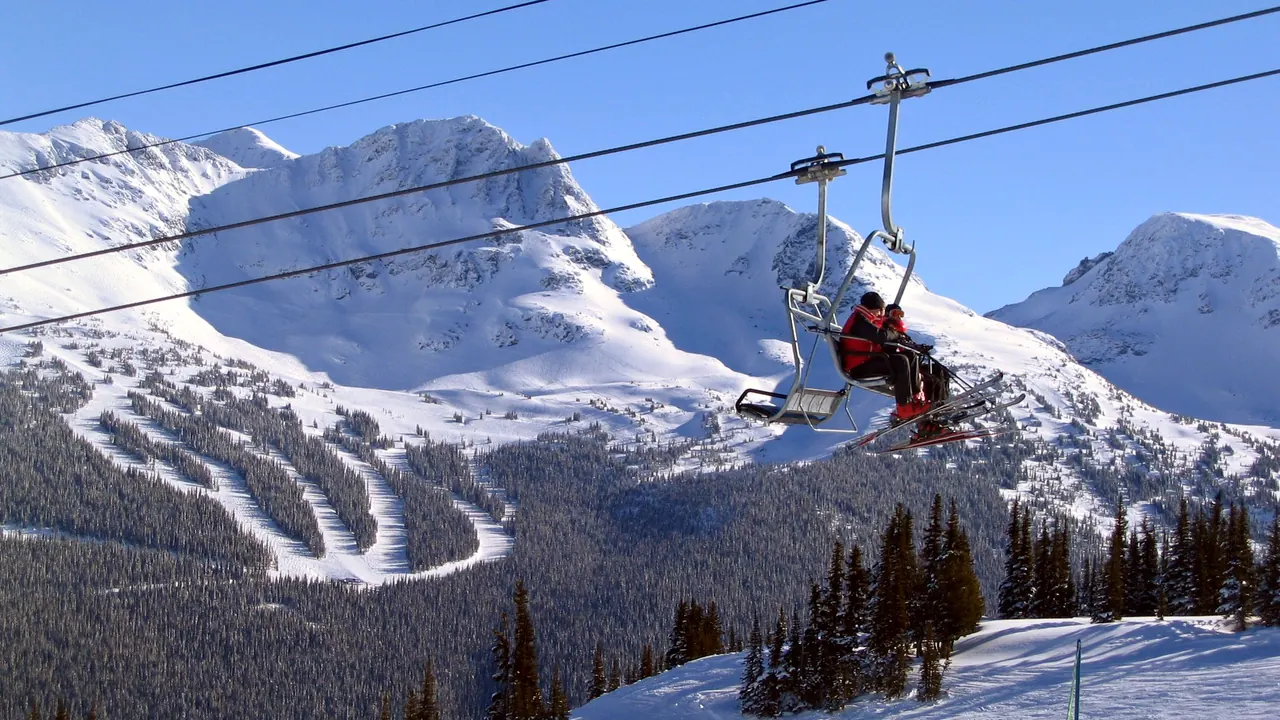
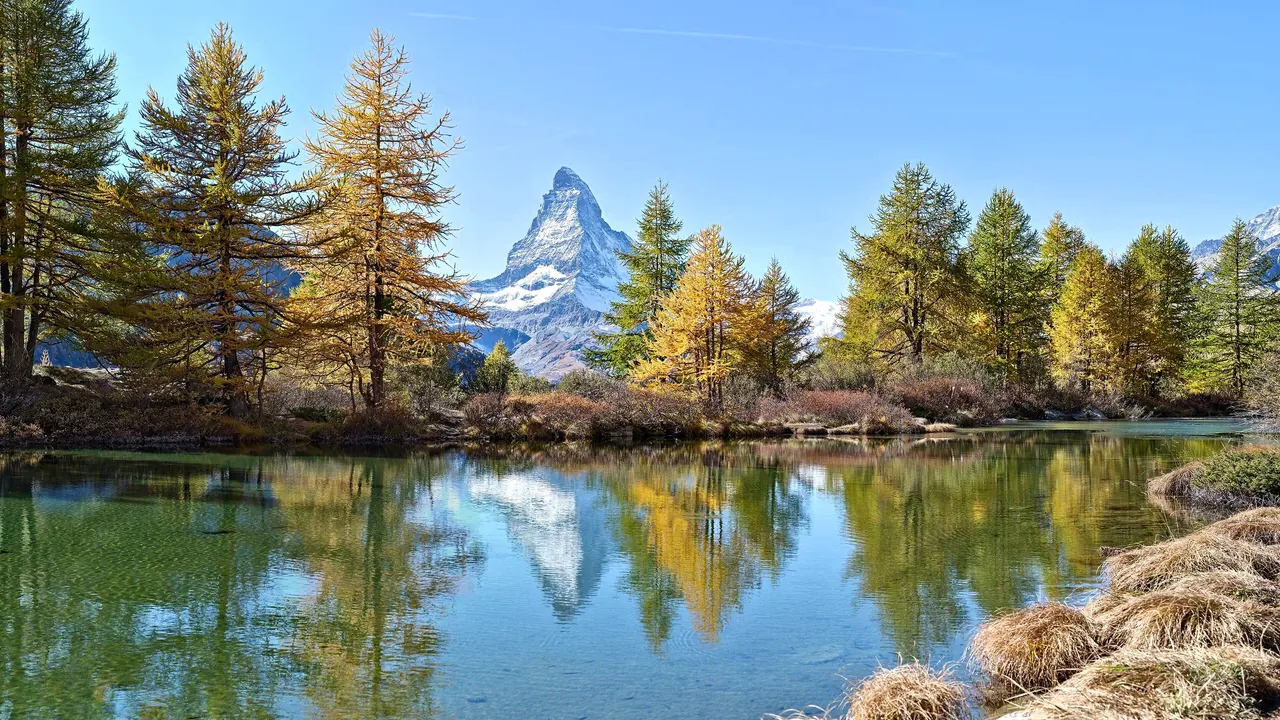
Photos: Whistler by Ruth Hartnup, CC BY 2.0, cropped; Zermatt by Roy Egloff, CC BY-SA 4.0, cropped.
Whistler or Zermatt?
Our verdict in twelve categories, each scored against the same fixed benchmark cities, and the climate month by month, so you can choose for your trip.
Choose Whistler for
- beaches
- families
- nightlife
Whistler suits travellers who want a mountain resort with a bit more going on around the skiing or riding. Summer brings lake swimming and one of the best-known bike parks anywhere. The ski schools and family set-up are bigger, the late bars stay open longer, and a silent forest spa is there for tired legs. It is never cheap, but it is a little easier on the wallet than its Swiss rival.
Choose Zermatt for
- getting around
- day trips
- live music and the arts
Zermatt is the choice for anyone who wants the high Alps at their most dramatic. The Matterhorn stands over a car-free village, glaciers and four-thousand-metre peaks surround it, and the cog railway and cable cars climb above 3,800m. Long lunches on chalet terraces and a quiet village after dark are part of the draw. It rewards keen skiers, hikers and climbers who aren't worried about cost and are happy with early nights.
Scoreboard
Twelve categories on one fixed scale from 0 to 100. The shaded stretch is the gap between the two.
Your match
Pick a travel style or drag the sliders, and both match scores follow your weighting.
Wins on beaches and families with your weighting.
Wins on getting around and day trips with your weighting.
What matters to you?
Category by category
What the scores mean for a trip.
Beaches & swimming
Neither town has a sea, but only Whistler offers proper swimming. In July and August, Lost Lake's sandy shore and the rafts and jetties on Alta and Alpha lakes make a good afternoon after a hike, and the shallower lakes warm to around 20°C.
Zermatt's mountain tarns are for photographing the Matterhorn's reflection, not for getting in. A swim there means a hotel pool.
Food & drink
The two eat about equally well for small resorts, but the cooking is quite different. Whistler leans on the Pacific Northwest: BC salmon, spot prawns and deep cellars of British Columbia wine, with ramen and sushi counters alongside the après nachos and craft beer.
Zermatt cooks Valais mountain food, such as raclette, fondue and air-dried beef, served with Petite Arvine or Cornalin. Its best meals are lunches on the terraces of chalet restaurants in Findeln, Furi and Zum See, which you reach on skis or on foot. In both places the range is narrow, and in Zermatt many kitchens close between seasons.
Culture & sights
Neither is a sightseeing town, and either one fills a morning at most. Whistler's two institutions are about art and Indigenous history: the Audain Art Museum with its Emily Carr paintings and Northwest Coast masks, and the Squamish Lil'wat Cultural Centre, with the 2010 Olympic venues as an extra.
Zermatt's heritage is the story of climbing. The Matterhorn Museum covers the 1865 first ascent and its fatal descent, climbers are buried in the mountaineers' cemetery, and the old larch-wood barns of the Hinterdorf stand on their stone slabs.
Nightlife
Whistler makes a better night out. After the patio après, a handful of clubs and late bars in the pedestrian village fill with seasonal workers and visiting groups, and on winter weekends they stay loud until the early hours. The big summer bike festivals bring some of that energy back.
Zermatt's slope-side après is cheerful, and a few bars on the main street go past midnight on busy weekends. In summer, though, the hikers and climbers are in bed early, and between seasons the village is largely shut.
Nature & outdoors
Both are world-class mountain bases, but the mountains are different. Whistler and Blackcomb are two vast, forested mountains linked by the Peak 2 Peak Gondola, with deep coastal snow. In summer the lower slopes become a famous downhill bike park, there are hikes to the turquoise lakes of Garibaldi, and black bears are often seen.
Zermatt is higher and icier. The Matterhorn, the Gorner Glacier and a ring of four-thousanders surround lifts that reach above 3,800m. You can ski across the border into Italy, glacier pistes stay open in summer, and the Five Lakes walk and the Europaweg bridge lie among marmots and ibex.
Day trips
Neither town is a great base for outings, and most visitors stay in the mountains. Days out from Whistler follow the Sea to Sky Highway by car or coach: the gondola at Squamish, the Britannia mining museum and farmland around Pemberton. Vancouver is two hours away and better done with an overnight stay.
Zermatt's trips start with the train down the valley and lead to old towns rather than wilderness. Sion has its two castle hills and the Valère basilica, Brig has the Stockalper Palace, and there are the high vineyards of Visperterminen, with Saas-Fee one valley over.
Good for families
Both villages are car-free and feel safe, but Whistler is better set up for children. Its ski schools are large, there is tubing and sledding between lessons, and condos with kitchens are easy to find. In summer, lake beaches, mini-golf, an adventure park and gentle bike paths fill the days.
Zermatt has nursery slopes on the Sunnegga side, marmots to spot and the novelty of cog railways, but little else is made for children. Wet days drag, and the viewpoints above 3,000m can be too cold and airless for small ones.
Getting around
Zermatt is the easier place to arrive at and move around in. You come by train, every lift is a walk from the centre, the Gornergrat cog railway and the underground funicular to Sunnegga do the climbing, and onward connections into the Swiss rail network are smooth. The only real catch is a steep walk with luggage to the hotels at the edges.
Whistler's pedestrian village and free shuttles work well inside the valley, and the Valley Trail is a pleasure on foot or by bike. But there is no passenger railway, arrival is by coach from Vancouver, and anything beyond the valley needs a car, which means winter tyres when it snows.
Shopping & style
In both towns shopping is mainly outdoor gear, and very good gear at that. Whistler's village adds galleries selling Indigenous prints and carvings, plus a summer farmers' market in the Upper Village.
Zermatt's one main street mixes serious mountaineering outfitters with Swiss watch and jewellery boutiques for wealthy skiers, plus cowbells and chocolate. It has no market to browse.
Affordability
Both are expensive, and Zermatt is the harder of the two on a budget. In Whistler the lift passes are steep and prices climb over Christmas, but free shuttles, kitchens to cook in and much cheaper spring and autumn weeks make a real difference.
In Zermatt even plain hotels charge a lot in season, a drink on a mountain terrace costs well above European norms, and the lifts and cog railways every visitor uses add up. Sleeping down the valley in Täsch and picnicking from the supermarket are the main ways to save.
Live music & performing arts
Live performance is thin in both, and the evenings mostly mean bands in bars. Whistler's offering is casual and summery, with free concerts in Olympic Plaza, buskers and a small community arts centre. Anyone wanting a proper concert drives to Vancouver.
Zermatt has no stage of its own, but it does have two festivals worth timing a trip around: Zermatt Unplugged's acoustic sets in spring and a chamber music festival in the village church in late summer.
Wellness & relaxation
Whistler has the better place to unwind. Its big Nordic-style spa sits among cedars by the river, with hot pools, saunas and cold plunges, and guests keep silent, which makes a soak in falling snow memorable. Massage studios for sore skiers are everywhere, and the shoulder seasons are calm.
Zermatt has no public bathing. Its strength is a cluster of excellent hotel spas, a few of them open to day visitors, in a quiet car-free village. The mood is still more active than slow, and for thermal baths you go down the valley.
When should you go?
Pick your month. The climate figures are measured averages, not a forecast.
Whistler in July
Zermatt in July
Daytime high, °C
Rainfall in the month, mm
Where the figures come from
Whistler has no rain gauge within 25 km of the centre, so its rainfall comes from a gridded climate dataset read at the destination rather than from a gauge further away.
Zermatt has no weather station within reach, so its figures come from a gridded climate model rather than a measured record, and read a broad area rather than one spot.
Temperature and rainfall are climate normals, averaged over the years shown. Whistler: 1991-2020 normals, Whistler - Nesters (1.1 km from centre). Zermatt: 1991-2020 normals, TerraClimate 4 km grid at the town, no weather station within 90 km.
Whistler has a real summer. July and August reach about 25°C, warm enough to swim in the valley lakes, and those are also the driest months. From October the wet season sets in, and November is the wettest month at close to 196mm, falling as deep snow on the mountains from late November into spring. In the valley, December to February sit around freezing, so this is ski weather rather than strolling weather.
Zermatt is cooler all year because it sits so much higher. Even in July and August the village peaks at around 14°C, which is ideal for hiking but never beach weather. From December to February daytime highs stay below freezing. Precipitation is spread fairly evenly through the year, with November the wettest month at 130mm, so neither summer nor winter has a clearly dry spell. For warmth, go to Whistler in midsummer. For crisp, snowy mountain days, Zermatt's winter is the colder and more reliable of the two.
Which traveller are you?
On a family trip with children, Whistler suits families with mixed ages and abilities, because there is plenty to fill the days in either season. Zermatt is better for older children who already ski or walk well, because away from the mountain there is little for them.
For a food and nightlife trip, Whistler suits a group of friends who want to keep drinking and dancing long after dinner. Zermatt suits couples who would rather make a slow lunch on a chalet terrace the main event of the day and turn in early.
For climbers who want a real summit, Whistler has glaciers and fine alpine hiking but nothing near four thousand metres. Zermatt is the place: guides lead first ascents of four-thousanders, the Hörnli hut path climbs towards the Matterhorn, and the Haute Route ends here.
Before you go
| Measure | Whistler | Zermatt |
|---|---|---|
| Official language | French, English | French, German, Italian, Romansh |
| Currency | Canadian Dollar (CAD) | Swiss Franc (CHF) |
| Sockets | AB120 V, 60 Hz | CJ230 V, 50 Hz |
| Driving side | Right | Right |
| Time zone | UTC-8, UTC-7 in summer | UTC+1, UTC+2 in summer |
| Emergency number | 911 | 112 |
| Elevation | 670 m | 1,624 m |
| Main airport | Vancouver International Airport (YVR)104 km from centre109 non-stop destinations | Geneva International Airport (GVA)128 km from centre150 non-stop destinations |
| Public holidays this year | 11 days | 9 days |
By the numbers
| Measure | Whistler | Zermatt |
|---|---|---|
| Population | 13,982 | 6,023 |
| People per km² | 58 | 25 |
| Museums within 10 km | 1 | 2 |
| UNESCO World Heritage sites within 50 km | 0 | 2 |
Where else could you go?
Every comparison below shares a destination with this one, so you can follow Whistler or Zermatt somewhere new.
- Saas-Feevs Zermatt
- Crans-Montanavs Zermatt
- Verbiervs Zermatt
- Leukerbadvs Zermatt
- Adelbodenvs Zermatt
- Mürrenvs Zermatt