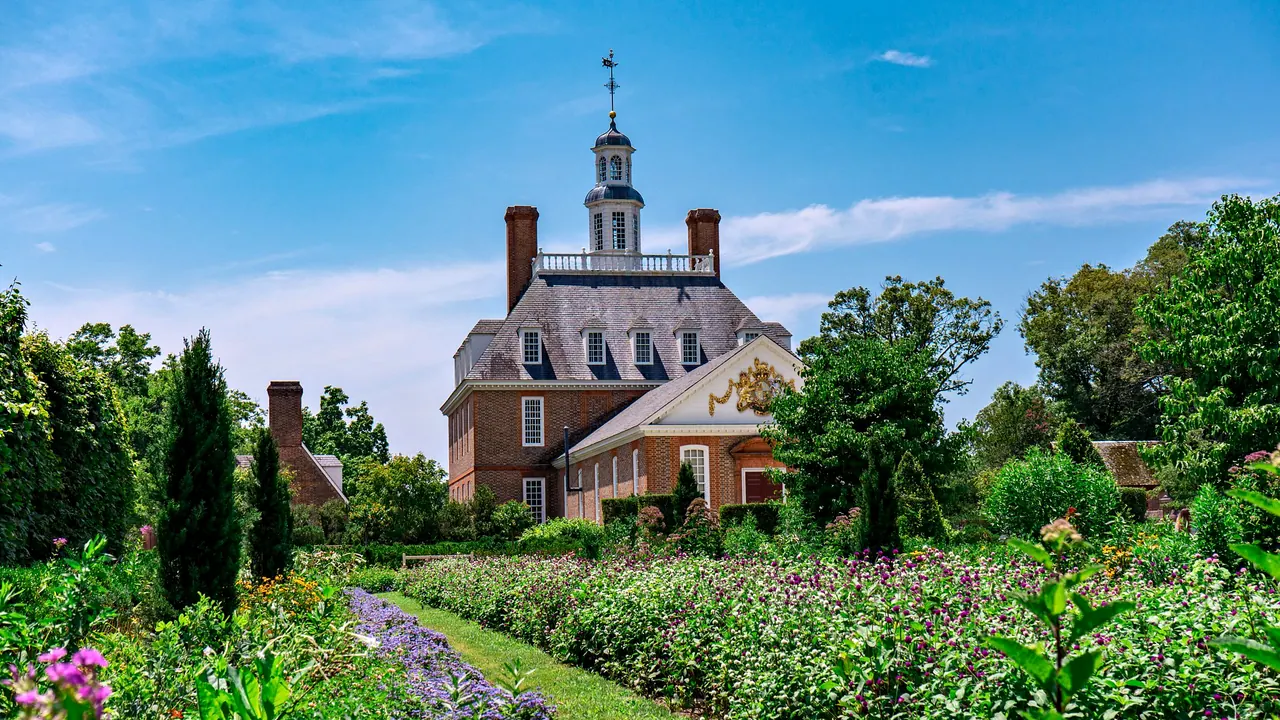
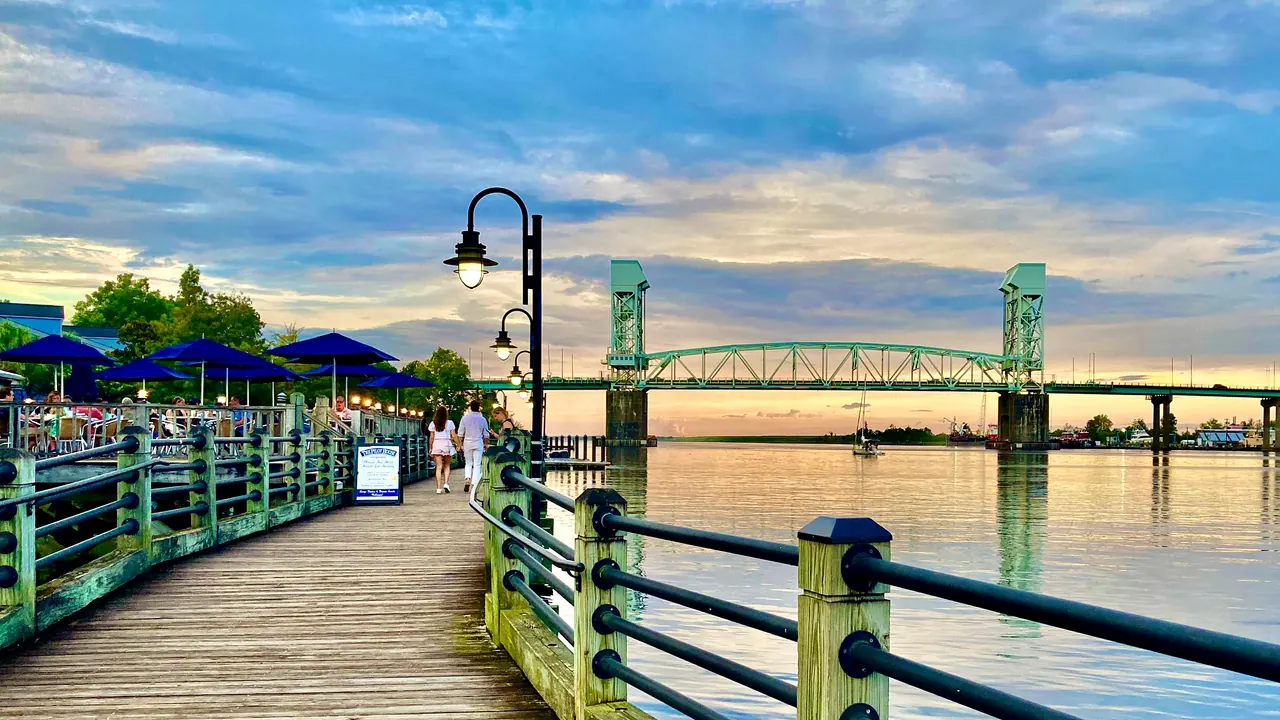
Photos: Williamsburg, Virginia by Brian Magill, Pexels License; Wilmington by Unexpected Snacks, CC BY-SA 4.0, cropped.
Williamsburg, Virginia or Wilmington?
Our verdict in twelve categories, each scored against the same fixed benchmark cities, and the climate month by month, so you can choose for your trip.
Choose Williamsburg, Virginia for
- culture and sights
- families
- day trips
Williamsburg suits travellers who want history to be the trip itself. The restored colonial capital, Jamestown and Yorktown are all a short drive apart, and Busch Gardens with its water park makes it one of the easiest family vacations on the East Coast. Expect quiet evenings and simple cooking.
Choose Wilmington for
- beaches
- nightlife
- nature and the outdoors
If the sea matters more than the past, choose Wilmington. Three beach towns, a warm Atlantic, kayaking out to Masonboro Island and menus built on local seafood make for a relaxed coastal stay. In the evenings, the Front Street bars and Thalian Hall give it more life than Williamsburg can offer.
Scoreboard
Twelve categories on one fixed scale from 0 to 100. The shaded stretch is the gap between the two.
Your match
Pick a travel style or drag the sliders, and both match scores follow your weighting.
Wins on culture and sights and families with your weighting.
Wins on beaches and nightlife with your weighting.
What matters to you?
Category by category
What the scores mean for a trip.
Beaches & swimming
Wilmington is the beach destination of the two, and by a wide margin. Wrightsville, Carolina and Kure beaches are all within half an hour, and each has its own character, from the polished barrier island at Wrightsville to the quieter sand at Kure. The Atlantic stays warm enough to swim into October.
Williamsburg sits inland between two rivers, so a swim in open water means the small York River beach at Yorktown, the bay at Buckroe or an hour's drive to Virginia Beach. Most visitors swim in the hotel pool or at the water park and add a single beach day.
Food & drink
Both towns eat Southern and coastal food, but Wilmington does it with more confidence. Local shrimp, flounder and oysters are on most menus, there is vinegar-sauced whole-hog barbecue, and downtown has a handful of modern Southern restaurants in old brick buildings and a strong craft brewery scene.
Williamsburg's best meals are the simple ones: a country ham biscuit, peanut soup, crab cakes or soft-shell crab in season. The candlelit taverns in the Historic Area are more about the setting than the cooking, and the pancake houses and buffets on Richmond Road cater to theme-park crowds.
Culture & sights
Here Williamsburg is far ahead. Colonial Williamsburg is an entire restored capital, with costumed tradespeople along Duke of Gloucester Street, the Governor's Palace, the Capitol and the Wren Building at William & Mary, plus art museums strong in American folk and decorative arts. Much of it is rebuilt, but the re-creation is careful and thorough, and it is the whole reason for the trip.
Wilmington's offer is real but more modest. It has a large historic district of antebellum and Victorian houses under live oaks, house museums such as the Bellamy Mansion that are frank about the port's enslaved labour, and the Battleship North Carolina across the river. Two or three unhurried days cover it, and for most visitors it sits alongside a beach stay rather than shaping it.
Nightlife
Neither is a late-night town, but Wilmington at least offers a proper night out. Front Street and the blocks around it fill with bars, rooftop terraces and pubs at weekends, and the beach towns add easy-going bars in summer, though there is little club culture.
In Williamsburg the evening usually ends with a tavern dinner or a candlelit ghost walk. A few student pubs and taprooms on the edge of town are there for a drink, and anyone after more drives to Norfolk or Richmond.
Nature & outdoors
Both sit in the same low coastal country of pine, marsh and tidal creeks, but Wilmington has the open water. Kayaking out to undeveloped Masonboro Island, surfing and paddleboarding off Wrightsville, fishing from the piers or offshore, and the wild Venus flytraps of Carolina Beach State Park give it more to do outdoors.
Williamsburg's outdoors is gentler and more inland: cycling the traffic-free Colonial Parkway or the Virginia Capital Trail, easy forest walks at York River State Park, and paddling the Chickahominy past ospreys and bald eagles. Neither has hills, and both have humid summers with plenty of biting insects.
Day trips
Williamsburg sits at the centre of the Historic Triangle, so its day trips are both better and closer. Jamestown is about 15 minutes away and Yorktown's battlefield only a little further. The James River plantations line Route 5, and Richmond is an easy drive west. Together they tell the story of colonial and Revolutionary America, though nearly all of them need a car.
From Wilmington, the best day out heads south to Southport and the ferry to car-free Bald Head Island, passing Fort Fisher and Brunswick Town on the way. New Bern and Beaufort are each about two hours north. The choice is pleasant but thinner: a handful of small-town days rather than a reason to base yourself there.
Good for families
Williamsburg is one of the classic family trips on the East Coast, and it beats Wilmington here. Busch Gardens and Water Country USA cover the thrills, while musket firings, fife-and-drum parades and the replica ships at Jamestown make history hands-on for children. There are family motels with pools everywhere.
Wilmington is a good summer choice built around the sand: the boardwalk rides at Carolina Beach, the aquarium at Fort Fisher and the battleship's decks for rainy days, and rental houses near the beach. Rip currents need watching, and in both towns families spend a lot of time in the car in the heat.
Getting around
You need a car in both towns, but Williamsburg's centre is easier on foot. The Historic Area, Merchants Square and the campus make a flat walk of about 20 minutes. Duke of Gloucester Street is closed to cars by day, a shuttle circles the district and Amtrak trains stop near the centre.
Wilmington's downtown and riverwalk are pleasant to walk, but the beaches lie 15km or more away across suburban roads. The buses are of little use to visitors, and beach traffic and parking are slow on summer weekends.
Shopping & style
Williamsburg has the more distinctive shopping. The colonial-style shops in the Historic Area sell hand-made pewter, silver, pottery and books printed the old way, alongside the stores of Merchants Square and a large outlet centre on Richmond Road.
Wilmington is lower-key, with independent boutiques, galleries, bookshops and antique dealers along Front Street and in the Cotton Exchange, and surf wear in the beach towns. Neither has any luxury shopping.
Affordability
The two cost much the same, mid-range by American standards, and in both a hire car is hard to avoid. What drives the bill differs. In Williamsburg it is the entry tickets for Colonial Williamsburg, Jamestown, Yorktown and the theme parks, so combination passes are worth a look. In Wilmington it is summer demand for beachfront hotels and rental houses, and off-season stays and casual seafood are the better value.
Live music & performing arts
Wilmington has more going on stage. Thalian Hall, a restored 19th-century opera house, hosts theatre, music and touring shows. There is also a community symphony and a larger venue for touring musicals, and the warmer months bring outdoor concerts by Greenfield Lake and long-running jazz and blues festivals.
In Williamsburg, most performances belong to the colonial setting: candlelit recitals of eighteenth-century music, period theatre and fife-and-drum corps on Duke of Gloucester Street, plus student shows at William & Mary. For an orchestra or professional theatre, visitors drive to Richmond or Norfolk.
Wellness & relaxation
The two are level here. Neither has a bathing tradition, and wellness comes down to resort and day spas. The calm comes from different settings: in Williamsburg, riverside golf resorts, early mornings on the empty colonial greens and slow drives on the wooded Colonial Parkway; in Wilmington, quiet evenings on the waterfront and the slow pace of a beach town outside summer weekends.
When should you go?
Pick your month. The climate figures are measured averages, not a forecast.
Williamsburg, Virginia in July
Wilmington in July
Daytime high, °C
Rainfall in the month, mm
Where the figures come from
Williamsburg, Virginia's sunshine is measured 60 km from the centre, at Richmond International Airport.
Temperature and rainfall are climate normals, averaged over the years shown. Williamsburg, Virginia: 2006-2020 (sunshine 1981-2010, rainfall 1991-2020) normals, Williamsburg / Kingspoint (3.6 km from centre). Wilmington: 1991-2020 normals, Wilmington / The Palms Mobile Home Park (5.3 km from centre).
Williamsburg has the colder winter, around 10°C by day in January against Wilmington's 14°C, and the shorter swimming season, with the water nearby pleasant only from June to September. Wilmington's Atlantic is warm enough from late May into October and reaches 28°C in August. In high summer both towns are hot and humid, with highs in the low thirties, so walking the Historic Area or Wilmington's downtown is hard work in the middle of the day.
Rain falls in every month in both towns, and summer brings the most. Williamsburg's wettest month is August. Wilmington's wet season is heavier and runs on into September, when it passes 220mm. For walking and sightseeing, both are at their best in spring and autumn. April is the driest of the warm months and one of the sunniest in each town, while May and October are warm and pleasant but wetter. Williamsburg's winter is the chillier of the two, but it is still fine for a short visit if you wrap up against the cold.
Which traveller are you?
For a beach and sun trip, Wilmington is the obvious choice. Three different beach towns are within half an hour, the sea stays warm into October, and surfing, paddleboarding and summer beach bars fill out the days. From Williamsburg, a beach is a single outing.
On a culture and arts trip built around history, Williamsburg wins clearly. Colonial Williamsburg, its folk art and decorative arts museums, and Jamestown and Yorktown nearby tell America's founding story in depth. Wilmington's historic district and battleship make a shorter, lighter programme.
On a family trip with children, Williamsburg has the edge. Busch Gardens, Water Country USA and hands-on history such as musket firings and replica ships keep every age busy, and there are family motels with pools everywhere. Wilmington suits families who mainly want a beach, a boardwalk and an aquarium.
Before you go
| Measure | Williamsburg, Virginia | Wilmington |
|---|---|---|
| Currency | US Dollar (USD) | US Dollar (USD) |
| Sockets | AB120 V, 60 Hz | AB120 V, 60 Hz |
| Driving side | Right | Right |
| Time zone | UTC-5, UTC-4 in summer | UTC-5, UTC-4 in summer |
| Emergency number | 911 | 911 |
| Elevation | 15 m | 9 m |
| Main airport | Newport News Williamsburg International Airport (PHF)24 km from centre1 non-stop destination | Wilmington International Airport (ILM)5 km from centre25 non-stop destinations |
| Public holidays this year | 13 days | 14 days |
By the numbers
| Measure | Williamsburg, Virginia | Wilmington |
|---|---|---|
| City population | 15,425 | 115,451 |
| People per km² | 656 | 839 |
| Museums within 10 km | 8 | 2 |
| UNESCO World Heritage sites within 50 km | 0 | 0 |
| Swim season, months above 21 °C | 4 months | 6 months |
Where else could you go?
Every comparison below shares a destination with this one, so you can follow Williamsburg, Virginia or Wilmington somewhere new.
- Virginia Beachvs Williamsburg, Virginia
- Myrtle Beachvs Wilmington
- Washington DCvs Williamsburg, Virginia
- Ocean City, Marylandvs Williamsburg, Virginia
- Bethany Beachvs Williamsburg, Virginia
- Rehoboth Beachvs Williamsburg, Virginia