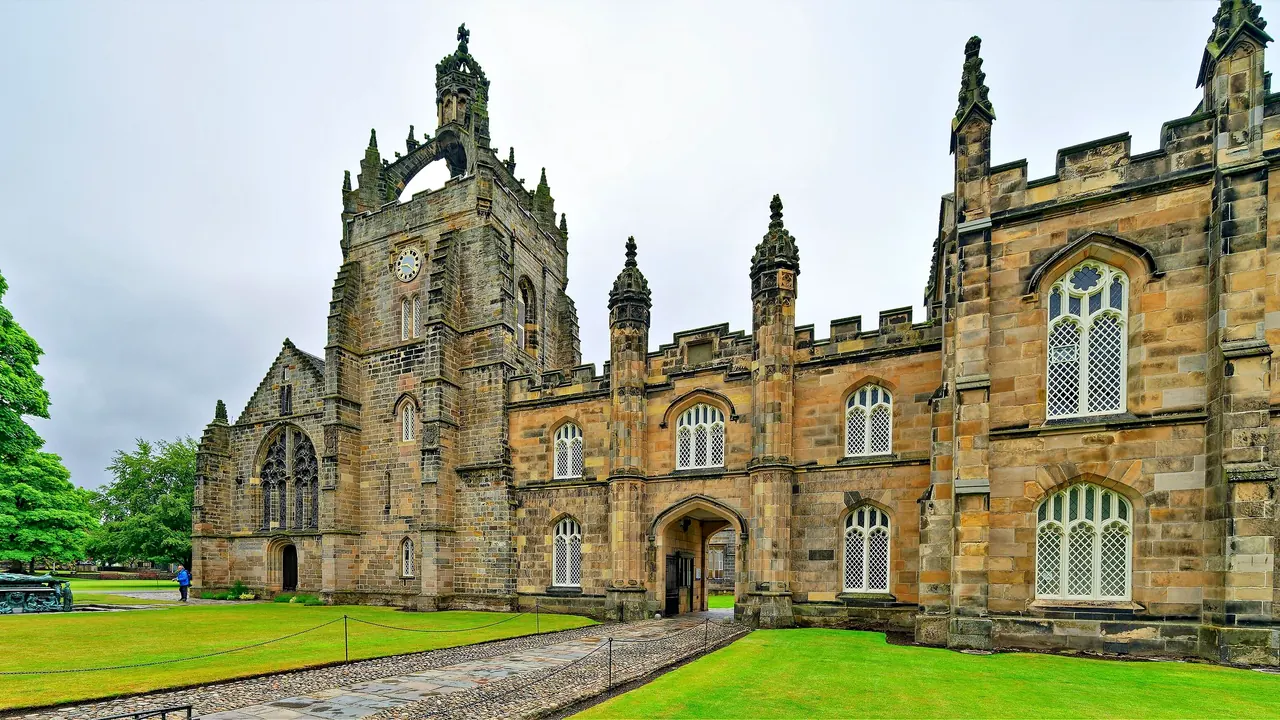
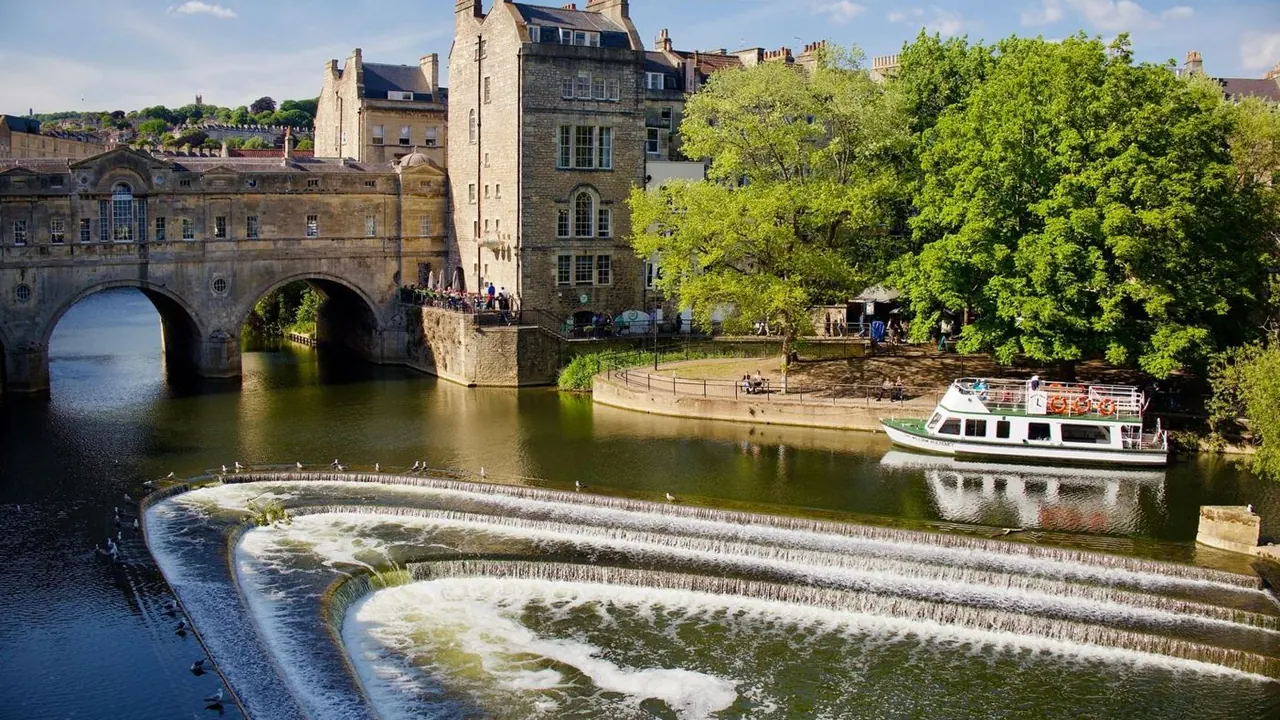
Photos: Aberdeen by Holger Uwe Schmitt, CC BY-SA 4.0, cropped; Bath by Lucas Carlini, Pexels License.
Aberdeen or Bath?
Our verdict in twelve categories, each scored against the same fixed benchmark cities, and the climate month by month, so you can choose for your trip.
Choose Aberdeen for
- nature and the outdoors
- prices
- beaches
Aberdeen suits travellers who want a base for wild country rather than a showpiece city. Within an hour or so you can be walking in Royal Deeside and the Cairngorms or along sea cliffs where dolphins and seals are often seen. Castles fill the surrounding land, and the granite centre and Old Aberdeen give you enough to see on days when the weather turns. Rooms are easier on the budget than in Bath, and the student pubs keep evenings a little livelier.
Choose Bath for
- wellness
- culture and sights
- shopping
Bath is the better pick for a polished, unhurried short break. The whole city is a Georgian set piece built over Roman ruins, almost everything is a short walk apart, and it is the one place in Britain where you can still bathe in natural hot springs. Stonehenge, Wells, the Cotswolds and Bristol are all close by for day trips. It costs more to stay, though, and the countryside around it is gentle rather than dramatic.
Scoreboard
Twelve categories on one fixed scale from 0 to 100. The shaded stretch is the gap between the two.
Your match
Pick a travel style or drag the sliders, and both match scores follow your weighting.
Wins on nature and the outdoors and prices with your weighting.
Wins on wellness and culture and sights with your weighting.
What matters to you?
Category by category
What the scores mean for a trip.
Beaches & swimming
Neither city is a beach destination, but Aberdeen at least has real sand on its doorstep. A long sweep of beach and dunes runs north from the harbour, and the wide strands at Balmedie are within half an hour. The cold North Sea and frequent wind make them places for a brisk walk rather than sunbathing.
Bath is inland in the Avon valley. The nearest seaside is the brown, shallow water at Weston-super-Mare, about an hour away. In warm weather, a swim in the river at a weir outside town is the local alternative.
Food & drink
The two cities eat about equally well, and the difference is in what they serve. Aberdeen's table comes from the sea and the farms: North Sea fish and shellfish, Aberdeen Angus beef, the salty buttery roll at breakfast, and fish and chips down the coast in Stonehaven, with Speyside whisky alongside.
Bath leans towards West Country cheese, Somerset cider, afternoon tea and its own buns and biscuits, including the Sally Lunn bun. It also has a farmers' market in the old Green Park station. Neither offers much in the way of other cuisines.
Culture & sights
Bath is the stronger sightseeing city by a wide margin. Its whole Georgian townscape is a World Heritage Site, with the Royal Crescent, the Circus and Pulteney Bridge built in honey-coloured stone. The Roman Baths and the Abbey stand together beneath it, and smaller museums from the Holburne to No. 1 Royal Crescent add more.
Aberdeen's appeal is quieter and greyer. It offers the granite bulk of Marischal College, the cobbled medieval lanes of Old Aberdeen around King's College and St Machar's Cathedral, and a Maritime Museum on fishing and oil. It is rewarding, but the sights are smaller in scale and less well known.
Nightlife
Aberdeen has somewhat more going on after dark. Students fill the pubs, cocktail bars and handful of clubs around Belmont Street and Union Street, and the traditional bars have long whisky lists.
Bath's evenings are mostly spent in coaching inns and real-ale pubs, and the city is usually quiet soon after dinner on weeknights. Its advantage is Bristol, fifteen minutes away by train, for anyone who wants a bigger night out.
Nature & outdoors
Aberdeen is the gateway to far grander country. Within about an hour up the Dee you reach the Cairngorms National Park, with high plateau walks, Lochnagar and skiing at Glenshee in winter. The coast adds cliff walks, a seal colony at the Ythan estuary and dolphins seen from Torry Battery.
Bath's outdoors is gentle and starts right at the edge of town. You can follow the Skyline loop over the surrounding ridges, the Kennet and Avon towpath or the Two Tunnels Greenway, and the Cotswolds and Cheddar Gorge are within easy reach. It is lovely, but it is soft lowland rather than mountain.
Day trips
Bath has the richer range of famous places nearby. Stonehenge and Avebury are about an hour away, and so are Wells Cathedral, Glastonbury Tor, Lacock and the Cotswold villages. Bristol is a short train ride and Cardiff is just over an hour.
Aberdeen's outings are excellent but more of one kind. There are castles, from clifftop Dunnottar to Crathes, Craigievar and Balmoral, plus whisky distilleries in Speyside. They are spread across a wider area, and most of them really need a car.
Good for families
The two are about level for children, and both are safe and small. Bath's single big draw is the Roman Baths, with steam rising off green water, and Royal Victoria Park has a large playground. Its steep streets are hard going with a pushchair, and the bigger family attractions lie out at Bristol and Longleat.
Aberdeen offers the Science Centre, a traditional funfair on the beach esplanade, the glasshouses of Duthie Park and dolphin-spotting at the harbour. Its cold, windy weather means you should always have an indoor plan ready.
Getting around
Bath is the easier city to get around. You can walk its pedestrianised centre end to end in about twenty minutes, and the Abbey, Baths, Crescent and shops are all close together. Drivers are best off leaving the car at a park-and-ride.
Aberdeen's centre is compact around Union Street and the station, but the beach and Old Aberdeen are a longer walk or a bus ride away, and there is no tram. Both cities need a car for the countryside, and Aberdeen's spread-out castles and glens depend on one more.
Shopping & style
Bath is a far better place for an afternoon's browsing. There are fashion shops on Milsom Street and bookshops and jewellers in the lanes by the Abbey. You will also find antiques on Bartlett Street, makers and salvage dealers on Walcot Street, the centuries-old Guildhall Market, and the little shops lining Pulteney Bridge.
Aberdeen's shopping is mostly two indoor centres of familiar chains, plus a few independents around Belmont Street and Rosemount. The best souvenirs there are knitwear, tartan and whisky, and these are often better bought in the Deeside villages or at the distilleries.
Affordability
Aberdeen is noticeably kinder to the wallet, mainly because of its hotels. They are built for business travellers and are often reasonable at weekends and in summer, and the museums and art gallery are free. Hiring a car for the countryside is the main extra cost.
Bath's central hotels are dear and fill early on summer weekends and around Christmas, and the Roman Baths and spa are expensive. Walking everywhere and eating pub lunches help, and sleeping in Bristol saves the most.
Live music & performing arts
The two cities offer much the same stage life, each built around one handsome historic theatre that hosts touring drama, opera and dance. In Aberdeen that is the Edwardian His Majesty's, with the Music Hall for the Scottish orchestras, an arena for big tours and folk sessions in the pubs.
Bath has the gilded Georgian Theatre Royal and its studio and children's stage. It also holds concerts in the Abbey and Assembly Rooms and long-running festivals of literature, music and Mozart.
Wellness & relaxation
This is where Bath stands furthest apart. It is the one place in Britain with natural thermal bathing, from the rooftop pool at Thermae Bath Spa, looking over the Abbey, to the small Georgian Cross Bath. Tea in the Pump Room and slow walks through the Georgian gardens complete the picture.
Aberdeen has no bathing culture at all. Relaxation there means a hotel spa or a country-house hotel in Deeside, with the restful quiet of the hills around it.
When should you go?
Pick your month. The climate figures are measured averages, not a forecast.
Aberdeen in July
Bath in July
Daytime high, °C
Rainfall in the month, mm
Where the figures come from
Bath's temperatures are measured 29 km from the centre, at Lyneham.
Bath has no rain gauge within 25 km of the centre, so its rainfall comes from a gridded climate dataset read at the city rather than from a gauge further away.
Temperature and rainfall are climate normals, averaged over the years shown. Aberdeen: 1991-2020 normals, Aberdeen / Dyce (9 km from centre). Bath: 1991-2020 normals, Lyneham (29.2 km from centre).
Aberdeen is at its best from late May to early September, when afternoons reach about 18°C. May is its sunniest month. The North Sea peaks at around 13°C, so even in August the beach is for walking rather than swimming. Bath is a little warmer through most of the year, with summer highs of about 21°C. From April to October it also gets clearly more sunshine, so late spring to September is the pleasant time for its streets and hill paths. Neither city ever gets too hot for sightseeing.
Rain falls in every month in both cities, but the wet seasons differ. In Aberdeen the rain gets heavy in autumn, peaking at about 101mm in October, just as the days grow short and dim. Bath's wettest months run from October to December, when its country paths turn muddy. In midwinter the two are much alike: cold, grey and short of daylight. A winter trip is mostly about indoor sights, and in Bath that includes the thermal pools.
Which traveller are you?
For an outdoors trip, Aberdeen is the clear choice. The Cairngorms, Lochnagar and the pine forests around Braemar are within reach, and so are cliff walks, seabird colonies and dolphins at the harbour mouth. Bath offers pleasant canal towpaths and rolling hills, but nothing as wild.
On a relaxing and wellness trip, Bath has no real rival here. You can soak in natural thermal water on the rooftop pool above the Abbey or in the small Cross Bath, then take tea in the Pump Room. Aberdeen has only hotel spas.
For a trip on a tight budget, Aberdeen goes further. Its many business hotels often have reasonable weekend and summer rates, and its museums are free. Bath's central hotels are dear, especially on summer weekends, and the Roman Baths and spa add to the bill.
Before you go
| Measure | Aberdeen | Bath |
|---|---|---|
| Official language | English | English |
| Currency | Pound Sterling (GBP) | Pound Sterling (GBP) |
| Sockets | G230 V, 50 Hz | G230 V, 50 Hz |
| Driving side | Left | Left |
| Time zone | UTC, UTC+1 in summer | UTC, UTC+1 in summer |
| Emergency number | 112 or 999 | 112 or 999 |
| Elevation | 29 m | 132 m |
| Main airport | Aberdeen International Airport (ABZ)8 km from centre29 non-stop destinations | Bristol Airport (BRS)25 km from centre117 non-stop destinations |
| Public holidays this year | 10 days | 8 days |
By the numbers
| Measure | Aberdeen | Bath |
|---|---|---|
| City population | 200,680 | 94,092 |
| People per km² | 3,083 | 3,245 |
| Museums within 10 km | 10 | 17 |
| UNESCO World Heritage sites within 50 km | 0 | 2 |
| Swim season, months above 21 °C | None | None |
Where else could you go?
Every comparison below shares a destination with this one, so you can follow Aberdeen or Bath somewhere new.