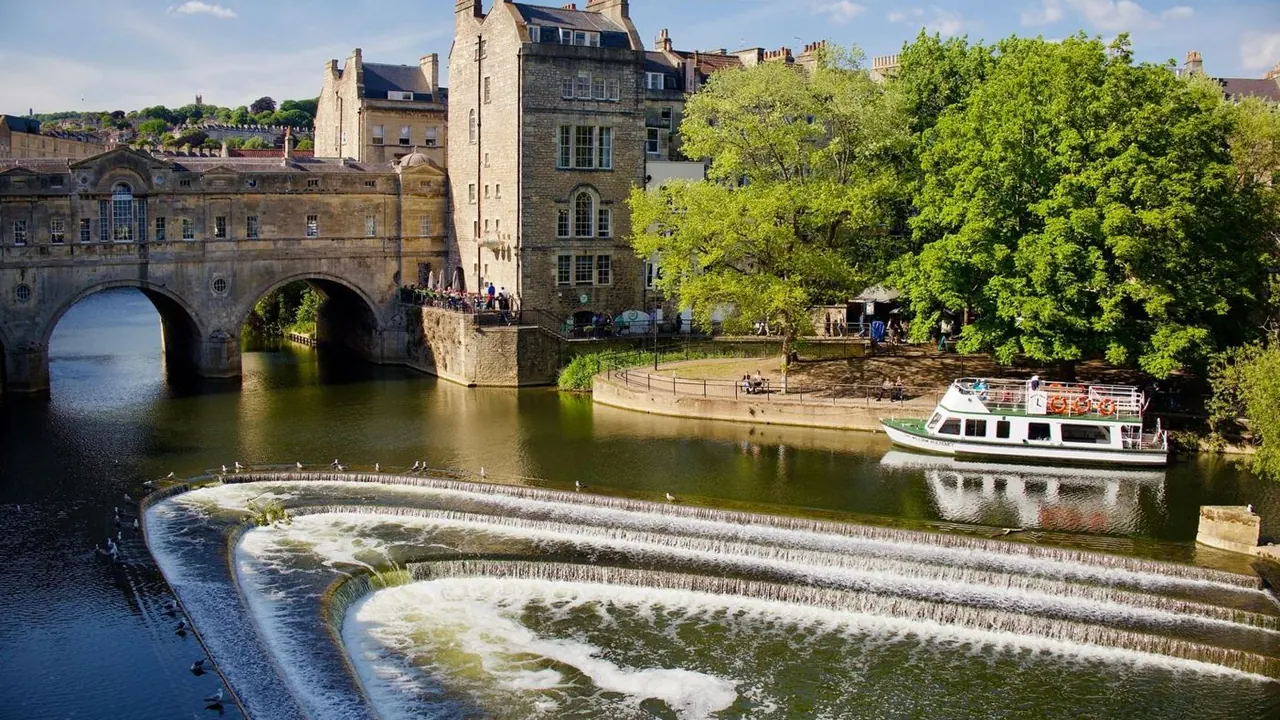
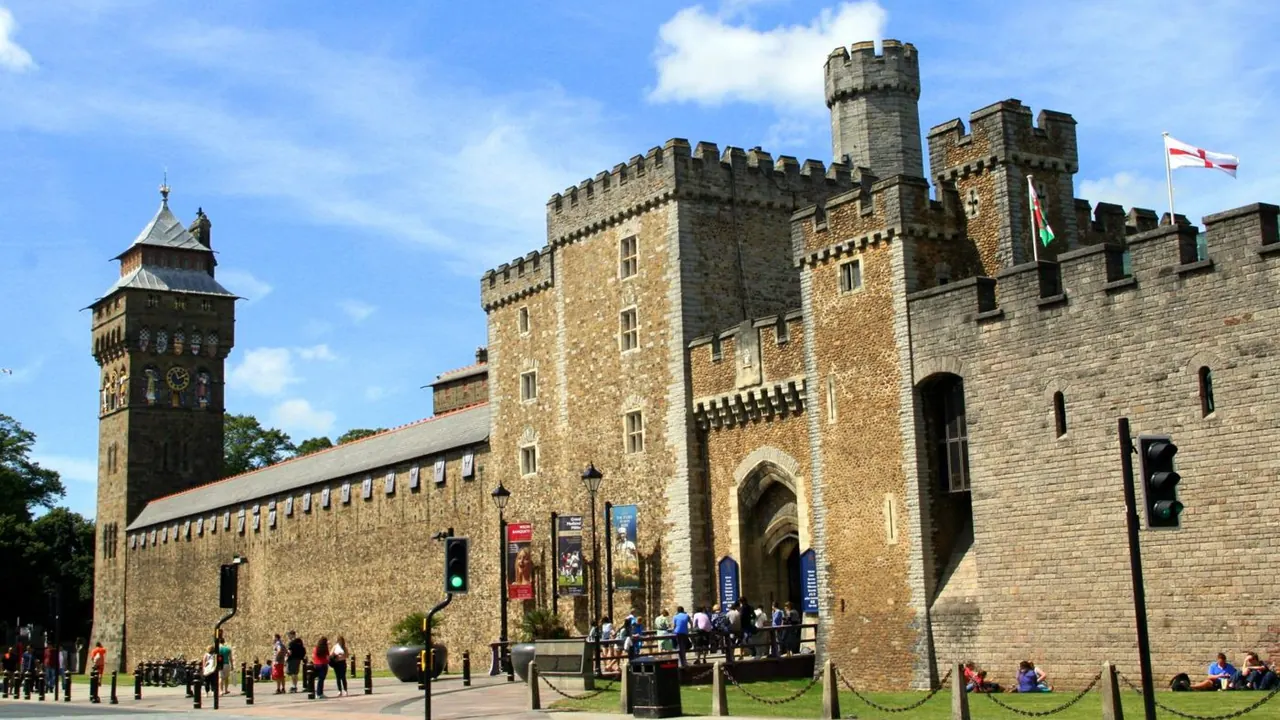
Photos: Bath by Lucas Carlini, Pexels License; Cardiff by Tevfik Teker, CC BY 3.0, cropped.
Bath or Cardiff?
Our verdict in twelve categories, each scored against the same fixed benchmark cities, and the climate month by month, so you can choose for your trip.
Choose Bath for
- wellness
- culture and sights
- day trips
Bath suits a slower, more polished trip. Choose it for a couple of days among Georgian crescents and Roman remains, evenings soaking in thermal water above the rooftops, and drives out to Stonehenge, Wells and the Cotswold villages. Lovers of architecture and couples who want to unwind will be happiest here, as long as they can accept high hotel prices and quiet nights.
Choose Cardiff for
- beaches
- nightlife
- prices
Travellers who want more going on after dark, and a smaller bill, will do better in Cardiff. As a capital it has its own opera company and orchestra, small music venues on Womanby Street and a lively weekend crowd, and its free national museums keep costs down. It also has the Brecon Beacons and a string of castles within an hour, which makes it the stronger base for walkers and for families.
Scoreboard
Twelve categories on one fixed scale from 0 to 100. The shaded stretch is the gap between the two.
Your match
Pick a travel style or drag the sliders, and both match scores follow your weighting.
Too close to call, 1 point apart
Wins on wellness and culture and sights with your weighting.
Wins on beaches and nightlife with your weighting.
What matters to you?
Category by category
What the scores mean for a trip.
Beaches & swimming
Neither city is a beach destination, but Cardiff is closer to the sand. Barry Island's bay and funfair are about half an hour away by train, Penarth has a pebble shore and a pier, and the wide beaches of the Gower are an hour or more to the west.
From Bath, the nearest seaside is Weston-super-Mare, an hour away, where the sea is muddy and the tide goes out a very long way. Decent sand means two hours or more to Dorset or Devon. Bath makes up for it a little with river swimming in the Avon on warm days. Either way, the Bristol Channel stays cool.
Food & drink
The two eat about equally well, in different ways. Bath relies on West Country produce and tradition: cider, cheese, the Bath bun and the Sally Lunn bun, afternoon tea in Georgian tearooms and the farmers' market in the old Green Park station. Its weakness is range. There is little cooking from other cuisines, and the city's evenings finish early.
Cardiff has more variety. City Road's long run of Middle Eastern and South Asian places fills the gap that Bath leaves, Pontcanna and Canton have neighbourhood bistros, and the Victorian market serves Welsh cakes off the griddle, along with cawl and laverbread with cockles.
Culture & sights
Bath is the more remarkable place to walk around. The whole city is a World Heritage Site, with the Royal Crescent, the Circus and Pulteney Bridge forming one unbroken Georgian townscape, and the Roman Baths and the Abbey beneath and beside it.
Cardiff has fewer sights, and most of them are Victorian: the castle with its lavish Gothic rooms, the Impressionists in the National Museum and the open-air buildings of St Fagans. They fill two or three good days, but the streets between them lack Bath's coherence.
Nightlife
Cardiff has far more going on after dark. St Mary Street fills with big groups at weekends, Womanby Street has alternative bars and late venues, and on rugby days the whole centre is taken over by the crowd. The wine bars of Pontcanna offer something calmer.
Bath is a city of old coaching inns and real-ale pubs, with a handful of student clubs during term. Most weeknights end soon after dinner, and anyone wanting a big night out takes the train to Bristol.
Nature & outdoors
Cardiff has wilder country within reach. The Brecon Beacons are about an hour away, with the open moorland ridges of Pen y Fan, and the Taff Trail runs from Bute Park up the valley into the hills. The Wales Coast Path adds the cliffs at Penarth.
Bath's countryside is gentler but closer to the door. The Skyline loop starts from town, the Kennet and Avon towpath follows the Limpley Stoke valley, and the Cotswolds and Cheddar Gorge are close by. It suits rambles and canal-side cycling more than proper hill walking.
Day trips
Both are fine bases, but Bath's list of trips is longer. Stonehenge and Avebury, Wells and Glastonbury, Lacock, Castle Combe and Salisbury are all within about an hour, and Bristol is fifteen minutes away by train. The catch is that many of the villages need a car or a tour.
Cardiff's day trips are mostly castles: Caerphilly by train, Castell Coch in the woods, and Chepstow together with Tintern Abbey. Big Pit and Blaenavon add the mining past. Bath is an easy hour across the Severn, so a stay in Cardiff can still take in its rival's highlights.
Good for families
Cardiff is the easier city with children. It is flat and most of its sights are free or cheap. Techniquest, the farm animals at St Fagans and the rowing boats on Roath Park lake are all aimed at families, and Barry Island's sands are a short train ride away in summer.
Bath has the Roman Baths, which children love, and the playground in Royal Victoria Park. But its steep streets are hard going with a pushchair, and much of the city is built around adult pleasures. Families staying there often go to Bristol or Longleat for the bigger attractions.
Getting around
Both cities have small, largely pedestrianised centres, and Bath's is slightly easier: nearly every sight is within a twenty-minute walk, though the hills are steep. Driving in the city is a nuisance, yet you need a car or a tour to reach the outlying villages.
Cardiff is flat, with the castle, market and station a few minutes apart, but Cardiff Bay is a half-hour walk, a shuttle train or a water taxi ride away. Local trains serve Penarth, Caerphilly and the valleys well, which makes up for having no metro or tram.
Shopping & style
There is little between them, and both are at their best in independent shops rather than luxury. In Bath they fill Georgian streets: fashion on Milsom Street, antiques on Bartlett Street, makers and salvage dealers on Walcot Street, and small shops along Pulteney Bridge.
Cardiff's character is in its glass-roofed Victorian arcades, full of record shops, vintage clothing and books, alongside the chains on Queen Street and Welsh crafts such as lovespoons and slate. Bath rewards a slow browse, while Cardiff is easily covered in an afternoon.
Affordability
Cardiff costs noticeably less. Hotels are moderately priced on ordinary weekdays, though they climb steeply on rugby and big concert dates, and the free national museums and short train hops keep daily spending low.
Bath is expensive to stay in. Central rooms are dear, summer weekends and Christmas are dearer still, and the Roman Baths and spa add up. Visiting midweek helps, as does sleeping in Bristol and coming in by train.
Live music & performing arts
Cardiff has the richer arts life. The Wales Millennium Centre is home to Welsh National Opera, the BBC National Orchestra of Wales is based in the city, the Royal Welsh College of Music and Drama stages frequent performances, and small venues around Womanby Street book bands most nights.
Bath's stage life centres on the gilded Georgian Theatre Royal, with touring drama, visiting opera and pantomime, plus concerts in the Abbey and the Assembly Rooms. Its festivals of literature and music are a draw, but on an ordinary night there is not much choice.
Wellness & relaxation
The difference here comes down to the water itself. Bath is the only city in Britain where you can still bathe in natural hot springs, so a soak is the point of the visit rather than something added on. You can float in the rooftop pool at Thermae Bath Spa looking across to the Abbey, or slip into the little Georgian Cross Bath, and then spend the rest of the day idling in the riverside Parade Gardens.
Cardiff has no springs of its own, and the pampering on offer there is much like what you would find in most British cities. Its gentler side is in slow mornings in the cafés of Pontcanna and the riverside paths of Bute Park. These make a pleasant break between sights, but they are not a reason to plan a restful trip around the city.
When should you go?
Pick your month. The climate figures are measured averages, not a forecast.
Bath in July
Cardiff in July
Daytime high, °C
Rainfall in the month, mm
Where the figures come from
Bath's temperatures are measured 29 km from the centre, at Lyneham.
Bath has no rain gauge within 25 km of the centre, so its rainfall comes from a gridded climate dataset read at the city rather than from a gauge further away.
Cardiff has no rain gauge within 25 km of the centre, so its rainfall comes from a gridded climate dataset read at the city rather than from a gauge further away.
Cardiff's sunshine is measured 83 km from the centre, at Lyneham.
Temperature and rainfall are climate normals, averaged over the years shown. Bath: 1991-2020 normals, Lyneham (29.2 km from centre). Cardiff: 1991-2020 normals, Cardiff-Wales Airport (14.9 km from centre).
The two cities share almost exactly the same mild, damp climate, so the choice comes down to everything else. Summer is short and gentle. July and August are the warmest months, with highs of about 21°C in Bath and a degree less in Cardiff. That is pleasant for walking but rarely beach weather, and the Bristol Channel only reaches about 18°C, so expect to paddle rather than swim. May to July are the sunniest months, each with around 200 hours of sunshine. Late spring to early autumn is the best time for the hills around both cities.
Rain comes all year but is heaviest from October to December, peaking at about 118mm in October, and winter highs fall to around 7°C. Grey winter days suit indoor sights in either city, and they suit Bath especially, where a hot outdoor soak on a cold evening is one of the best things the town has to offer.
Which traveller are you?
On a relaxing and wellness trip, Bath is the clear choice. It is the one place in Britain where you can bathe in natural hot spring water, and tea in the Pump Room and its walkable Georgian streets set an unhurried pace. Cardiff offers only hotel spas.
For a food and nightlife trip, Cardiff gives you more to do. The cooking ranges wider, from City Road's Middle Eastern and South Asian places to Pontcanna's bistros, and Womanby Street's bars and gig venues stay open late. Bath mostly settles into its pubs early.
On a trip on a tight budget, Cardiff is easier on the wallet. Hotels are moderately priced outside rugby and concert dates, the national museums, St Fagans included, are free, and trains to the castles and coast are short. Bath's central hotels and spa entry are expensive.
Before you go
| Measure | Bath | Cardiff |
|---|---|---|
| Official language | English | English |
| Currency | Pound Sterling (GBP) | Pound Sterling (GBP) |
| Sockets | G230 V, 50 Hz | G230 V, 50 Hz |
| Driving side | Left | Left |
| Time zone | UTC, UTC+1 in summer | UTC, UTC+1 in summer |
| Emergency number | 112 or 999 | 112 or 999 |
| Elevation | 132 m | 41 m |
| Main airport | Bristol Airport (BRS)25 km from centre117 non-stop destinations | Cardiff International Airport (CWL)15 km from centre30 non-stop destinations |
| Public holidays this year | 8 days | 8 days |
By the numbers
| Measure | Bath | Cardiff |
|---|---|---|
| City population | 94,092 | 383,536 |
| People per km² | 3,245 | 2,734 |
| Museums within 10 km | 17 | 9 |
| UNESCO World Heritage sites within 50 km | 2 | 1 |
| Swim season, months above 21 °C | None | None |
Where else could you go?
Every comparison below shares a destination with this one, so you can follow Bath or Cardiff somewhere new.