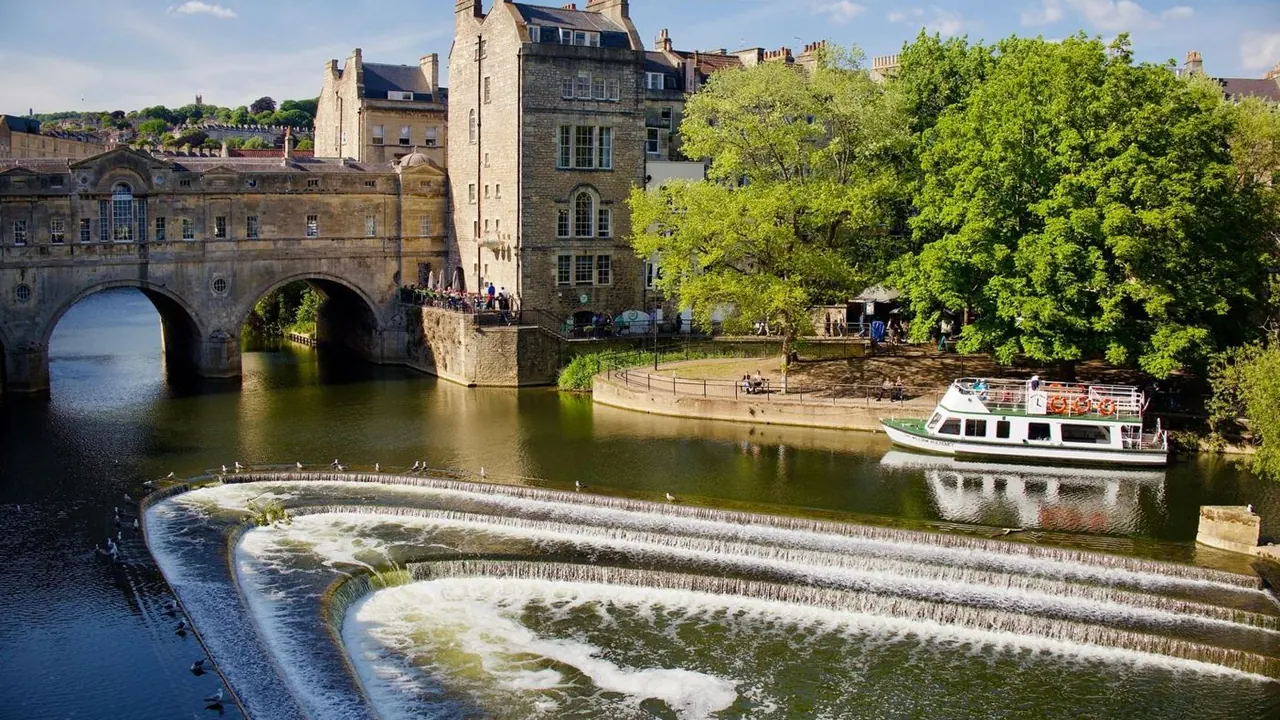
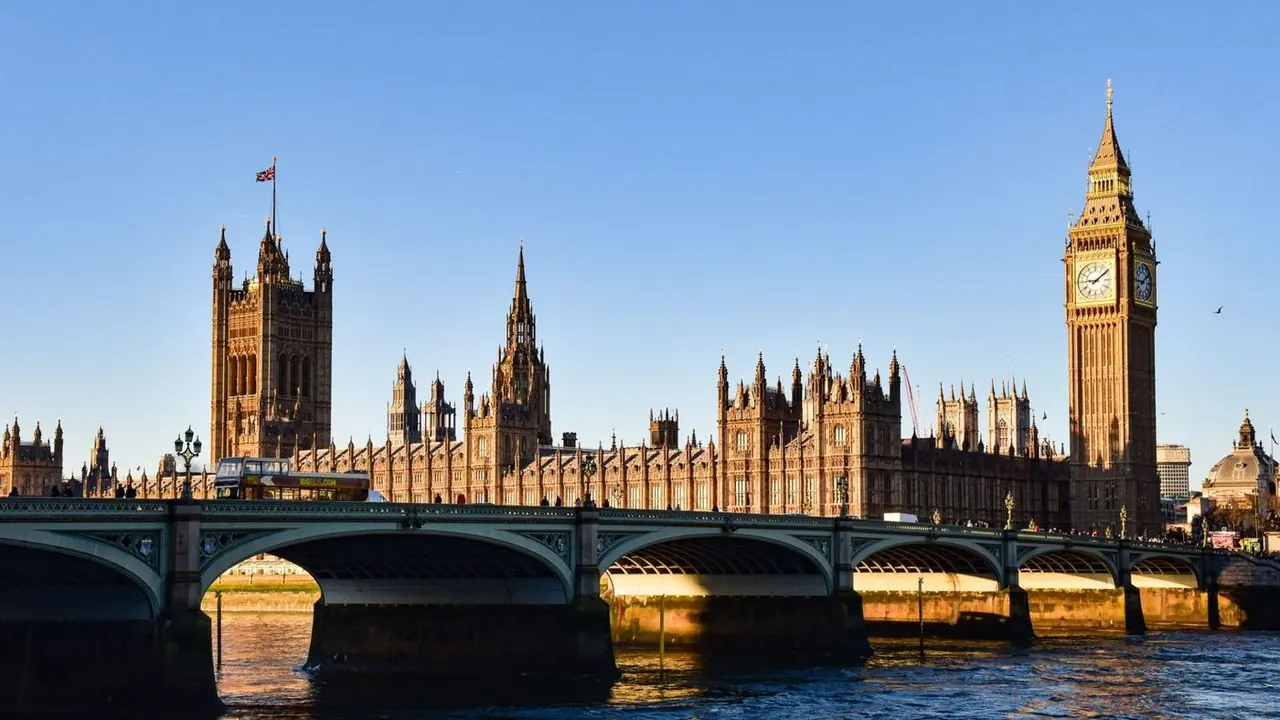
Photos: Bath by Lucas Carlini, Pexels License; London by AXP Photography, Pexels License.
Bath or London?
Our verdict in twelve categories, each scored against the same fixed benchmark cities, and the climate month by month, so you can choose for your trip.
Choose Bath for
- wellness
- prices
- nature and the outdoors
Bath suits a slower trip of two or three days. It is a compact Georgian city you can cross on foot, you can actually bathe in its natural hot springs, and the countryside starts at the edge of town. Choose it if architecture, afternoon tea, a long soak and walks over the hills appeal more than a full evening programme, and if you don't mind a city that goes quiet after dinner.
Choose London for
- nightlife
- live music and the arts
- shopping
For depth and variety, London is the stronger choice by a wide margin. Its free national museums, its stages from the West End to the South Bank, food from every corner of the world and districts that stay up late at weekends give you more than a week can hold, and families find far more to do. It costs more to stay and is never restful, but it also puts Bath within easy reach for a day.
Scoreboard
Twelve categories on one fixed scale from 0 to 100. The shaded stretch is the gap between the two.
Your match
Pick a travel style or drag the sliders, and both match scores follow your weighting.
Wins on wellness and prices with your weighting.
Wins on nightlife and live music and the arts with your weighting.
What matters to you?
Category by category
What the scores mean for a trip.
Beaches & swimming
Neither city works for a beach vacation, but London has the easier options. From Bath the nearest sea is at Weston-super-Mare, an hour away, where the water is brown and the tide goes out a long way. Proper sand means two hours or more each way to Dorset or Devon, so on warm days locals swim in the Avon at a weir instead.
London reaches Brighton's pebble beach and pier in about an hour by train, and the sandier Kent shores at Margate and Whitstable are close too. In the city itself the lidos and the Hampstead Heath ponds give London a real swimming culture of its own.
Food & drink
Bath's food is local and good within a narrow range: West Country cheese, Somerset cider, the Sally Lunn bun, the farmers' market in the old Green Park station and tearooms across the Georgian streets. Look for Indian, Chinese or street food and you will find little, and kitchens close early.
London works on another scale. Its strength is the cooking of its communities, from Bangladeshi food on Brick Lane to Punjabi Southall and Caribbean kitchens south of the river, with Borough Market and a large fine-dining scene on top. Both cities do afternoon tea, but only in London could you eat a different cuisine every night of a week.
Culture & sights
Bath is one single, coherent sight: a whole city of honey-coloured Georgian stone. The Royal Crescent, the Circus and Pulteney Bridge are a few minutes apart, with the Roman Baths and the Abbey at the centre. It is beautiful and complete, and two or three days do it justice.
London has far more to see. The British Museum, the National Gallery, the V&A and the two Tates are each worth a day and mostly free, while the Tower, Westminster Abbey and St Paul's span a thousand years. It is less uniform than Bath, with glass towers beside medieval lanes, but a week there only scratches the surface.
Nightlife
An evening in Bath means an old coaching inn or a real-ale pub on Walcot Street, and on weeknights the streets are quiet soon after dinner. Students fill a few clubs during term, and for anything bigger people take the fifteen-minute train to Bristol.
London gives you a proper night out in several directions: the late bars and long-established gay scene of Soho, warehouse clubs in Hackney and Dalston, and big venues and rooftop bars in Brixton and Peckham. Many London pubs also empty around eleven, but on a Friday or Saturday the city keeps going for hours after Bath has gone to bed.
Nature & outdoors
For the outdoors the two are evenly matched, but the experience differs. From Bath you walk straight out of town onto the Skyline ridges, follow the Kennet and Avon towpath or cycle the Two Tunnels Greenway, and the Cotswolds and Cheddar Gorge are within an hour.
London's green space is inside the city: the royal parks, the hilltop views from Hampstead Heath and the deer roaming Richmond Park. Open country such as the Chilterns or the South Downs is an hour or so away by train. Around both cities the landscape is gentle and rolling rather than wild.
Day trips
Both make excellent bases, and London is a little ahead on range and ease. Bath is closer to Stonehenge, Avebury, Wells, Glastonbury and Lacock, but many of these places are hard to reach without a car or a small-group tour. Bristol and Cardiff are the easy rail trips.
From London the trains do the work. Oxford, Cambridge and Windsor are each about an hour or less away, Canterbury, Brighton and Portsmouth lie to the south and east, and Bath itself is about an hour and a half by train. With that spread, a week can include several very different days out.
Good for families
A family can fill a day or two in Bath, but not much more. Children tend to love the green, steaming water of the Roman Baths and the costumed characters on the terraces, and Royal Victoria Park below the Royal Crescent has a big playground and lawns to run on. After that the city leans towards architecture and tearooms, its hilly streets are tiring with a pushchair, and most families end up taking the train to Bristol's science centre and aquarium or driving to the safari park at Longleat.
London can keep children busy for a week or more. The dinosaur halls of the Natural History Museum, the hands-on Science Museum and the Young V&A cost nothing to enter, the parks have boating lakes and the pirate-ship playground in Kensington Gardens, and the zoo sits in Regent's Park, with Legoland Windsor further out. The downsides are long distances and packed sights during school breaks. Many Tube stations can only be reached by stairs, so the step-free buses are easier with a buggy.
Getting around
Bath is a walking city. The centre takes about twenty minutes from end to end and much of it is pedestrianised, so the main sights need no transport at all. The trouble lies outside town, where many villages are poorly served by buses. A car is useful for those, yet a burden in the narrow city streets.
London covers far more ground, and you never need a car to do it. The Underground, the Elizabeth line, buses and Thames riverboats all run on one contactless card, and the centre is pleasant on foot. Journeys are longer and the Tube is packed at rush hour, but almost everywhere is reachable.
Shopping & style
Bath is pleasant for browsing. There is fashion in Georgian buildings on Milsom Street, antiques on Bartlett Street, furniture makers and salvage dealers on Walcot Street, and little shops lining Pulteney Bridge. What it lacks is a luxury tier or big department stores.
London has its own version of all that and a great deal more: the luxury houses of Bond Street, the flagships of Oxford Street, bespoke tailoring on Savile Row and historic stores such as Liberty and Fortnum & Mason. Add markets from Portobello Road to Columbia Road, and for a serious shopping trip London is the obvious choice.
Affordability
Neither city is cheap, but Bath is easier on the budget. The centre is walkable, so transport costs little, and pub lunches keep food bills down. Hotels are still dear at weekends and around Christmas, and the Roman Baths and the spa are expensive.
London's central hotel rooms are among the costliest in Europe and small for what they cost, and fares, theatre seats and pub rounds add up quickly. Its great saving is free entry to the national museums and the parks, so a day spent in the galleries can cost less than a day of paid sights in Bath.
Live music & performing arts
Bath's stage life centres on the gilded Georgian Theatre Royal, with touring drama, opera, dance and pantomime. There are also concerts in the Abbey and the Assembly Rooms and bands and comedy at the Forum. Its literature, music and Mozart festivals are the high points, but on an ordinary night the choice is small.
London is one of the world's two great theatre cities. The West End, the National Theatre, the Globe and the pub fringe stages cover drama, the Royal Opera House covers opera and ballet, and five major orchestras, the Wigmore Hall and the Proms at the Royal Albert Hall cover classical music. Every evening of the year there is a serious choice.
Wellness & relaxation
This is where Bath clearly leads. It is the only place in Britain to bathe in natural thermal water, which rises at about 46°C. You can soak in the rooftop pool facing the Abbey or in the small Georgian Cross Bath, and the slow pace, tea in the Pump Room and the riverside gardens make for a restful stay.
London has Victorian Turkish baths in Bayswater and Islington, full spas in the Mayfair hotels, and cold dips at the lidos or the Hampstead ponds. But its pace is fast and crowded, and Londoners who want to take the waters properly take the train to Bath.
When should you go?
Pick your month. The climate figures are measured averages, not a forecast.
Bath in July
London in July
Daytime high, °C
Rainfall in the month, mm
Where the figures come from
Bath's temperatures are measured 29 km from the centre, at Lyneham.
Bath has no rain gauge within 25 km of the centre, so its rainfall comes from a gridded climate dataset read at the city rather than from a gauge further away.
Temperature and rainfall are climate normals, averaged over the years shown. Bath: 1991-2020 normals, Lyneham (29.2 km from centre). London: 1992-2020 (sunshine 1991-2020, rainfall 1991-2020) normals, London Weather Centre (1.3 km from centre).
Both cities have the same mild, changeable English climate, and summer is the only stretch warm enough for long, comfortable days outdoors. London runs a few degrees warmer, reaching about 23°C in July against Bath's 21°C, and it is drier in every month. Bath is wettest from October to December, with up to 90mm a month, and that is when its valley paths turn muddy. Sunshine is almost the same in both through the year. Neither is beach weather: the sea within reach of Bath gets to only about 18°C in July and August.
Late spring to early autumn is the best time for both, and May and September are mild and pleasant for walking. Winter highs of 7 to 9°C make long street walks chilly in either city. That is when Bath's open-air thermal pool is at its best, while London's museums and theatres carry a winter trip well indoors.
Which traveller are you?
On a relaxing and wellness trip, Bath is the clear pick. It is the one place in Britain to bathe in natural thermal water, the rooftop pool looks out over the Abbey, and the small walkable centre and riverside gardens keep the pace slow. London's spas cannot match it.
For a food and nightlife trip, London wins easily. Brick Lane curries, Chinatown, Turkish grills on Green Lanes and Borough Market cover far more ground than Bath's tearooms and gastropubs, and Soho, Shoreditch and Brixton keep going long after Bath's pubs have emptied.
On a culture and arts trip, London offers far more. The British Museum, the National Gallery and the Tates are mostly free, and in the evening there is the National Theatre, the Royal Opera House or a West End play. Bath's Georgian streets and Roman Baths fill two days beautifully, but not much more.
Before you go
| Measure | Bath | London |
|---|---|---|
| Official language | English | English |
| Currency | Pound Sterling (GBP) | Pound Sterling (GBP) |
| Sockets | G230 V, 50 Hz | G230 V, 50 Hz |
| Driving side | Left | Left |
| Time zone | UTC, UTC+1 in summer | UTC, UTC+1 in summer |
| Emergency number | 112 or 999 | 112 or 999 |
| Elevation | 132 m | 4 m |
| Main airport | Bristol Airport (BRS)25 km from centre117 non-stop destinations | London Heathrow Airport (LHR)23 km from centre224 non-stop destinations |
| Public holidays this year | 8 days | 8 days |
By the numbers
| Measure | Bath | London |
|---|---|---|
| City population | 94,092 | 8,799,728 |
| People per km² | 3,245 | 5,598 |
| Museums within 10 km | 17 | 216 |
| UNESCO World Heritage sites within 50 km | 2 | 4 |
| Swim season, months above 21 °C | None | - |
Where else could you go?
Every comparison below shares a destination with this one, so you can follow Bath or London somewhere new.