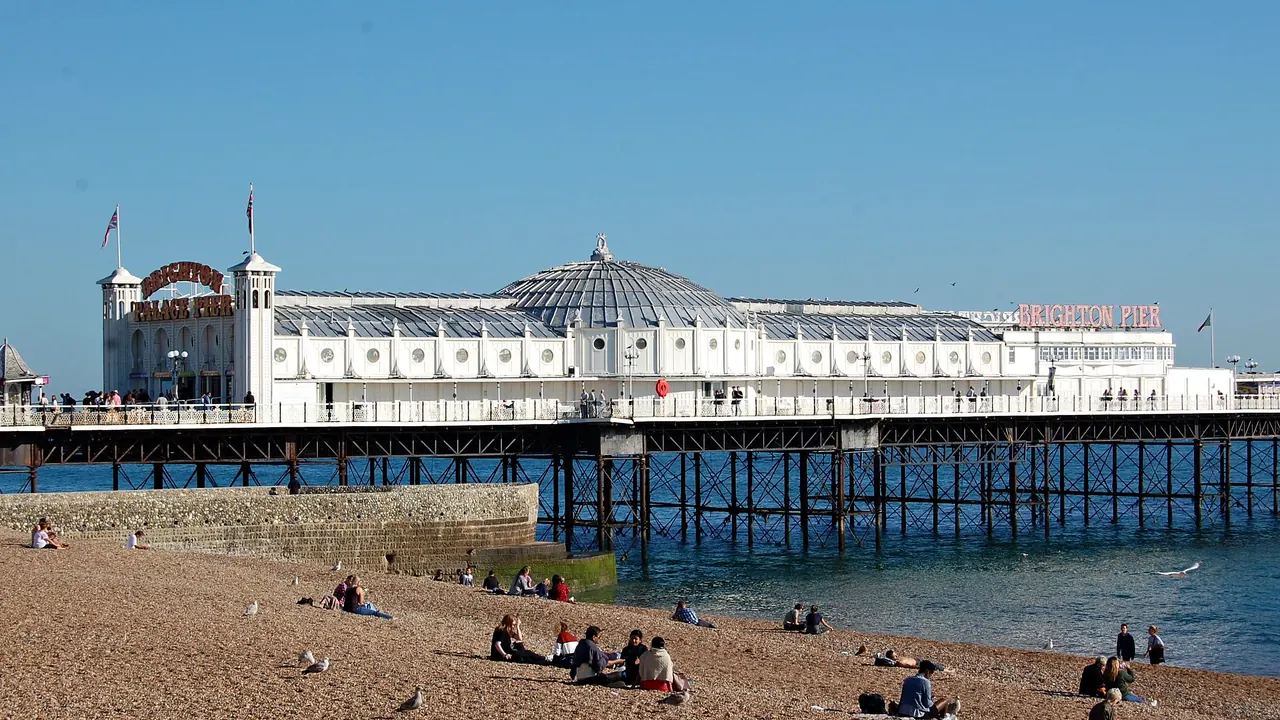
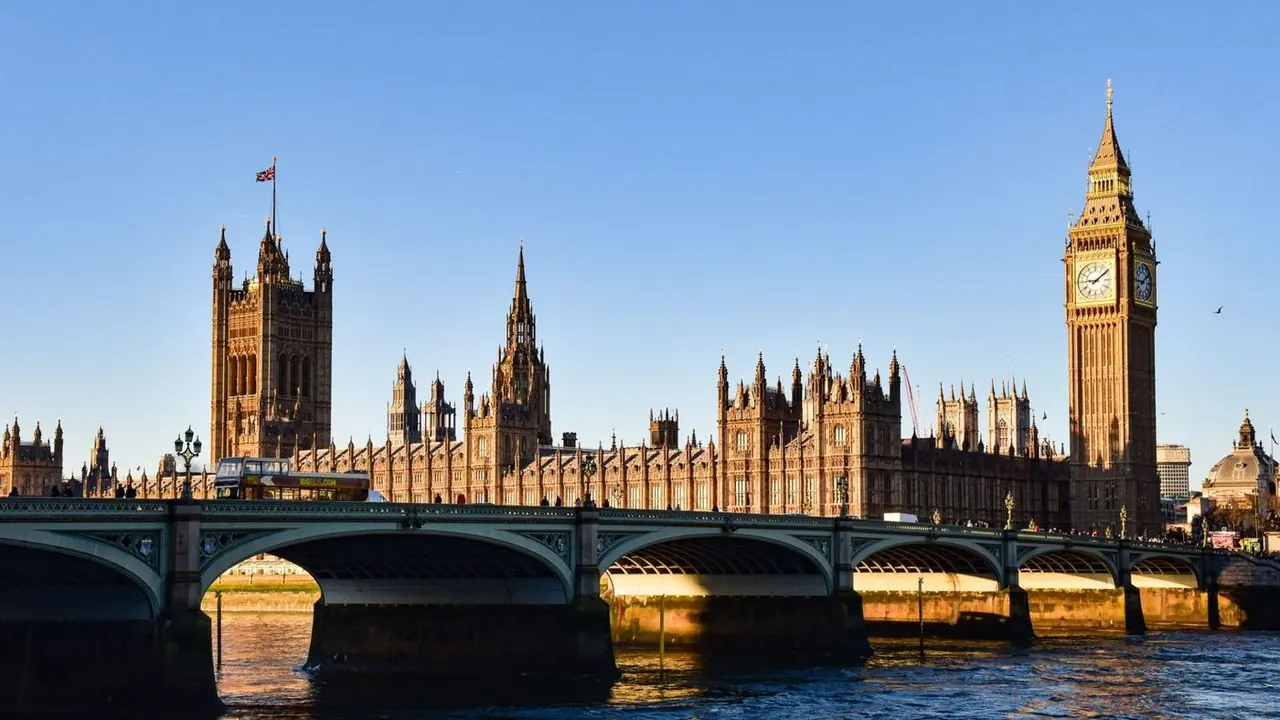
Photos: Brighton by Hassocks5489, CC0; London by AXP Photography, Pexels License.
Brighton or London?
Our verdict in twelve categories, each scored against the same fixed benchmark cities, and the climate month by month, so you can choose for your trip.
Choose Brighton for
- prices
- beaches
- nature and the outdoors
Brighton suits a slower, smaller-scale trip: a long weekend of seafront walks, the oddity of the Royal Pavilion, browsing the North Laine and climbing onto the South Downs, with a night out that stays within walking distance of your bed. It is the better pick if you want the sea in view and open chalk country close by, and it is less punishing on the wallet than the capital.
Choose London for
- culture and sights
- shopping
- live music and the arts
If you want depth, go to London. Its museums, theatres, restaurants and shops are on another scale entirely, the transport network puts half of southern England within a day's reach, and a week there still leaves plenty unseen. You give up the sea and a quiet pace, and you pay more for the room you sleep in.
Scoreboard
Twelve categories on one fixed scale from 0 to 100. The shaded stretch is the gap between the two.
Your match
Pick a travel style or drag the sliders, and both match scores follow your weighting.
Wins on prices and beaches with your weighting.
Wins on culture and sights and shopping with your weighting.
What matters to you?
Category by category
What the scores mean for a trip.
Beaches & swimming
Brighton at least has a seafront to build a summer day around: miles of steep shingle from the Marina to Hove, lifeguards on the central stretch and a Channel cool enough to make a swim bracing. It is a place to sit by the water more than a swimming destination.
London has no shore of its own, and its seaside is Brighton itself, an hour away by train. Its swimming happens in fresh water instead, at the lidos and the Hampstead Heath ponds.
Food & drink
London eats on a different scale. Bangladeshi cooking on Brick Lane, Punjabi food in Southall, Turkish grills in Green Lanes, Borough Market and a large fine-dining scene mean you can eat across the world in a week.
Brighton's strength is narrower but real. Independent kitchens are packed into the North Laine and Kemptown, the city is known for vegetarian food and serious coffee, and Sussex sparkling wine comes from the hills behind town, but the top end is small.
Culture & sights
The Royal Pavilion is a genuine marvel, and Brighton's Regency crescents and the Lanes reward a day or two of wandering. After that the list runs out.
London's runs for weeks. The British Museum, the V&A, both Tates and the National Gallery, mostly free, sit alongside a thousand years of landmarks from the Tower to St Paul's and Greenwich.
Nightlife
Brighton punches above its size, with a student crowd, the long-established LGBTQ+ scene in Kemptown and clubs in the seafront arches, all within a short walk of each other. West Street gets rowdy with stag and hen groups at weekends.
London offers far more choice, but you have to pick a district: Soho for late bars, Shoreditch and Dalston for clubs and warehouse parties, Brixton and Peckham for big venues. Getting between them takes more effort than a Brighton pub crawl.
Nature & outdoors
Brighton has the edge for open country, since the South Downs begin at the city limits and Devil's Dyke is a short bus ride away. The Seven Sisters cliffs are close enough for an easy outing, and the sea adds windsurfing and paddleboarding.
London's green space is mostly inside the city: Richmond Park's deer, the heath above the skyline and Kew. Real hills mean an hour on the train, and the cliffs that are close to Brighton are a long day from the capital.
Day trips
Both make excellent bases. Brighton has Lewes, Arundel, Chichester, Rye and the Sussex vineyards, with London itself an hour up the line.
London's rail hub reaches further and offers more variety: Oxford, Cambridge, Windsor, Bath, Stonehenge and Canterbury are all straightforward days out, and Brighton is one of the options too.
Good for families
Brighton offers the classic seaside day: arcades on the Palace Pier, the old aquarium, Volk's Electric Railway and paddling at Hove Lagoon, all in a compact centre. The cold water and shingle limit beach time.
London simply has more to fill the days, much of it free: the dinosaurs at the Natural History Museum, the Science Museum, the Diana Memorial Playground and the zoo in Regent's Park. The trade-off is long distances and Tube stairs with a buggy.
Getting around
Brighton is mostly a walking town, fifteen minutes downhill from the station to the sea, with a steady climb back and buses for Hove and the Downs.
London covers far more ground, and its Underground, Elizabeth line, buses and riverboats all run on one contactless payment. That gets you almost anywhere without a car, though journeys are longer and rush hour is crowded.
Shopping & style
Brighton is good for quirky browsing: vintage, records and alternative fashion in the North Laine, and jewellers and antiques in the Lanes. There are no luxury streets.
London has everything Brighton lacks and plenty of what it has. Bond Street, Savile Row and the historic department stores sit alongside Spitalfields, Camden and Columbia Road, so a shopping trip has far more range.
Affordability
Neither is cheap, but Brighton is easier on the wallet. Rooms ease off midweek and in winter, and once you are there walking and the free seafront keep the daily spend low.
London's central hotels are among Europe's costliest, and meals and theatre add up fast. The free national museums and the daily fare caps help, but they only soften the bill.
Live music & performing arts
Brighton does well for its size. The Festival and Fringe fill the town every May, there is a deep pub-gig and comedy circuit, and Glyndebourne's opera is nearby in summer.
London is among the world's great stages. You get the West End, the National Theatre and the Globe, the Royal Opera House, five major orchestras and the Proms, with serious choice on any night of the year.
Wellness & relaxation
Neither city is made for rest. Brighton's version is simple and outdoors: a dawn dip with the year-round sea swimmers, a seafront sauna afterwards, and quiet midweek walks past the beach huts on Hove's lawns.
London gives you a little more to book. Historic Turkish baths survive at Ironmonger Row in Islington and in Bayswater, with steam rooms and plunge pools under tiled vaults. The grand hotels of Mayfair run full spas, and Bath's thermal waters are a day trip away.
When should you go?
Pick your month. The climate figures are measured averages, not a forecast.
Brighton in July
London in July
Daytime high, °C
Rainfall in the month, mm
Where the figures come from
Brighton has no rain gauge within 25 km of the centre, so its rainfall comes from a gridded climate dataset read at the city rather than from a gauge further away.
Brighton's sunshine is measured 37 km from the centre, at London Gatwick Airport.
Temperature and rainfall are climate normals, averaged over the years shown. Brighton: 1999-2020 (sunshine 1981-2010, rainfall 1991-2020) normals, Shoreham Airport (10.3 km from centre). London: 1992-2020 (sunshine 1991-2020, rainfall 1991-2020) normals, London Weather Centre (1.3 km from centre).
The two share a mild, damp English climate, but London runs a little warmer in summer, peaking around 23°C in July and August against Brighton's 20°C. Both are comfortable for walking from May to September, and neither is ever too hot for sightseeing. Winters are cool and grey in both, and the sunshine follows the same curve, bright from May to August and scarce in December and January.
Rain is where they differ. Brighton's coast turns wet from October to January, with over 100mm a month in late autumn, while London stays drier all year. For swimming, Brighton's sea is only worth it from July to September, when it reaches about 17°C, so late summer is the clear choice for a seaside trip, and spring or early autumn suits London's streets and parks.
Which traveller are you?
On a culture and arts trip, London is the one to pick. Spend mornings in smaller treasures like the Wallace Collection or Sir John Soane's Museum, and evenings at a Wigmore Hall recital or a play above a pub. Brighton's Pavilion fills an afternoon.
For a shopping trip, London gives you days rather than hours. Work along Marylebone High Street and the lanes of Seven Dials, lose an afternoon in the Charing Cross Road bookshops and keep Saturday for Portobello Road's antiques. Brighton's browsing is done in a day.
On a trip on a tight budget, Brighton stretches the money further. Fill the days with the Undercliff Walk to Rottingdean or a bus out to the South Downs Way, buy lunch at the Open Market on London Road, and save your one ticket for the Royal Pavilion.
Before you go
| Measure | Brighton | London |
|---|---|---|
| Official language | English | English |
| Currency | Pound Sterling (GBP) | Pound Sterling (GBP) |
| Sockets | G230 V, 50 Hz | G230 V, 50 Hz |
| Driving side | Left | Left |
| Time zone | UTC, UTC+1 in summer | UTC, UTC+1 in summer |
| Emergency number | 112 or 999 | 112 or 999 |
| Elevation | 22 m | 4 m |
| Main airport | London Gatwick Airport (LGW)37 km from centre224 non-stop destinations | London Heathrow Airport (LHR)23 km from centre224 non-stop destinations |
| Public holidays this year | 8 days | 8 days |
By the numbers
| Measure | Brighton | London |
|---|---|---|
| City population | 134,293 | 8,799,728 |
| People per km² | 1,624 | 5,598 |
| Museums within 10 km | 11 | 216 |
| UNESCO World Heritage sites within 50 km | 0 | 4 |
| Swim season, months above 21 °C | None | - |
Where else could you go?
Every comparison below shares a destination with this one, so you can follow Brighton or London somewhere new.