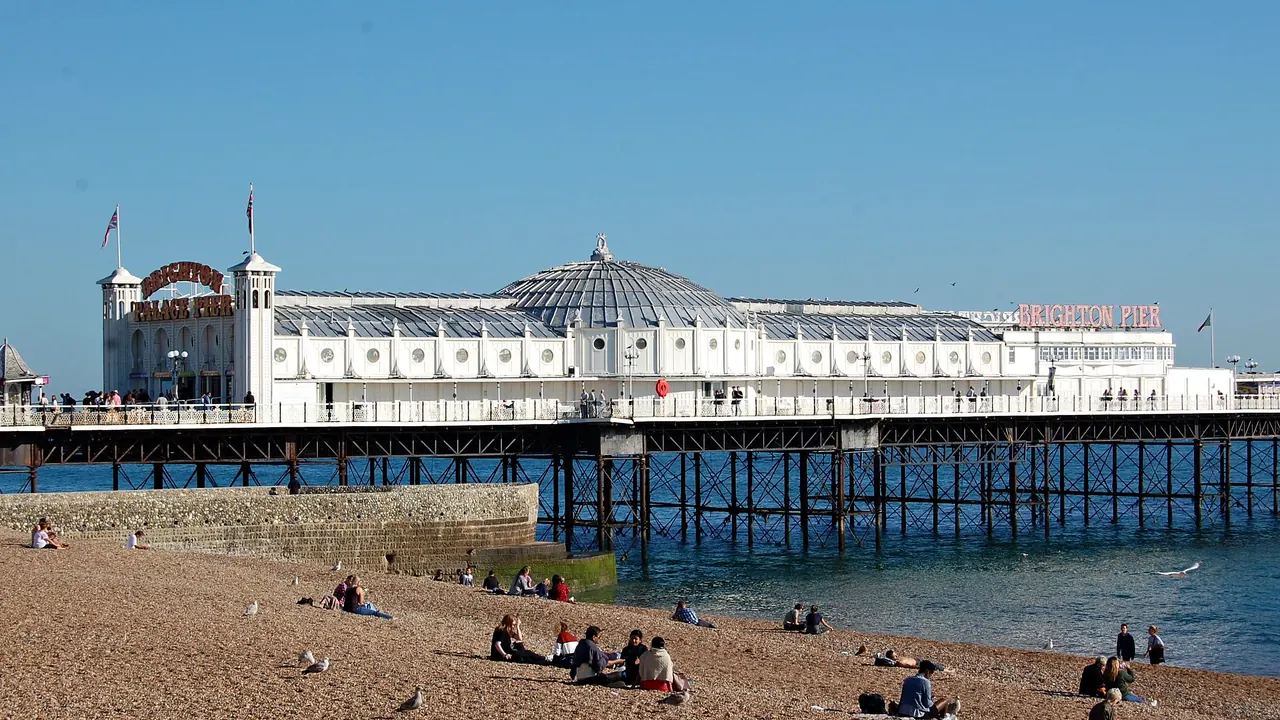
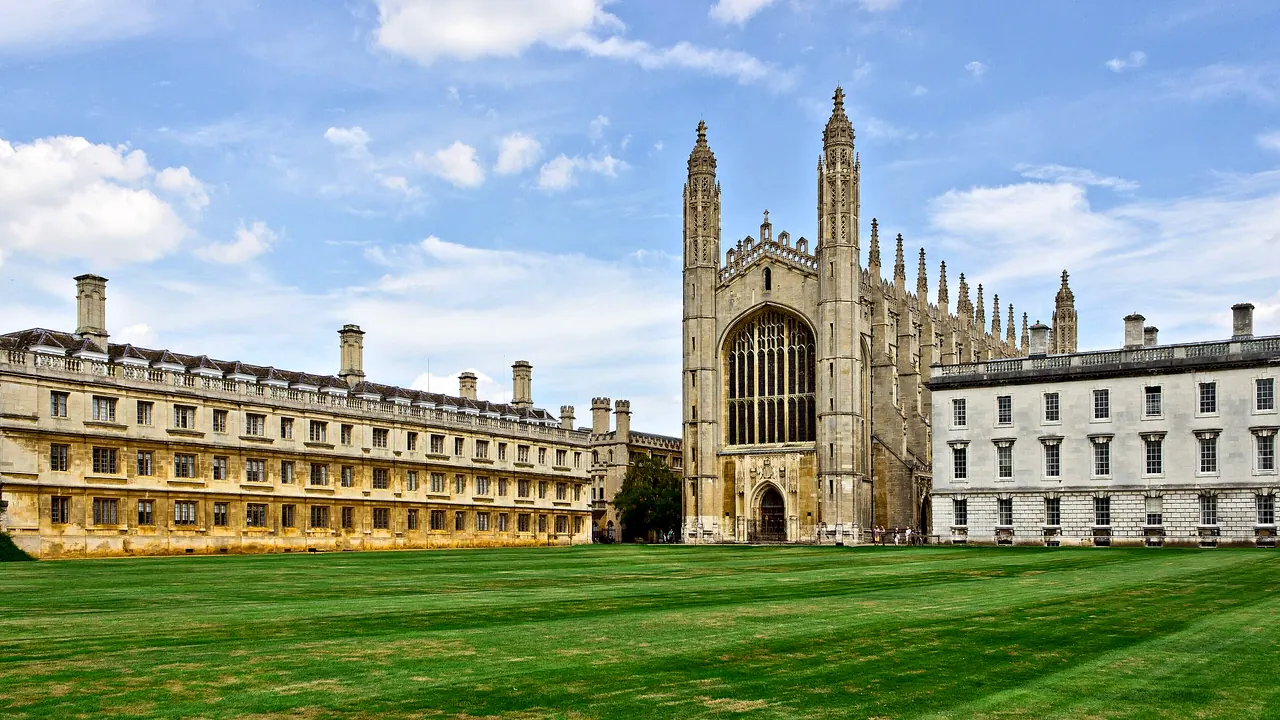
Photos: Brighton by Hassocks5489, CC0; Cambridge by Dmitry Tonkonog, CC BY-SA 3.0, cropped.
Brighton or Cambridge?
Our verdict in twelve categories, each scored against the same fixed benchmark cities, and the climate month by month, so you can choose for your trip.
Choose Brighton for
- nature and the outdoors
- beaches
- nightlife
Brighton suits travellers who want the sea, a night out and open country all close together. You get the shingle seafront, the pubs and clubs of Kemptown and West Street, and the South Downs starting at the edge of town, which makes it the livelier and more outdoor choice. The North Laine is good for vintage clothes and records. It is the better pick for groups of friends, LGBTQ+ travellers and anyone who would rather wander than work through a list of sights.
Choose Cambridge for
- culture and sights
- wellness
Choose Cambridge for a quieter trip built around history and learning. Its college courts, King's College Chapel and the free university museums, with the Fitzwilliam at their head, pack more serious sightseeing into a small area than Brighton can. Evensong and punting set a slower pace for evenings and afternoons. It suits couples, older travellers and anyone happy with an old pub and a walk by the river as a night out.
Scoreboard
Twelve categories on one fixed scale from 0 to 100. The shaded stretch is the gap between the two.
Your match
Pick a travel style or drag the sliders, and both match scores follow your weighting.
Wins on nature and the outdoors and beaches with your weighting.
Wins on culture and sights and wellness with your weighting.
What matters to you?
Category by category
What the scores mean for a trip.
Beaches & swimming
Brighton at least has a beach, and the town is built around it. The shingle seafront runs from the Marina to Hove, with lifeguards in summer. The Channel is cold, better for a quick dip on a calm day than a long swim, and most people use the beach for sitting and watching the sea. Cambridge has no beach at all, and the coast is around an hour and a half away by car.
What Cambridge has instead is fresh water: the 1920s Jesus Green Lido and river swimming at Grantchester Meadows. That is pleasant on a hot afternoon, but anyone who wants the sea to be part of the trip should go to Brighton.
Food & drink
Brighton is the better place to eat. The small independent kitchens of the North Laine, the Lanes and Kemptown have long been strong on vegetarian and vegan cooking, the coffee is taken seriously, and stalls under the seafront arches sell oysters and whelks. Sussex sparkling wine from the Downs turns up on most wine lists.
In Cambridge the setting matters more than the cooking. There are old beamed pubs by the river, tea rooms serving scones, the daily market on Market Hill, and Asian and Mediterranean places along Mill Road. Neither city has a cuisine of its own, but a visitor who cares about food runs out of ideas sooner in Cambridge.
Culture & sights
Cambridge has far more to see. Eight centuries of colleges make up a dense historic centre, including King's College Chapel, Trinity's Great Court and the Wren Library. The Fitzwilliam's art and antiquities head a group of smaller university museums, from the Polar Museum to Kettle's Yard.
Brighton has one sight of that standard, the Royal Pavilion with its Indian domes and chinoiserie rooms. Beyond that come the Regency crescents, the piers and the old alleys of the Lanes, enough for a day or two of looking at buildings. Cambridge gives two or three days of proper sightseeing.
Nightlife
Going out is one of the main reasons people visit Brighton, and the bars are busy every night of the week. Students keep the pubs full, Kemptown is home to one of the oldest LGBTQ+ scenes in Britain, and the clubs in the seafront arches stay open into the small hours. Weekends on West Street get rowdy with stag and hen parties, so Hove and the Level are the calmer choices.
Cambridge is a pub town. Old inns and riverside gardens make for good summer evenings, but the clubs are small, aimed at students and quiet outside term. For a big night, locals take the train to London.
Nature & outdoors
Brighton has real countryside on its doorstep. The chalk hills of the South Downs National Park start at the edge of the city, and Devil's Dyke and the South Downs Way are a short bus ride away. The cliffs of the Seven Sisters and Beachy Head are about forty minutes east, and windsurfing and sailing off the seafront mean you can be out on the water too.
Around Cambridge the outdoors is flat and gentle: punting through the Backs, towpath walks to Grantchester, the commons in the middle of town, and birds and wild ponies at Wicken Fen. It is lovely for an easy afternoon, but not something to plan a walking trip around.
Day trips
Both cities make excellent bases, and London is about an hour away by train from either, so the difference lies in the countryside around them. Brighton's outings are mostly castles and coast: Lewes, Arundel, cobbled Rye, the battlefield at Battle and Portsmouth's Historic Dockyard, plus vineyards on the Downs and gardens in the Weald.
From Cambridge they are mostly cathedrals and old market towns. Ely is fifteen minutes away by train, and Norwich, Peterborough, timber-framed Lavenham, Audley End and the racing town of Newmarket are all within reach. Choose by whether Sussex castles or East Anglian churches appeal more.
Good for families
Brighton offers more classic seaside fun for children: rides and arcades on the Palace Pier, the Victorian aquarium, Volk's Electric Railway along the beach and paddling at Hove Lagoon. On the downside, the beach is cold shingle and the centre gets rowdy late at weekends.
Cambridge is calmer, flat and green, which makes it easy with a pushchair. Punting, the whale skeleton at the Museum of Zoology and the historic aircraft at Duxford are all strong outings. The colleges are quiet, grown-up places, though, and with no seaside the city keeps children busy for fewer days.
Getting around
Both centres are small enough to walk, and in both a car is more trouble than it is worth. Brighton's catch is the hills: the walk down from the station is easy, but the climb back up and the streets of Kemptown are steep. A dense, frequent bus network fills the gaps.
Cambridge is flat and largely pedestrian, and the bicycle is the natural way to get about. The station is a fair walk from the centre and the buses are nothing special. So the choice is between hills with good buses in Brighton and flat streets made for cycling in Cambridge.
Shopping & style
Brighton is the more rewarding place to shop for anything unusual. The narrow streets of the North Laine are full of vintage clothing, record shops, retro furniture and comics, and the jewellers and antique dealers of the Lanes add hours more browsing.
Cambridge's speciality is books, from long-established academic booksellers to second-hand dealers in the lanes. It also has small independents on Trinity Street and Green Street and vintage shops on Mill Road. Neither city has luxury streets, but Brighton gives you more reason to set aside time just for shopping.
Affordability
Neither is a budget destination, but Brighton is a little easier on the wallet. Rooms cost the most on summer weekends and noticeably less midweek and in winter. The beach, the piers and the Downs are free, though a night out on the seafront soon adds up.
Cambridge has fewer hotel rooms, in steady demand from conferences and graduations, so they stay expensive. It makes some of that back with free museums such as the Fitzwilliam and free evensong, and a college room out of term can be the best deal. Entry to the most famous colleges is charged, though.
Live music & performing arts
The two are closely matched but offer very different evenings. Brighton is about festivals and late gigs. The Brighton Festival and Fringe take over the city every May, the Dome and the Theatre Royal have shows all year, small venues offer plenty of music and comedy, and Glyndebourne's opera is close by in summer.
Cambridge's speciality is choral music. During term you can hear evensong sung by the choirs of King's, St John's and Trinity in candlelit chapels. Add student plays and comedy in the Footlights tradition, touring shows at the Arts Theatre and the Corn Exchange, and the long-running Folk Festival each summer.
Wellness & relaxation
Neither city has a spa tradition, but Cambridge is the more restful place to unwind. A punt on the river, a bench in a college garden or the Botanic Garden, and a walk across the meadows to tea in an orchard at Grantchester make slow days easy. Just keep away from King's Parade in the middle of a summer day.
Rest in Brighton depends more on the season. The hardy can join the dawn sea swimmers and warm up in the seafront saunas afterwards, and Hove's lawns and beach huts are peaceful on a quiet midweek day out of season. Summer weekends are anything but calm.
When should you go?
Pick your month. The climate figures are measured averages, not a forecast.
Brighton in July
Cambridge in July
Daytime high, °C
Rainfall in the month, mm
Where the figures come from
Brighton has no rain gauge within 25 km of the centre, so its rainfall comes from a gridded climate dataset read at the city rather than from a gauge further away.
Brighton's sunshine is measured 37 km from the centre, at London Gatwick Airport.
Cambridge's temperatures are measured 59 km from the centre, at Wattisham.
Cambridge has no rain gauge within 25 km of the centre, so its rainfall comes from a gridded climate dataset read at the city rather than from a gauge further away.
Temperature and rainfall are climate normals, averaged over the years shown. Brighton: 1999-2020 (sunshine 1981-2010, rainfall 1991-2020) normals, Shoreham Airport (10.3 km from centre). Cambridge: 1991-2020 normals, Wattisham (58.5 km from centre).
Both cities are at their best from June to September, when Brighton reaches about 20°C and Cambridge is a little warmer at 22°C. Only Brighton has a beach season, and it is short. The Channel is at its coldest in spring and only warms to around 17°C in August and September, so late summer is the time to swim. May and June are sunny in both cities without being as warm as high summer, which makes them good months for walking around.
The real difference through the year is rain. Brighton turns wet from October, and the winter months are its wettest at up to 105mm. Cambridge stays fairly dry all year and never gets much above 60mm in any month. Winters in both are cold, grey and short of sunshine, better for museums and pubs than long walks, but Cambridge's flat, drier streets make it the easier of the two for a winter trip.
Which traveller are you?
For a culture and arts trip, Cambridge is the clear choice. The colleges along the Backs, King's College Chapel and the Fitzwilliam fill two or three full days, and evensong adds music. Brighton has the Royal Pavilion and then mostly streets to wander.
On a food and nightlife trip, Brighton comes out well ahead. You get independent kitchens in the North Laine and Kemptown, oysters from the seafront stalls and clubs open late in the arches. Cambridge's evenings mostly mean a good pub, and its student clubs go quiet outside term.
For an outdoors trip, pick Brighton. The South Downs begin at the edge of the city for walking and mountain biking, the Seven Sisters cliffs are under an hour away, and the sea suits windsurfing. Around Cambridge the Fens are flat, best for cycling and birdwatching.
Before you go
| Measure | Brighton | Cambridge |
|---|---|---|
| Official language | English | English |
| Currency | Pound Sterling (GBP) | Pound Sterling (GBP) |
| Sockets | G230 V, 50 Hz | G230 V, 50 Hz |
| Driving side | Left | Left |
| Time zone | UTC, UTC+1 in summer | UTC, UTC+1 in summer |
| Emergency number | 112 or 999 | 112 or 999 |
| Elevation | 22 m | 6 m |
| Main airport | London Gatwick Airport (LGW)37 km from centre224 non-stop destinations | London Stansted Airport (STN)37 km from centre197 non-stop destinations |
| Public holidays this year | 8 days | 8 days |
By the numbers
| Measure | Brighton | Cambridge |
|---|---|---|
| City population | 134,293 | 123,867 |
| People per km² | 1,624 | 3,043 |
| Museums within 10 km | 11 | 17 |
| UNESCO World Heritage sites within 50 km | 0 | 0 |
| Swim season, months above 21 °C | None | - |
Where else could you go?
Every comparison below shares a destination with this one, so you can follow Brighton or Cambridge somewhere new.
- Londonvs Brighton
- Londonvs Cambridge
- Oxfordvs Cambridge
- Oxfordvs Brighton
- Bathvs Brighton
- Bristolvs Brighton