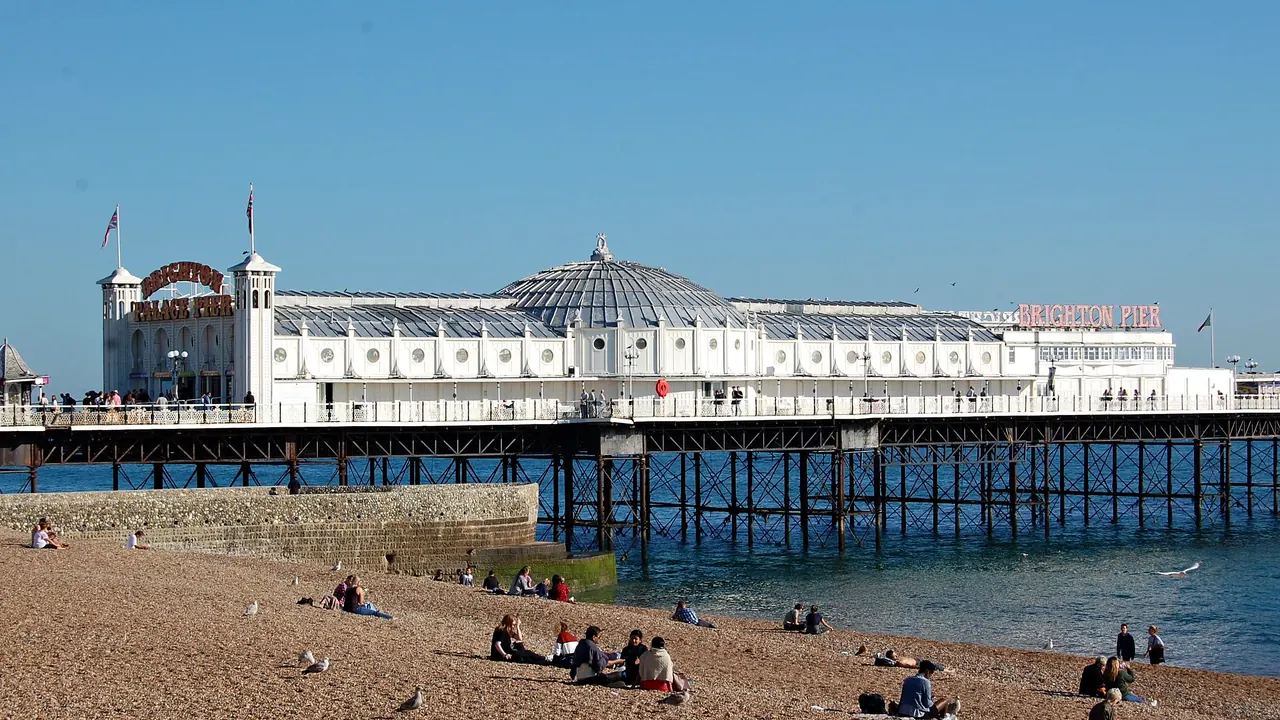
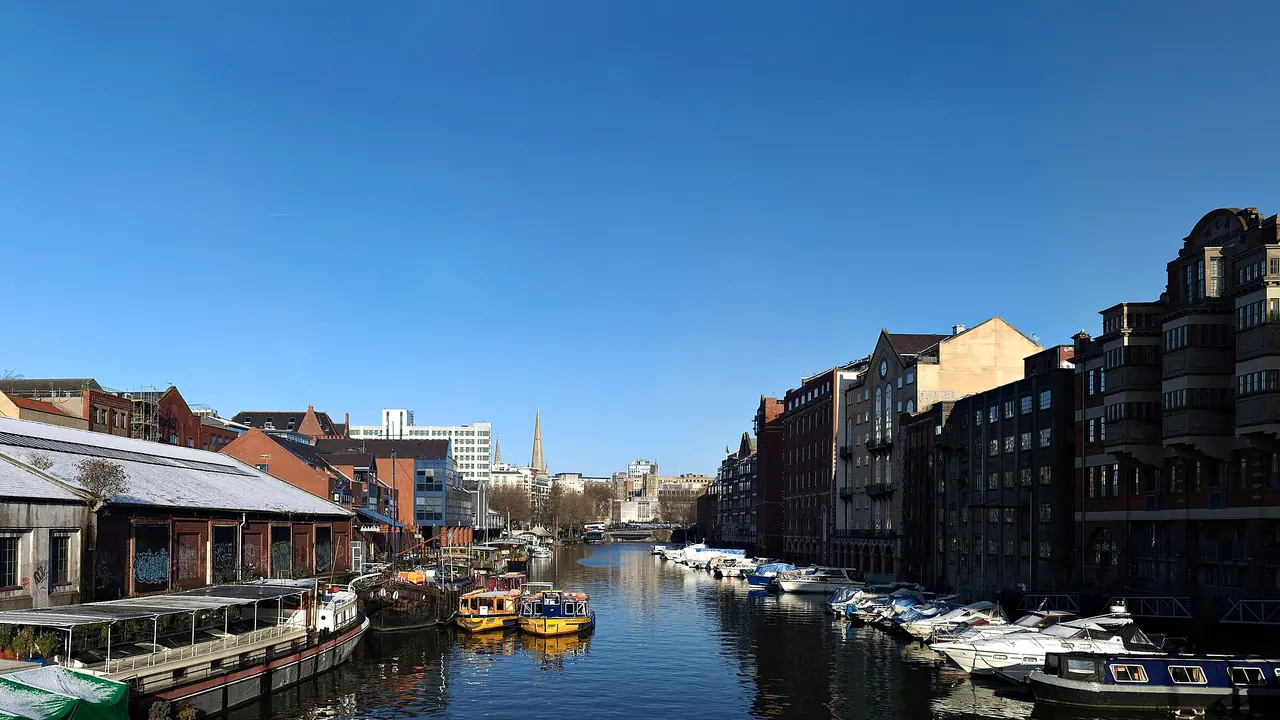
Photos: Brighton by Hassocks5489, CC0; Bristol by NotFromUtrecht, CC BY-SA 3.0, cropped.
Brighton or Bristol?
Our verdict in twelve categories, each scored against the same fixed benchmark cities, and the climate month by month, so you can choose for your trip.
Choose Brighton for
- beaches
- getting around
- shopping
Pick Brighton for a seaside city break done entirely on foot. The station, the Lanes, the Royal Pavilion and the shingle seafront are all a short walk apart, and the sea is there to sit beside, or to swim in on a calm late-summer day. It suits couples and friends who want the pier, the odd little shops of the North Laine and nights out in Kemptown, with the South Downs and London both a short train ride away.
Choose Bristol for
- wellness
- culture and sights
- prices
Bristol makes more sense if the beach doesn't matter and you'd rather have an old port city of engineering and street art: Brunel's ship and bridge, the terraces of Clifton and a club scene with a sound of its own. It is also the better base for slower, restful days, with the Clifton lido close by and Bath's hot springs a quarter of an hour away by train, though outside the hilly centre you rely on slow buses.
Scoreboard
Twelve categories on one fixed scale from 0 to 100. The shaded stretch is the gap between the two.
Your match
Pick a travel style or drag the sliders, and both match scores follow your weighting.
Wins on beaches and getting around with your weighting.
Wins on wellness and culture and sights with your weighting.
What matters to you?
Category by category
What the scores mean for a trip.
Beaches & swimming
Neither city is a beach destination, but only Brighton has a beach in town at all. Steep shingle runs the whole seafront, lifeguards cover the central stretches in season, and the Channel is cool but swimmable on calm late-summer days.
Bristol sits on the silt-brown Severn estuary, where the huge tides mean that even a swim at Weston-super-Mare's sands has to be timed with care. The best water nearby is the old marine lake at Clevedon. For proper beaches you need a long drive to Devon, Cornwall or Gower.
Food & drink
The two eat about equally well, and both rely on small independent kitchens rather than a cuisine of their own. Brighton's strengths are its long reputation for vegetarian and vegan cooking, the cafés and roasteries of the North Laine, seafood stalls under the seafront arches and Sussex sparkling wine.
Bristol is more of a market and street-food city, built around the covered stalls of St Nicholas Market and the container kitchens on the harbourside. Its drinking is more local: West Country cider, from farmhouse scrumpy to old cider houses, and craft taprooms in former warehouses.
Culture & sights
Each city fills two days rather than a week, but the sights are different in kind. Brighton has one great showpiece, the Royal Pavilion, George IV's palace with Indian domes. The rest of the pleasure is in Regency crescents, the two piers and wandering the Lanes.
Bristol's sights tell a weightier story of trade and engineering: the SS Great Britain in its dry dock, the Clifton Suspension Bridge over the Avon Gorge, the Gothic church of St Mary Redcliffe and M Shed's account of the city's part in the slave trade. Banksy's early street art adds a modern layer.
Nightlife
Nights out are a main reason to visit either city, but the flavour differs. Brighton's centre of gravity is Kemptown, one of Britain's oldest and largest LGBTQ+ scenes, together with West Street and the clubs in the seafront arches. Stag and hen groups make weekends rowdy.
Bristol's nightlife is rooted in music: the sound-system culture behind trip hop, drum and bass and dubstep, played in warehouses and railway arches around Temple Meads and on a boat moored in the harbour. Stokes Croft gives the city a scruffier, more creative edge.
Nature & outdoors
Both have gentle green country close by rather than wild scenery. Brighton backs straight onto the chalk grassland of the South Downs, the Seven Sisters and Beachy Head are the most dramatic coast in southern England, and the sea adds windsurfing and paddleboarding.
Bristol brings the outdoors into the city itself. Climbers use the Avon Gorge cliffs, Ashton Court has mountain-bike trails and the old railway path runs traffic-free to Bath. Further out, Cheddar Gorge offers caving, and Exmoor and the Brecon Beacons have upland walking within about two hours.
Day trips
London, about an hour away by fast train, is the trump card of a Brighton stay. Lewes is only a quarter of an hour by train, and the rest of Sussex adds the castle and cathedral at Arundel, Chichester with the Roman palace at Fishbourne, and the medieval towns of Rye and Winchelsea further east.
Bristol is just as well placed. Bath is a quarter of an hour away by train and Cardiff is under an hour across the Severn. There is also a run of ancient and sacred places: Wells, Glastonbury, Stonehenge and Avebury. The Cotswold villages are about an hour's drive east.
Good for families
Brighton is the place for a traditional seaside day with children: pier rides and arcades, the Victorian aquarium, Volk's Electric Railway along the beach and paddling at Hove Lagoon. The shingle, though, is no good for sandcastles.
Bristol is the stronger pick when it rains, with the hands-on science centre and planetarium on the harbourside, the SS Great Britain and the little ferries between them. A spacious wildlife park sits on the city's edge. Expect steep slopes with a pushchair in either city.
Getting around
Brighton is the easier city to get around. The station, the North Laine, the Lanes, the Pavilion and the seafront are all a short walk apart, frequent buses reach Hove and the edge of the Downs, and the flat promenade is good for cycling. The main effort is the climb back up to the station.
Bristol's core is walkable too, and the harbour ferries are a pleasure. The climb to Clifton is punishing, though, and with no tram or metro, anything further out depends on buses that get stuck in traffic.
Shopping & style
Neither city offers luxury shopping, and both are best for independent shops. Brighton makes the more concentrated browse, with the North Laine's tight grid of vintage, records, comics and alternative fashion and the jewellers and antique dealers of the Lanes.
Bristol has more mainstream shopping in Cabot Circus and Broadmead, including department stores that Brighton lacks. Its independents are spread out, along Gloucester Road and in Clifton's Georgian arcades.
Affordability
Both are expensive by British standards and cost about the same. In Brighton, the room is the big expense, especially on summer weekends, while the beach, the piers and the Downs cost nothing.
Bristol's prices climb at weekends and during events in the same way, but most of its main museums and churches are free and market stalls give cheaper meals. In either city, staying midweek saves the most.
Live music & performing arts
Brighton's year peaks in May, when the Brighton Festival and England's largest fringe take over its theatres, churches and pubs for weeks. In summer, Glyndebourne's country-house opera is about twenty minutes away.
Bristol spreads its programme more evenly through the year. The Georgian Bristol Old Vic is the oldest continuously working theatre in the English-speaking world, the Tobacco Factory stages Shakespeare, and small venues host bands, jazz and electronic acts most nights.
Wellness & relaxation
Bristol is the better choice for a restful stay, mostly because of Bath, a quarter of an hour away by train, where you can bathe in Britain's only natural hot springs on a rooftop. Closer at hand, the heated Victorian lido in Clifton fills a quiet half day.
Brighton has no bathing tradition beyond its dawn sea swimmers and seafront saunas, and its calm depends on the season. Think midweek walks past Hove's beach huts out of season, or a retreat to the villages of the Downs.
When should you go?
Pick your month. The climate figures are measured averages, not a forecast.
Brighton in July
Bristol in July
Daytime high, °C
Rainfall in the month, mm
Where the figures come from
Brighton has no rain gauge within 25 km of the centre, so its rainfall comes from a gridded climate dataset read at the city rather than from a gauge further away.
Brighton's sunshine is measured 37 km from the centre, at London Gatwick Airport.
Bristol's station stands 178 m above the city centre, so the centre is likely a little warmer than the figures say.
Bristol has no rain gauge within 25 km of the centre, so its rainfall comes from a gridded climate dataset read at the city rather than from a gauge further away.
Bristol's sunshine is measured 43 km from the centre, at Lyneham.
Temperature and rainfall are climate normals, averaged over the years shown. Brighton: 1999-2020 (sunshine 1981-2010, rainfall 1991-2020) normals, Shoreham Airport (10.3 km from centre). Bristol: 1991-2020 normals, Lulsgate Bottom (11.8 km from centre).
Both cities have the mild, changeable English climate, so late May to September suits either, with highs of around 20°C in July and August. Brighton is the drier of the two through spring and summer, which matters for a seafront town. The Channel is at its warmest in August and September, at about 17°C, which is just enough for a brisk swim. Bristol's summers are damper, with about 79mm of rain in August against Brighton's 61mm. Its estuary water is not for swimming whatever the temperature.
From October both turn wet, grey and short of sunshine, and Brighton's rain peaks at about 105mm in December. Winter days in either city are cool enough to favour museums, pubs and cafés over long walks. If you're coming outside summer, spring is the better choice, as it is noticeably drier than autumn in both places.
Which traveller are you?
On a beach and sun trip, Brighton is the only real option of the two. Its shingle seafront runs the length of the town, and the Channel is swimmable on calm summer days, while Bristol's muddy estuary offers no beach life at all.
For a relaxing and wellness trip, Bristol is the better choice. Britain's only natural hot springs are in Bath, a short train ride away, and Clifton has a heated Victorian lido. Brighton has little beyond hotel spas and its hardy dawn sea swimmers.
For a short city break, Brighton fits more into two days on foot: the Royal Pavilion and the North Laine's shops, the Palace Pier at dusk, then a night out in Kemptown. In Bristol, the hills and slow buses eat into a brief stay.
Before you go
| Measure | Brighton | Bristol |
|---|---|---|
| Official language | English | English |
| Currency | Pound Sterling (GBP) | Pound Sterling (GBP) |
| Sockets | G230 V, 50 Hz | G230 V, 50 Hz |
| Driving side | Left | Left |
| Time zone | UTC, UTC+1 in summer | UTC, UTC+1 in summer |
| Emergency number | 112 or 999 | 112 or 999 |
| Elevation | 22 m | 11 m |
| Main airport | London Gatwick Airport (LGW)37 km from centre224 non-stop destinations | Bristol Airport (BRS)11 km from centre117 non-stop destinations |
| Public holidays this year | 8 days | 8 days |
By the numbers
| Measure | Brighton | Bristol |
|---|---|---|
| City population | 134,293 | 472,465 |
| People per km² | 1,624 | 4,311 |
| Museums within 10 km | 11 | 23 |
| UNESCO World Heritage sites within 50 km | 0 | 3 |
| Swim season, months above 21 °C | None | None |
Where else could you go?
Every comparison below shares a destination with this one, so you can follow Brighton or Bristol somewhere new.
- Bathvs Bristol
- Cardiffvs Bristol
- Londonvs Brighton
- Oxfordvs Bristol
- Oxfordvs Brighton
- Cambridgevs Brighton