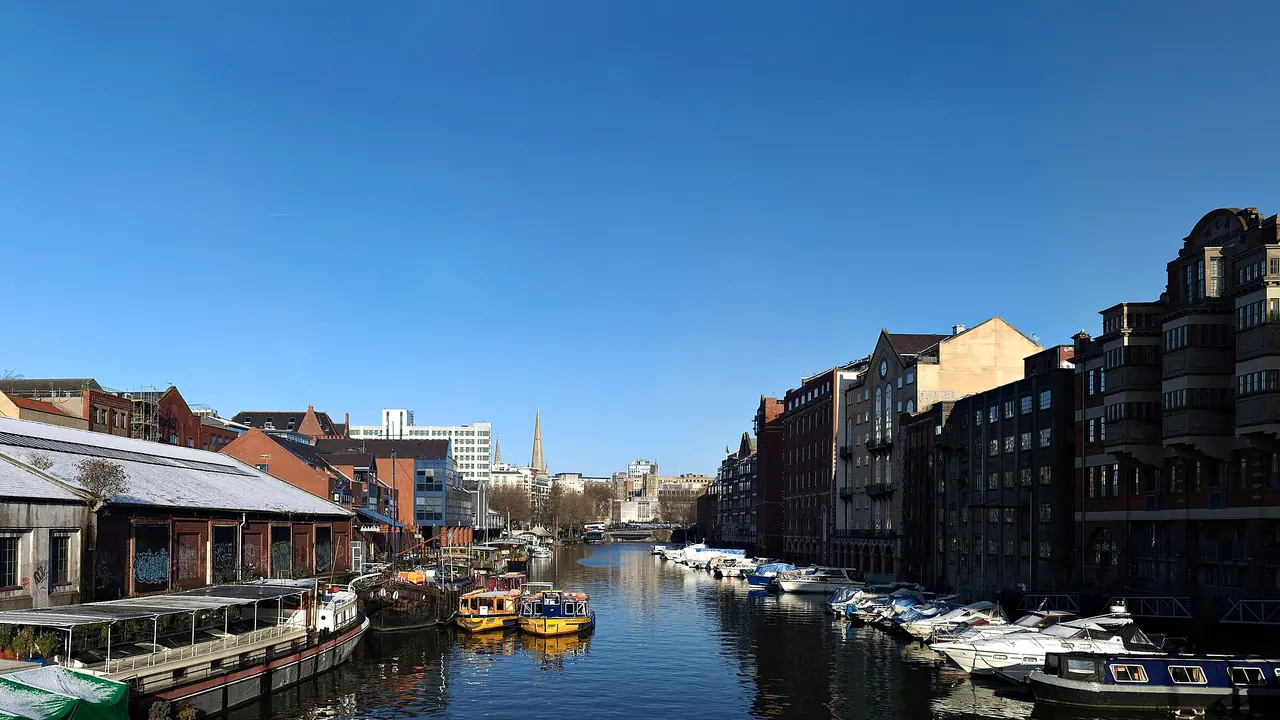
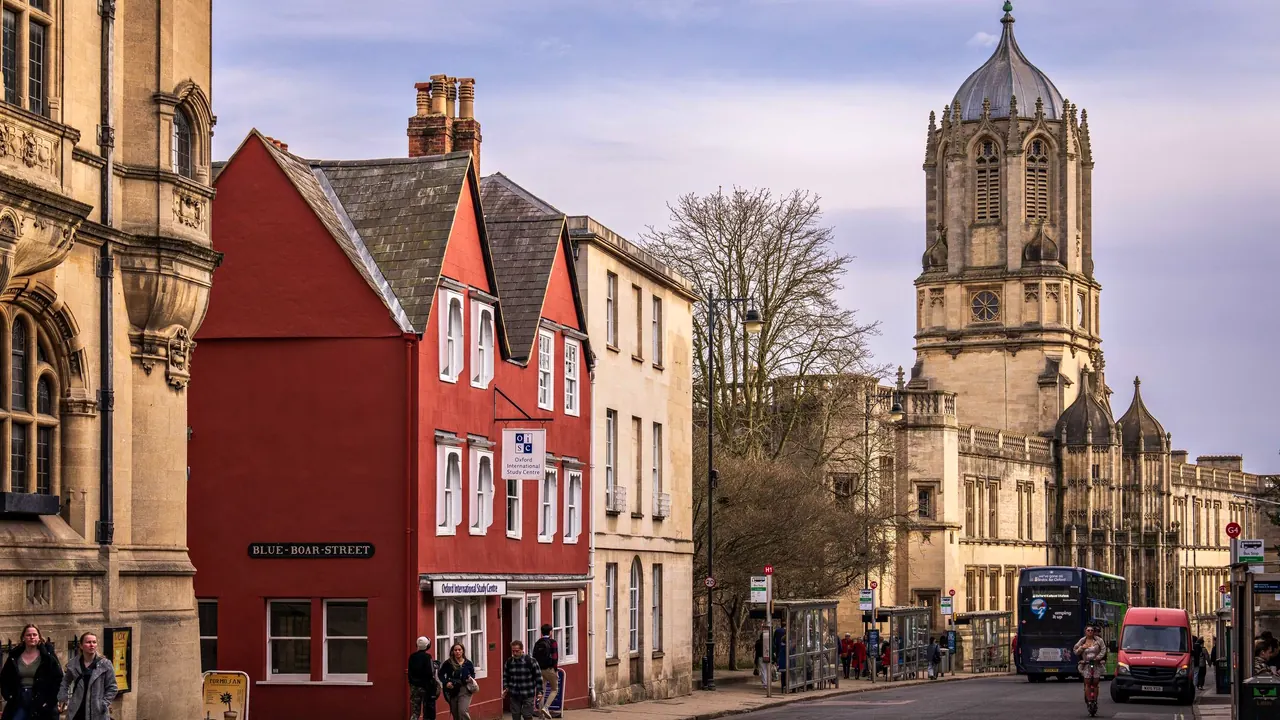
Photos: Bristol by NotFromUtrecht, CC BY-SA 3.0, cropped; Oxford by Mark Stebnicki, Pexels License.
Bristol or Oxford?
Our verdict in twelve categories, each scored against the same fixed benchmark cities, and the climate month by month, so you can choose for your trip.
Choose Bristol for
- nightlife
- food and drink
- nature and the outdoors
Bristol suits travellers who want a city with some life in it after dark and a lot of countryside within reach. Its club and live music culture, its independent food streets and its cider and craft beer give evenings real substance. The Avon Gorge, Ashton Court and the Bath railway path bring the outdoors almost to the centre, and it handles children well too. You will be climbing hills and taking buses, but the city feels lived in rather than looked at.
Choose Oxford for
- getting around
- culture and sights
- day trips
Oxford is the better choice when the sights are the point of the trip. Its colleges, libraries and museums sit within a few flat streets you can cross on foot, and Evensong in a college chapel is unlike anything Bristol offers. Blenheim, the Cotswolds and London are all easy outings. Evenings are quieter and mostly spent in pubs, and rooms cost more, so it rewards a focused stay built around history and learning.
Scoreboard
Twelve categories on one fixed scale from 0 to 100. The shaded stretch is the gap between the two.
Your match
Pick a travel style or drag the sliders, and both match scores follow your weighting.
Wins on nightlife and food and drink with your weighting.
Wins on getting around and culture and sights with your weighting.
What matters to you?
Category by category
What the scores mean for a trip.
Beaches & swimming
Neither city is a beach destination, and the difference is in the kind of water rather than its quality. Bristol looks out on the muddy, silty Severn estuary, where the huge tides make Weston-super-Mare's sands tricky for swimming, so cold-water dips happen in tidal pools such as Clevedon's marine lake.
Oxford is inland, so its swimming is in rivers: grassy stretches of the Thames by Port Meadow and the Cherwell, plus the open-air pool at Hinksey. For proper sand, both mean a long drive to the coast.
Food & drink
Bristol is the more rewarding place to eat. St Nicholas Market, the harbourside container kitchens and the bakeries and roasters along Gloucester Road, Stokes Croft and North Street give it real range, and West Country cider and warehouse taprooms make drinking a draw in itself.
Oxford's strength is narrower: beamed taverns, riverside pubs and a Sunday roast by the Thames, with the Covered Market for lunch. Cowley Road and Jericho add variety, but much of the centre caters to day visitors and students.
Culture & sights
Oxford is the stronger sightseeing city by some way. Its college quads, chapels and libraries in honey-coloured stone are still in daily use and packed into a few streets, and the Ashmolean, Pitt Rivers and Natural History Museum are far better than a city its size usually manages.
Bristol's appeal is industrial and maritime: Brunel's SS Great Britain and Suspension Bridge, the Georgian crescents of Clifton, St Mary Redcliffe and the M Shed's honest account of the port's past. Banksy's street art in Stokes Croft and Bedminster gives it a contemporary edge Oxford lacks.
Nightlife
Bristol is far the better city for a night out. It has long been a major centre of the sound-system culture behind trip hop, drum and bass and dubstep, and that heritage still shapes its clubs in old warehouses and railway arches around Temple Meads and on a boat moored in the harbour. Stokes Croft has scruffier, more creative late bars, Whiteladies Road and Clifton are smarter, and the students keep it busy all year.
Oxford's evenings revolve around historic pubs and, in summer, drinks by the river. Cowley Road has its few late bars and small clubs, and Jericho has its quieter cocktail and wine bars. Everything follows the university calendar, so the city thins out over the long summer vacation and the centre is usually calm by midnight.
Nature & outdoors
Bristol has more to offer outdoors, and it is more varied. The Downs, the climbable limestone cliffs of the Avon Gorge, Leigh Woods and the mountain-bike trails at Ashton Court sit on the city's doorstep, with Cheddar Gorge, the Wye Valley and eventually the Brecon Beacons and Exmoor for real hill walking.
Oxford's green space is flatter and gentler: Port Meadow with its grazing horses, the University Parks and riverside paths ideal for punting or an easy cycle. The Cotswolds, Chilterns and Ridgeway give long, mild walks rather than anything rugged.
Day trips
Both are excellent bases, and Oxford edges it thanks to range. Blenheim Palace is twenty minutes away, the classic Cotswold villages are within an hour, and London's museums are an easy train ride, with Stratford, Warwick and Windsor all reachable in a day.
Bristol's trump card is Bath, a quarter of an hour by train, plus Wells, Glastonbury and Cardiff across the Severn. Stonehenge and Avebury suit either base, but from Bristol you lean towards Wales and Somerset, while Oxford points towards London and the Midlands.
Good for families
Bristol has more to keep children busy within the city. The SS Great Britain, the We The Curious science centre with its planetarium and the aquarium sit side by side on the harbour, linked by little ferries, and there is a spacious wildlife park on the northern edge. The steep hills are hard work with a pushchair, though.
Oxford is small, safe and flat, and its free dinosaur and curiosity museums are a hit, as is a punt on the Cherwell or spotting Harry Potter locations. Beyond those, most family outings, such as the Cotswold Wildlife Park or Blenheim's maze, need a trip out of town.
Getting around
Oxford is much easier to get around. Its centre is flat, partly closed to through traffic and crossed on foot in twenty minutes, the station is a short walk away, and bikes and frequent buses cover the rest. Drivers are better off at the park-and-ride.
Bristol's core around the harbour and old city is walkable, and the yellow harbour ferries are a pleasant way to move along the water. Clifton means a steep climb, though, and with no tram or metro, getting further out depends on buses that stall in traffic.
Shopping & style
The two are broadly level, with mainstream chains in the centre and character found off to the side. Bristol's independent streak runs along Gloucester Road's record shops and vintage stores, Park Street's boutiques and Clifton Village's Georgian arcades.
Oxford's specialities are bookish: Blackwell's on Broad Street, antique map and print dealers and university-branded clothing. It also has the luxury outlet village near Bicester twenty minutes away, which Bristol has nothing to match.
Affordability
Neither is cheap, but Bristol is easier on the budget. Its hotels are moderately priced on weekdays, and street food and market stalls keep meals reasonable, so it is manageable for careful travellers.
Oxford has few central rooms and steady demand from university events, so many visitors stay out by the ring road or come in from London. Both cities have free main museums, but Oxford's college entry fees and library tours add up over a longer stay.
Live music & performing arts
The two are evenly matched, but they offer very different evenings. Bristol is the place for live bands, jazz and electronic acts in small venues most nights, with theatre at the Georgian Bristol Old Vic and fringe Shakespeare at the Tobacco Factory.
Oxford's great draw is choral: Evensong sung by the world-famous choirs of Christ Church, Magdalen and New College, plus concerts in the Sheldonian and the historic Holywell Music Room. Its theatre and rock gigs are modest by comparison.
Wellness & relaxation
Bristol has the stronger hand here, largely because of what lies nearby. Bath's thermal spa, Britain's only natural hot springs, is a short train ride away, and Clifton's heated Victorian lido with its spa makes a restful half day in the city itself.
Oxford has little in the way of treatments, and its calm comes from places rather than pampering: the Botanic Garden, Addison's Walk, Magdalen's deer park and a slow punt. It is the quieter city, but not a restorative break.
When should you go?
Pick your month. The climate figures are measured averages, not a forecast.
Bristol in July
Oxford in July
Daytime high, °C
Rainfall in the month, mm
Where the figures come from
Bristol's station stands 178 m above the city centre, so the centre is likely a little warmer than the figures say.
Bristol has no rain gauge within 25 km of the centre, so its rainfall comes from a gridded climate dataset read at the city rather than from a gauge further away.
Bristol's sunshine is measured 43 km from the centre, at Lyneham.
Oxford's temperatures are measured 37 km from the centre, at Fairford Royal Air Force Base.
Oxford has no rain gauge within 25 km of the centre, so its rainfall comes from a gridded climate dataset read at the city rather than from a gauge further away.
Oxford's sunshine is measured 57 km from the centre, at Lyneham.
Temperature and rainfall are climate normals, averaged over the years shown. Bristol: 1991-2020 normals, Lulsgate Bottom (11.8 km from centre). Oxford: 1961-1990 (sunshine 1991-2020, rainfall 1991-2020) normals, Fairford Royal Air Force Base (37 km from centre).
Both cities share the same mild English pattern, with the same amount of sunshine month by month, so the best time for either is late May to September, when the days are long and comfortable for walking. Oxford gets a little warmer in high summer, reaching about 22°C in July against Bristol's 20°C, and its winters are colder, while Bristol stays a degree or two milder from December to February. Neither is ever too hot for exploring on foot.
Rain is the bigger difference. Bristol is noticeably wetter all year, and from October to December it turns properly damp, at around 97mm in November, so an autumn visit means packing for showers. Oxford is drier in every month, which makes it the safer bet for a spring or autumn trip. Bristol's estuary only warms to about 18°C in late summer, enough for a bracing dip in a tidal pool and not much more.
Which traveller are you?
For a food and nightlife trip, Bristol is the clear pick. It has market stalls, harbourside container kitchens, cider houses and taprooms, then warehouse clubs and late bars with a sound-system heritage of their own. Oxford's evenings mostly end quietly in a pub.
On a culture and arts trip, Oxford comes out ahead. Medieval quadrangles, the Bodleian, the Radcliffe Camera and the Ashmolean are all close together, and choral Evensong adds a live experience Bristol cannot match, for all its Brunel and Georgian Clifton.
On a family trip with children, Bristol offers more. The SS Great Britain, the We The Curious science centre, the aquarium and harbour ferries sit close together, with a wildlife park nearby. Oxford's free natural history museum charms, but much else needs a drive.
Before you go
| Measure | Bristol | Oxford |
|---|---|---|
| Official language | English | English |
| Currency | Pound Sterling (GBP) | Pound Sterling (GBP) |
| Sockets | G230 V, 50 Hz | G230 V, 50 Hz |
| Driving side | Left | Left |
| Time zone | UTC, UTC+1 in summer | UTC, UTC+1 in summer |
| Emergency number | 112 or 999 | 112 or 999 |
| Elevation | 11 m | 73 m |
| Main airport | Bristol Airport (BRS)11 km from centre117 non-stop destinations | London Heathrow Airport (LHR)63 km from centre224 non-stop destinations |
| Public holidays this year | 8 days | 8 days |
By the numbers
| Measure | Bristol | Oxford |
|---|---|---|
| City population | 472,465 | 147,500 |
| People per km² | 4,311 | 3,235 |
| Museums within 10 km | 23 | 11 |
| UNESCO World Heritage sites within 50 km | 3 | 1 |
| Swim season, months above 21 °C | None | - |
Where else could you go?
Every comparison below shares a destination with this one, so you can follow Bristol or Oxford somewhere new.