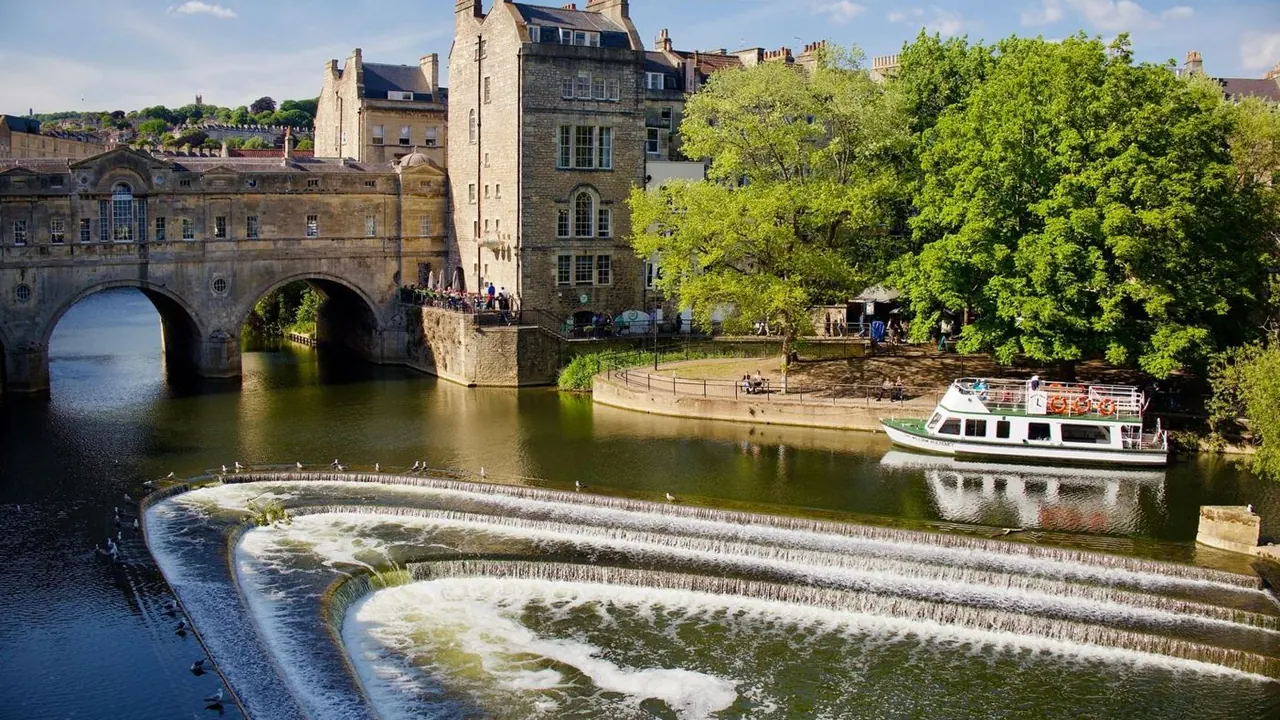
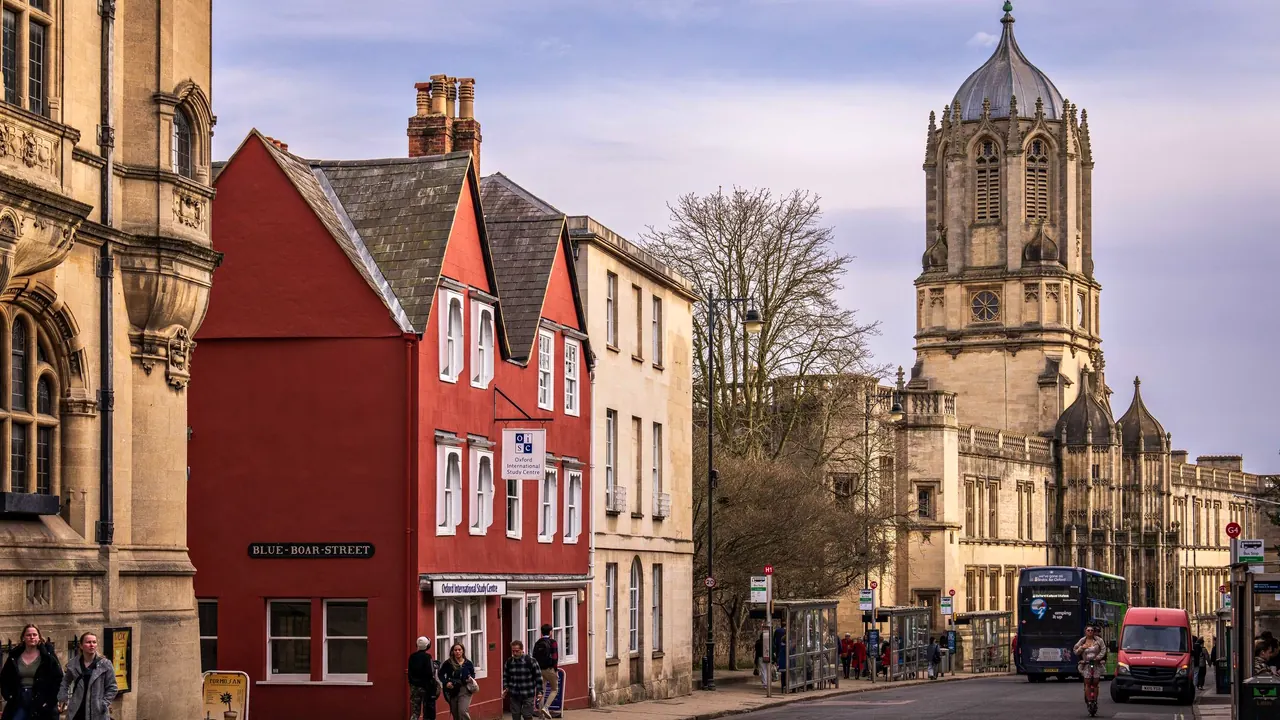
Photos: Bath by Lucas Carlini, Pexels License; Oxford by Mark Stebnicki, Pexels License.
Bath or Oxford?
Our verdict in twelve categories, each scored against the same fixed benchmark cities, and the climate month by month, so you can choose for your trip.
Choose Bath for
- wellness
- nature and the outdoors
- food and drink
Bath suits the traveller who wants to slow down. Its hot springs give it a spa culture no other British city has, with a rooftop pool over the Abbey and tea in the Pump Room, and steep green hills rise straight from the Georgian streets for walks along ridges and canal towpaths. Choose it for a restful few days of soaking, strolling and countryside.
Choose Oxford for
- live music and the arts
- nightlife
- day trips
Oxford is the better pick for a mind kept busy. The working colleges, the Ashmolean and the Pitt Rivers make for full days of sightseeing, and evenings bring choral Evensong in candlelit chapels, which Bath cannot match. With London an hour away by train and Blenheim just up the road, it also works well as a base for outings.
Scoreboard
Twelve categories on one fixed scale from 0 to 100. The shaded stretch is the gap between the two.
Your match
Pick a travel style or drag the sliders, and both match scores follow your weighting.
Too close to call, 2 points apart
Wins on wellness and nature and the outdoors with your weighting.
Wins on live music and the arts and nightlife with your weighting.
What matters to you?
Category by category
What the scores mean for a trip.
Beaches & swimming
Neither city is a beach destination, and both are a long way from good sand. Bath's nearest coast is the muddy, tidal Bristol Channel at Weston-super-Mare, about an hour away, while Oxford is even further from the sea.
For a summer dip, the two offer different kinds of fresh water. In Bath it means the Avon at a weir east of town. In Oxford it means the Thames at Port Meadow, the Cherwell, or the large open-air pool at Hinksey, which is the easier option if you just want to swim.
Food & drink
The two eat about equally well but in different ways. Bath has more local identity: West Country cheese and cider, its own buns and biscuits, afternoon tea in Georgian tearooms and a farmers' market in the old Green Park station. It has very little food from other cuisines.
Oxford is less distinctive but offers more range. Low-beamed pubs and a Sunday roast by the Thames are the classic meal, the historic Covered Market is good for lunch, and Cowley Road brings cheap Middle Eastern, South Asian and Caribbean cooking that Bath lacks.
Culture & sights
These are two honey-stone cities with two different pasts. Bath is an eighteenth-century stage set laid over a Roman one: the Royal Crescent, the Circus and Pulteney Bridge above, and the steaming Roman Baths and the Abbey below. It is a city you take in as a whole townscape.
Oxford's appeal is medieval and still at work: college quads, chapels and libraries such as the Bodleian and Radcliffe Camera, all in daily use. Its museums give it a slight edge, as the Ashmolean, the Pitt Rivers and the Gothic Natural History Museum are broader than anything Bath has.
Nightlife
Both cities go out to the pub and are quiet by midnight. Bath's evenings are coaching inns and real-ale houses on Walcot Street, busier on weekends with groups from nearby towns, and Bristol is fifteen minutes away for a proper night out.
Oxford has a little more of its own. Summer evenings at riverside pubs, late bars on Cowley Road and relaxed cocktail bars in Jericho give it some choice, though the whole scene dips once students leave for the summer.
Nature & outdoors
Bath has the better outdoors on its doorstep. It sits in a bowl of steep hills, so the Bath Skyline ridge walk, the Kennet and Avon towpath through the Limpley Stoke valley and the Two Tunnels cycle route all start from town, with the Mendips, Cheddar Gorge and its caves within an hour.
Oxford's countryside is flatter and tamer: grazed Port Meadow, Christ Church Meadow and level paths along the Thames and Cherwell, with punting as the signature pastime. The Chilterns and the Ridgeway are further out for longer walks.
Day trips
Both make excellent bases. What differs is the country around them. Bath opens onto the ancient and churchly West Country: the stone circles of Stonehenge and Avebury, the cathedral and moated palace at Wells, Glastonbury Tor, and the wool towns of Lacock and Bradford-on-Avon. Bristol is fifteen minutes away by train, and Cardiff a little over an hour.
Oxford's outings run more to a palace, castles and the capital. Blenheim is about twenty minutes away, Cotswold villages such as Burford and Chipping Campden are within an hour, and Stratford, Warwick and Windsor are all in reach, as is Bath itself. London is an hour away by train, so a whole extra city is on the list. From either base, the villages are far easier with a car or on a tour.
Good for families
Neither is built around children, and both send families out of town for their biggest days. In Bath, the steaming Roman Baths and the playground in Royal Victoria Park are the highlights, but the steep streets make pushchairs hard work, and Bristol's science centre and Longleat's safari park need a trip.
Oxford is flatter and a little easier going. Its dinosaur skeletons and the Pitt Rivers' masks and curiosities are free, punting makes a good afternoon, and young Harry Potter fans will spot Christ Church's hall and staircase.
Getting around
Both centres take about twenty minutes to cross on foot, have a station close by and are best reached by car only as far as the park-and-ride. The difference is the ground. Bath's streets climb steeply towards the Crescent and outer viewpoints, and its country villages are poorly served by public transport. Oxford is mostly flat, buses run out to the suburbs often and bicycles are everywhere.
Shopping & style
This is a close match with a different feel in each city. Bath is the better place for a day of browsing: Milsom Street in Georgian buildings, independent lanes around the Abbey, antiques on Bartlett Street, the artisan workshops of Walcot Street and little shops on Pulteney Bridge.
Oxford's centre is more chain-heavy. Its strengths are particular ones, though: Blackwell's vast bookshop, antique maps and prints, the traders of the Covered Market, and the designer outlet village near Bicester for luxury labels at a discount.
Affordability
Both are costly places to sleep, with scarce central rooms. Bath is dearest on summer weekends and at Christmas, and its spa and the Roman Baths add to the bill. Staying midweek or in Bristol helps most.
Oxford is a touch easier once you arrive, because its major museums are free and Cowley Road cafés keep meals cheap. College entry and library tours still add up, and graduation weeks push hotel prices up.
Live music & performing arts
Oxford has the richer live culture, and it is built on music. Evensong by the Christ Church, Magdalen and New College choirs is a world-class experience open to visitors on most term evenings, and the Sheldonian and the historic Holywell Music Room add concerts and chamber music.
Bath is more of a theatre town. The gilded Georgian Theatre Royal runs drama, opera, dance and pantomime all year, and its festivals of literature and Mozart give the calendar some highlights, but on an ordinary night there is less to hear.
Wellness & relaxation
This is where the two differ most. Bath is built on hot springs, and soaking in naturally warm water in the rooftop pool at Thermae Bath Spa, with the Abbey lit up below, or in the small Georgian Cross Bath, is something no other British city offers. Tea in the Pump Room completes a slow day.
Oxford has no bathing tradition and few spas. Its calm comes from walking in the Botanic Garden, along Addison's Walk or by Magdalen's deer park early in the morning, or from an idle afternoon on a punt.
When should you go?
Pick your month. The climate figures are measured averages, not a forecast.
Bath in July
Oxford in July
Daytime high, °C
Rainfall in the month, mm
Where the figures come from
Bath's temperatures are measured 29 km from the centre, at Lyneham.
Bath has no rain gauge within 25 km of the centre, so its rainfall comes from a gridded climate dataset read at the city rather than from a gauge further away.
Oxford's temperatures are measured 37 km from the centre, at Fairford Royal Air Force Base.
Oxford has no rain gauge within 25 km of the centre, so its rainfall comes from a gridded climate dataset read at the city rather than from a gauge further away.
Oxford's sunshine is measured 57 km from the centre, at Lyneham.
Temperature and rainfall are climate normals, averaged over the years shown. Bath: 1991-2020 normals, Lyneham (29.2 km from centre). Oxford: 1961-1990 (sunshine 1991-2020, rainfall 1991-2020) normals, Fairford Royal Air Force Base (37 km from centre).
The two cities share almost the same year. Both are at their best from late May to early September, when afternoons reach about 21°C in Bath and 22°C in Oxford, the days are long and sunniest, and walking the streets or the riverbanks is easy. Neither ever gets too hot for sightseeing. Swimming is a summer-only affair, and even the sea at Bath's nearest coast tops out at around 18°C in July and August.
The real difference comes in the cold months. Bath is noticeably wetter from October onwards, with rainfall building to about 90mm in December, while Oxford stays drier through the winter but is a shade colder, with January afternoons around 5°C. Both turn grey and short-days from November to February. In Bath that is the time for a thermal soak after dark, and in Oxford it is the time for museums and chapels.
Which traveller are you?
On a relaxing and wellness trip, Bath is the clear choice. It is the only place in Britain where you can bathe in natural thermal water, and its slow-paced Georgian streets and gardens suit unhurried days. Oxford offers quiet gardens but no spa culture.
For an outdoors trip, Bath gives you more. Hills rise right from the centre, with the Skyline loop, the canal towpath and the Two Tunnels cycle route, and Cheddar Gorge is within an hour. Oxford's meadows and riverbanks are flatter and gentler.
On a culture and arts trip, Oxford pulls ahead. Its living colleges, the Ashmolean and the Pitt Rivers fill full days, and in the evening the world-famous college choirs sing Evensong. Bath's Georgian set pieces are superb, but its stage and music offer less.
Before you go
| Measure | Bath | Oxford |
|---|---|---|
| Official language | English | English |
| Currency | Pound Sterling (GBP) | Pound Sterling (GBP) |
| Sockets | G230 V, 50 Hz | G230 V, 50 Hz |
| Driving side | Left | Left |
| Time zone | UTC, UTC+1 in summer | UTC, UTC+1 in summer |
| Emergency number | 112 or 999 | 112 or 999 |
| Elevation | 132 m | 73 m |
| Main airport | Bristol Airport (BRS)25 km from centre117 non-stop destinations | London Heathrow Airport (LHR)63 km from centre224 non-stop destinations |
| Public holidays this year | 8 days | 8 days |
By the numbers
| Measure | Bath | Oxford |
|---|---|---|
| City population | 94,092 | 147,500 |
| People per km² | 3,245 | 3,235 |
| Museums within 10 km | 17 | 11 |
| UNESCO World Heritage sites within 50 km | 3 | 1 |
| Swim season, months above 21 °C | None | - |
Where else could you go?
Every comparison below shares a destination with this one, so you can follow Bath or Oxford somewhere new.