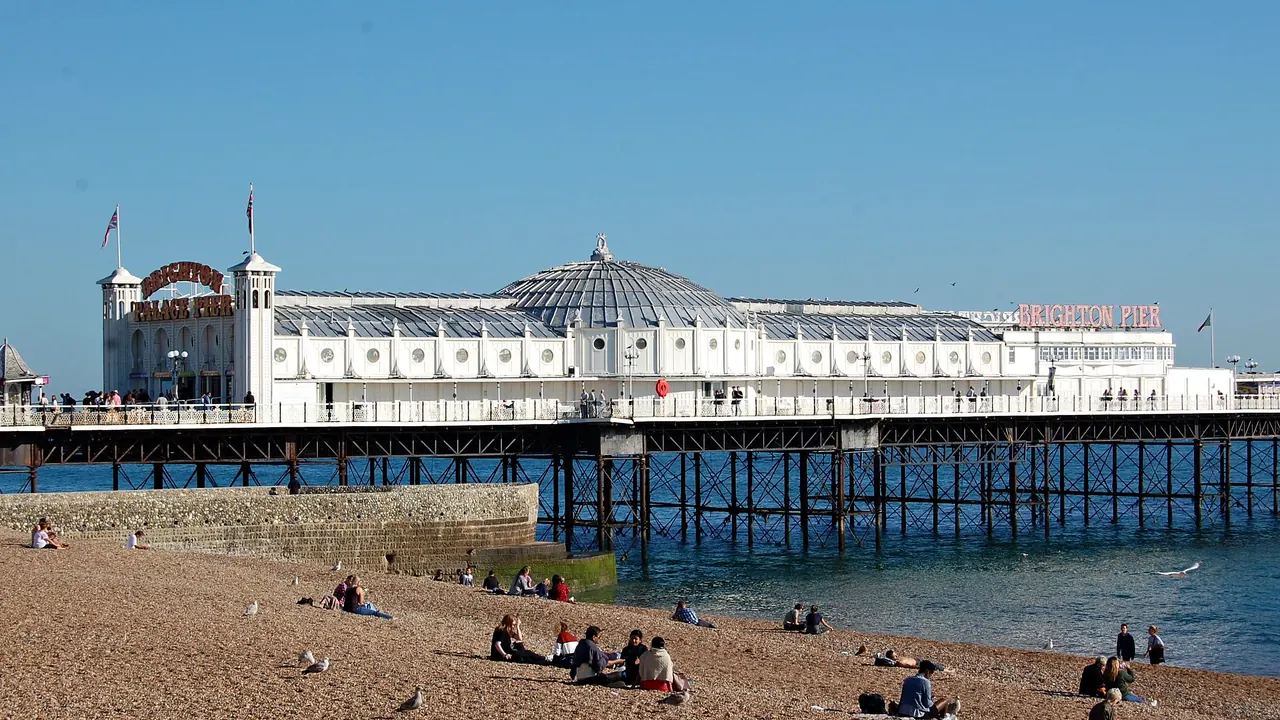
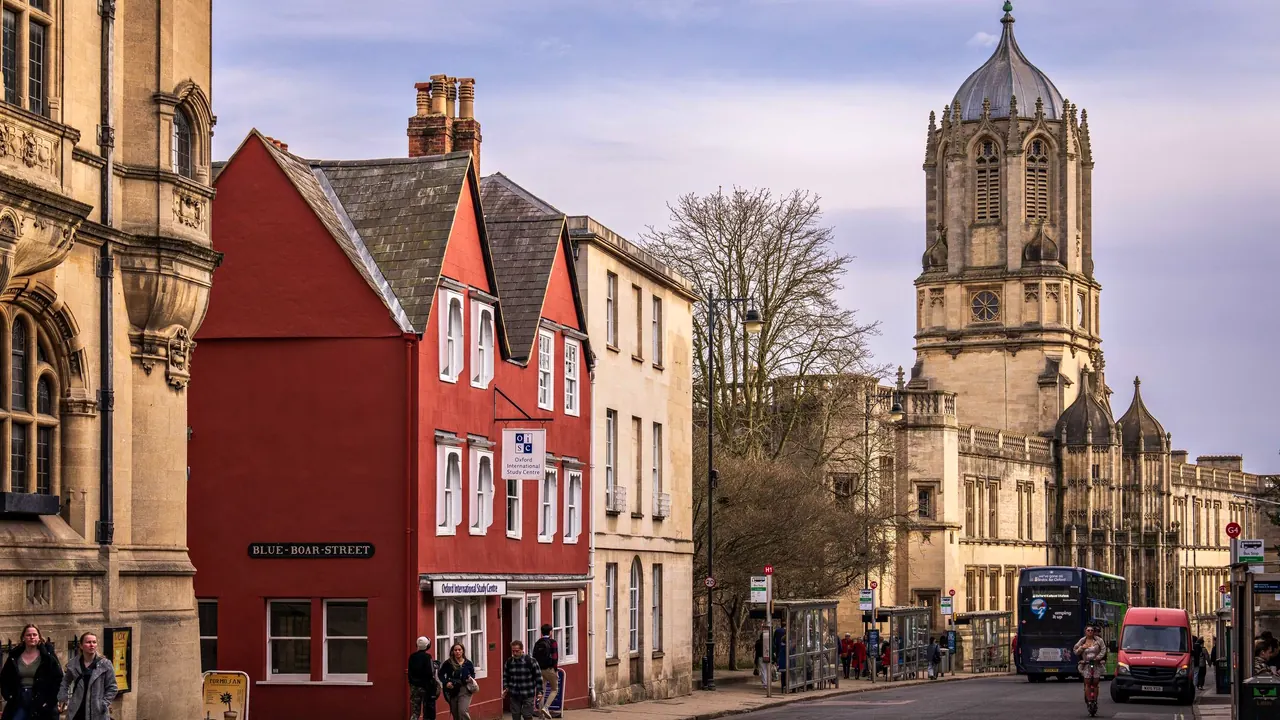
Photos: Brighton by Hassocks5489, CC0; Oxford by Mark Stebnicki, Pexels License.
Brighton or Oxford?
Our verdict in twelve categories, each scored against the same fixed benchmark cities, and the climate month by month, so you can choose for your trip.
Choose Brighton for
- nightlife
- beaches
- nature and the outdoors
Brighton suits a trip where the evenings matter as much as the days. Its pubs, bars and clubs stay busy all week, Kemptown has one of Britain's longest-running LGBTQ+ scenes, and the small independent kitchens of the North Laine and the Lanes feed you well between outings. Add a seafront to sit on, the South Downs and the Seven Sisters close by, and a classic pier for the children, and it makes the livelier and more varied base of the two.
Choose Oxford for
- culture and sights
- day trips
- wellness
Oxford is the one to pick if you want to spend your days looking at things and your evenings quietly. The college quadrangles, the Radcliffe Camera, the Bodleian and the Ashmolean sit within a few minutes' walk of each other in honey-coloured stone, and Evensong in a college chapel is a fine end to the day. It has no sea and its nights end early, but for history, architecture and museums it is clearly ahead.
Scoreboard
Twelve categories on one fixed scale from 0 to 100. The shaded stretch is the gap between the two.
Your match
Pick a travel style or drag the sliders, and both match scores follow your weighting.
Wins on nightlife and beaches with your weighting.
Wins on culture and sights and day trips with your weighting.
What matters to you?
Category by category
What the scores mean for a trip.
Beaches & swimming
Brighton has a real seafront, steep shingle running from the Marina past the Palace Pier to Hove, with lifeguards in season and a sea that is just warm enough for a bracing swim in late summer. It is more a place to sit by the water than a swimming beach, but on a warm day the whole town turns towards it.
Oxford has nothing of the kind. Swimming means the Thames at Port Meadow, the Cherwell or the lido at Hinksey, all of them pleasant for a cool dip on a hot afternoon but no reason to choose the city.
Food & drink
Brighton eats noticeably better. Small independent places pack the North Laine, the Lanes and Kemptown, vegetarian and vegan cooking has deep roots, the coffee is taken seriously, and the seafront arches sell oysters and whelks. Sussex sparkling wine from the Downs turns up on most lists.
Oxford's strength is the old pub, with low beams, riverside gardens and a Sunday roast by the Thames, plus the historic Covered Market for lunch. For variety you head out to Cowley Road or Jericho, and much of the centre is chains, so meals tend to be dependable rather than memorable.
Culture & sights
Oxford is the stronger city for sightseeing by some distance. Its medieval and later colleges, the Radcliffe Camera, the Sheldonian and Christ Church form a working historic centre, and the Ashmolean, the Pitt Rivers and the Gothic Natural History Museum give it museums far beyond its size.
Brighton has one sight of national fame in the Royal Pavilion, George IV's oriental fantasy, along with the Regency crescents of Kemptown and Hove and the skeleton of the West Pier. Its appeal is atmosphere and architecture to stroll past, and a day or two covers the rest.
Nightlife
Going out is one of the main reasons people visit Brighton. Students, a young population and weekenders from London fill its bars nightly, Kemptown anchors a large LGBTQ+ scene, and the clubs on West Street and in the seafront arches run late. Hove and the North Laine have calmer pubs and craft-beer rooms.
Oxford's evenings revolve around historic taverns and summer riverside pubs, with a few late bars on Cowley Road. The city quietens in the long university break and is mostly asleep by midnight, so it suits a drink after dinner rather than a night out.
Nature & outdoors
Brighton has the more striking landscape on its doorstep. The South Downs National Park begins at the city edge, with Devil's Dyke and the South Downs Way a bus ride away, and the white cliffs of the Seven Sisters and Beachy Head are some of southern England's finest coastal scenery. The sea adds windsurfing, kitesurfing and sailing.
Oxford's outdoors is flatter and gentler: Port Meadow's grazing horses, the Thames Path, the University Parks and an afternoon punting. The Cotswolds, the Chilterns and the Ridgeway lie within an hour for longer walks, but you need to travel to reach them.
Day trips
Both are excellent bases, each with London about an hour away by train, so the difference lies in what surrounds them. Brighton opens onto Sussex: Lewes a short hop away, castles at Arundel, Chichester's cathedral and Roman palace, medieval Rye and the Conquest battlefield at Battle.
Oxford has the grander headline trips: Blenheim Palace twenty minutes off, the honey-stone Cotswold villages, Stratford-upon-Avon, Warwick, Windsor and Bath. Several of them, especially in the Cotswolds, are easier by car or on a tour, whereas Brighton's main outings work well by train.
Good for families
Brighton gives children more to do. There are rides and arcades on the Palace Pier, a Victorian aquarium, Volk's Electric Railway along the beach and paddling at Hove Lagoon. The shingle and cold water rule out sandcastles, though, and the centre late on weekend nights is no place for families.
Oxford is calm, safe and easy to handle, and its free natural history and Pitt Rivers museums, a punt on the Cherwell and the Harry Potter links at Christ Church go down well. Beyond those it is a grown-up city, and the wildlife park and Blenheim's maze mean a trip out.
Getting around
Both centres are compact enough to see on foot, with good buses beyond and cars more trouble than help. The difference is the ground underfoot. In Brighton the walk down from the station to the sea is easy and the return is a steady climb, with Kemptown steep too, though the seafront is flat and good for cycling.
Oxford is mostly level, several central streets are closed to through traffic and bicycles are everywhere, so wandering between colleges and the river is effortless. Drivers usually leave the car at a park-and-ride.
Shopping & style
Neither city does luxury in its centre, and both are best for browsing. Brighton's North Laine is a grid of vintage clothes, records, retro furniture and alternative fashion, and the Lanes add jewellers and antique dealers.
Oxford's character lies in old books and small traders: Blackwell's vast basement room, antique maps and prints, the Covered Market and the shops of Little Clarendon Street. It also has the designer outlet village near Bicester twenty minutes away, which Brighton cannot match for big labels.
Affordability
Brighton comes out slightly easier on the wallet, mainly because its dear spells are easy to avoid. Rooms cost most on summer weekends, when Londoners and party groups fill the seafront hotels, but midweek and in winter the same rooms are much cheaper. Once you are there, the beach, the piers, the Lanes and the Downs cost nothing, and train fares are the main thing to watch if you plan several outings.
Oxford has few central rooms to begin with, and graduations, conferences and university events keep them dear through summer and the busy weeks of term, so many visitors sleep out by the ring road or come in from London for the day. The big museums are free, but college entry and guided library tours mount up over a few days.
Live music & performing arts
The two are close, but they offer different kinds of evening. Brighton is about volume and variety: the May festival and England's largest fringe take over the city for weeks, while the Dome and the Theatre Royal, a deep circuit of small music rooms and strong comedy fill the rest of the year. Glyndebourne's opera is close by in summer.
Oxford's highlight is choral. Evensong sung by the choirs of Christ Church, Magdalen and New College is free to attend in term, and there is chamber music at the historic Holywell Music Room. Theatre and gigs are on a smaller scale.
Wellness & relaxation
Neither city has thermal baths or much of a spa scene, so rest comes from the setting rather than from treatments. In Brighton that means dawn sea swims followed by a seafront sauna, or quiet off-season walks past the Hove beach huts, while summer weekends are anything but peaceful.
Oxford's calm is green and walled in: the Botanic Garden, college gardens, the deer park at Magdalen and Addison's Walk early in the morning, or an unhurried afternoon on a punt.
When should you go?
Pick your month. The climate figures are measured averages, not a forecast.
Brighton in July
Oxford in July
Daytime high, °C
Rainfall in the month, mm
Where the figures come from
Brighton has no rain gauge within 25 km of the centre, so its rainfall comes from a gridded climate dataset read at the city rather than from a gauge further away.
Brighton's sunshine is measured 37 km from the centre, at London Gatwick Airport.
Oxford's temperatures are measured 37 km from the centre, at Fairford Royal Air Force Base.
Oxford has no rain gauge within 25 km of the centre, so its rainfall comes from a gridded climate dataset read at the city rather than from a gauge further away.
Oxford's sunshine is measured 57 km from the centre, at Lyneham.
Temperature and rainfall are climate normals, averaged over the years shown. Brighton: 1999-2020 (sunshine 1981-2010, rainfall 1991-2020) normals, Shoreham Airport (10.3 km from centre). Oxford: 1961-1990 (sunshine 1991-2020, rainfall 1991-2020) normals, Fairford Royal Air Force Base (37 km from centre).
Both cities share the same mild southern English year, with the best months running from late May to September. Brighton's sea stays cold until midsummer and only reaches about 17°C in August and September, so those are the months for a swim. On the coast the rain arrives hard in autumn, with October to December the wettest stretch at around 100mm a month, and that makes a winter seaside visit grey and blustery.
Oxford lies inland, so it runs a little warmer in high summer, around 22°C in July, and colder in winter, when January days barely reach 5°C. Its rain is spread more evenly through the year and its winters are noticeably drier than Brighton's. Sunshine is much the same in both, peaking in May to August. Spring and early autumn are good walking weather in either city.
Which traveller are you?
On a beach and sun trip, Brighton is the only real choice. It has a long shingle seafront, swimmable water on calm late-summer days and promenade cafés, while Oxford offers only river dips and an open-air pool, well over an hour from the coast.
For a culture and arts trip, Oxford wins comfortably. The colleges, the Bodleian, the Ashmolean and the Pitt Rivers fill two or three full days, and Evensong adds world-class choral singing. Brighton has the Royal Pavilion, then mostly streets and buildings to wander.
On a food and nightlife trip, Brighton is far stronger. It has vegetarian kitchens, serious coffee, seafront oysters and a going-out scene that runs every night until the small hours. In Oxford you get good pubs and solid cooking, and most nights wind down by midnight.
Before you go
| Measure | Brighton | Oxford |
|---|---|---|
| Official language | English | English |
| Currency | Pound Sterling (GBP) | Pound Sterling (GBP) |
| Sockets | G230 V, 50 Hz | G230 V, 50 Hz |
| Driving side | Left | Left |
| Time zone | UTC, UTC+1 in summer | UTC, UTC+1 in summer |
| Emergency number | 112 or 999 | 112 or 999 |
| Elevation | 22 m | 73 m |
| Main airport | London Gatwick Airport (LGW)37 km from centre224 non-stop destinations | London Heathrow Airport (LHR)63 km from centre224 non-stop destinations |
| Public holidays this year | 8 days | 8 days |
By the numbers
| Measure | Brighton | Oxford |
|---|---|---|
| City population | 134,293 | 147,500 |
| People per km² | 1,624 | 3,235 |
| Museums within 10 km | 11 | 11 |
| UNESCO World Heritage sites within 50 km | 0 | 1 |
| Swim season, months above 21 °C | None | - |
Where else could you go?
Every comparison below shares a destination with this one, so you can follow Brighton or Oxford somewhere new.