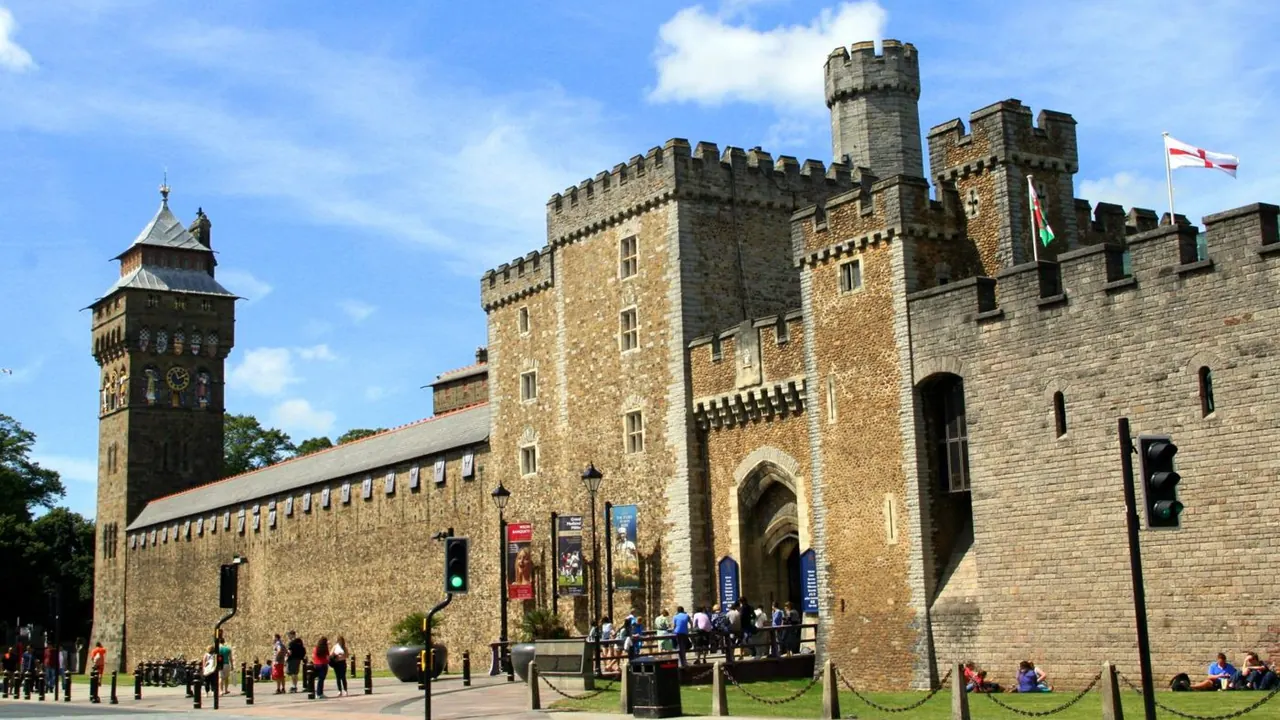
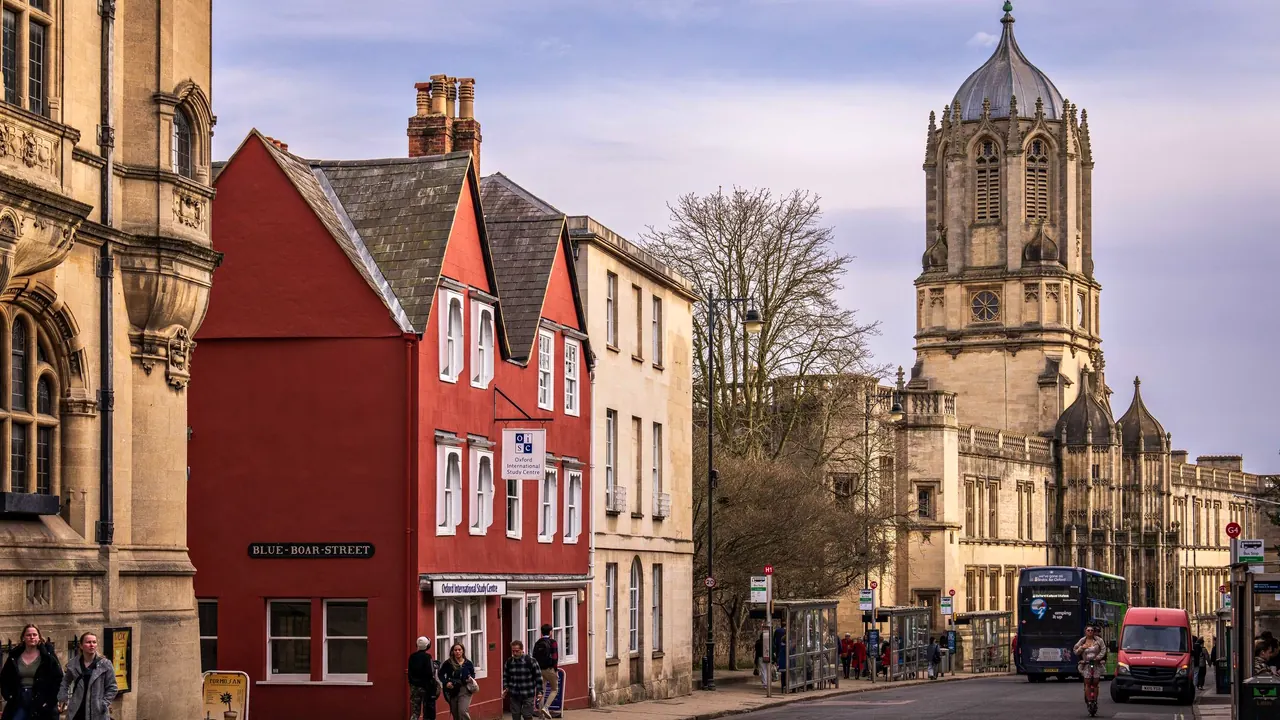
Photos: Cardiff by Tevfik Teker, CC BY 3.0, cropped; Oxford by Mark Stebnicki, Pexels License.
Cardiff or Oxford?
Our verdict in twelve categories, each scored against the same fixed benchmark cities, and the climate month by month, so you can choose for your trip.
Choose Cardiff for
- beaches
- nature and the outdoors
- prices
Cardiff suits travellers who want a compact capital with a livelier weekend, real hills within reach and a lighter bill. The Brecon Beacons and the Gower give it the stronger outdoor side. Its Saturday crowds and the bars of Womanby Street keep going later. Free national museums and short train hops to Caerphilly and Barry Island make a budget go further.
Choose Oxford for
- culture and sights
- day trips
- getting around
Oxford is the pick for anyone who travels for buildings, libraries and the countryside around them. Its medieval colleges and the Ashmolean offer far more to see, Evensong in a college chapel makes a rare evening, and Blenheim, the Cotswolds and London are all within easy reach. Expect to pay more for a bed, and to find the streets quiet early.
Scoreboard
Twelve categories on one fixed scale from 0 to 100. The shaded stretch is the gap between the two.
Your match
Pick a travel style or drag the sliders, and both match scores follow your weighting.
Wins on beaches and nature and the outdoors with your weighting.
Wins on culture and sights and day trips with your weighting.
What matters to you?
Category by category
What the scores mean for a trip.
Beaches & swimming
Neither city is a beach destination, but Cardiff at least has the sea close by. Barry Island's sandy bay and funfair are half an hour away by train, and Penarth's pebble shore and pier are next door. The Gower and the Porthcawl surf beaches are worth a longer drive, though the cool water means more paddling than swimming.
Oxford is far inland, with the coast more than an hour and a half away. Swimming there means the river at Port Meadow, the Cherwell or the open-air pool at Hinksey: fresh water and grassy banks for a hot afternoon, not a day at the seaside.
Food & drink
Food is a side matter in both cities, and it will not decide between them. Cardiff has more of a regional larder: Welsh cakes off the griddle in the market, cawl, and laverbread with cockles. Its best eating is in the bistros of Pontcanna and Canton and along the long run of cooking on City Road.
Oxford's strength is the pub. Its low-beamed taverns and towpath pubs make a Sunday roast by the Thames the meal to remember. Cowley Road and Jericho play the same part there that City Road and Pontcanna play in Cardiff, and both cities have an old covered market that is good for lunch.
Culture & sights
Oxford has much the richer sightseeing. Its centre is a tight cluster of medieval college quadrangles, chapels and libraries, from the Radcliffe Camera and the Bodleian to Christ Church. The Ashmolean, the Pitt Rivers and the Natural History Museum add collections of real depth.
Cardiff's sights are fewer, and most are Victorian. The castle has Gothic rooms set inside Roman and Norman walls, the National Museum has its Impressionists, and St Fagans shows how people lived across Wales. It is a rewarding few days, but Cardiff has nothing like Oxford's centuries of old stone still in daily use.
Nightlife
Cardiff is the place for a proper night out. The Saturday crowds on St Mary Street, rugby days that fill the whole centre and the late alternative bars of Womanby Street give it an energy Oxford lacks, though midweek is quiet.
Oxford's evenings revolve around historic pubs and summer drinks by the river, and Cowley Road is the only corner that stays open late. Outside university term the city grows quieter still, and on most nights the centre has settled by midnight.
Nature & outdoors
Cardiff has the wilder landscape on its doorstep. Bute Park leads straight onto the Taff Trail, and the Wales Coast Path runs along the cliffs at Penarth. About an hour away by car, Pen y Fan in the Brecon Beacons is a real half-day climb across open moorland.
Oxford's outdoors is softer. In town there are Port Meadow, Christ Church Meadow and the river towpaths, and further out the Cotswolds, the Chilterns and the Ridgeway offer long, gentle walks. Punting is its signature pastime, but nothing nearby has the height of the Beacons. The price of Cardiff's hills is rain and wind.
Day trips
Both cities make good bases, but Oxford has the wider choice. Blenheim Palace is twenty minutes away and the Cotswold villages are within an hour. London is an easy train ride, and Stratford, Warwick, Windsor and Bath each fit into a day.
Cardiff's outings centre on castles and industrial heritage. Caerphilly and Castell Coch are close by, Chepstow and Tintern Abbey share the Wye Valley, and Big Pit is at Blaenavon. Bath and Bristol are within reach of either city.
Good for families
Both cities are small, walkable and easy with children, and Cardiff has a little more made for them. Techniquest's hands-on science, boat trips on the Bay, rowing boats on Roath Park lake, the farm animals at St Fagans and the sands at Barry Island fill several days.
Oxford wins children over with the dinosaurs at the Natural History Museum, the masks and boats of the Pitt Rivers, punting and the Harry Potter links at Christ Church. Beyond those, much of the city is for grown-ups, and the wildlife park and Blenheim's maze both need a trip out.
Getting around
Oxford is the easier city to cover on foot. You can cross its centre in twenty minutes on streets closed to through traffic, and the station is a short walk away. Bikes and frequent buses do the rest, and a car is mostly a nuisance.
Cardiff's core is just as flat and compact, but Cardiff Bay is about half an hour's walk away, so you will use the shuttle train, the bus or the water taxi more. Local trains to Penarth, Barry Island and Caerphilly are handy, but the Beacons need a car.
Shopping & style
The shopping is similar in scale: both have a central mall and the usual chains, and both show their character in the details. In Cardiff that means the glass-roofed Victorian arcades, full of record, vintage and book shops, with Welsh lovespoons and woollen blankets to take home.
Oxford answers with the Covered Market's traders, sellers of antique maps and prints, and the huge Blackwell's bookshop on Broad Street. The Bicester outlet village, twenty minutes away, gives designer hunters something Cardiff cannot match.
Affordability
Cardiff is the cheaper stay. Hotels are moderate except on big stadium weekends, and free national museums and short train trips keep daily costs down.
In Oxford, central rooms are scarce and university events keep demand high, so a bed costs more and many visitors sleep out by the ring road or come for the day from London. Its museums are free as well, but college entry and library tours add up over a few days.
Live music & performing arts
The two cities are evenly matched on stage, but they offer very different evenings. Cardiff's arts life centres on the bronze-domed Wales Millennium Centre, home of Welsh National Opera, which also hosts touring musicals, dance and comedy. The BBC National Orchestra of Wales is based in the city, the Sherman and the New Theatre cover drama, and new bands play the small rooms around Womanby Street most nights. At the other end of the scale, the national stadium hosts the big touring concerts.
Oxford's great performance is older and quieter. On most evenings in term, the choirs of Christ Church, Magdalen and New College sing choral Evensong, and visitors can sit in. The Sheldonian and the Holywell Music Room, one of Europe's oldest concert halls, add orchestral, chamber and jazz concerts. Its theatre is smaller than Cardiff's: touring shows at the Playhouse and the New Theatre, and student plays in the college gardens in summer.
Wellness & relaxation
Neither city is a place for treatments or thermal water, and both offer only hotel and day spas. The difference is in the quiet. Oxford has the Botanic Garden, its walled college gardens and Addison's Walk, which are peaceful early in the morning. Cardiff's calm comes from slow mornings in Pontcanna's cafés and a stroll along the Taff through Bute Park.
When should you go?
Pick your month. The climate figures are measured averages, not a forecast.
Cardiff in July
Oxford in July
Daytime high, °C
Rainfall in the month, mm
Where the figures come from
Oxford's temperatures are measured 37 km from the centre, at Fairford Royal Air Force Base.
Oxford has no rain gauge within 25 km of the centre, so its rainfall comes from a gridded climate dataset read at the city rather than from a gauge further away.
Oxford's sunshine is measured 57 km from the centre, at Lyneham.
Temperature and rainfall are climate normals, averaged over the years shown. Cardiff: 1991-2020 (sunshine 1981-2010, rainfall 1981-2010) normals, Cardiff-Wales Airport (14.9 km from centre). Oxford: 1961-1990 (sunshine 1991-2020, rainfall 1991-2020) normals, Fairford Royal Air Force Base (37 km from centre).
Both cities are at their best from May to September, when the days are longest and warmest and sunshine is at its peak. Cardiff is the wetter of the two all year round, and from October to December it turns properly rainy, with the most rain in November at 103mm. Its sea only reaches about 18°C in August, so a day at Barry Island means a paddle rather than a long swim.
Oxford gets roughly half as much rain as Cardiff, which makes it the safer choice for walking between the colleges in spring or autumn. Its temperatures swing further, though. July is the warmest month in either city at 22°C, and January highs of 5°C make winter sightseeing colder than in mild, damp Cardiff.
Which traveller are you?
On a culture and arts trip, Oxford packs more history into a short walk. The vaulted Divinity School, Wren's Sheldonian Theatre, the Bridge of Sighs and Merton's cloisters stand minutes apart. Cardiff's mostly Victorian city has nothing so old in such density.
For an outdoors trip, Cardiff is the better base for walkers and cyclists who want height and sea air. There are the limestone headlands of the Gower, the Vale of Glamorgan coast and the level barrage loop round the Bay. Oxford's countryside stays low and mild. Pack a waterproof.
On a trip on a tight budget, Cardiff is kinder to the wallet, as long as you book away from rugby internationals and big stadium concerts. A day in the castle grounds, the arcades and the market costs little. Oxford suits day visitors better than overnight stays.
Before you go
| Measure | Cardiff | Oxford |
|---|---|---|
| Official language | English | English |
| Currency | Pound Sterling (GBP) | Pound Sterling (GBP) |
| Sockets | G230 V, 50 Hz | G230 V, 50 Hz |
| Driving side | Left | Left |
| Time zone | UTC, UTC+1 in summer | UTC, UTC+1 in summer |
| Emergency number | 112 or 999 | 112 or 999 |
| Elevation | 41 m | 73 m |
| Main airport | Cardiff International Airport (CWL)15 km from centre30 non-stop destinations | London Heathrow Airport (LHR)63 km from centre224 non-stop destinations |
| Public holidays this year | 8 days | 8 days |
By the numbers
| Measure | Cardiff | Oxford |
|---|---|---|
| City population | 383,536 | 147,500 |
| People per km² | 2,734 | 3,235 |
| Museums within 10 km | 9 | 11 |
| UNESCO World Heritage sites within 50 km | 1 | 1 |
| Swim season, months above 21 °C | None | - |
Where else could you go?
Every comparison below shares a destination with this one, so you can follow Cardiff or Oxford somewhere new.