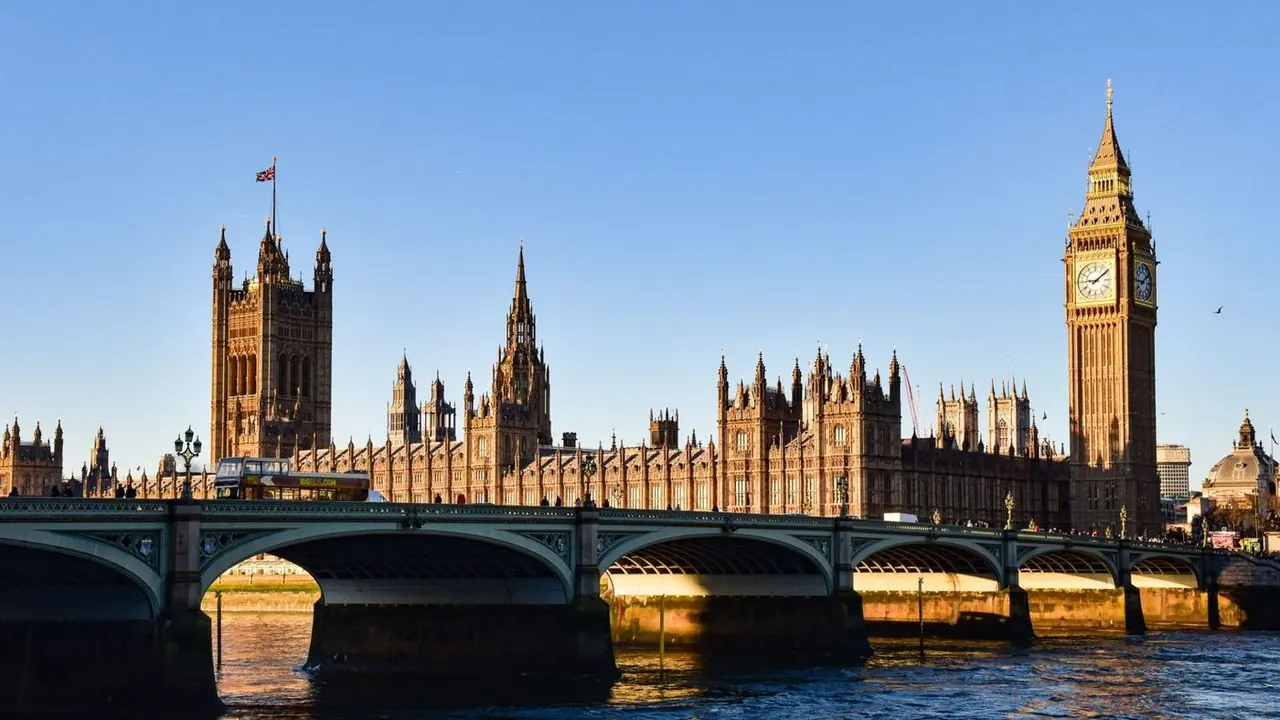
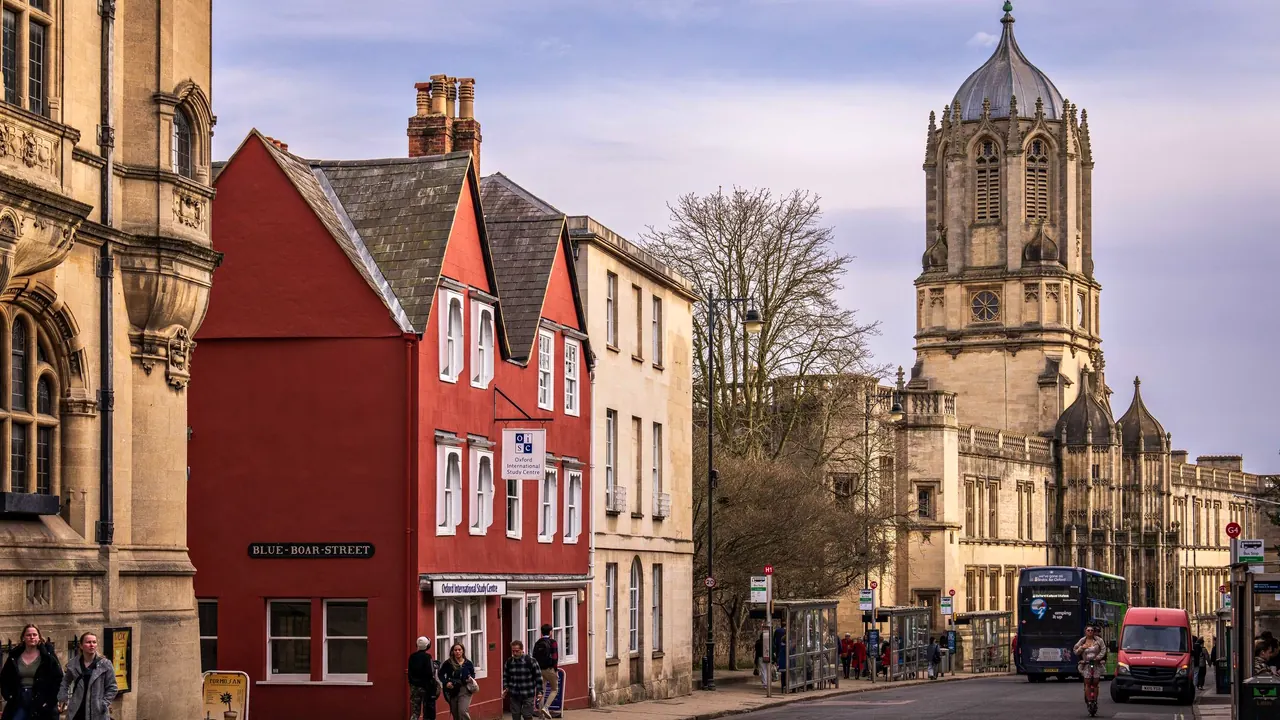
Photos: London by AXP Photography, Pexels License; Oxford by Mark Stebnicki, Pexels License.
London or Oxford?
Our verdict in twelve categories, each scored against the same fixed benchmark cities, and the climate month by month, so you can choose for your trip.
Choose London for
- nightlife
- food and drink
- shopping
London suits travellers who want range and depth: the great national collections, a night at the West End or the National Theatre, food from every community that has settled in the city, and a different district for every kind of night out. It also works well for families and for anyone who wants to shop seriously, and its rail links make the rest of southern England easy to reach.
Choose Oxford for
- prices
Choose Oxford for a slower, more concentrated trip. Its colleges, libraries and chapels stand within a few minutes' walk of each other in honey-coloured stone. Evensong in a candlelit chapel takes the place of a big stage, and evenings end at a riverside pub rather than a club. It costs a little less once you are there, and it makes a good base for Blenheim and the Cotswold villages.
Scoreboard
Twelve categories on one fixed scale from 0 to 100. The shaded stretch is the gap between the two.
Your match
Pick a travel style or drag the sliders, and both match scores follow your weighting.
Wins on nightlife and food and drink with your weighting.
Wins on prices with your weighting.
What matters to you?
Category by category
What the scores mean for a trip.
Beaches & swimming
Neither city is a beach destination, but London at least has the coast within reach. Brighton's pebble beach is about an hour away by train, and Margate and Whitstable have sandier shores. In the city itself, people swim at the lidos in Brockwell Park and Parliament Hill and in the Hampstead Heath ponds.
Oxford is further from the sea, so swimming here means a river dip from the grassy banks at Port Meadow or on the Cherwell, or a swim in the open-air pool at Hinksey. That is pleasant on a hot afternoon, but it is no substitute for the coast.
Food & drink
This is one of the widest gaps between the two. London's cooking comes from its communities: Bangladeshi food around Brick Lane, Cantonese in Chinatown, Punjabi in Southall and Turkish grills in Green Lanes. On top of that come a deep fine-dining scene, Borough Market and weekend food markets set in old yards and railway arches.
In Oxford you eat well rather than memorably. The best of it is a Sunday roast at a riverside pub, lunch at the counters of the Covered Market, and the cheap Middle Eastern and South Asian cooking on Cowley Road. For variety it cannot get close to London.
Culture & sights
London's collections are of world rank, and most are free: the British Museum, the National Gallery, the V&A and both Tates. Around them stand a thousand years of landmarks, from the Tower and Westminster Abbey to Wren's St Paul's. A week barely scratches the surface.
Oxford's culture is concentrated rather than vast. Its college quadrangles, the Radcliffe Camera, the Bodleian and Christ Church, along with the Ashmolean and the Pitt Rivers, fill two or three full days. Its appeal is seeing a working medieval university up close, entirely on foot.
Nightlife
London offers a genuine big night out. There are Soho's late cocktail bars and its long-established gay scene, the warehouse-party culture of Hackney and Dalston, and the large venues and rooftop bars of Brixton and Peckham. At weekends a few clubs keep going until morning.
An evening in Oxford means a pint in a historic tavern or beside the Thames, with Cowley Road for a late bar or one of its small clubs. The scene follows the university terms. It is calm by midnight and quieter still over the summer.
Nature & outdoors
Both cities are surrounded by gentle countryside rather than wild landscape, and London edges ahead. Richmond Park, with its deer and ancient oaks, the skyline views from Hampstead Heath and the gardens at Kew give it larger green spaces inside the city. The South Downs and the Seven Sisters cliffs make a full day out.
Oxford's countryside starts closer to the door. Port Meadow, Christ Church Meadow and the river paths are a short walk from the colleges, and punting is the classic way to spend an afternoon. The Cotswold hills and the ancient Ridgeway lie within an hour.
Day trips
Both are excellent bases, and the main difference is how you travel. From London almost everything is a train ride away: Oxford and Cambridge in about an hour, plus Windsor, Bath, Canterbury, Brighton and the castles of Kent.
Oxford's outings lean towards the countryside and the Midlands. Blenheim Palace is about twenty minutes away, Stratford-upon-Avon and Warwick Castle are easy to reach, and the Cotswold villages are much easier with a car or a tour. London itself becomes one of the day trips.
Good for families
London has far more to fill children's days. The Natural History and Science Museums and the Young V&A are free, the Diana Memorial Playground has its pirate ship, London Zoo is in Regent's Park, and Legoland and the theme parks are outside the city. The price is scale: long journeys, stairs at many Tube stations, and heavy crowds when schools are out.
Oxford is easier to manage but has less to offer. The dinosaur skeletons and the Pitt Rivers' masks and boats fill a morning, and punting or spotting Harry Potter settings at Christ Church fills an afternoon. After that, most family outings need a trip out of the city.
Getting around
London's Tube, Elizabeth line, buses and Thames riverboats all run on one contactless card and reach almost anywhere. Crossing the city still takes time, though, and the trains are packed at rush hour.
Oxford barely needs public transport. You can walk across the centre in twenty minutes, several streets are closed to through traffic, bicycles are everywhere, and the station is a short walk away. Buses only matter for outer areas such as Headington or Summertown, and drivers are better off using the park-and-ride.
Shopping & style
London is one of the world's great shopping cities. It has luxury houses on Bond Street, bespoke tailoring on Savile Row, and historic department stores such as Liberty and Fortnum & Mason. Portobello Road's antiques and the Columbia Road flower market add weekend browsing.
Oxford's main shopping streets are mostly chains. Its character is in the details: small traders in the Covered Market, independent shops in Jericho, antique map sellers and Blackwell's on Broad Street. Designer shoppers head twenty minutes out to the outlet village near Bicester.
Affordability
Neither city is cheap, but Oxford is easier on the wallet. In London, central hotel rooms are small and costly, and meals, theatre seats and fares add up quickly. The free museums and parks are the main saving.
Oxford's rooms are also scarce and expensive, especially during graduations and conferences. Once you are there, though, the walkable centre, free museums, pub meals and Cowley Road cafés keep daily spending down. Entry fees for the colleges are the main extra.
Live music & performing arts
London is one of the world's two great theatre cities. It has the West End, the National Theatre, the Globe and the Royal Opera House, five major orchestras and the Proms, plus jazz cellars in Soho and gigs in Camden and Brixton. There is a serious choice every night.
Oxford's great live experience is quieter. In term, the choirs of Christ Church, Magdalen and New College sing Evensong, and the Holywell Music Room hosts chamber music. Its theatres mostly stage touring productions.
Wellness & relaxation
For proper steam and water, London has the edge. A few historic public Turkish baths from the early twentieth century survive, in Bayswater and at Ironmonger Row in Islington, with steam rooms and plunge pools under tiled vaults. The grand hotels of Mayfair and Knightsbridge also run full spas. The city's pace is fast, though, so rest comes in short breaks between busy days.
Oxford has no bathing tradition and few spas, and its calm is of a different kind. You find it early in the morning in the Botanic Garden, the walled college gardens and along Addison's Walk, or on a slow afternoon in a punt. Anyone in either city who wants thermal water goes to Bath.
When should you go?
Pick your month. The climate figures are measured averages, not a forecast.
London in July
Oxford in July
Daytime high, °C
Rainfall in the month, mm
Where the figures come from
Oxford's temperatures are measured 37 km from the centre, at Fairford Royal Air Force Base.
Oxford has no rain gauge within 25 km of the centre, so its rainfall comes from a gridded climate dataset read at the city rather than from a gauge further away.
Oxford's sunshine is measured 57 km from the centre, at Lyneham.
Temperature and rainfall are climate normals, averaged over the years shown. London: 1992-2020 (sunshine 1991-2020, rainfall 1991-2020) normals, London Weather Centre (1.3 km from centre). Oxford: 1961-1990 (sunshine 1991-2020, rainfall 1991-2020) normals, Fairford Royal Air Force Base (37 km from centre).
Both cities share the same mild, changeable English climate, and London is the warmer of the two in every month. The gap is widest in winter and spring. London's January highs of about 8°C compare with Oxford's 5°C, so its streets feel a little less raw. By July, and again from September to November, the difference narrows to about a degree. Neither city ever gets warm enough for a beach trip. Summer peaks at around 23°C in London and 22°C in Oxford, which is comfortable walking weather rather than heat. July is the sunniest month in both, and late spring is nearly as bright, with May in Oxford sunnier than June.
Rain is spread fairly evenly through the year, and there is no true dry season. Autumn and early winter are the wettest stretch, and Oxford is a little damper, reaching about 69mm in November. May to September is the best time for either city. Those months are when Oxford's meadows, riverbanks and punts are at their most inviting, and when London's parks and lidos come into their own.
Which traveller are you?
For a food and nightlife trip, London wins clearly. An evening can run from curry on Brick Lane or a Turkish grill in Dalston to Soho's cocktail bars and the clubs of the east, while Oxford's nights centre on the pub and wind down by midnight.
For a short city break, Oxford fits neatly. The colleges, the Bodleian, the Ashmolean and the riverside pubs all lie within a twenty-minute walk, so two or three days show the city properly, whereas London's size means a weekend covers only a fraction.
On a trip on a tight budget, Oxford is the slightly kinder choice. Both cities are expensive places to sleep, but in Oxford you can walk everywhere and skip the fares, and free museums, pub meals and Cowley Road cafés keep the days modest.
Before you go
| Measure | London | Oxford |
|---|---|---|
| Official language | English | English |
| Currency | Pound Sterling (GBP) | Pound Sterling (GBP) |
| Sockets | G230 V, 50 Hz | G230 V, 50 Hz |
| Driving side | Left | Left |
| Time zone | UTC, UTC+1 in summer | UTC, UTC+1 in summer |
| Emergency number | 112 or 999 | 112 or 999 |
| Elevation | 4 m | 73 m |
| Main airport | London Heathrow Airport (LHR)23 km from centre224 non-stop destinations | London Heathrow Airport (LHR)63 km from centre224 non-stop destinations |
| Public holidays this year | 8 days | 8 days |
By the numbers
| Measure | London | Oxford |
|---|---|---|
| City population | 8,799,728 | 147,500 |
| People per km² | 5,598 | 3,235 |
| Museums within 10 km | 216 | 11 |
| UNESCO World Heritage sites within 50 km | 4 | 1 |
Where else could you go?
Every comparison below shares a destination with this one, so you can follow London or Oxford somewhere new.