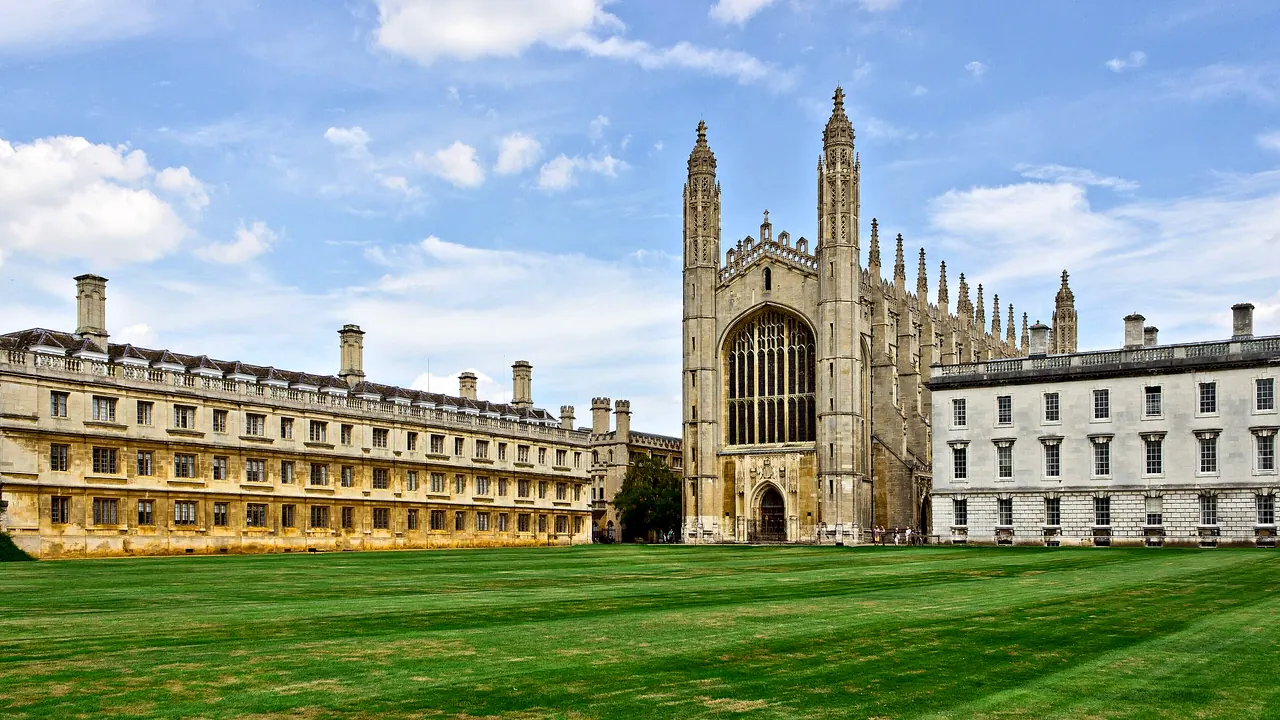
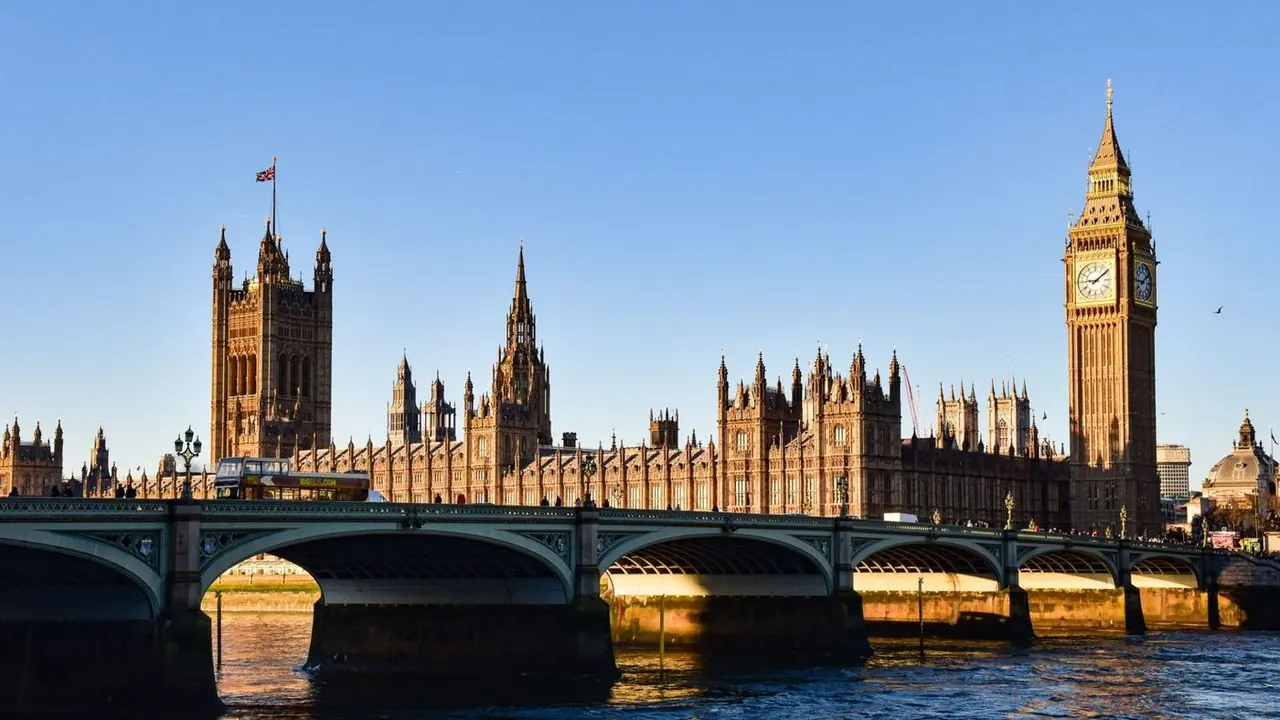
Photos: Cambridge by Dmitry Tonkonog, CC BY-SA 3.0, cropped; London by AXP Photography, Pexels License.
Cambridge or London?
Our verdict in twelve categories, each scored against the same fixed benchmark cities, and the climate month by month, so you can choose for your trip.
Choose Cambridge for
- prices
Cambridge suits a slower, smaller trip built around one remarkable historic core. Colleges, chapels and university museums are packed into a flat centre you can cover on foot or by bike, evensong costs nothing, and an afternoon punting to Grantchester sets the pace. Two or three days do it justice, and it costs less than the capital, though it is not cheap. Choose it if you want depth in a small space and quiet evenings rather than big nights.
Choose London for
- nightlife
- shopping
- food and drink
London is the better pick for almost every other kind of trip. Its museums, theatre, concert halls, restaurants and shops are on another scale entirely, and its nightlife runs late across whole districts. Families have far more to fill their days with, and the rail hub opens up much of southern England. The price is the size, the crowds and the cost, but a week here still leaves plenty unseen.
Scoreboard
Twelve categories on one fixed scale from 0 to 100. The shaded stretch is the gap between the two.
Your match
Pick a travel style or drag the sliders, and both match scores follow your weighting.
Wins on prices with your weighting.
Wins on nightlife and shopping with your weighting.
What matters to you?
Category by category
What the scores mean for a trip.
Beaches & swimming
Neither works for a beach vacation, but London is closer to the sea. Brighton's pebble beach and pier are about an hour away by train, and Margate and Whitstable offer sandier Kent shores for a breezy day out.
From Cambridge the Suffolk shingle and the Norfolk sands take around an hour and a half by car. Locally, swimming means Jesus Green Lido or the river at Grantchester Meadows, while London has a larger choice of lidos and the Hampstead Heath ponds, where some swimmers go in all year.
Food & drink
London is one of the world's great eating cities, and its strength comes from its communities: Bangladeshi cooking on Brick Lane, Punjabi in Southall, Caribbean and West African south of the river, plus Borough Market and a deep fine-dining scene.
Cambridge is pleasant but limited. You will eat well enough in old riverside pubs, at the Market Hill stalls and along Mill Road, and the tea rooms are good for scones. A couple of days covers it, whereas in London you could eat somewhere different every night for weeks.
Culture & sights
Cambridge offers concentration: eight centuries of colleges along the Backs, King's College Chapel's fan vaulting, the Wren Library and a Fitzwilliam far grander than the city's size suggests. You can take it all in properly in a few days.
London offers sheer scale. The British Museum, the National Gallery, the V&A and the Tates are each worth a day, most of them free, and then come the Tower, Westminster Abbey, St Paul's and Greenwich. Cambridge is the more unified historic townscape, but London has far more to see.
Nightlife
Evenings in Cambridge revolve around historic inns, riverside beer gardens and a few livelier bars on Regent Street and Mill Road. The small student club scene goes quiet outside term, and anyone wanting a big night takes the train to London.
That says most of it. London gives you whole districts to choose between: Soho for late cocktail bars and its long-established gay scene, the east for warehouse parties and clubs, and Brixton and Peckham for big venues and rooftops, with weekend nights that run until morning.
Nature & outdoors
Neither has dramatic scenery, but London gives you more green space and more varied walking. Richmond Park's deer and ancient oaks, the views from Hampstead Heath and Kew's gardens are all in the city, and the Chilterns and the South Downs are an hour or so away by train.
Cambridge is gentler and flatter. Its outdoor life means punting through the Backs, the water meadows to Grantchester, the town commons and birdwatching at Wicken Fen, all easy by bike but without a single real hill.
Day trips
Both make good bases. Cambridge has Ely's cathedral fifteen minutes away by train, the Suffolk wool towns of Lavenham and Long Melford, Norwich, Audley End, and London itself within the hour.
London's rail hub gives it the edge in range. Oxford, Windsor, Bath, Stonehenge with Salisbury, Canterbury, Brighton and the Kent castles are all straightforward outings, and Cambridge is one of them, so a week can take in several very different days out.
Good for families
Cambridge is calm and easy with children: small, flat and green, with punting, the free zoology museum's whale skeleton, the dinosaurs at the Sedgwick and Duxford's historic aircraft just outside town. Once those are done, though, the hushed colleges have little for young children.
London can fill a much longer stay. The free Natural History and Science Museums, the Young V&A, the zoo in Regent's Park and the pirate-ship playground in Kensington Gardens are all in town, with Legoland and the theme parks further out. The trade-off is long distances, crowds whenever schools are out and Tube stairs that are hard with a buggy.
Getting around
Getting about London takes more effort, but its network is better. The Underground, the Elizabeth line, buses and Thames riverboats all run on one contactless payment, and you never need a car, though journeys are long and the Tube gets packed at rush hour.
Cambridge barely needs transport at all, since the centre is compact, flat and largely pedestrian, and a hired bike gets you to Grantchester. Buses are basic, the station is a walk from the centre, and the country estates are easier to reach by car.
Shopping & style
London is a shopping destination in its own right. Bond Street has the luxury houses, Savile Row and Jermyn Street the bespoke tailoring, the historic department stores are sights in themselves, and Portobello Road, Columbia Road and Spitalfields give weekends their character.
Cambridge is for browsing between sights. Its best find is books, from academic booksellers to second-hand dealers in the lanes, and the market, Trinity Street's independents and Mill Road's vintage shops round it out.
Affordability
Neither is cheap. In Cambridge the cost comes mostly from the beds: there are few hotel rooms near the centre, and university visitors and conferences keep them in steady demand, so summer and graduation weeks are the dearest times to book. Eating and drinking out is priced like the rest of the wealthy south-east, and the best-known colleges charge for entry. Even so, a stay here works out lighter than in the capital.
London costs more at almost every turn. Central rooms are among the most expensive in Europe and small for what you pay, pub rounds and theatre seats add up, and single fares are high, though daily contactless caps soften them. The free national museums and parks are the big saving, along with staying further out and eating at markets or Turkish and South Asian cafés.
Live music & performing arts
Cambridge has one thing London cannot match: choral evensong sung by the King's, St John's and Trinity choirs in candlelit chapels. The Arts Theatre, the student ADC stage and the summer Folk Festival fill out the rest of its programme.
London is in a different league for range. The West End, the National Theatre and the Globe lead on drama, the Royal Opera House covers opera and ballet, five major orchestras play there, and the Proms fill the Royal Albert Hall each summer. There is serious choice every night.
Wellness & relaxation
Neither is a spa destination, and they are equally restful in their own ways. London has actual bathing, with Victorian Turkish baths in Bayswater and at Ironmonger Row and full hotel spas in Mayfair, and Bath's thermal waters are a day trip away.
Cambridge's calm is outdoors and slow: a punt on the Cam, the Botanic Garden, tea in an orchard at Grantchester. It is quieter overall, as long as you avoid King's Parade in summer.
When should you go?
Pick your month. The climate figures are measured averages, not a forecast.
Cambridge in July
London in July
Daytime high, °C
Rainfall in the month, mm
Where the figures come from
Cambridge's temperatures are measured 59 km from the centre, at Wattisham.
Cambridge has no rain gauge within 25 km of the centre, so its rainfall comes from a gridded climate dataset read at the city rather than from a gauge further away.
Temperature and rainfall are climate normals, averaged over the years shown. Cambridge: 1991-2020 normals, Wattisham (58.5 km from centre). London: 1992-2020 (sunshine 1991-2020, rainfall 1991-2020) normals, London Weather Centre (1.3 km from centre).
The two share almost the same climate, with London a degree or so warmer all year. June to August is the best stretch in both, with highs around 22°C to 23°C and the longest sunny days, ideal for punting, parks, lidos and long evenings outdoors. This is never beach weather in any real sense, just pleasant summer warmth.
Spring and early autumn are mild and good for walking, and April and May are fairly dry in both. The wetter months come in autumn: October is the rainiest in Cambridge, while London gets more rain in November and through winter, around 67mm at its wettest. From December to February highs sit near 7°C to 9°C with short grey days, cold enough that indoor sights carry the trip. London's museums and theatres cope with that far better than Cambridge's outdoor charms.
Which traveller are you?
For a food and nightlife trip, London wins easily. You get Brick Lane curries, Chinatown, Turkish grills in Dalston, Borough Market and modern British cooking, then late bars in Soho and clubs in Shoreditch and Brixton. Cambridge offers good pubs and not much after them.
For a short city break of two or three days, Cambridge makes the most of limited time. King's College Chapel, the Backs, the Fitzwilliam and the river all lie within walking distance, so you can see the whole place without spending hours on the Tube.
On a tight budget, Cambridge is the less punishing of two expensive places. The centre needs no transport, most university museums are free and evensong costs nothing. A college room out of term can beat London's small, costly hotels, although neither city is cheap.
Before you go
| Measure | Cambridge | London |
|---|---|---|
| Official language | English | English |
| Currency | Pound Sterling (GBP) | Pound Sterling (GBP) |
| Sockets | G230 V, 50 Hz | G230 V, 50 Hz |
| Driving side | Left | Left |
| Time zone | UTC, UTC+1 in summer | UTC, UTC+1 in summer |
| Emergency number | 112 or 999 | 112 or 999 |
| Elevation | 6 m | 4 m |
| Main airport | London Stansted Airport (STN)37 km from centre197 non-stop destinations | London Heathrow Airport (LHR)23 km from centre224 non-stop destinations |
| Public holidays this year | 8 days | 8 days |
By the numbers
| Measure | Cambridge | London |
|---|---|---|
| City population | 123,867 | 8,799,728 |
| People per km² | 3,043 | 5,598 |
| Museums within 10 km | 17 | 216 |
| UNESCO World Heritage sites within 50 km | 0 | 4 |
Where else could you go?
Every comparison below shares a destination with this one, so you can follow Cambridge or London somewhere new.