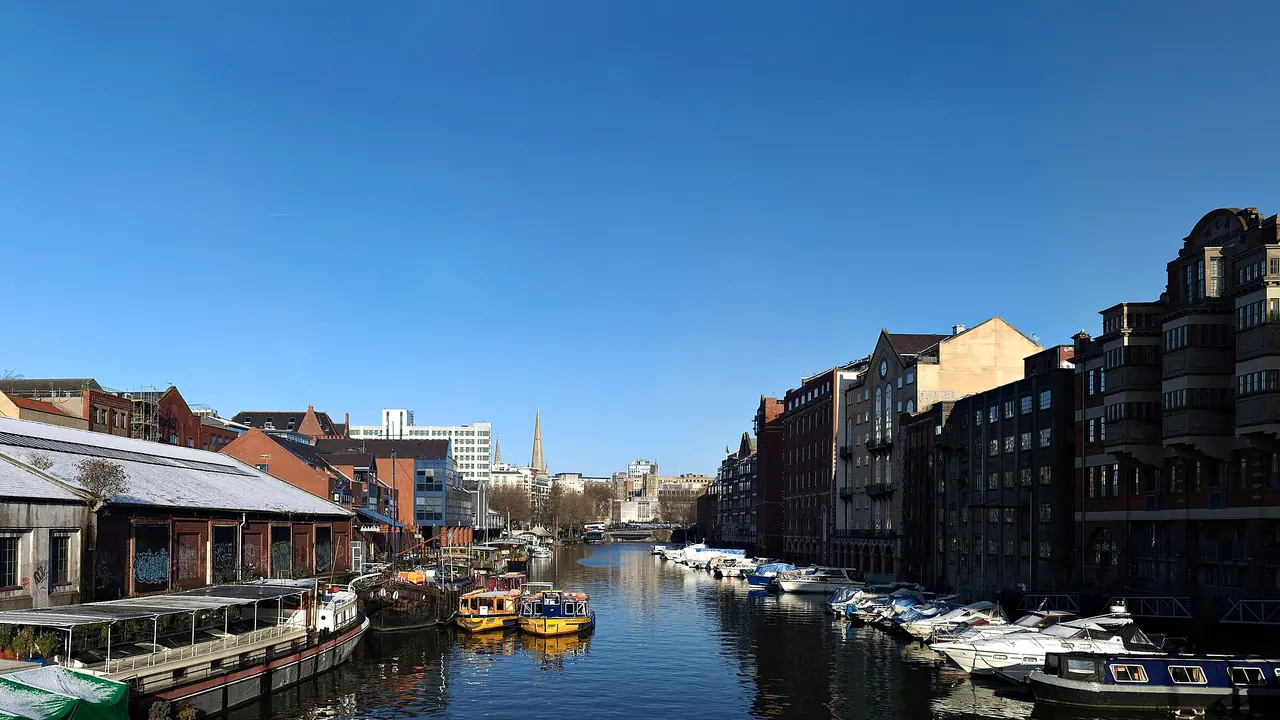
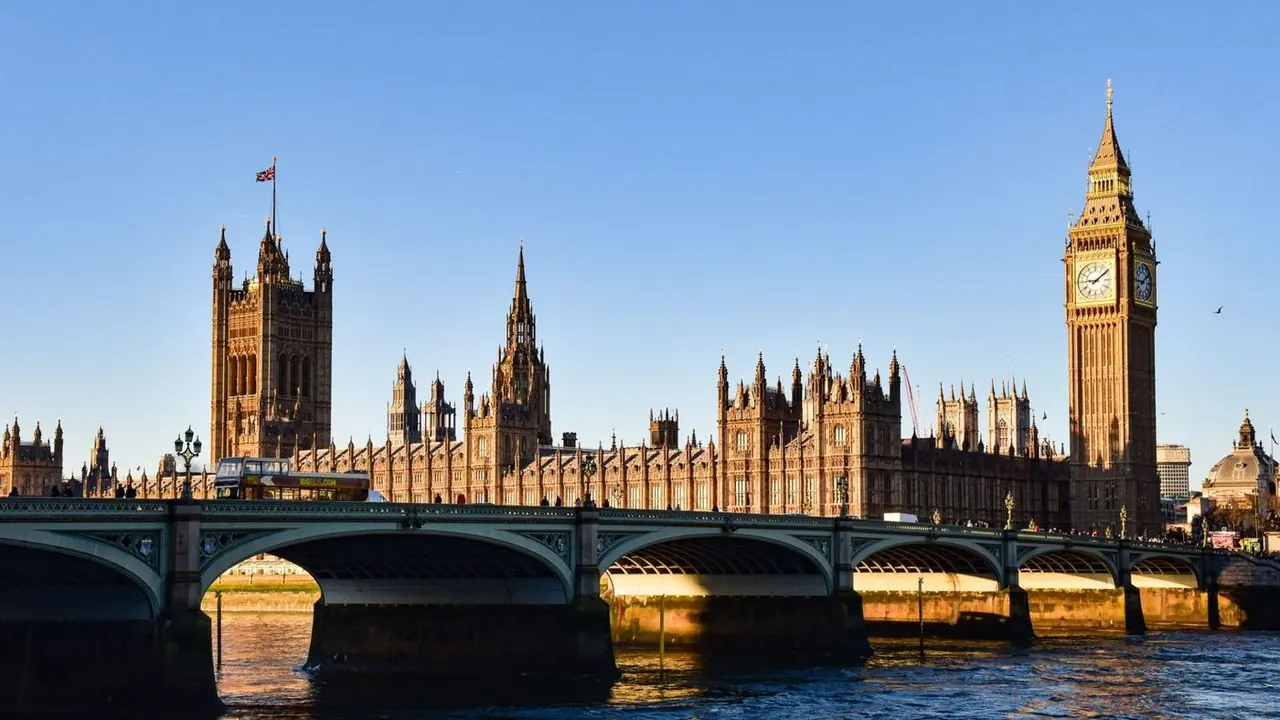
Photos: Bristol by NotFromUtrecht, CC BY-SA 3.0, cropped; London by AXP Photography, Pexels License.
Bristol or London?
Our verdict in twelve categories, each scored against the same fixed benchmark cities, and the climate month by month, so you can choose for your trip.
Choose Bristol for
- prices
- nature and the outdoors
- wellness
Bristol suits a shorter, easier-going trip with a strong outdoor and local streak. The Avon Gorge, the Downs and Ashton Court sit right on the edge of the centre, Bath is a short hop by train, and the city's club and sound-system culture gives its nights a distinct character. It also costs noticeably less to stay in than the capital, and its centre is small enough to explore on foot. Choose it if you want a manageable base for the West Country rather than a list of famous sights to get through.
Choose London for
- shopping
- live music and the arts
- culture and sights
London is the choice when the trip is about depth. Its great free museums, the West End and the South Bank stages, world-class shopping streets and food drawn from every corner of the globe give it far more to fill a week than Bristol can manage. It is also easier to get around without a car, and it is better with children. The trade-off is cost, crowds and distance, so it rewards travellers who plan their days by district and come with a bigger budget.
Scoreboard
Twelve categories on one fixed scale from 0 to 100. The shaded stretch is the gap between the two.
Your match
Pick a travel style or drag the sliders, and both match scores follow your weighting.
Wins on prices and nature and the outdoors with your weighting.
Wins on shopping and live music and the arts with your weighting.
What matters to you?
Category by category
What the scores mean for a trip.
Beaches & swimming
Neither city works for a beach vacation, but London gives swimmers more to do. Brighton's pebble beach is about an hour away by train, and Margate and Whitstable have sandier shores. In the city itself, the lidos at Brockwell Park and Parliament Hill and the Hampstead Heath ponds are well loved.
Bristol faces a muddy, silty estuary with one of the world's largest tidal ranges. The best it offers is a cold dip in a tidal pool such as Clevedon's marine lake, or careful tide-timing at Weston-super-Mare.
Food & drink
London is on another level for eating. You can have Bangladeshi cooking on Brick Lane, Punjabi food in Southall, Turkish grills on Green Lanes and Caribbean and West African food south of the river, as well as a large fine-dining scene and Borough Market. It is a city to plan meals around.
Bristol is good for grazing rather than seeking out food. St Nicholas Market, the container kitchens on the harbourside and the bakeries and roasters of Gloucester Road and North Street make easy eating. Its most local pleasure is in the glass: West Country cider and taprooms set in old warehouses.
Culture & sights
London has one of the deepest sets of museums and landmarks anywhere, from the British Museum and the V&A to the Tower, Westminster Abbey, St Paul's and Greenwich. Most of the major collections are free, and a week still leaves plenty unseen.
Bristol's sights tell the more focused story of a trading port and Victorian engineering. They include the SS Great Britain, the Clifton Suspension Bridge, St Mary Redcliffe and M Shed, along with Banksy's early street art. They are rewarding, but two or three days cover them.
Nightlife
London offers the bigger night out. Soho is the late, crowded centre, Shoreditch, Hackney and Dalston hold the warehouse and club scene, Brixton and Peckham have the big venues, and thousands of pubs fill in everywhere. Choosing a district is half the plan.
Bristol's scene is smaller but has its own sound, rooted in trip hop, drum and bass and dubstep. Its clubs sit in railway arches near Temple Meads and on the harbour, and Stokes Croft is scruffy and creative. A large student population keeps it busy all year.
Nature & outdoors
Bristol has the edge for getting outdoors, mainly because the wild-feeling places are so close. The limestone cliffs of the Avon Gorge are popular with climbers, Leigh Woods and Ashton Court have walks and mountain-bike trails, and the railway path cycles out towards Bath. Cheddar Gorge, the Mendips and the Wye Valley are within an hour, and Exmoor and the Brecon Beacons are within two.
London's green space is mostly parkland: Richmond Park's deer, Hampstead Heath and Kew's gardens. Proper walking country such as the Chilterns or the South Downs means a train ride out.
Day trips
Both are excellent bases, but London's rail hub gives it more range. Oxford, Cambridge and Windsor are each about an hour or less away, and Canterbury, Brighton, Portsmouth's dockyard and the castles of Kent spread the options in every direction, so a week can include several outings with different themes.
Bristol's day trips are fewer but very close. Bath is a quarter of an hour away by train, Wells, Glastonbury and Cardiff are about an hour, and Stonehenge, Avebury and the southern Cotswolds are easy drives.
Good for families
Bristol is the smaller, calmer choice. The SS Great Britain, the hands-on We The Curious science centre and the aquarium sit close together on the harbourside, and the little ferries between them are part of the fun. The wildlife park on the northern edge and the deer at Ashton Court add more. Its steep hills are hard work with a pushchair, though, and there is no large theme park nearby.
London gives families far more to fill the days. The dinosaur halls of the Natural History Museum, the Science Museum and the Young V&A are all free to enter, and so are the park playgrounds, including the pirate ship in Kensington Gardens. The zoo is in Regent's Park, and Legoland Windsor and the Harry Potter studio tour are within reach outside the city. The downsides are long distances, crowds when schools are out and Tube stairs that are hard with a buggy.
Getting around
In London, the Underground, the Elizabeth line, the Overground, buses and riverboats all run on one contactless card, so a car is never needed. The only catches are the city's size, packed trains at rush hour and long station corridors.
Bristol's centre is small enough to walk, and yellow ferries cross the Floating Harbour. There is no metro or tram, though, so buses stuck in traffic serve everything further out, and the climb up to Clifton is steep.
Shopping & style
London is a shopping destination in its own right. It has the luxury houses of Bond Street and Sloane Street and the bespoke tailoring of Savile Row and Jermyn Street, and its department stores are sights in themselves. Portobello Road, Camden, Spitalfields and the bookshops of Charing Cross Road add character.
Bristol makes a pleasant afternoon instead. There are chain stores at Cabot Circus and Broadmead, independent and vintage shops along Gloucester Road, and galleries in Clifton Village's Georgian arcades.
Affordability
Bristol is the cheaper stay, although it is still not a bargain by British standards. Hotel rooms cost more at weekends, and eating out costs much what it does elsewhere in England. Free museums and a walkable centre help.
London is expensive at almost every turn: small central rooms, pub rounds, theatre seats and fares. Its free national museums and parks are a big saving, and staying out along a good Tube line keeps costs down, but it never feels cheap.
Live music & performing arts
London ranks among the world's great stage cities. It has the West End playhouses, the National Theatre, the Globe and the Royal Court, the Royal Opera House and the Coliseum for opera and ballet, five major orchestras and the Proms at the Royal Albert Hall. There is a serious choice every night.
Bristol's strengths are more intimate. The Georgian Old Vic is the oldest continuously working theatre in the English-speaking world, and there is fringe Shakespeare at the Tobacco Factory and chamber music at St George's. Most of all, it has small music venues in Stokes Croft and Old Market with bands most nights.
Wellness & relaxation
Neither city is restful, and both send serious spa-goers to the hot springs at Bath. Bath is much closer to Bristol, a quarter of an hour away by train rather than an hour and a half from London.
Otherwise the options differ in kind. Bristol has the heated Victorian lido behind Clifton's terraces, along with tidal pools for cold-water swimmers and the quiet of the Downs. London has surviving Victorian and Edwardian Turkish baths in Bayswater and Islington, full spas in the grand hotels of Mayfair and Knightsbridge, and the Hampstead ponds.
When should you go?
Pick your month. The climate figures are measured averages, not a forecast.
Bristol in July
London in July
Daytime high, °C
Rainfall in the month, mm
Where the figures come from
Bristol's station stands 178 m above the city centre, so the centre is likely a little warmer than the figures say.
Bristol has no rain gauge within 25 km of the centre, so its rainfall comes from a gridded climate dataset read at the city rather than from a gauge further away.
Bristol's sunshine is measured 43 km from the centre, at Lyneham.
Temperature and rainfall are climate normals, averaged over the years shown. Bristol: 1991-2020 normals, Lulsgate Bottom (11.8 km from centre). London: 1992-2020 (sunshine 1991-2020, rainfall 1991-2020) normals, London Weather Centre (1.3 km from centre).
Neither city is a summer beach destination, and both are at their best from late May to September, when days are long and mild. London runs a few degrees warmer, reaching about 23°C in July and August against about 20°C in Bristol, and its summer is noticeably drier. Bristol gets more rain all year, and autumn there turns properly wet, with close to 97mm in November. The Severn estuary off Bristol peaks at only about 18°C in late summer, which is bracing even for a quick dip.
Sunshine is much the same in both, with around 200 hours a month at the height of summer and very little in December and January. Winter is cool and grey but rarely too cold for walking the streets, which suits London's indoor museums and theatres better than Bristol's outdoor attractions. Spring and early autumn are comfortable for sightseeing in both cities, though more often damp in Bristol.
Which traveller are you?
On a culture and arts trip, London is the clear choice. The British Museum, the National Gallery and the Tates are mostly free, and the National Theatre, the Royal Opera House and five major orchestras fill the evenings. Bristol's Brunel sights and the Old Vic fill only a couple of days.
For a shopping trip, head to London. Bond Street's luxury houses, the bespoke tailors of Savile Row, the historic department stores and the weekend markets at Portobello Road and Columbia Road are on a different scale from Cabot Circus and the independent shops of Gloucester Road.
On a trip with a tight budget, Bristol stretches money further. Its hotels and meals cost less than London's, the main museums and churches are free, and the compact centre saves on fares. St Nicholas Market and the harbourside street food make cheap, good eating.
Before you go
| Measure | Bristol | London |
|---|---|---|
| Official language | English | English |
| Currency | Pound Sterling (GBP) | Pound Sterling (GBP) |
| Sockets | G230 V, 50 Hz | G230 V, 50 Hz |
| Driving side | Left | Left |
| Time zone | UTC, UTC+1 in summer | UTC, UTC+1 in summer |
| Emergency number | 112 or 999 | 112 or 999 |
| Elevation | 11 m | 4 m |
| Main airport | Bristol Airport (BRS)11 km from centre117 non-stop destinations | London Heathrow Airport (LHR)23 km from centre224 non-stop destinations |
| Public holidays this year | 8 days | 8 days |
By the numbers
| Measure | Bristol | London |
|---|---|---|
| City population | 472,465 | 8,799,728 |
| People per km² | 4,311 | 5,598 |
| Museums within 10 km | 23 | 216 |
| UNESCO World Heritage sites within 50 km | 3 | 4 |
| Swim season, months above 21 °C | None | - |
Where else could you go?
Every comparison below shares a destination with this one, so you can follow Bristol or London somewhere new.