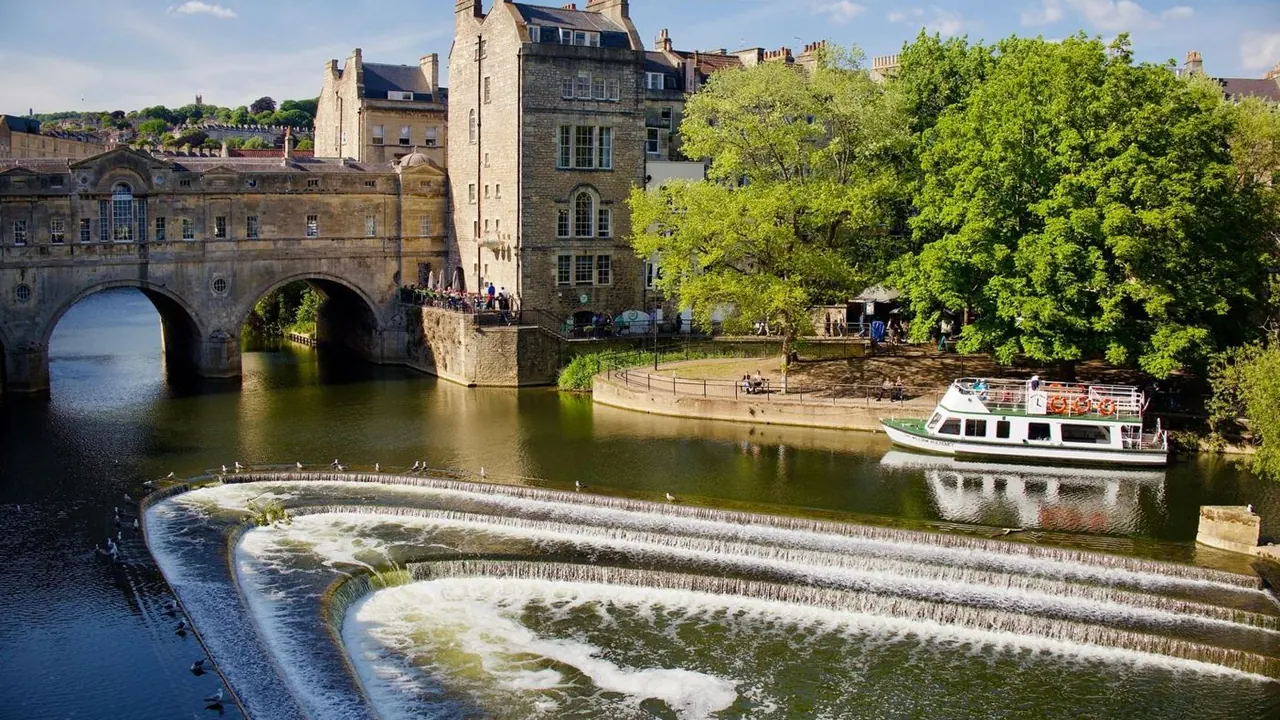
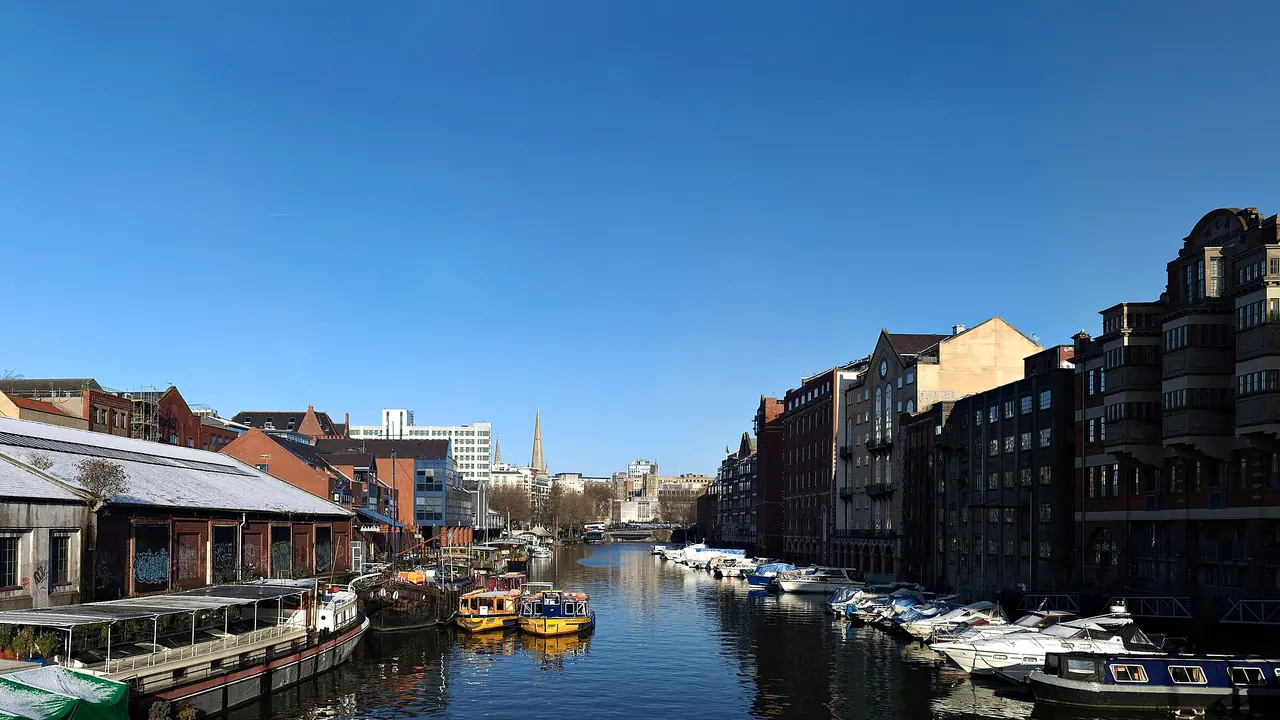
Photos: Bath by Lucas Carlini, Pexels License; Bristol by NotFromUtrecht, CC BY-SA 3.0, cropped.
Bath or Bristol?
Our verdict in twelve categories, each scored against the same fixed benchmark cities, and the climate month by month, so you can choose for your trip.
Choose Bath for
- wellness
- getting around
- culture and sights
Bath suits a slower, more graceful trip. The whole city is one Georgian set piece, with the Roman Baths and the Abbey at its centre. You can walk everything in a morning, and the hot springs give you something Britain has nowhere else: a soak in natural thermal water on a rooftop above the town. Couples, architecture lovers and anyone who wants tea, browsing and early nights will feel at home. The trade-off is cost, and quiet evenings.
Choose Bristol for
- nightlife
- food and drink
- live music and the arts
Bristol is the pick for travellers who want a working, sociable city rather than a showpiece. It eats more widely, goes out much later and has far more live music on an ordinary weeknight. Children get a science centre, an aquarium and harbour ferries, and the free museums make it gentler on the budget. Bath is only a quarter of an hour away by train, so staying in Bristol never means missing its neighbour.
Scoreboard
Twelve categories on one fixed scale from 0 to 100. The shaded stretch is the gap between the two.
Your match
Pick a travel style or drag the sliders, and both match scores follow your weighting.
Too close to call, 2 points apart
Wins on wellness and getting around with your weighting.
Wins on nightlife and food and drink with your weighting.
What matters to you?
Category by category
What the scores mean for a trip.
Beaches & swimming
Neither city is a beach destination, and the sand most people try is the same: Weston-super-Mare, where the tide goes out so far that a swim needs careful timing. The difference is the kind of water nearby. Bath's swimmers use the river Avon, at a weir east of the city and at spots upstream. Bristol, on the Severn estuary, points cold-water bathers to tidal pools such as the Victorian marine lake at Clevedon. For clear water and real beaches, both mean a long drive to Devon, Dorset, Cornwall or Gower.
Food & drink
Bristol gives you more to eat and more ways to eat it. St Nicholas Market serves pies alongside Caribbean and Middle Eastern dishes, container kitchens line the harbourside, and Gloucester Road, Stokes Croft and North Street are full of bakeries and neighbourhood restaurants. Drinking is its local strength, from old cider houses to craft taprooms in former warehouses.
Bath is narrower but has more of its own identity. It has its own bakes, the Bath bun, the Bath Oliver and the Sally Lunn bun, and a farmers' market in the old Green Park station. Afternoon tea is served all over the Georgian streets. What it lacks is cooking from other cuisines, street food and much life after the evening meal.
Culture & sights
Bath is the stronger draw because the city itself is the sight. The Royal Crescent, the Circus, Pulteney Bridge and the Assembly Rooms form an unbroken Georgian townscape in honey-coloured stone. Beneath it lie the Roman Baths, with their steaming great bath and temple precinct, and the Abbey stands beside them. Smaller museums such as the Holburne and No. 1 Royal Crescent round it out.
Bristol's culture is a story of trade and engineering told through single landmarks. Brunel's SS Great Britain and the Clifton Suspension Bridge are the highlights, with St Mary Redcliffe and the M Shed account of the port and the slave trade alongside. Banksy and the street art of Stokes Croft add a modern layer that Bath has nothing like.
Nightlife
This is where the two differ most sharply. Bristol has a real club culture, born of trip hop, drum and bass and dubstep. It lives in warehouses and railway arches around Temple Meads and on a moored boat in the harbour, and students keep it going all year. Stokes Croft adds scruffy, creative bars, and the harbourside offers calmer waterside pubs.
Bath's evenings mostly mean a pint in a coaching inn or a real-ale house on Walcot Street. A few clubs fill up during university term. On weeknights the centre is quiet soon after dinner, which is why Bath's own night owls take the train to Bristol.
Nature & outdoors
The two are broadly level, and they share the same soft, rolling West Country landscape. The old railway path of about 25km even links them by bike. The difference is in the style of outing. From Bath you step straight out of town onto the Skyline loop over the ridges, the Kennet and Avon towpath through the Limpley Stoke valley, or the Two Tunnels Greenway. Canoes and narrowboats are for hire on the canal.
Bristol has more rugged ground within the city. Climbers use the limestone cliffs of the Avon Gorge, and Ashton Court has mountain-bike trails and a deer park. From Bristol, the Wye Valley, the Brecon Beacons and Exmoor are within reach for proper upland hiking.
Day trips
Both make an excellent base, and each is the other's best day out, a quarter of an hour apart by train. Wells, Glastonbury, Stonehenge, Avebury, Salisbury and the southern Cotswolds are in range from either. The difference is which edge of the map is closer.
Bath sits nearer the wool towns of Bradford-on-Avon and Lacock, the gardens at Stourhead and the house at Longleat. Bristol is better placed for the west: Cardiff, Tintern Abbey in the Wye Valley, Berkeley Castle and Gloucester. For the villages, a car or a tour helps from either city.
Good for families
Bristol keeps children busy for longer. We The Curious, a science centre with a planetarium, and the aquarium sit side by side on the harbourside. Little ferries link them to the SS Great Britain, which is well set up for young visitors, and there is a spacious wildlife park on the northern edge.
Bath has the Roman Baths, which children enjoy for the steam and costumed characters, plus the playground in Royal Victoria Park and river boat trips. After that it is mostly a city for adults, though Longleat's safari park is within a drive. Steep streets make pushchairs hard work in both cities.
Getting around
Bath is easier on foot. You can cross the centre in about twenty minutes, much of it is pedestrianised, and the Abbey, the Baths, the Circus and the Crescent are all close together. Drivers are best off leaving the car at a park-and-ride site.
Bristol's core around the old city, the harbour and Queen Square is also walkable, and the yellow harbour ferries are a pleasant way to cross it. Beyond that, the steep climb to Clifton tires legs. With no metro or tram, the buses get stuck in traffic, and Temple Meads station is a walk from the centre. For country sights, both cities leave you needing a car or a tour.
Shopping & style
There is little to choose between them, and neither has a luxury tier. The difference is in scale and texture. Bath is made for browsing. Fashion runs along Milsom Street, antiques along Bartlett Street, makers and salvage dealers along Walcot Street, small shops cross Pulteney Bridge, and the Guildhall Market has traded for centuries.
Bristol has the bigger mainstream offer, with department stores and chains under cover at Cabot Circus and Broadmead. Its independent streak is grittier: record shops, delis and vintage clothes on Gloucester Road, and boutiques up Park Street to Clifton Village's arcades.
Affordability
Bristol is the easier city on the wallet. Most of its main museums and churches are free, and central hotels are reasonably priced on weekdays. Market stalls and street food keep meals affordable, though it is still far from cheap.
Bath is dear. It is a small city with many visitors, so central rooms cost a lot, especially on summer weekends and at Christmas, and both the Roman Baths and the spa charge highly. Pub lunches and a walkable centre help. Many visitors simply sleep in Bristol and come over by train.
Live music & performing arts
Bristol has more going on, especially in live music. Small venues in Stokes Croft, Old Market and around the harbour host bands, jazz and electronic acts most nights. On stage, the Bristol Old Vic, the oldest continuously working theatre in the English-speaking world, makes its own productions, while the Hippodrome takes touring musicals and ballet. The Tobacco Factory does Shakespeare, the Bristol Beacon hosts big concerts and St George's has chamber music.
Bath's stage life centres on the gilded Theatre Royal and its studio and children's theatre. There are concerts in the Abbey and the Assembly Rooms, and long-running festivals of literature, music and Mozart. On an ordinary night the choice is small.
Wellness & relaxation
Bath is in a different league here. It is the one place in Britain where you can bathe in natural hot spring water. The water rises at about 46°C and feeds the rooftop pool at Thermae Bath Spa, with its view over the Abbey, and the small Georgian Cross Bath. Tea in the Pump Room and strolls through the riverside gardens set an unhurried pace.
Bristol's own options are more modest. There is a heated Victorian lido behind Clifton's terraces, cold-water dips in the Severn's tidal pools, and the usual hotel spas and yoga studios. The city's mood is sociable rather than calm, though the Downs offer quiet.
When should you go?
Pick your month. The climate figures are measured averages, not a forecast.
Bath in July
Bristol in July
Daytime high, °C
Rainfall in the month, mm
Where the figures come from
Bath's temperatures are measured 29 km from the centre, at Lyneham.
Bath has no rain gauge within 25 km of the centre, so its rainfall comes from a gridded climate dataset read at the city rather than from a gauge further away.
Bristol's station stands 178 m above the city centre, so the centre is likely a little warmer than the figures say.
Bristol has no rain gauge within 25 km of the centre, so its rainfall comes from a gridded climate dataset read at the city rather than from a gauge further away.
Bristol's sunshine is measured 43 km from the centre, at Lyneham.
Temperature and rainfall are climate normals, averaged over the years shown. Bath: 1991-2020 normals, Lyneham (29.2 km from centre). Bristol: 1991-2020 normals, Lulsgate Bottom (11.8 km from centre).
The two cities lie a short train ride apart and share almost the same weather. Late spring to early autumn is the time to come. May to July bring the most sunshine, around 200 hours a month, and July and August are the warmest months, with afternoons of about 21°C in Bath and a degree cooler in Bristol. That is pleasant for walking the hills and the streets, but never beach weather. The nearby sea reaches only about 18°C even in high summer, so it suits a brisk dip rather than a long swim.
Rain comes in every month, but it gets heavier from October. November and December are the wettest months, at around 90mm in Bath and a little more in Bristol. Winter days are short, grey and cold, with highs near 7°C. That is when Bath's open-air thermal pool shows its worth, and when Bristol's science centre, aquarium and indoor venues carry a stay. Spring and September are mild in both, with fewer wet days than late autumn.
Which traveller are you?
On a relaxing and wellness trip, Bath is the clear choice. You can bathe in natural hot spring water at the rooftop spa or in the small Cross Bath, take tea in the Pump Room and wander the gardens. Bristol's lido is lovely, but it is no match for the springs.
For a food and nightlife trip, choose Bristol. You can graze market stalls and harbourside kitchens, drink cider and craft beer in warehouse taprooms, then go on to clubs in railway arches. Bath offers tearooms and pubs, and then quiet streets soon after dinner.
On a family trip with children, Bristol does more. It has a hands-on science centre with a planetarium, an aquarium, a wildlife park and little ferries crossing the harbour. Bath's Roman Baths and park playground fill a day, but families staying there often take the train to Bristol anyway.
Before you go
| Measure | Bath | Bristol |
|---|---|---|
| Official language | English | English |
| Currency | Pound Sterling (GBP) | Pound Sterling (GBP) |
| Sockets | G230 V, 50 Hz | G230 V, 50 Hz |
| Driving side | Left | Left |
| Time zone | UTC, UTC+1 in summer | UTC, UTC+1 in summer |
| Emergency number | 112 or 999 | 112 or 999 |
| Elevation | 132 m | 11 m |
| Main airport | Bristol Airport (BRS)25 km from centre117 non-stop destinations | Bristol Airport (BRS)11 km from centre117 non-stop destinations |
| Public holidays this year | 8 days | 8 days |
By the numbers
| Measure | Bath | Bristol |
|---|---|---|
| City population | 94,092 | 472,465 |
| People per km² | 3,245 | 4,311 |
| Museums within 10 km | 17 | 23 |
| UNESCO World Heritage sites within 50 km | 3 | 3 |
| Swim season, months above 21 °C | None | None |
Where else could you go?
Every comparison below shares a destination with this one, so you can follow Bath or Bristol somewhere new.