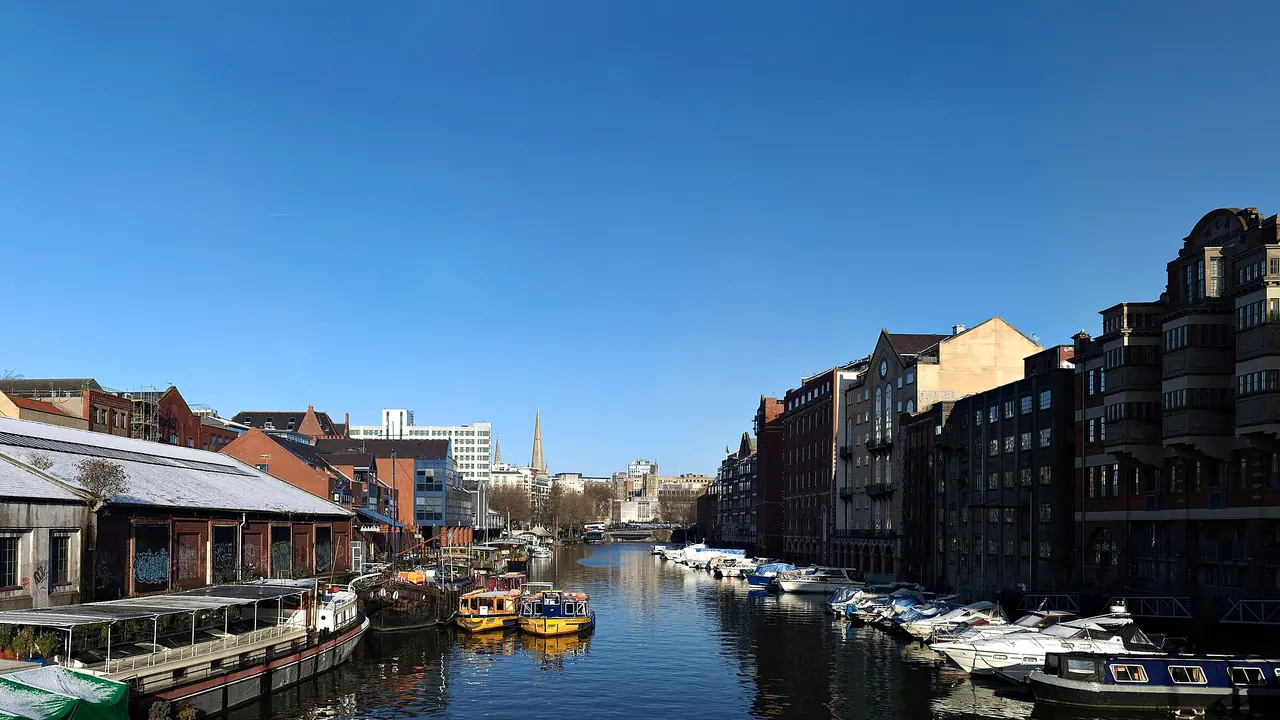
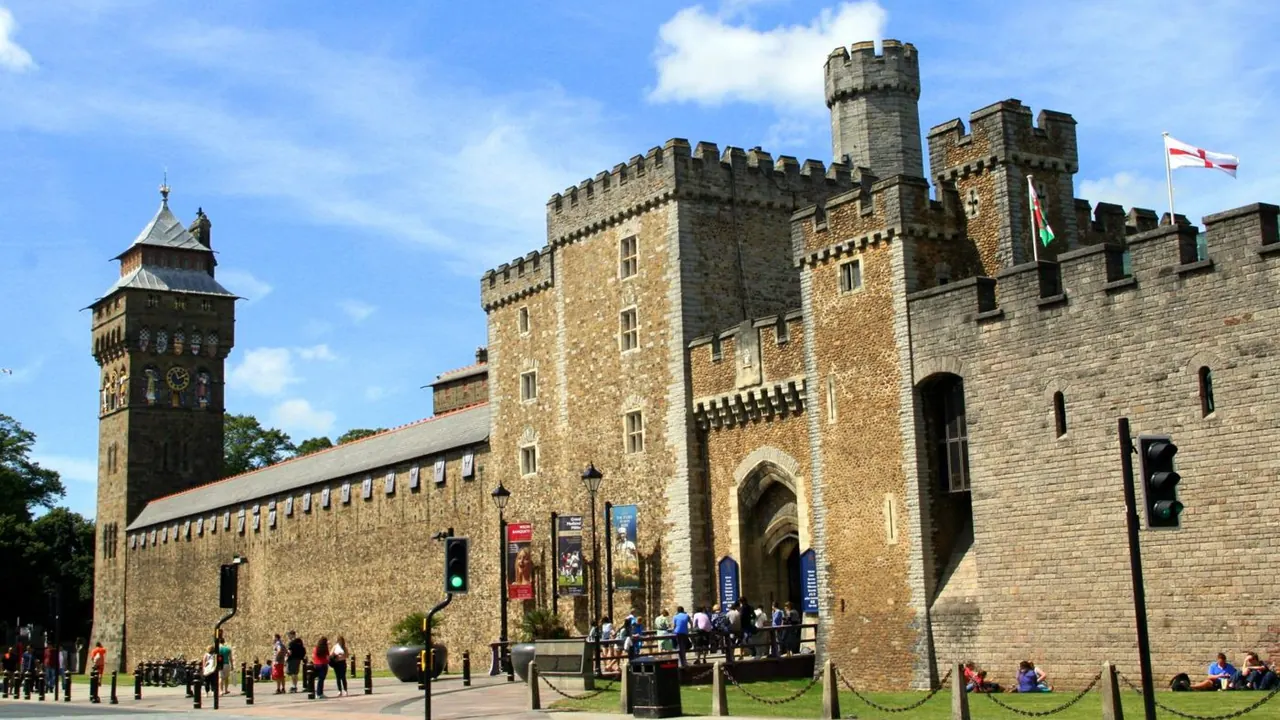
Photos: Bristol by NotFromUtrecht, CC BY-SA 3.0, cropped; Cardiff by Tevfik Teker, CC BY 3.0, cropped.
Bristol or Cardiff?
Our verdict in twelve categories, each scored against the same fixed benchmark cities, and the climate month by month, so you can choose for your trip.
Choose Bristol for
- wellness
- nightlife
- food and drink
Bristol suits travellers who want a city with its own sound and appetite. It has the stronger club and live-music scene, rooted in warehouses and railway arches, better independent eating with plenty of West Country cider, and the wider choice of day trips. Bath is a quarter of an hour away by train, both for its Georgian streets and for its thermal spa. Pick it for a long weekend of grazing, going out and heading into Somerset and the Cotswolds.
Choose Cardiff for
- beaches
- getting around
- prices
Cardiff is the easier and slightly cheaper choice if you would rather spend your time outdoors and among castles. Its flat, walkable centre puts the castle, market and arcades a few minutes from the station. Local trains reach Barry Island's sands and Caerphilly, and the Brecon Beacons are an hour's drive. Choose it for hillwalking, a capital's museums and opera, and a quieter pace once the weekend is over.
Scoreboard
Twelve categories on one fixed scale from 0 to 100. The shaded stretch is the gap between the two.
Your match
Pick a travel style or drag the sliders, and both match scores follow your weighting.
Too close to call, 1 point apart
Wins on wellness and nightlife with your weighting.
Wins on beaches and getting around with your weighting.
What matters to you?
Category by category
What the scores mean for a trip.
Beaches & swimming
Neither city is a beach destination, but Cardiff has the easier seaside. Barry Island's sandy bay and funfair are half an hour away by train, and Penarth's pebble shore and pier are just along the coast, so you don't need a car for a summer afternoon on the sand.
Bristol's own shore at the head of the Severn turns to mud at low tide, and at Weston-super-Mare the tide goes out a long way from the sand. Its best water is in tidal pools such as Clevedon's marine lake. These suit cold-water dippers rather than anyone who wants a beach day.
Food & drink
Bristol is the better place to eat, almost entirely thanks to independent places: covered stalls in St Nicholas Market, container kitchens on the harbourside, and bakeries and coffee roasters along Gloucester Road and North Street. Drink is its most local strength, with West Country cider and craft taprooms in old warehouses.
Cardiff has the more distinctly national food, with Welsh cakes off the griddle in the Victorian market, cawl, and laverbread with cockles. Beyond that the choice is thinner. Head to Pontcanna's bistros and the Middle Eastern and South Asian cooking on City Road, and go to the chain restaurants at the Bay for the view.
Culture & sights
The two are evenly matched for sightseeing, and each fills two or three days, but they tell different stories. Bristol's sights are about its seafaring past and Victorian engineering: Brunel's SS Great Britain and the Clifton Suspension Bridge over the Avon Gorge. Around them are Georgian Clifton and the Gothic St Mary Redcliffe, with Banksy's street art adding a modern layer.
Cardiff's sights are about a nation and the coal wealth that built its capital. There is a castle whose Roman and Norman walls surround lavish Victorian rooms, the National Museum's Impressionist paintings in the white stone of Cathays Park, and St Fagans, which gathers buildings from all over Wales. Bristol has more of its older streets and buildings, while Cardiff has the stronger art collection.
Nightlife
Bristol is the better night out by some way. Its club culture grew out of the sound systems behind trip hop and drum and bass. Nights out happen in warehouses and railway arches near Temple Meads and on a boat moored in the harbour, and the scruffier bars of Stokes Croft are the more creative option. A large student population keeps the city busy all year.
Cardiff's nights are bigger and blunter, with Saturday crowds on St Mary Street and mostly mainstream clubs. The small alternative bars on Womanby Street are the interesting exception. Midweek is quiet, and a couple of nights is enough to see it all.
Nature & outdoors
Cardiff has the better access to real hills. Bute Park runs from the castle straight onto the Taff Trail up the valley, and the Brecon Beacons, with the moorland ridge walk up Pen y Fan, are about an hour away by car. The Wales Coast Path past Penarth's cliffs adds sea views close to town.
Bristol's outdoors is softer and closer in. Climbers use the Avon Gorge's limestone, Ashton Court has deer and bike trails, and the old railway path runs towards Bath, with the Mendips and Cheddar Gorge within an hour. The Beacons are twice as far from Bristol, so days in proper uplands favour Cardiff.
Day trips
Both make fine bases and share some destinations, but Bristol reaches more. Bath is only a quarter of an hour away by train. Wells, Glastonbury, the Cotswold villages of Castle Combe and Lacock, and Stonehenge with Avebury each make an easy day out, and Cardiff itself is under an hour away.
Cardiff's day trips are mostly castles: Caerphilly's huge medieval fortress a short train ride away, Castell Coch in the woods, and Chepstow together with Tintern Abbey. Add the mining heritage of Blaenavon and Big Pit and it is a strong list, just narrower than Bristol's mix of English cathedral cities, prehistoric sites and Georgian Bath.
Good for families
Both are easy with children and suit families about equally, and each has a hands-on science centre on its waterfront: We The Curious in Bristol and Techniquest in Cardiff. Bristol adds an aquarium, a wildlife park and little harbour ferries, though its hills are hard work with a pushchair.
Cardiff's flat, compact centre is easier on small legs, St Fagans has farm animals and craft demonstrations, and in summer Barry Island's sands and funfair are a short train ride away. Cardiff has no zoo or large aquarium. Bristol's nearest seaside, at Weston-super-Mare, is further off, and its far-retreating tide makes it a poorer bet than Barry Island for a day building sandcastles.
Getting around
Cardiff is the easier city to get around. Its centre is flat and largely pedestrianised, with the castle, market, arcades and Cardiff Central station a few minutes apart. Local trains reach Penarth, Barry Island and Caerphilly without a car.
Bristol's centre is walkable too, and the yellow harbour ferries are a pleasant way to move along the water, but the climb to Clifton is steep and buses beyond the centre get stuck in traffic. Neither city has a metro or tram, and you need a car in either to get deep into the countryside.
Shopping & style
Shopping is on a par: worth an afternoon in either city but not a reason to go, with the chain stores gathered in a large central shopping centre in each. Bristol's independent shops line its streets, from the record shops, delis and vintage clothes on Gloucester Road to the boutiques of Park Street and Clifton Village.
Cardiff's independent shops sit under glass, in the Royal, Morgan and Castle arcades. It also has Welsh crafts such as lovespoons, woollen blankets and slate, which Bristol has nothing to match.
Affordability
Cardiff is the cheaper of the two and mid-priced for Britain. Bristol is one of the dearer British cities outside London, and its hotel rates climb at weekends. Both keep costs down with free museums and centres you can walk.
The catch in Cardiff is the national stadium: a rugby international or big concert sends hotel prices sharply up, so the dates you choose matter more there. The short, cheap train rides to its castles and the coast also keep day trips inexpensive.
Live music & performing arts
Bristol's stage life is built on historic theatres and small venues, while Cardiff's rests on national institutions. The Bristol Old Vic, working since the 1760s, stages its own productions in a Georgian auditorium, and the Tobacco Factory does Shakespeare. Small venues in Stokes Croft and Old Market host bands and electronic acts most nights.
Cardiff has the bigger companies: Welsh National Opera at the Wales Millennium Centre, the BBC National Orchestra of Wales, frequent concerts from its college of music and drama, and a stadium for major tours. It also has the Welsh tradition of choral singing. Opera lovers should lean towards Cardiff, and anyone after gigs is well served in both.
Wellness & relaxation
Bristol has the clear advantage, largely thanks to its neighbour: Bath's rooftop thermal pool, fed by Britain's only natural hot springs, is a quarter of an hour away by train. In the city, the heated Victorian lido behind Clifton's terraces makes a quiet half day, and cold-water swimmers use the tidal pools along the coast.
Cardiff has nothing comparable, so unwinding there means a hotel spa, a leisure pool at one of the Bay's waterfront hotels, or a slow walk along the Taff through Bute Park. Its everyday pace is more easy-going than Bristol's, though, which is sociable rather than restful.
When should you go?
Pick your month. The climate figures are measured averages, not a forecast.
Bristol in July
Cardiff in July
Daytime high, °C
Rainfall in the month, mm
Where the figures come from
Bristol's station stands 178 m above the city centre, so the centre is likely a little warmer than the figures say.
Bristol has no rain gauge within 25 km of the centre, so its rainfall comes from a gridded climate dataset read at the city rather than from a gauge further away.
Bristol's sunshine is measured 43 km from the centre, at Lyneham.
Temperature and rainfall are climate normals, averaged over the years shown. Bristol: 1991-2020 normals, Lulsgate Bottom (11.8 km from centre). Cardiff: 1991-2020 (sunshine 1981-2010, rainfall 1981-2010) normals, Cardiff-Wales Airport (14.9 km from centre).
The two cities have almost the same mild, damp climate, so their best months are the same: June to September, when afternoons reach about 20°C and long days suit walking the streets and the hills. Neither city ever gets too hot for sightseeing, and winters are cool and grey rather than freezing. The water in the Bristol Channel only warms to around 18°C in August, so even in high summer a swim is a brisk dip.
The real difference is rain. Cardiff is wetter in every month, and its autumn and early winter are the dampest time in either city, with November bringing around 103mm against Bristol's 97mm. Late spring and early summer are the driest stretch in both, which makes May and June good months for Cardiff's hill walks and Bristol's day trips alike.
Which traveller are you?
On a food and nightlife trip, stay in Bristol. Plan for long afternoons grazing at independent kitchens and cider bars, then a late night out in clubs with a sound of their own. Cardiff's weekends are louder but more ordinary.
For an outdoors trip, base yourself in Cardiff. You can walk or cycle out of the centre along a river valley, and a full mountain day is easy to reach by car, so city evenings follow real hillwalking. Bristol's countryside is gentler. Pack waterproofs either way.
On a relaxing and wellness trip, choose Bristol and treat Bath as part of the stay. A morning soaking in hot spring water is a short train ride away, and leafy Clifton keeps the evenings quiet. In Cardiff, unwinding rarely goes beyond a hotel spa.
Before you go
| Measure | Bristol | Cardiff |
|---|---|---|
| Official language | English | English |
| Currency | Pound Sterling (GBP) | Pound Sterling (GBP) |
| Sockets | G230 V, 50 Hz | G230 V, 50 Hz |
| Driving side | Left | Left |
| Time zone | UTC, UTC+1 in summer | UTC, UTC+1 in summer |
| Emergency number | 112 or 999 | 112 or 999 |
| Elevation | 11 m | 41 m |
| Main airport | Bristol Airport (BRS)11 km from centre117 non-stop destinations | Cardiff International Airport (CWL)15 km from centre30 non-stop destinations |
| Public holidays this year | 8 days | 8 days |
By the numbers
| Measure | Bristol | Cardiff |
|---|---|---|
| City population | 472,465 | 383,536 |
| People per km² | 4,311 | 2,734 |
| Museums within 10 km | 23 | 9 |
| UNESCO World Heritage sites within 50 km | 3 | 1 |
| Swim season, months above 21 °C | None | None |
Where else could you go?
Every comparison below shares a destination with this one, so you can follow Bristol or Cardiff somewhere new.