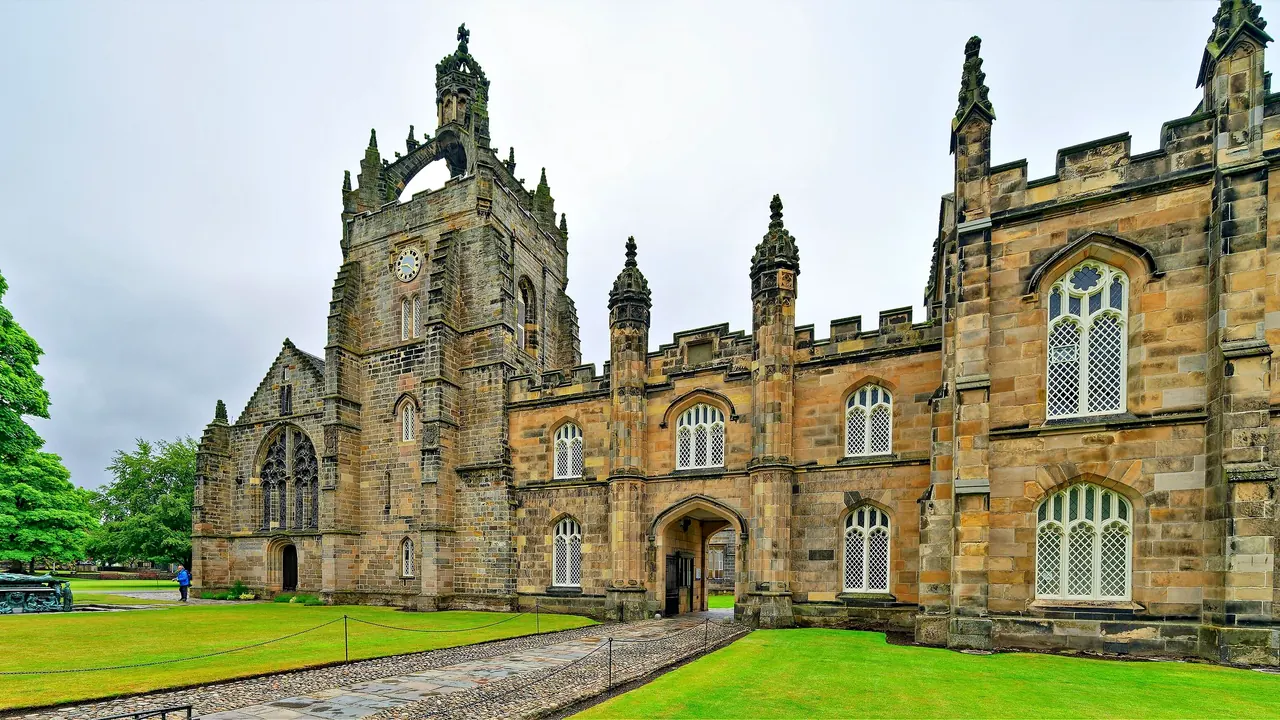
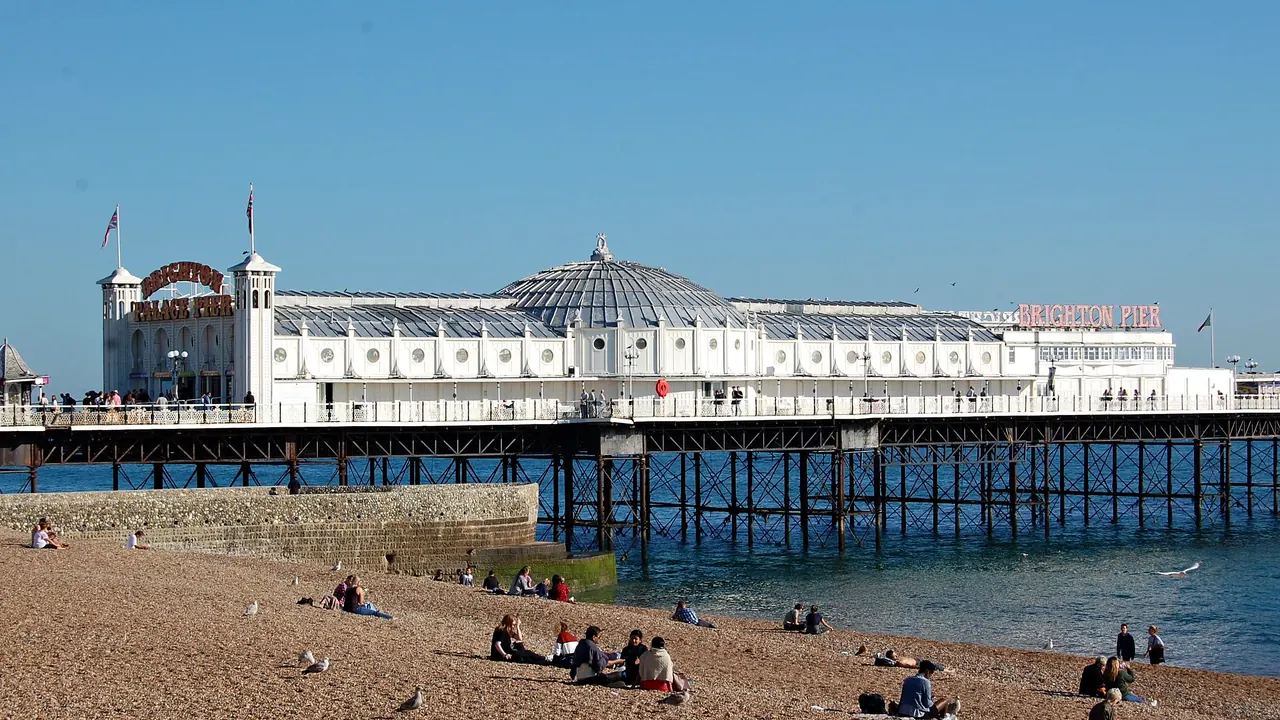
Photos: Aberdeen by Holger Uwe Schmitt, CC BY-SA 4.0, cropped; Brighton by Hassocks5489, CC0.
Aberdeen or Brighton?
Our verdict in twelve categories, each scored against the same fixed benchmark cities, and the climate month by month, so you can choose for your trip.
Choose Aberdeen for
- nature and the outdoors
- prices
Aberdeen is for travellers who want the country more than the city. The granite streets and Old Aberdeen fill a couple of days. After that comes the real draw: Royal Deeside, the Cairngorms, the castles of the Castle Trail and the cliffs and seabird colonies along the coast. Hotels aimed at business travellers often ease the cost of a weekend or summer stay. Choose it if you have a car, walking boots and a waterproof, and you would rather spend your evenings in a quiet pub than out late.
Choose Brighton for
- nightlife
- beaches
- shopping
Brighton suits people who want a lively seaside town with plenty to do after dark. It is better for eating out, going out, live performance and browsing the North Laine, and everything can be reached on foot. It also makes the stronger base for day trips, with London, Lewes and the Sussex towns all close by train. Families, groups of friends and anyone on a short break without a car will find more within easy reach here, though rooms cost more.
Scoreboard
Twelve categories on one fixed scale from 0 to 100. The shaded stretch is the gap between the two.
Your match
Pick a travel style or drag the sliders, and both match scores follow your weighting.
Wins on nature and the outdoors and prices with your weighting.
Wins on nightlife and beaches with your weighting.
What matters to you?
Category by category
What the scores mean for a trip.
Beaches & swimming
Neither city is a beach destination, but Brighton gets more use out of its seafront. The shingle runs all the way from the Marina to Hove. Lifeguards patrol the central stretches in season, and a warmer Channel makes a calm summer day good for a dip.
Aberdeen actually has the softer ground, with real sand and dunes by the harbour and wide, empty strands at Balmedie. The North Sea and the wind make it a place for a bracing walk rather than a swim, though. If you want sand you can enjoy in the sun, neither town gives you that easily.
Food & drink
Brighton is the better place to eat out. Its strength is a dense spread of independent places in the North Laine and Kemptown, a long record with vegetarian cooking, and serious coffee, with Sussex sparkling wine on the lists.
Aberdeen's strength is its ingredients rather than its restaurants. North Sea fish, Angus beef, the buttery at breakfast and Speyside whisky are excellent, but there are fewer good kitchens to choose from. The best fish supper may well be in Stonehaven, not in town.
Culture & sights
The two are broadly level for sights, but they show very different kinds of Britain. Aberdeen is stern and northern: silver-grey granite, the huge front of Marischal College, and the medieval lanes of Old Aberdeen around King's College and St Machar's Cathedral, with a maritime museum that tells the story of oil.
Brighton is playful and Regency. Its showpiece is the Royal Pavilion, with Indian domes outside and chinoiserie inside, set among white crescents and the old alleys of the Lanes. Both cities take two or three days at most, and in both you spend more time looking at buildings than going round collections.
Nightlife
Going out is one of the main reasons people visit Brighton, and it is one of the weakest reasons to visit Aberdeen. Brighton's bars are busy every night of the week. Kemptown has one of Britain's oldest LGBTQ+ scenes, and the clubs on West Street and in the seafront arches stay open into the small hours, loudly so at weekends.
Aberdeen's evenings centre on Belmont Street. There you will find traditional pubs with long whisky lists and a few student clubs, and they go quiet midweek and outside term.
Nature & outdoors
Aberdeen has the wilder and higher country. Royal Deeside and the Cairngorms give you mountain plateaus, Lochnagar, pine forest and winter skiing. On the coast there are seal colonies at the Ythan estuary, and dolphins swim past Torry Battery.
Brighton's landscape is softer but very close. The chalk grassland of the South Downs starts at the edge of the city, and the white cliffs of the Seven Sisters are the high point. It also has water sports off the seafront, which Aberdeen's colder sea does not encourage.
Day trips
Brighton has the wider choice, mainly because London is about an hour away by train. Add Lewes, Arundel, Chichester, Rye and the battlefield at Battle, most of which you can reach without a car.
Aberdeen's outings are excellent but of one type and more spread out. You get castles such as Dunnottar on its sea stack and Craigievar, Balmoral up Deeside and the Speyside distilleries, and most of them need a car.
Good for families
Brighton is the easier choice with children. It has a full traditional seaside kit: pier rides, one of the oldest aquariums in the world, Volk's Electric Railway and paddling at Hove Lagoon. The pebbles and the late-night weekend crowds are the drawbacks.
Aberdeen is safe and unhurried but has fewer attractions aimed at children. You get the science centre, the funfair on the esplanade, the glasshouses in Duthie Park and spotting dolphins at the harbour mouth. With the weather, you need an indoor backup plan more often.
Getting around
Both centres are compact, and both stations sit right in them, but Brighton is the easier town to manage without a car. Its frequent bus network reaches Hove and the Downs. Trains run straight to London and the Sussex towns, so you only need a car for remote villages. The one catch is the climb back up from the seafront.
Aberdeen's centre is just as walkable, and the town is flatter. The buses are only adequate, though, and the castles, Deeside and the distilleries all really need a hired car.
Shopping & style
Brighton is better for browsing. The North Laine is full of vintage clothes, records and retro furniture, and the Lanes have jewellers and antique dealers in the old alleys.
Aberdeen's shopping is mostly two chain-store centres and Union Street. Rosemount and Belmont Street have a few independents. Its best souvenirs are knitwear, tartan and whisky, which you are better buying in the Deeside villages or at a distillery.
Affordability
Aberdeen is somewhat easier on the budget, and mostly because of its rooms. Hotels built for business travellers often have reasonable rates at weekends and in summer. Its museums are free, though hiring a car adds to the cost.
Brighton's rooms are the expensive part, especially on summer weekends when Londoners and party groups fill them. Once you have a bed, walking, the beach and the Downs cost nothing. A midweek or winter stay brings the cost down a long way.
Live music & performing arts
Brighton has much more going on stage, and much of it is made locally. In May the Brighton Festival and Fringe fill the whole town for weeks. All year round there is a deep live-music and comedy circuit, and Glyndebourne's summer opera is twenty minutes away.
Aberdeen has a respectable regional programme. His Majesty's Theatre and the Music Hall host touring drama, national opera and ballet, and the Scottish orchestras, and pub sessions add some traditional music.
Wellness & relaxation
Neither is a place to come for pampering, though Brighton has a little more of a ritual. Its year-round dawn sea swimmers warm up in saunas on the seafront, and a quiet midweek walk past the beach huts on Hove's lawns is restful.
In Aberdeen, relaxing mostly means a hotel spa or a country-house hotel out in Deeside.
When should you go?
Pick your month. The climate figures are measured averages, not a forecast.
Aberdeen in July
Brighton in July
Daytime high, °C
Rainfall in the month, mm
Where the figures come from
Brighton has no rain gauge within 25 km of the centre, so its rainfall comes from a gridded climate dataset read at the city rather than from a gauge further away.
Brighton's sunshine is measured 37 km from the centre, at London Gatwick Airport.
Temperature and rainfall are climate normals, averaged over the years shown. Aberdeen: 1991-2020 normals, Aberdeen / Dyce (9 km from centre). Brighton: 1999-2020 (sunshine 1981-2010, rainfall 1991-2020) normals, Shoreham Airport (10.3 km from centre).
Neither city ever gets too hot for walking, so the question is how cool and wet you are willing to put up with. Aberdeen tops out at about 18°C in July and August. It gets its sunniest weather in May, and the rain gets heavier from October, its wettest month. Winters are short on daylight and cold, which suits skiers heading to Glenshee more than people exploring the city on foot. Brighton runs a couple of degrees warmer all year and has noticeably more sun from April to September. Its peak runs from June to August, when the days are longest and brightest.
The sea makes the biggest difference. Off Brighton the Channel warms to about 17°C from August into September, which is enough for a swim on a calm day. The North Sea at Aberdeen stays near 13°C even then. Brighton's wet season comes later and lasts longer, with October to December the dampest stretch at over 100mm in the last two months. For a mix of beach and town, July to September favours Brighton. Late spring and summer are the best time for walking in Deeside.
Which traveller are you?
On an outdoors trip, Aberdeen is the better choice. Within an hour or so you can be on the Cairngorms plateau, in the pine forests around Braemar or walking the cliffs towards Stonehaven, and winter brings skiing. The South Downs are lovely but much gentler.
For a food and nightlife trip, Brighton is far ahead. Small independent kitchens fill the Lanes and Kemptown, and evenings run from craft-beer rooms to clubs in the seafront arches. Aberdeen offers good fish and whisky in pubs that empty early outside term.
On a family trip with children, Brighton gives more to do. Children get the Palace Pier's rides, the Victorian aquarium and Volk's Electric Railway along the shingle. Aberdeen is calm and safe but has fewer attractions, mainly its science centre and a funfair on the esplanade.
Before you go
| Measure | Aberdeen | Brighton |
|---|---|---|
| Official language | English | English |
| Currency | Pound Sterling (GBP) | Pound Sterling (GBP) |
| Sockets | G230 V, 50 Hz | G230 V, 50 Hz |
| Driving side | Left | Left |
| Time zone | UTC, UTC+1 in summer | UTC, UTC+1 in summer |
| Emergency number | 112 or 999 | 112 or 999 |
| Elevation | 29 m | 22 m |
| Main airport | Aberdeen International Airport (ABZ)8 km from centre29 non-stop destinations | London Gatwick Airport (LGW)37 km from centre224 non-stop destinations |
| Public holidays this year | 10 days | 8 days |
By the numbers
| Measure | Aberdeen | Brighton |
|---|---|---|
| City population | 200,680 | 134,293 |
| People per km² | 3,083 | 1,624 |
| Museums within 10 km | 10 | 11 |
| UNESCO World Heritage sites within 50 km | 0 | 0 |
| Swim season, months above 21 °C | None | None |
Where else could you go?
Every comparison below shares a destination with this one, so you can follow Aberdeen or Brighton somewhere new.
- Londonvs Brighton
- St Andrewsvs Aberdeen
- Oxfordvs Brighton
- Invernessvs Aberdeen
- Edinburghvs Aberdeen
- Cambridgevs Brighton