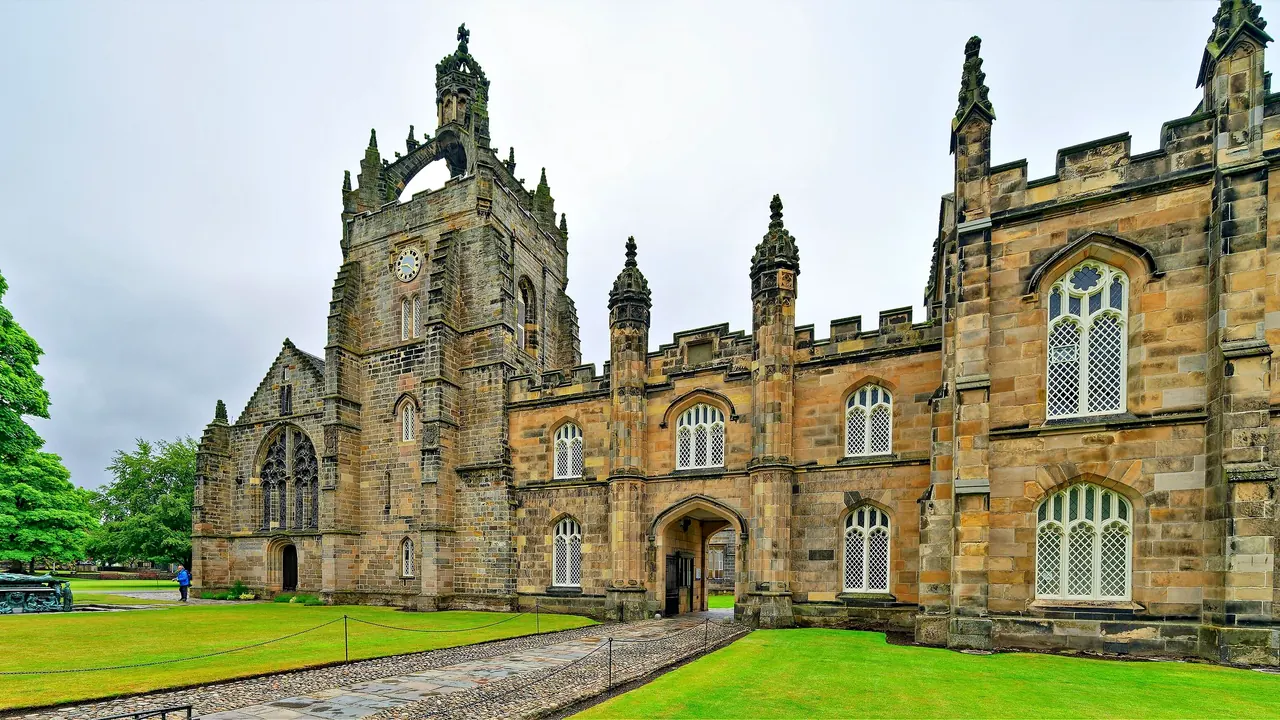
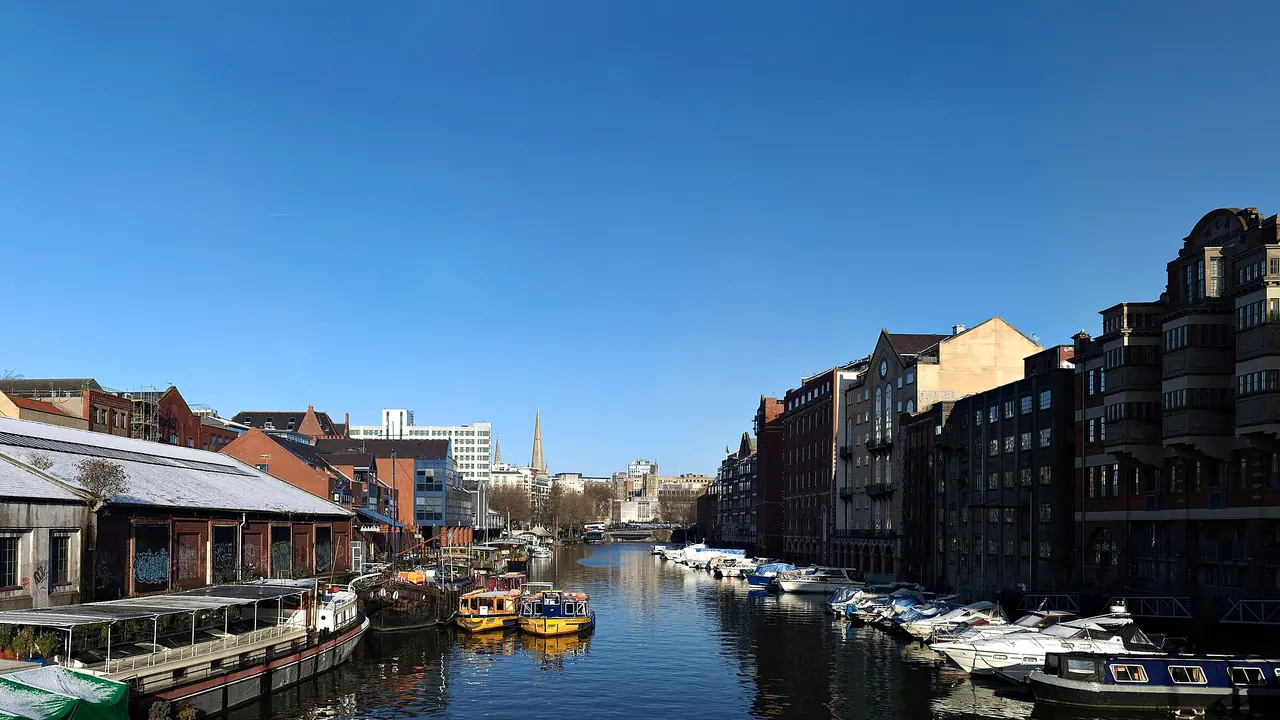
Photos: Aberdeen by Holger Uwe Schmitt, CC BY-SA 4.0, cropped; Bristol by NotFromUtrecht, CC BY-SA 3.0, cropped.
Aberdeen or Bristol?
Our verdict in twelve categories, each scored against the same fixed benchmark cities, and the climate month by month, so you can choose for your trip.
Choose Aberdeen for
- nature and the outdoors
- prices
- beaches
Aberdeen is the choice for travellers who want landscape more than city life. The granite centre and Old Aberdeen fill a couple of days, and then the real trip starts: Royal Deeside, the Cairngorms, the Castle Trail and a coast of cliffs, seabirds and dolphins. Walkers, castle-hunters and anyone with a hire car will get the most from it. Evenings are quiet and the food is honest rather than memorable.
Choose Bristol for
- nightlife
- wellness
- food and drink
Bristol suits people who want the city itself to be the entertainment. It has more to eat, more to hear and more to do after dark, with a club and live-music culture of its own and a food scene of markets and independent kitchens. It is also the stronger base for easy day trips by train, with Bath close enough for an afternoon. Families and couples on a long weekend will find more to fill their days.
Scoreboard
Twelve categories on one fixed scale from 0 to 100. The shaded stretch is the gap between the two.
Your match
Pick a travel style or drag the sliders, and both match scores follow your weighting.
Wins on nature and the outdoors and prices with your weighting.
Wins on nightlife and wellness with your weighting.
What matters to you?
Category by category
What the scores mean for a trip.
Beaches & swimming
Neither city is anywhere to go for the beach, but they fall short in different ways. Aberdeen at least has real sand on its doorstep, a long stretch of dunes running north from the harbour and emptier strands at Balmedie. These are beaches for a windy walk, not for swimming in a sea that barely passes 13°C.
Bristol has no beach of its own, only the silty, muddy Severn shore. Weston-super-Mare's sands are spoiled by a tide that goes out a very long way. What it has instead are tidal pools such as Clevedon's marine lake, which suit a cold dip rather than a day in the sun.
Food & drink
Bristol is the better place to eat. Grazing is the pleasure here: market stalls in the old city, container kitchens by the harbour and neighbourhood bakeries and roasters along Gloucester Road and North Street. Add West Country cider and the taprooms of its breweries, and an evening of eating and drinking is easily planned.
Aberdeen has the clearer local identity but less choice. North Sea fish, Aberdeen Angus beef and the buttery at breakfast are worth seeking out, and fish and chips in Stonehaven make a fine excuse for a trip down the coast. Beyond those, the restaurants are solid rather than a reason to visit.
Culture & sights
Aberdeen's appeal lies more in how the city looks than in what it holds. The silver granite of Marischal College and Union Street sets the tone. The medieval lanes of Old Aberdeen, around King's College and St Machar's Cathedral, are its best walk, and the fishermen's cottages of Footdee are a short stroll from the harbour.
Bristol has more to see, and most of it comes from its seafaring and engineering past. Brunel's SS Great Britain and the Clifton Suspension Bridge stand out, along with the Gothic St Mary Redcliffe and M Shed's frank account of the city's part in the slave trade. Bristol is also where Banksy started out, and the street art of Stokes Croft and Bedminster has grown from the city's own scene. In both cities, two or three days are enough.
Nightlife
This is where the two differ most. Bristol has a real club culture, rooted in the sound-system scene behind trip hop and drum and bass. It takes place in railway arches near Temple Meads and on the water, with scruffier late bars in Stokes Croft, and weekends run late.
Aberdeen's nights centre on Belmont Street: traditional pubs with long whisky lists, a few cocktail bars and clubs that rely on students in term time. It makes a pleasant evening, but outside weekends it is quiet early.
Nature & outdoors
Aberdeen has far grander country on its doorstep. Follow the Dee west and you reach the Cairngorms, Lochnagar and the pine forests of Braemar, with winter skiing at Glenshee and the Lecht. On the coast there are seabird cliffs, the seals of the Ythan estuary and dolphins seen from Torry Battery.
Bristol's outdoors is gentler and closer to the centre. There is climbing in the Avon Gorge, woodland at Leigh Woods and Ashton Court, and the railway path to Bath for cyclists. The Mendips and Cheddar Gorge are under an hour away. Real upland walking means a two-hour drive to the Brecon Beacons or Exmoor.
Day trips
Bristol is the easier base for day trips, largely because so much is reachable by train. Bath is a quarter of an hour away and Cardiff under an hour. Wells, Glastonbury, the southern Cotswolds, Stonehenge and Avebury fill further days.
Aberdeen's day trips are rewarding but more spread out and more dependent on a car. The cliff-top ruin of Dunnottar, the Castle Trail through Crathes, Craigievar and Fyvie, Balmoral and the Speyside distilleries make a strong castle-and-whisky circuit for anyone driving.
Good for families
Bristol has more for children, and most of it sits together on the harbourside. The SS Great Britain, the hands-on science centre with its planetarium and the aquarium are all there, linked by little ferries. The wildlife park and the Ashton Court deer add outdoor days, though the steep hills are hard work with a pushchair.
Aberdeen is calm and safe but has fewer attractions built for young visitors. The Science Centre, the seaside funfair on the esplanade and the Duthie Park glasshouses cover a wet day. Watching for dolphins at the harbour mouth is the outing children tend to remember.
Getting around
There is little to choose between them. Both have a compact walkable centre, a central station and buses rather than a metro or tram. The difference lies in the ground. Aberdeen's centre is flat, with the beach and Old Aberdeen an easy walk away. Bristol's core is threaded by harbour ferries, but the climb to Clifton is steep and buses get stuck in traffic.
Outside town, Bristol's trains reach more of what a visitor wants. From Aberdeen, Deeside, the castles and the distilleries really call for a car.
Shopping & style
Bristol offers more of interest. Beyond the chain stores of Cabot Circus and Broadmead, Gloucester Road has a long run of independent record shops, delis and vintage clothing. Park Street and the Georgian arcades of Clifton Village add boutiques and galleries.
Aberdeen's shopping is mostly two central malls and Union Street, with a few independents around Belmont Street and Rosemount. Its real souvenirs are knitwear, tartan and whisky, and these are better bought in the Deeside villages or at the distilleries.
Affordability
Neither is cheap, but Aberdeen is slightly easier on the budget. Its supply of business hotels often makes rooms reasonable at weekends and in summer. The catch is that seeing the countryside usually means paying for a hire car.
Bristol hotels tend to climb at weekends, just when most visitors come, and eating out costs the same as anywhere in England. The market stalls, the free museums and a centre you can explore on foot help to balance that.
Live music & performing arts
Bristol has the richer stage, and more of it is its own work. The Bristol Old Vic produces plays in its Georgian auditorium, the Tobacco Factory stages fringe theatre and Shakespeare, and small venues in Stokes Croft and Old Market have bands, jazz and electronic acts most nights.
Aberdeen depends more on visiting companies. His Majesty's Theatre takes touring drama and visits from the national opera and ballet, and the Music Hall hosts the Scottish orchestras. Folk sessions in pubs give it a traditional flavour that Bristol lacks.
Wellness & relaxation
Bristol is the better place to unwind, mainly thanks to its neighbour. Bath's thermal spa, with its rooftop pool fed by natural hot springs, is a quarter of an hour away by train, and Clifton's heated Victorian lido is a quiet half day closer to home.
Aberdeen has only hotel spas and the country-house hotels of Deeside. Its rest comes from the slow pace and the empty countryside close by, not from any place built for relaxing.
When should you go?
Pick your month. The climate figures are measured averages, not a forecast.
Aberdeen in July
Bristol in July
Daytime high, °C
Rainfall in the month, mm
Where the figures come from
Bristol's station stands 178 m above the city centre, so the centre is likely a little warmer than the figures say.
Bristol has no rain gauge within 25 km of the centre, so its rainfall comes from a gridded climate dataset read at the city rather than from a gauge further away.
Bristol's sunshine is measured 43 km from the centre, at Lyneham.
Temperature and rainfall are climate normals, averaged over the years shown. Aberdeen: 1991-2020 normals, Aberdeen / Dyce (9 km from centre). Bristol: 1991-2020 normals, Lulsgate Bottom (11.8 km from centre).
Neither city gets warm enough for a beach vacation in any month, so summer is the season for walking and long days outdoors. Aberdeen peaks at about 18°C in July and August. Its sunniest month is usually May, and the summer after that turns more showery. The North Sea stays cold all year. Bristol runs a couple of degrees warmer, reaching about 20°C in July. It is also sunnier than Aberdeen in almost every month, most clearly from April to September. The Severn estuary warms more than the North Sea but is still not water for swimming.
Both cities are at their best from May to September. Rain sets in from October in both. Aberdeen's wettest month passes 100mm, while Bristol stays damp right through to December and is slightly the wetter of the two over the year. Winter days of 6 to 8°C are chilly but fine for walking the streets in either city, though there is more wind on the Aberdeen coast.
Which traveller are you?
For an outdoors trip, Aberdeen is the clear pick. Within an hour or so you are on Cairngorms plateau walks or in the pine woods around Braemar, and in winter there is skiing too. On the coast there are cliff paths, seal colonies and dolphins at the harbour mouth.
For a food and nightlife trip, choose Bristol. It has St Nicholas Market, street food on the harbourside, West Country cider and a craft-beer scene. After dark there are warehouse clubs and small music venues, and they keep going late most weekends. Aberdeen's pubs are pleasant but quiet by comparison.
On a relaxing and wellness trip, Bristol does better. The heated Victorian lido in Clifton is a restful half day, and Bath's natural hot springs are only a quarter of an hour away by train. Aberdeen offers hotel spas and country quiet, but it has no bathing culture at all.
Before you go
| Measure | Aberdeen | Bristol |
|---|---|---|
| Official language | English | English |
| Currency | Pound Sterling (GBP) | Pound Sterling (GBP) |
| Sockets | G230 V, 50 Hz | G230 V, 50 Hz |
| Driving side | Left | Left |
| Time zone | UTC, UTC+1 in summer | UTC, UTC+1 in summer |
| Emergency number | 112 or 999 | 112 or 999 |
| Elevation | 29 m | 11 m |
| Main airport | Aberdeen International Airport (ABZ)8 km from centre29 non-stop destinations | Bristol Airport (BRS)11 km from centre117 non-stop destinations |
| Public holidays this year | 10 days | 8 days |
By the numbers
| Measure | Aberdeen | Bristol |
|---|---|---|
| City population | 200,680 | 472,465 |
| People per km² | 3,083 | 4,311 |
| Museums within 10 km | 10 | 23 |
| UNESCO World Heritage sites within 50 km | 0 | 3 |
| Swim season, months above 21 °C | None | None |
Where else could you go?
Every comparison below shares a destination with this one, so you can follow Aberdeen or Bristol somewhere new.
- Bathvs Bristol
- Cardiffvs Bristol
- Oxfordvs Bristol
- St Andrewsvs Aberdeen
- Invernessvs Aberdeen
- Edinburghvs Aberdeen