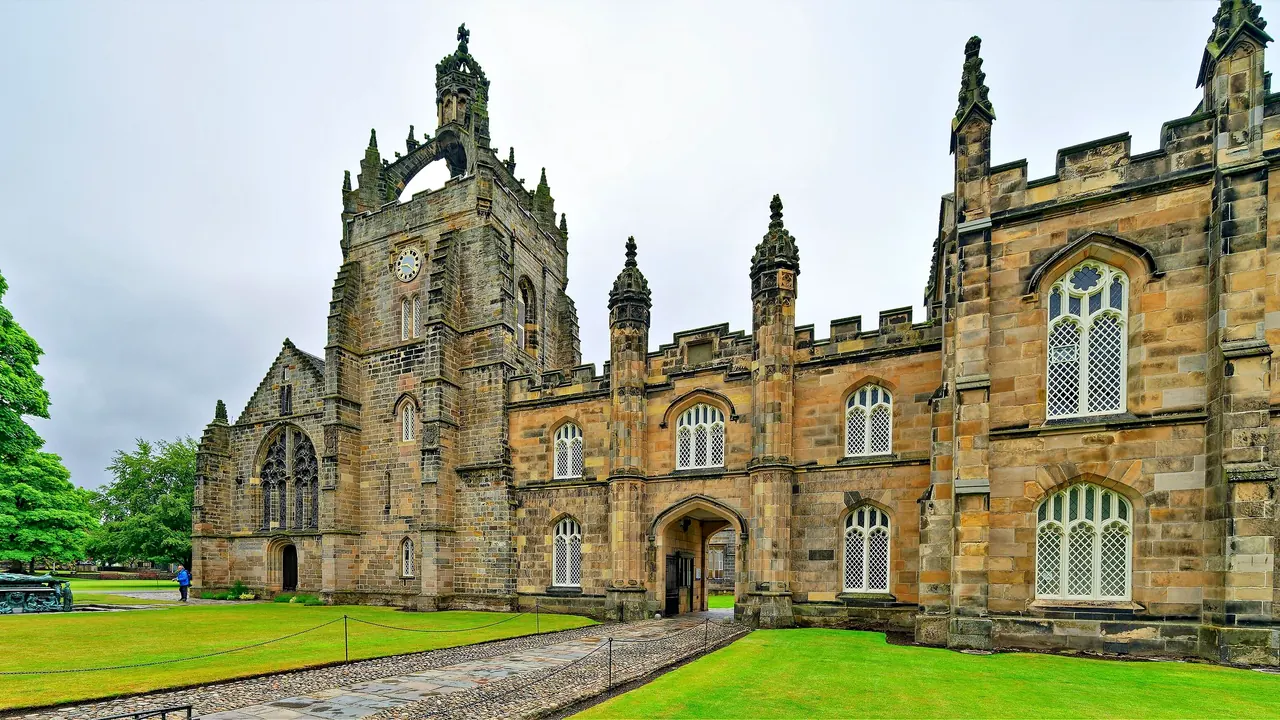
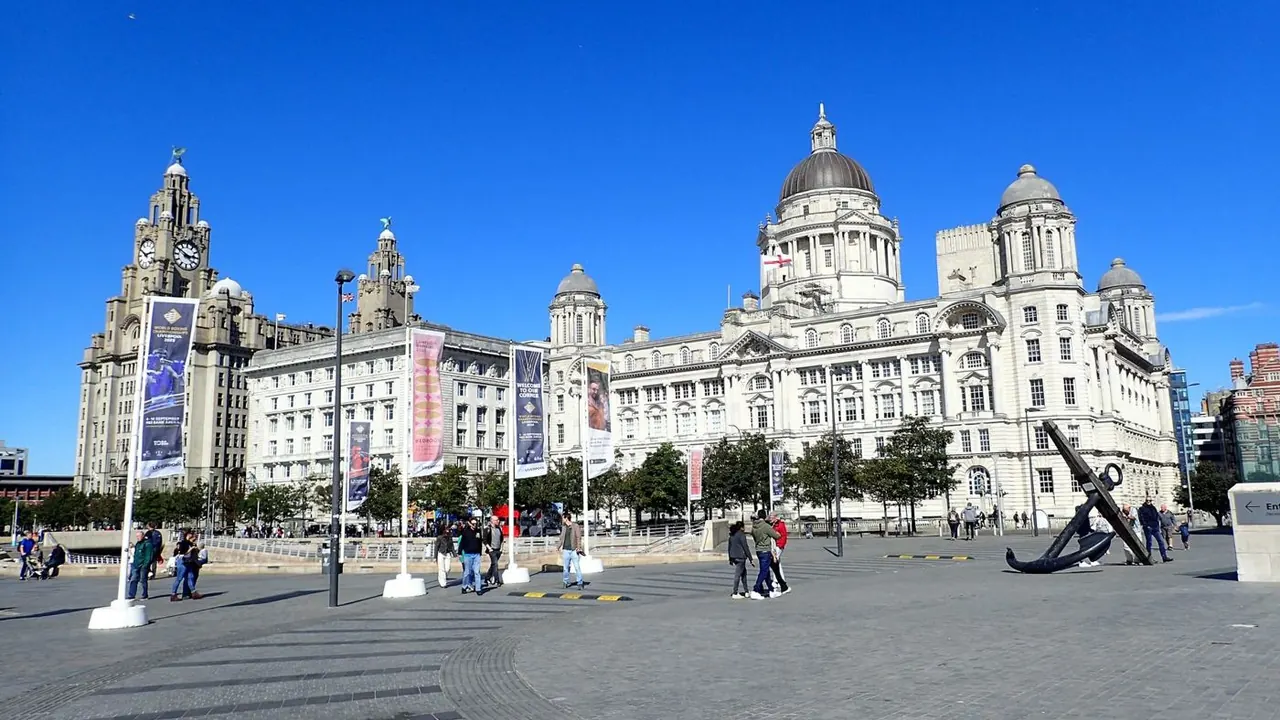
Photos: Aberdeen by Holger Uwe Schmitt, CC BY-SA 4.0, cropped; Liverpool by Marathon, CC BY-SA 2.0, cropped.
Aberdeen or Liverpool?
Our verdict in twelve categories, each scored against the same fixed benchmark cities, and the climate month by month, so you can choose for your trip.
Choose Aberdeen for
- nature and the outdoors
- day trips
Aberdeen suits travellers who want a city as a base for the outdoors. The Cairngorms and Royal Deeside are within an hour or so, the coast has cliffs, seabirds and dolphins, and the countryside is crowded with castles. The granite centre and Old Aberdeen fill a couple of days, but the evenings are quiet and the real reason to come lies beyond the city edge, ideally with a car.
Choose Liverpool for
- nightlife
- live music and the arts
- culture and sights
Pick Liverpool for a city vacation in the full sense: the docks and museums of a great port, two striking cathedrals, live music most nights and nights out that run late. It is easier to get around on foot and by train, kinder to families thanks to its free museums, and a little gentler on the wallet. In return, its surroundings are flatter, and the real hills are a long way off.
Scoreboard
Twelve categories on one fixed scale from 0 to 100. The shaded stretch is the gap between the two.
Your match
Pick a travel style or drag the sliders, and both match scores follow your weighting.
Wins on nature and the outdoors and day trips with your weighting.
Wins on nightlife and live music and the arts with your weighting.
What matters to you?
Category by category
What the scores mean for a trip.
Beaches & swimming
Both cities have long stretches of sand nearby, and neither is a place to swim. Aberdeen's beach begins at the edge of the centre and runs north to the empty dunes of Balmedie. All of it faces a North Sea that stays very cold and is often windy.
Liverpool's sand is spread along the Merseyrail line. Gormley's iron figures stand at Crosby, Formby has dunes topped with pines, and West Kirby's walled marine lake offers a safer paddle than the open shore, where the tide goes out a long way and there is soft mud. Aberdeen's beach is closer to hand, and Liverpool's coast has more to look at.
Food & drink
Aberdeen's food is about its produce more than its restaurants: North Sea fish and shellfish, Aberdeen Angus beef, the salty buttery roll at breakfast and Speyside whisky in every bar. A fish supper in Stonehaven is the meal to plan around, but the choice of restaurants in town is limited.
Liverpool gives a visitor more range. Besides scouse, there are the independent cafés and small international kitchens of Bold Street, the street-food halls of the Baltic Triangle, a long-established Chinatown, and pubs that run from Victorian gin palaces to backstreet locals. Neither city is a gourmet destination, but eating out in Liverpool is more varied.
Culture & sights
Aberdeen's appeal is its granite. Marischal College, the Georgian line of Union Street and above all Old Aberdeen, with the crowned tower of King's College and the fortress-like St Machar's, give it a stern beauty. The art gallery, the Maritime Museum and the cottages of Footdee complete a modest but rewarding list.
Liverpool has more to see and stronger museums. The Three Graces at the Pier Head, the Royal Albert Dock warehouses with the maritime and slavery museums, the Walker's Pre-Raphaelites and the two cathedrals linked by Hope Street tell the story of one of the world's great ports. The Beatles turn up throughout.
Nightlife
Aberdeen's evenings are spent in pubs. There are whisky bars and real-ale houses around Belmont Street and a few clubs that fill with students in term time, and the centre goes quiet early midweek.
Liverpool offers nights out on a different scale. At weekends, Concert Square, Seel Street and Wood Street fill with bars, clubs and stag and hen groups. The Baltic Triangle's warehouses lean towards electronic club nights, Lark Lane is calmer, and finishing well after 2am is normal.
Nature & outdoors
Here Aberdeen is far stronger. Within an hour or so up the Dee lie the Cairngorms, Lochnagar and the pine forests around Braemar, with skiing at Glenshee and the Lecht in winter. The coast adds cliff walks, seabird colonies, the Ythan seals and dolphins seen from Torry Battery.
Liverpool's green spaces are gentler: Sefton Park and its palm house, the Mersey promenade, Formby's red squirrels and the Wirral Way to the Dee estuary. Real mountains are about two hours away in North Wales or the Lake District, too far for most visitors to fit in.
Day trips
Both make good bases for excursions, but the outings are of different kinds. From Aberdeen they are rural: Dunnottar on its sea stack, the tower houses of the Castle Trail, Balmoral and Deeside, the Speyside distilleries and fishing villages such as Pennan. Most of them are far easier by car.
Liverpool's day trips are mostly to towns you can reach by train: Roman Chester, the museums of Manchester, the model village of Port Sunlight and Southport's pier, with Conwy and Llandudno for a longer day by car. Choose Aberdeen for castles and whisky, and Liverpool for historic towns without having to drive.
Good for families
Aberdeen is safe and calm with children but has little built for them. The Science Centre, the beachfront funfair, the Duthie Park glasshouses and the chance of seeing dolphins are the main draws, and the weather often pushes plans indoors.
Liverpool gives families more. Its free museums have dinosaurs, a planetarium and a play gallery, the waterfront is flat and pedestrian, and children enjoy the Mersey ferry. Chester Zoo and Knowsley Safari Park are within easy reach, and the loud weekend nights in the centre are the main thing to avoid.
Getting around
Both centres are easy on foot. The real difference shows once you head further out. In Aberdeen the station, Union Street, the harbour and the museums are all close together, and the beach is a stroll away. Old Aberdeen, though, means a longish walk or a bus, and the Deeside hills and castles really call for a car.
Liverpool lets a visitor go further without driving. The docks, the Pier Head, the Ropewalks and both cathedrals lie within about 2km of one another, with only Hope Street up a hill, and Merseyrail's underground loop runs often to Crosby, Formby, Southport and the Wirral. Neither city has a tram or metro, so Sefton Park and Anfield need a bus, just as Old Aberdeen does.
Shopping & style
Shopping in Aberdeen is practical: two indoor centres of British chains, Union Street, and a scattering of independent shops around Belmont Street and Rosemount. Knitwear, tartan and whisky are better bought out in Deeside or at the distilleries.
Liverpool ONE is a larger open-air district of chains and department stores. Bold Street adds vintage clothes, records and independent boutiques, and there are makers' studios in the Baltic Triangle. Neither city is a fashion destination, but Liverpool makes for the better afternoon of browsing.
Affordability
Both cities charge British prices for food and drink, so the difference lies in the extras. Aberdeen's business hotels often have reasonable weekend and summer rates and its museums are free, but hiring the car you need for the hills and castles adds a real cost.
Liverpool's hotels are good value for most of the year, except on big match and concert weekends and during the Grand National. The major museums are free, and with a compact centre and Merseyrail, little goes on transport. Money stretches a little further here.
Live music & performing arts
Most of what plays on an Aberdeen stage has come from elsewhere. His Majesty's Theatre, an Edwardian house on Rosemount Viaduct, takes touring drama, musicals and visits from the national opera and ballet companies. The Music Hall hosts the Scottish orchestras, and folk turns up in pub sessions.
Liverpool produces much of its own. The Royal Liverpool Philharmonic plays a full season in its art deco hall, the Everyman and the Playhouse stage their own productions, and live bands play most nights around Mathew Street and the Baltic Triangle, with the Cavern among the venues. For music lovers the gap between the two cities is wide.
Wellness & relaxation
Neither city is a place to be pampered. Neither has a bathing culture, and in both wellness means hotel spas. What differs is how you rest: in Aberdeen through the slow pace and a country-house hotel in Deeside, in Liverpool through a walk in Sefton Park or a slow ferry crossing, ideally staying on the Wirral to escape the noisy weekend centre.
When should you go?
Pick your month. The climate figures are measured averages, not a forecast.
Aberdeen in July
Liverpool in July
Daytime high, °C
Rainfall in the month, mm
Where the figures come from
Liverpool's temperatures are measured 47 km from the centre, at Manchester Airport.
Liverpool has no rain gauge within 25 km of the centre, so its rainfall comes from a gridded climate dataset read at the city rather than from a gauge further away.
Temperature and rainfall are climate normals, averaged over the years shown. Aberdeen: 1991-2020 normals, Aberdeen / Dyce (9 km from centre). Liverpool: 1991-2020 normals, Manchester Airport (47.4 km from centre).
Neither city is a beach destination at any time of year, but Liverpool is the milder of the two in every month. Summer highs reach about 21°C there against 18°C in Aberdeen. The Irish Sea off Liverpool warms to around 17°C by August, while the North Sea off Aberdeen stops at 13°C, which makes even a summer dip a test of nerve. May to August is the best stretch in both cities and has the most sunshine. Aberdeen's brightest month is May, while Liverpool stays sunny more evenly through high summer.
Winter is cold, grey and short of daylight from November to January, though rarely too cold for walking the streets of either city. Autumn is the wettest season in both, and Aberdeen gets the heavier rain, with around 101mm falling in October. For hill walking in Deeside, late spring and early summer are the safest choice. For Liverpool's streets, any month from April to September works well.
Which traveller are you?
On an outdoors trip, Aberdeen is the clear choice. Royal Deeside and the Cairngorms lie about an hour west, Bennachie makes an easy half-day climb, and the coast adds cliff paths, seal colonies and dolphins at the harbour mouth. Liverpool's flat parks cannot compete.
For a food and nightlife trip, Liverpool wins comfortably. Concert Square, Seel Street and the Baltic Triangle keep going well past midnight, while Bold Street's small kitchens and the old gin-palace pubs add variety. Aberdeen's whisky bars are pleasant but quieten early outside term.
On a culture and arts trip, Liverpool offers more: the Albert Dock museums, the Walker's Pre-Raphaelites, two cathedrals, its own Philharmonic and theatres that stage their own productions. Aberdeen's granite streets and Old Aberdeen are handsome, but its stage relies mostly on touring companies.
Before you go
| Measure | Aberdeen | Liverpool |
|---|---|---|
| Official language | English | English |
| Currency | Pound Sterling (GBP) | Pound Sterling (GBP) |
| Sockets | G230 V, 50 Hz | G230 V, 50 Hz |
| Driving side | Left | Left |
| Time zone | UTC, UTC+1 in summer | UTC, UTC+1 in summer |
| Emergency number | 112 or 999 | 112 or 999 |
| Elevation | 29 m | 70 m |
| Main airport | Aberdeen International Airport (ABZ)8 km from centre29 non-stop destinations | Liverpool John Lennon Airport (LPL)12 km from centre75 non-stop destinations |
| Public holidays this year | 10 days | 8 days |
By the numbers
| Measure | Aberdeen | Liverpool |
|---|---|---|
| City population | 200,680 | 513,441 |
| People per km² | 3,083 | 4,592 |
| Museums within 10 km | 10 | 31 |
| UNESCO World Heritage sites within 50 km | 0 | 2 |
| Swim season, months above 21 °C | None | None |
Where else could you go?
Every comparison below shares a destination with this one, so you can follow Aberdeen or Liverpool somewhere new.