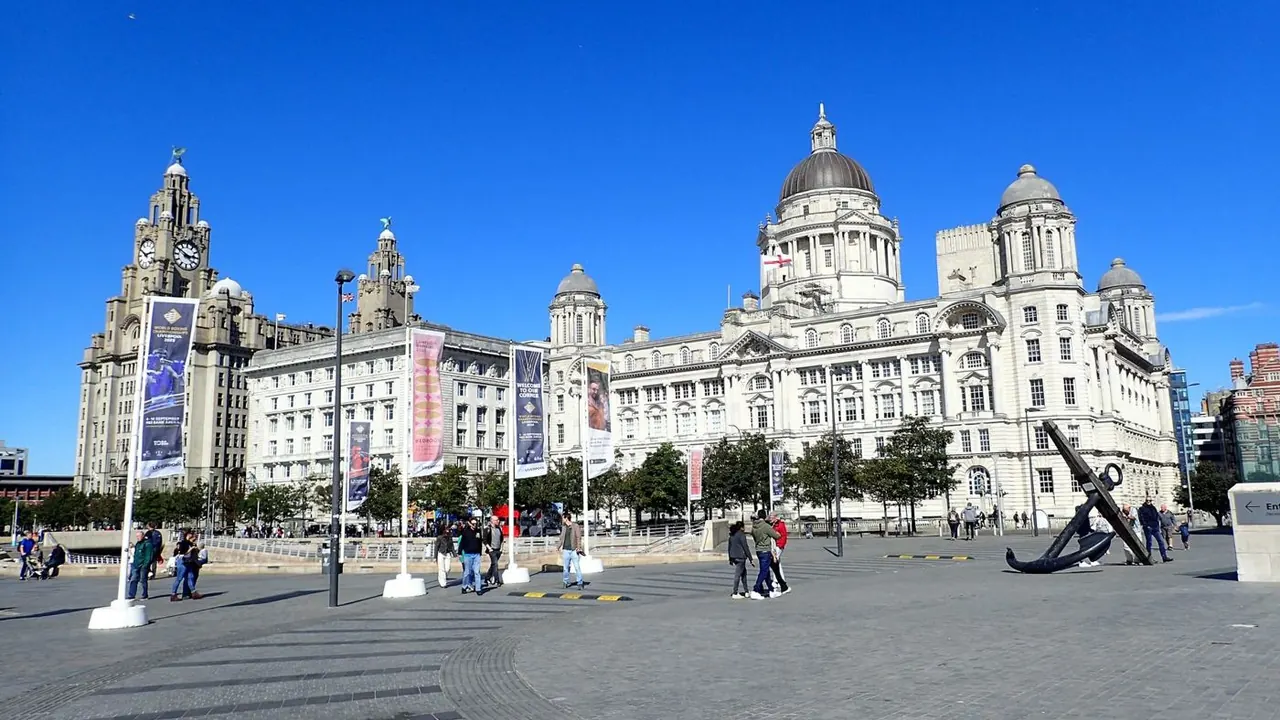
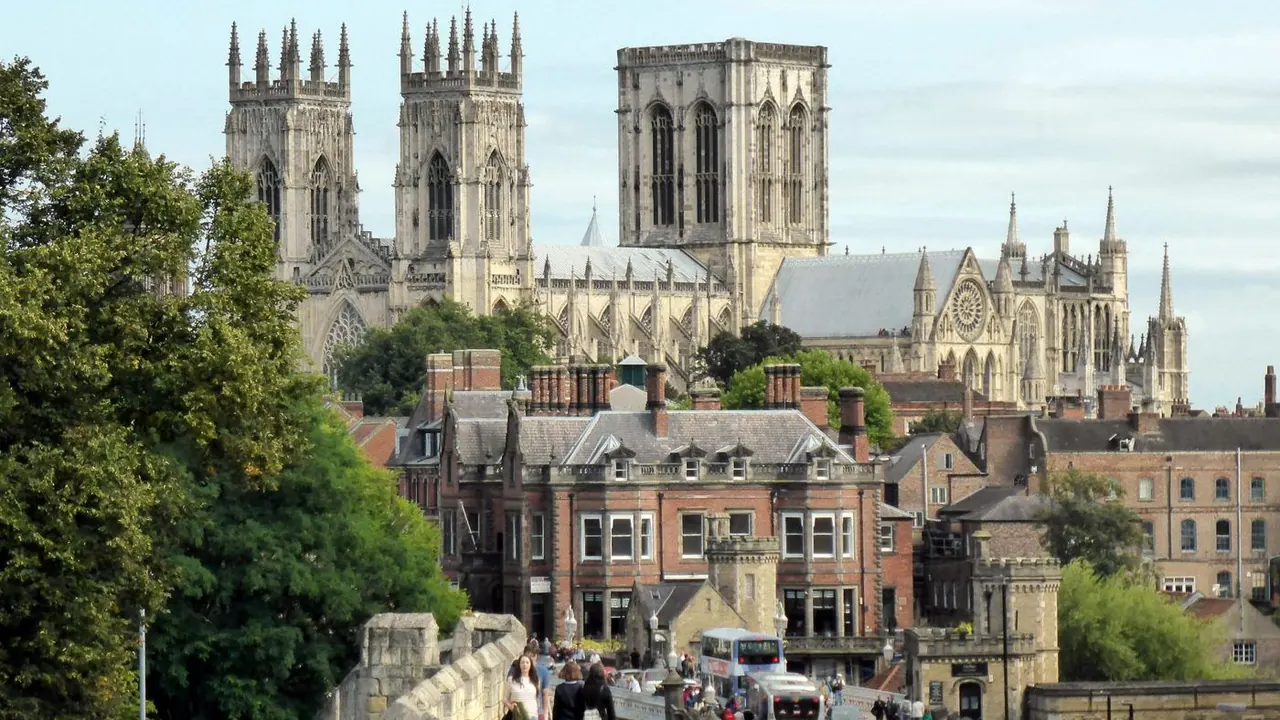
Photos: Liverpool by Marathon, CC BY-SA 2.0, cropped; York by PAUL FARMER, CC BY-SA 2.0, cropped.
Liverpool or York?
Our verdict in twelve categories, each scored against the same fixed benchmark cities, and the climate month by month, so you can choose for your trip.
Choose Liverpool for
- nightlife
- live music and the arts
- prices
Liverpool suits travellers who want the evenings to count as much as the days. It has live bands most nights, from the Cavern cellar to the Philharmonic's art deco hall, and bars in the Ropewalks and Baltic Triangle that stay open well past midnight. The great port museums on the Albert Dock cost nothing, and a stay generally costs less than in York. Choose it for music, a lively weekend and a waterfront city with a working river.
Choose York for
- day trips
- wellness
- nature and the outdoors
York is for the traveller who puts history first and likes a quieter pace. Roman, Viking and medieval York sit inside one small walled centre, with the Minster at its heart. The city is also the better base for seeing the north: Durham, Castle Howard, Fountains Abbey, the moors and the Dales are all close. Nights mean old inns rather than clubs, and the Victorian baths at Harrogate are close by when you want to slow down.
Scoreboard
Twelve categories on one fixed scale from 0 to 100. The shaded stretch is the gap between the two.
Your match
Pick a travel style or drag the sliders, and both match scores follow your weighting.
Wins on nightlife and live music and the arts with your weighting.
Wins on day trips and wellness with your weighting.
What matters to you?
Category by category
What the scores mean for a trip.
Beaches & swimming
Liverpool at least has the sea on its doorstep. Merseyrail runs straight out to the Gormley figures standing on the sands at Crosby and to the pine-backed dunes at Formby, and West Kirby's walled marine lake is the one place where a dip is easy whatever the tide. The shore is for wind and long walks, though, because the tide goes out a very long way and soft mud makes stretches of it unsafe.
York is inland, so any beach is a full day out. Scarborough's two sandy bays are about an hour away by train, and Filey and Whitby lie further on. In both cities the coast is a change of scene and not a reason to come.
Food & drink
Liverpool offers more range. Alongside the local stew, scouse, it has a long-established Chinatown under its great arch, the independent cafés and international kitchens of Bold Street and the street-food halls of the Baltic Triangle. Victorian gin palaces add atmosphere.
York is more traditional and more limited. It is good for afternoon tea and fat rascals in old tearooms, real ale from Yorkshire breweries and modern British cooking with local game, but international food is thin and the streets around the Minster lean towards tourist fare.
Culture & sights
York comes out ahead because so much history is packed into so small an area. The Minster's medieval glass, a walk along the walls, Jorvik built over a Viking street and the abbey ruins in the Museum Gardens are all within a twenty-minute walk of each other, and the National Railway Museum adds a world-class collection.
Liverpool tells a different and more recent story, that of a great Atlantic port. It is best seen at the Albert Dock's maritime and slavery museums, the Three Graces at the Pier Head and the Pre-Raphaelites in the Walker. Its two cathedrals are 20th-century buildings, where York's is medieval.
Nightlife
The gap is wide here. Liverpool is built for going out: Concert Square, Seel Street and Wood Street fill up at weekends, the Baltic Triangle's warehouses run late electronic nights, and Lark Lane has easygoing local bars. Students keep weeknights busy too.
York's evenings revolve around its centuries-old inns on Micklegate, Stonegate and the riverside. A crawl round them is a real pleasure, but there is little else, and anyone wanting a proper club night takes the train to Leeds. Both cities draw stag and hen groups at weekends.
Nature & outdoors
York has the better countryside within reach. The North York Moors begin about 40km away, turn purple with heather in late summer and end in sea cliffs at Robin Hood's Bay. The Dales, with their limestone scars and waterfalls, are about an hour west. In the city itself there are riverside paths and the open grass of the Strays, but you need a car for most of the wider landscape.
Liverpool's outdoors is flatter and closer to the coast. It has Sefton Park's lake and palm house, the breezy Mersey promenade, red squirrels in the Formby pinewoods and the Wirral Way out to the wading birds of the Dee estuary. Hills mean a two-hour drive.
Day trips
York is the stronger base. Durham's cathedral and castle are under an hour away by train, and Harrogate, Leeds, Beverley and Scarborough are all close. By road it is easy to reach Castle Howard, Fountains Abbey, Rievaulx, Whitby and the steam railway from Pickering, though for many of the abbeys and houses you need a car or a coach tour.
Liverpool's outings are fewer. Roman Chester is the best of them and Manchester is under an hour away, with Port Sunlight and Southport close by. Beyond those, Conwy and Llandudno need a long drive.
Good for families
Both cities suit families about equally, in different ways. York is history made into an adventure: walking the walls, the locomotive hall at the Railway Museum, Jorvik and gory ghost walks, all in a compact, largely car-free centre.
Liverpool offers science and animals. The World Museum has dinosaurs, an aquarium room and a planetarium, the ferry crossing is a simple treat, and Chester Zoo and Knowsley Safari Park make bigger days out. Plan around its loud weekend nights.
Getting around
Both cities are easy to see on foot. York is flatter and tighter: nearly everything lies inside or just outside the walls and much of it is pedestrianised. Its station is a rail hub for the rest of the north, although country buses are sparse.
Liverpool spreads a little further, and Hope Street and the university quarter sit on a hill. Merseyrail and the ferry reach the coast and the Wirral more easily than York's buses reach the moors, but to get to Sefton Park or Anfield you need a bus or a taxi.
Shopping & style
Liverpool is the better place for practical shopping. Liverpool ONE gathers the major chains and department stores in one open-air district, and Bold Street adds vintage clothes and record shops. Beatles and football souvenirs are what most visitors take home.
York's appeal is the setting: independent bookshops, jewellers and antiques dealers in the medieval lanes of Stonegate and Petergate. The Shambles is crowded with souvenir and wizard-themed shops, and the Christmas markets are a reason to visit in December. Neither city has much luxury fashion.
Affordability
Your money goes further in Liverpool. Hotel rooms are generally cheaper, except on match weekends and around the Grand National, and the maritime, slavery, world and Walker collections are all free, so a full day of sightseeing costs very little.
York costs more, mainly because rooms inside or near the walls are in heavy demand at weekends, on race days and at Christmas. The Minster, Jorvik and the castle museums charge for entry, though the walls, the Museum Gardens and the Railway Museum are free. Staying midweek or just outside the centre makes a real difference.
Live music & performing arts
Liverpool is far ahead. Music is part of its identity: bands play most nights around Mathew Street and Seel Street, the Cavern cellar draws visitors from all over the world, and the Royal Liverpool Philharmonic has a full season on Hope Street. The Everyman and the Playhouse produce their own theatre.
York offers smaller pleasures. The Theatre Royal is one of England's oldest playhouses, early music is played in a medieval church, and choral evensong at the Minster is free. The Mystery Plays are revived from time to time on wagons in the streets, but the city has no orchestra of note and big touring shows go to Leeds.
Wellness & relaxation
York is the better choice for a restful break, mostly because Harrogate is half an hour away by train. The Royal Baths there still have a Victorian Turkish bath with tiled hot rooms and plunge pools. In York itself, an early walk on the walls, the Museum Gardens and a long afternoon tea set a gentle pace.
Liverpool has hotel spas but nothing like Harrogate, and the centre is loud at weekends. For a quieter stay, base yourself on the Wirral or the coast and keep the city for day visits.
When should you go?
Pick your month. The climate figures are measured averages, not a forecast.
Liverpool in July
York in July
Daytime high, °C
Rainfall in the month, mm
Where the figures come from
Liverpool's temperatures are measured 47 km from the centre, at Manchester Airport.
Liverpool has no rain gauge within 25 km of the centre, so its rainfall comes from a gridded climate dataset read at the city rather than from a gauge further away.
York has no rain gauge within 25 km of the centre, so its rainfall comes from a gridded climate dataset read at the city rather than from a gauge further away.
York's sunshine is measured 48 km from the centre, at Leeming.
Temperature and rainfall are climate normals, averaged over the years shown. Liverpool: 1991-2020 normals, Manchester Airport (47.4 km from centre). York: 1991-2020 normals, Linton-On-Ouse (14.9 km from centre).
The two cities share almost the same temperatures. Daytime highs climb to about 21°C in July and fall to about 7°C in midwinter, so walking the streets is comfortable from May to September and never too hot. The difference is the rain. Liverpool sits on the Irish Sea coast and is wetter almost all year, and in autumn the gap is widest: October brings about 85mm in Liverpool against 59mm in York. York's spring is a little sunnier and drier, which makes March to May a good time for walking the walls and getting out to the moors.
Neither city is warm enough for a beach trip in the usual sense. At Liverpool the sea is at its warmest in August, at only about 17°C, so summer days on the coast are for walking the sand, not swimming. Liverpool gets a little more sunshine than York from May to August, and July and August are the best months for the waterfront and the Wirral. Choose York for late spring or early autumn, and Liverpool for high summer.
Which traveller are you?
For a food and nightlife trip, Liverpool is the clear choice. Bold Street's small international kitchens and the street-food halls of the Baltic Triangle lead on to late bars and club nights, while York's evenings mostly end in a historic pub and go quiet early.
On an outdoors trip, York wins. The heather of the North York Moors, the Cleveland Way along the sea cliffs and the limestone country of the Dales are all close. From Liverpool, real hills are about two hours away.
On a trip on a tight budget, Liverpool makes your money go further. Hotel rooms are generally cheaper and the big waterfront and city-centre museums charge nothing. In York, rooms inside the walls are in heavy demand and the Minster and Jorvik both charge for entry.
Before you go
| Measure | Liverpool | York |
|---|---|---|
| Official language | English | English |
| Currency | Pound Sterling (GBP) | Pound Sterling (GBP) |
| Sockets | G230 V, 50 Hz | G230 V, 50 Hz |
| Driving side | Left | Left |
| Time zone | UTC, UTC+1 in summer | UTC, UTC+1 in summer |
| Emergency number | 112 or 999 | 112 or 999 |
| Elevation | 70 m | 25 m |
| Main airport | Liverpool John Lennon Airport (LPL)12 km from centre75 non-stop destinations | Leeds Bradford Airport (LBA)39 km from centre69 non-stop destinations |
| Public holidays this year | 8 days | 8 days |
By the numbers
| Measure | Liverpool | York |
|---|---|---|
| City population | 513,441 | 208,400 |
| People per km² | 4,592 | 766 |
| Museums within 10 km | 31 | 24 |
| UNESCO World Heritage sites within 50 km | 2 | 2 |
| Swim season, months above 21 °C | None | - |
Where else could you go?
Every comparison below shares a destination with this one, so you can follow Liverpool or York somewhere new.