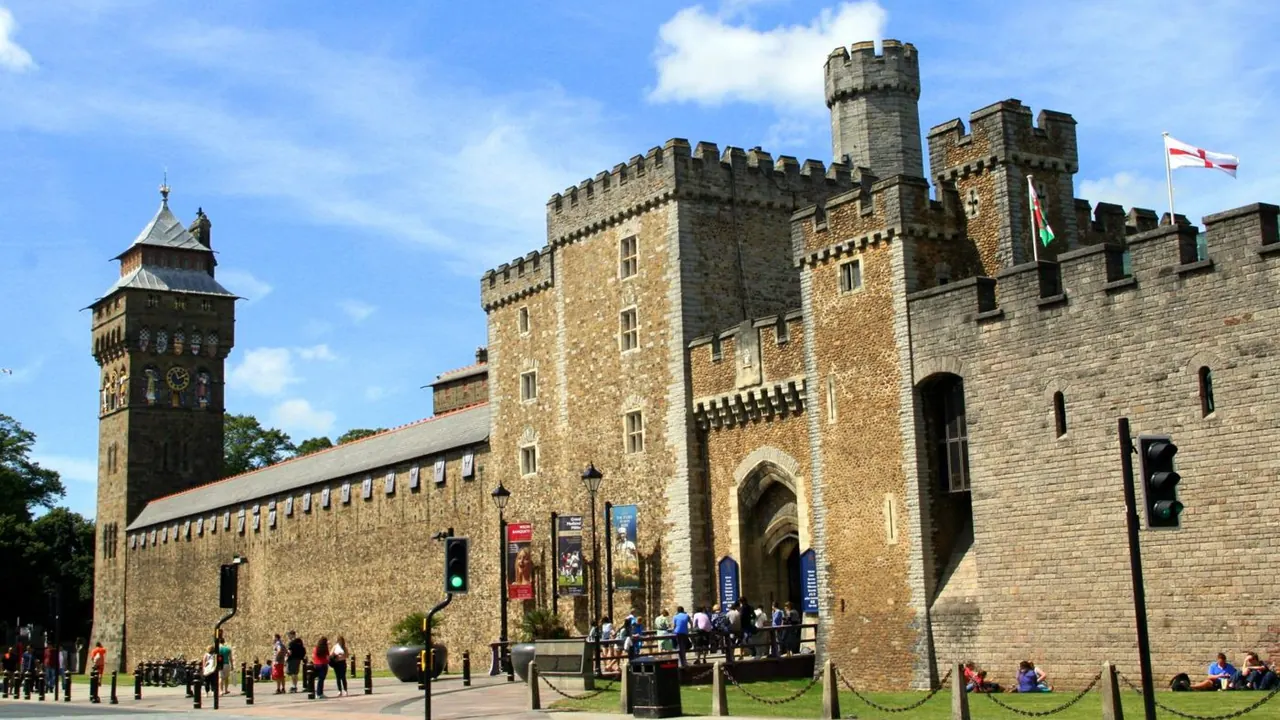
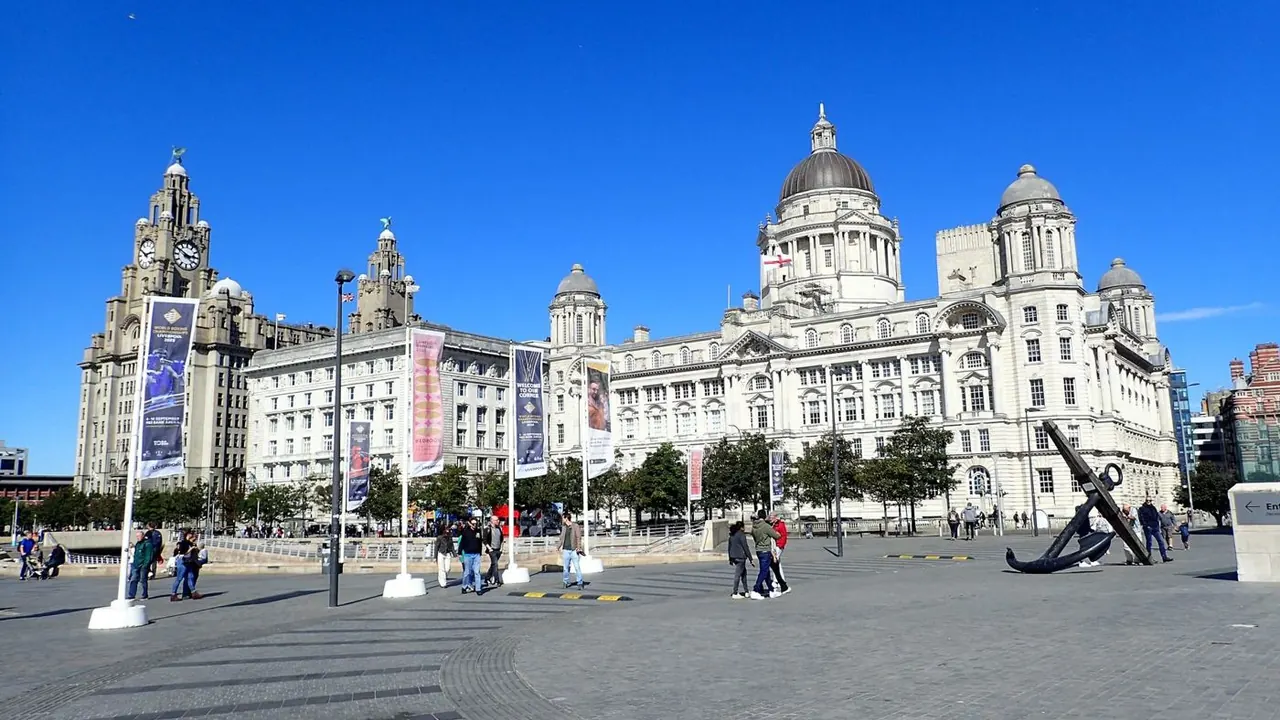
Photos: Cardiff by Tevfik Teker, CC BY 3.0, cropped; Liverpool by Marathon, CC BY-SA 2.0, cropped.
Cardiff or Liverpool?
Our verdict in twelve categories, each scored against the same fixed benchmark cities, and the climate month by month, so you can choose for your trip.
Choose Cardiff for
- nature and the outdoors
- beaches
- day trips
Cardiff suits a trip that spends as much time outside the city as in it. It has a castle in the middle of town, Bute Park and the Taff Trail close by, and Pen y Fan's ridges about an hour's drive away. Day trips to Caerphilly, Castell Coch, Tintern and Bath are all easy from here. Choose it if you would rather walk and get out into the country than stay up late.
Choose Liverpool for
- nightlife
- live music and the arts
- culture and sights
Liverpool is the better pick for the city itself, especially in the evening and for live performance. Its nights run later and spread from Concert Square to the Baltic Triangle warehouses. Bands play most nights, and the Philharmonic and two producing theatres add a more formal side. The dock museums also give it more to see by day, so it works well for a weekend of music, pubs and the waterfront.
Scoreboard
Twelve categories on one fixed scale from 0 to 100. The shaded stretch is the gap between the two.
Your match
Pick a travel style or drag the sliders, and both match scores follow your weighting.
Too close to call, level with your weighting
Wins on nature and the outdoors and beaches with your weighting.
Wins on nightlife and live music and the arts with your weighting.
What matters to you?
Category by category
What the scores mean for a trip.
Beaches & swimming
You won't come to either city to swim. Cardiff, though, puts proper sand closer at hand. Barry Island, with its promenade and funfair, is a short train ride away, Penarth's pebble shore and pier are next door, and the surf beaches at Porthcawl and on the Gower are worth the longer drive.
Liverpool's coast is for walking. Gormley's iron figures at Crosby and the pine-backed dunes at Formby are memorable, but the tide goes out a very long way, and mud and currents make parts of the shore unsafe.
Food & drink
Neither city is a place to travel for food, and they come out about even. What differs is where the good eating is. In Cardiff, start at the Victorian market for Welsh cakes off the griddle and laverbread with cockles. Then try the neighbourhood bistros of Pontcanna or the long run of Middle Eastern and South Asian kitchens on City Road.
Liverpool has its own dish in scouse and an old Chinatown, but its strength is casual eating. Bold Street has small cafés, and the Baltic Triangle has street-food halls. Its pubs, from ornate Victorian gin palaces to backstreet locals, are better than Cardiff's waterfront chains.
Culture & sights
Cardiff's sights centre on its castle, where lavish Victorian Gothic rooms sit inside Roman and Norman walls. Around it are the National Museum, with its fine Impressionists, and St Fagans, an open-air museum of rebuilt Welsh buildings. Little of the city is older than the Victorian era.
Liverpool has more. The Three Graces and the Royal Albert Dock warehouses make one of Britain's great waterfronts. The maritime and slavery museums sit inside the dock, the Walker holds its Pre-Raphaelites, and two very different 20th-century cathedrals face each other along Hope Street. You can see most of either city in two or three days, but Liverpool's days are fuller.
Nightlife
Cardiff's nightlife is mostly a weekend thing. Big groups fill St Mary Street on Saturdays, and small alternative bars on Womanby Street offer something more interesting. The clubs are mainstream, midweek is quiet, and a couple of nights covers it, except on rugby international days.
Liverpool offers a bigger night out. Concert Square, Seel Street and Wood Street often keep going past 2am. The Baltic Triangle warehouses add underground electronic nights, and Lark Lane has easygoing local bars. Students keep weeknights busy in term time too.
Nature & outdoors
Cardiff has real hills within reach. The Taff Trail leaves Bute Park and follows the valley north, and Pen y Fan, the highest peak in southern Britain, is a half-day hike about an hour's drive away. Closer in, the coast path runs along the cliffs past Penarth.
Liverpool is flat, and its outdoors is gentler. There are Sefton Park's lake and palm house, Formby's pinewoods with red squirrels, and the Wirral Way out to the Dee estuary's wading birds. The nearest mountains are two hours away.
Day trips
Day trips are where Cardiff does best. Caerphilly's huge fortress is twenty minutes away by train, and Castell Coch stands in the woods just north of the city. Chepstow and Tintern make a good day together in the Wye Valley, and Bath and Bristol are each about an hour away across the Severn. Blaenavon's mining landscape and Caerleon's amphitheatre are also within easy reach.
Liverpool has Chester's Roman walls and timbered Rows 45 minutes away, with Manchester and Port Sunlight close by and Conwy further along the coast. After Chester the choices thin out, while Cardiff keeps several strong outings within an hour.
Good for families
Both cities are easy with children, and most of their museums are free. The difference is in what there is to do. Cardiff has Techniquest's hands-on science, farm animals and crafts at St Fagans, and rowing boats on Roath Park lake. Barry Island's sands and funfair are a short train ride away.
Liverpool's World Museum has dinosaurs, an aquarium room and a planetarium, and children enjoy the Mersey ferry. Chester Zoo and Knowsley Safari Park give Liverpool the animal outings Cardiff lacks.
Getting around
Walking does most of the work in Cardiff. The castle, market, arcades and Cardiff Central station are a few minutes apart on flat, largely pedestrianised streets. The Bay is half an hour on foot, or a short ride by shuttle train or water taxi along the Taff. Local trains run to Penarth, Barry Island and Caerphilly, but you will need a car for the Brecon Beacons and the more remote castles.
Liverpool spreads a little wider, though it is just as easy to manage. The docks, the Ropewalks and both cathedrals lie within about 2km of one another, and reaching Hope Street means a climb. The Merseyrail underground loop and its coastal lines to Crosby, Formby and the Wirral make its trains handier for visitors than Cardiff's. Sefton Park and Anfield still need a bus or a taxi.
Shopping & style
Both are high-street cities with little luxury, and an afternoon covers either. Cardiff stands out for its glass-roofed Victorian and Edwardian arcades, lined with record, book and vintage shops. It also has Welsh crafts such as lovespoons, woollen blankets and slate.
Liverpool's mainstream shopping is in the open-air streets of Liverpool ONE. For vintage clothes, records and design, go to Bold Street and the Baltic Triangle's makers' studios. The usual souvenirs are Beatles and football merchandise rather than crafts.
Affordability
Costs are close, with ordinary British prices for meals and drinks and free national museums in both. In Cardiff the thing to watch is the stadium calendar, because rugby internationals and big concerts push hotel prices up sharply. The short train trips to castles and the coast are cheap.
Liverpool's hotel rooms are usually a little cheaper. Match weekends, the Grand National at Aintree and big concerts push them up in the same way, and pub meals help your money go further.
Live music & performing arts
Cardiff has something Liverpool lacks, a resident opera company. Welsh National Opera is based at the Wales Millennium Centre, and the BBC National Orchestra of Wales and the Royal Welsh College add concerts. Small venues around Womanby Street book rising bands.
Liverpool's music goes deeper overall. Bands play most nights around Mathew Street, Seel Street and the Baltic Triangle, and the Cavern draws Beatles pilgrims. The Royal Liverpool Philharmonic plays a full season in its art deco hall, and the Everyman and Playhouse produce their own theatre.
Wellness & relaxation
Neither city is a place to unwind, and neither has a bathing tradition, so relaxing means a hotel spa in either. Cardiff's quiet side is a little easier to find, in slow mornings in Pontcanna cafés or a walk along the Taff through Bute Park. In Liverpool, a calm day means Sefton Park, the ferry and the free galleries, with loud weekend nights in the centre to avoid.
When should you go?
Pick your month. The climate figures are measured averages, not a forecast.
Cardiff in July
Liverpool in July
Daytime high, °C
Rainfall in the month, mm
Where the figures come from
Cardiff has no rain gauge within 25 km of the centre, so its rainfall comes from a gridded climate dataset read at the city rather than from a gauge further away.
Cardiff's sunshine is measured 83 km from the centre, at Lyneham.
Liverpool's temperatures are measured 47 km from the centre, at Manchester Airport.
Liverpool has no rain gauge within 25 km of the centre, so its rainfall comes from a gridded climate dataset read at the city rather than from a gauge further away.
Temperature and rainfall are climate normals, averaged over the years shown. Cardiff: 1991-2020 normals, Cardiff-Wales Airport (14.9 km from centre). Liverpool: 1991-2020 normals, Manchester Airport (47.4 km from centre).
Both cities have a mild, damp climate. Their best months run from May to September, when daytime highs reach about 20°C and you can walk the streets in comfort all day. Neither ever gets too hot. Cardiff gets clearly more sunshine through spring and summer, and its sea is slightly warmer, peaking at about 18°C in August against 17°C off Liverpool. That is still paddling weather rather than swimming weather in both.
Cardiff gets wetter sooner, and August and September are damper there than in Liverpool. From October the rain sets in for both, and it is heavier in Liverpool, at about 85mm that month. Winters are grey and cool, with highs around 8°C. That is fine for museums and pubs, but the days are short and dull in both.
Which traveller are you?
On an outdoors trip, Cardiff is the clear choice. Bute Park leads onto the Taff Trail, and the coast path runs along the cliffs past Penarth. The open moorland of the Brecon Beacons is about an hour away. Liverpool's parks, dunes and Wirral Way are pleasant but flat.
For a food and nightlife trip, go to Liverpool. Eating out is much the same in both cities. Liverpool's nights, though, run later, cover more districts and include live bands most evenings. Cardiff's centre is busy at weekends and goes quiet midweek.
On a culture and arts trip, Liverpool has more to fill the days. It has the Albert Dock museums, the Walker's Pre-Raphaelites, two striking cathedrals and a full orchestral season on Hope Street. Cardiff answers with its castle and resident opera company, but it has fewer major sights.
Before you go
| Measure | Cardiff | Liverpool |
|---|---|---|
| Official language | English | English |
| Currency | Pound Sterling (GBP) | Pound Sterling (GBP) |
| Sockets | G230 V, 50 Hz | G230 V, 50 Hz |
| Driving side | Left | Left |
| Time zone | UTC, UTC+1 in summer | UTC, UTC+1 in summer |
| Emergency number | 112 or 999 | 112 or 999 |
| Elevation | 41 m | 70 m |
| Main airport | Cardiff International Airport (CWL)15 km from centre30 non-stop destinations | Liverpool John Lennon Airport (LPL)12 km from centre75 non-stop destinations |
| Public holidays this year | 8 days | 8 days |
By the numbers
| Measure | Cardiff | Liverpool |
|---|---|---|
| City population | 383,536 | 513,441 |
| People per km² | 2,734 | 4,592 |
| Museums within 10 km | 9 | 31 |
| UNESCO World Heritage sites within 50 km | 1 | 2 |
| Swim season, months above 21 °C | None | None |
Where else could you go?
Every comparison below shares a destination with this one, so you can follow Cardiff or Liverpool somewhere new.