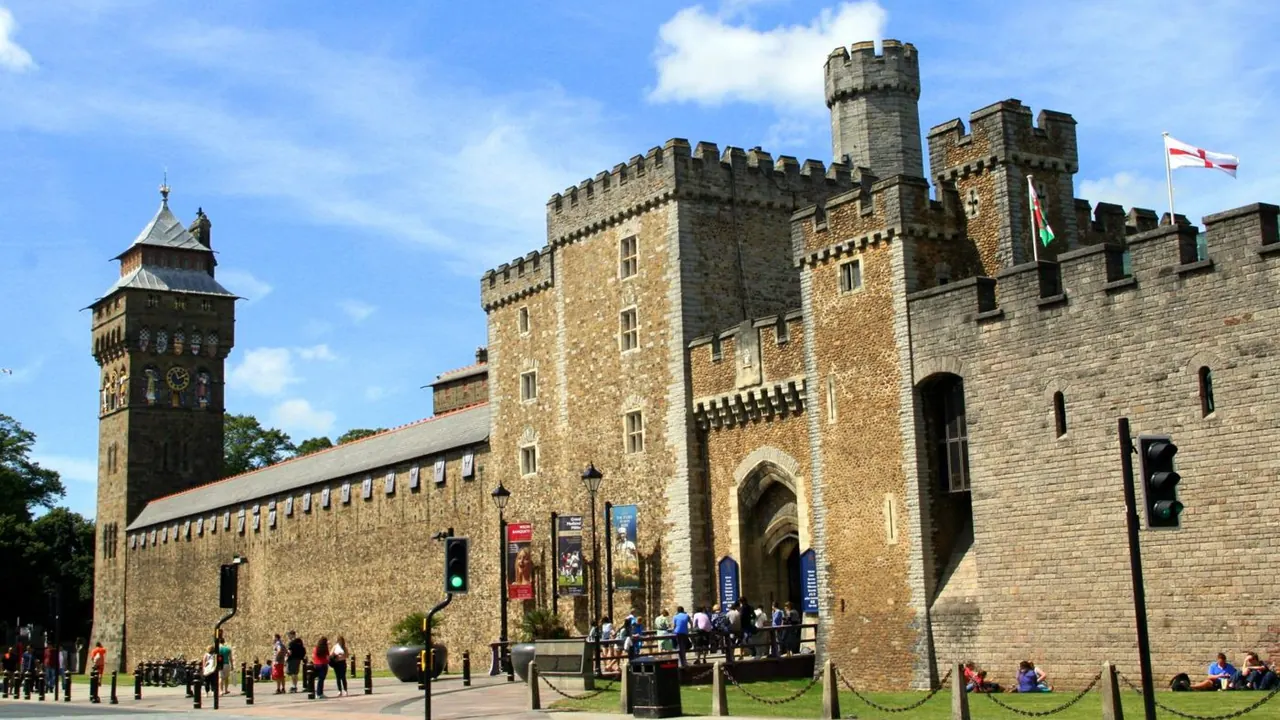
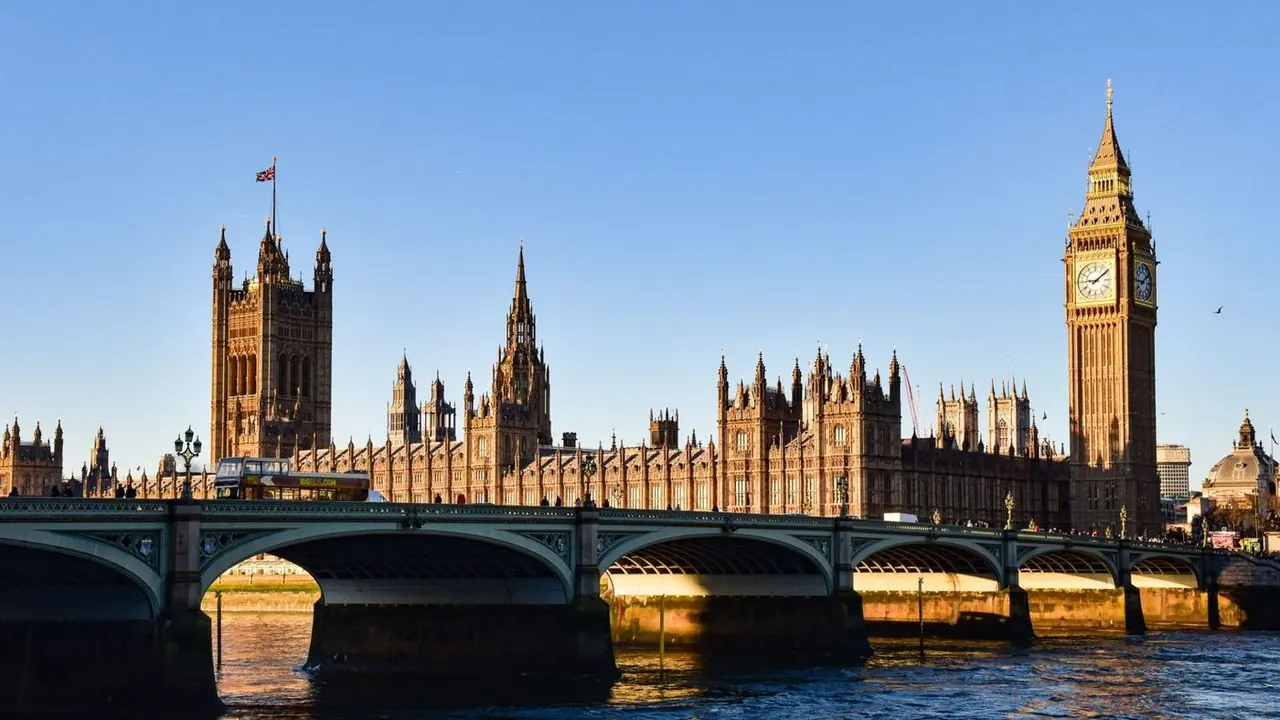
Photos: Cardiff by Tevfik Teker, CC BY 3.0, cropped; London by AXP Photography, Pexels License.
Cardiff or London?
Our verdict in twelve categories, each scored against the same fixed benchmark cities, and the climate month by month, so you can choose for your trip.
Choose Cardiff for
- prices
- nature and the outdoors
- beaches
Cardiff suits a shorter, gentler trip with the outdoors close by. It is a compact, walkable capital with a castle in the middle and free national museums. Caerphilly and Castell Coch are a short ride out, and the moorland of the Brecon Beacons is an hour's drive. It also costs noticeably less to stay. Two or three days covers the city, and after that the hills and the coast take over.
Choose London for
- shopping
- live music and the arts
- food and drink
When the city itself is the point of the trip, London wins. Its museums, theatres, restaurants and shops run so deep that a week hardly makes a dent, and families find far more laid on for children. The Underground means you never need a car, and the rail network makes Oxford, Cambridge and Windsor easy days out. The trade-off is cost and scale: it is much more expensive and a good deal more tiring.
Scoreboard
Twelve categories on one fixed scale from 0 to 100. The shaded stretch is the gap between the two.
Your match
Pick a travel style or drag the sliders, and both match scores follow your weighting.
Wins on prices and nature and the outdoors with your weighting.
Wins on shopping and live music and the arts with your weighting.
What matters to you?
Category by category
What the scores mean for a trip.
Beaches & swimming
Neither city is a beach destination, and the real difference is what each can reach. From Cardiff, Barry Island's sandy bay and summer funfair are about half an hour by train, Penarth's pebble shore and pier are closer still, and the surf at Porthcawl and the wide sands of Gower are a drive away. London's nearest sea is Brighton's long pebble beach, an hour out, with sandier shores at Margate and Whitstable on the Kent coast.
London's edge is swimming in the city itself, at the lidos in Brockwell Park and Parliament Hill or the year-round Hampstead Heath ponds. Cardiff's own waterfront at the Bay is tidal and brown, a place for a stroll rather than a swim.
Food & drink
Cardiff eats pleasantly rather than memorably. Its Victorian market, with Welsh cakes off the griddle, cawl and laverbread with cockles, gives you a taste of Wales that London cannot. Pontcanna and Canton have good neighbourhood bistros, and the Middle Eastern and South Asian cooking along City Road adds range. The chain restaurants at the Bay are better for the view than the food.
London is in another league for eating. Its strength lies in the cooking of its communities: Bangladeshi food on Brick Lane, Punjabi in Southall, Turkish grills in Green Lanes and Caribbean and West African cooking south of the river. On top of that come Borough Market, the weekend food markets and a large fine-dining scene. Eating well there is easy, but it rarely comes cheap.
Culture & sights
Cardiff fills two or three days well. Its castle sets lavish Victorian Gothic rooms inside Roman and Norman walls, and the National Museum in Cathays Park has a surprisingly strong collection of French Impressionists. St Fagans, an open-air museum of buildings brought from all over Wales, has no real equivalent in London. Little of the city is older than the coal boom, though.
London's collections are among the deepest anywhere. The British Museum, the National Gallery, the V&A and the two Tates are each worth a day, and most are free. Around them stand a thousand years of landmarks, from the Tower and Westminster Abbey to Wren's St Paul's and Greenwich. A week there still leaves much unseen.
Nightlife
Cardiff's nightlife is concentrated and easy to get the measure of. Big weekend groups fill St Mary Street, small alternative bars line Womanby Street opposite the castle, Pontcanna has quieter pubs, and on rugby international days the whole centre turns red. Two nights is enough to see it all, and midweek is quiet.
London works on a different scale, with a separate scene in each district. Soho has late cocktail bars and a long-established gay scene, Shoreditch, Hackney and Dalston have warehouse clubs, and Brixton and Peckham have rooftop bars. Away from the hubs it keeps sensible hours too, but its Friday and Saturday nights are world-class.
Nature & outdoors
Cardiff sits much closer to real landscape. Bute Park leads straight onto the Taff Trail up the valley, and the Wales Coast Path runs past the cliffs at Penarth. In about an hour by car you can be on the ridges of Pen y Fan, the highest ground in southern Britain.
London is remarkably green inside the city, with the deer of Richmond Park, the views from Hampstead Heath and the gardens at Kew. The country beyond is gentle, though: the chalk of the Downs and the beechwoods of the Chilterns, with no mountains. Expect damp weather in both, and wind on the Welsh tops.
Day trips
Cardiff's day trips are mostly about castles. Caerphilly is twenty minutes by train, Castell Coch stands in the woods just north of the city, and Chepstow pairs with Tintern Abbey in the Wye Valley. Blaenavon and Big Pit add the industrial past, and Bath and Bristol are about an hour away, although some of the best places need a car.
London's position at the centre of the rail network gives a much wider choice. Oxford, Cambridge, Windsor, Canterbury, Brighton and Portsmouth's dockyard are all easy outings, and Stonehenge pairs with Salisbury. A week can include several quite different days without repeating a theme.
Good for families
Cardiff's strength with children is ease. The centre is flat and compact, and Techniquest at the Bay, the farm animals and old shops of St Fagans and the rowing boats on Roath Park lake make for unhurried days. Barry Island's sands are a short ride away in summer. There is no zoo, aquarium or theme park, however.
London gives children far more to do. There are the dinosaur halls of the Natural History Museum, the Science Museum's hands-on galleries, the pirate ship playground in Kensington Gardens and ZSL London Zoo, with theme parks and the Harry Potter studio tour outside the city. The cost is effort: long distances, Tube stations with only stairs and big crowds when schools are out.
Getting around
Cardiff is a city for walking. The castle, museum, arcades, market and Central station are minutes apart on flat, largely pedestrianised streets, and a shuttle train or water taxi runs to the Bay. Beyond that there are only local trains and buses, and the national park needs a car.
London's Underground, Elizabeth line, Overground and buses reach almost everywhere on one contactless card, so a car is never needed, and riverboats add the Thames. What you pay in return is distance and effort: long journeys between neighbourhoods, corridors and stairs, and packed trains at rush hour.
Shopping & style
Most of Cardiff's shopping is high street, with one real draw. Its glass-roofed Victorian and Edwardian arcades, such as the Royal and the Morgan, are full of independent record, book and vintage shops, and the market sells lovespoons and Welsh blankets. There is no luxury tier, and an afternoon covers it.
London is one of the world's great shopping cities and can fill days rather than hours. It runs from the luxury houses of Bond Street and the tailors of Savile Row to the historic department stores of Knightsbridge and Regent Street. Weekends add the markets of Portobello Road, Camden and Columbia Road.
Affordability
Cardiff costs clearly less on almost every count. A room that would be cramped and costly in central London is a reasonable night's spend here, meals and pints are at ordinary British prices, and you rarely pay to get around because the centre is walkable. The catch is timing: on big match or concert weekends at the stadium, rooms become scarce and dear.
London charges more for nearly everything, above all a bed near the sights, with eating out and evening tickets close behind. Both cities keep their national museums free, which narrows the gap by day. In London, sleeping further out on a good line, eating at markets and cafés and relying on the daily fare cap make a visit manageable, though never cheap.
Live music & performing arts
Cardiff has a respectable arts life, centred on the Wales Millennium Centre at the Bay, home to Welsh National Opera. It also has the BBC National Orchestra of Wales, student productions from the Royal Welsh College and rising bands in the small venues around Womanby Street. Choral singing gives it a distinctly Welsh note.
London is one of the world's two great theatre cities. It has the West End, the National Theatre, the Globe and fringe stages above pubs, opera and ballet at the Royal Opera House, five major orchestras, and the Proms at the Royal Albert Hall every summer. For a trip built around evenings at a show, there is no contest.
Wellness & relaxation
Cardiff has no bathing tradition, so relaxing there means a hotel spa, one of a few day spas or a leisure pool at the Bay hotels. Its easy pace is the real asset: slow mornings in the cafés of Pontcanna and a walk along the Taff through Bute Park.
London offers rather more. It has surviving Victorian and Edwardian Turkish baths under tiled vaults in Bayswater and at Ironmonger Row, full spas in the grand hotels of Mayfair, and cold dips in the Hampstead ponds. For taking the waters properly, people head to the thermal spa at Bath, which is a little nearer to Cardiff.
When should you go?
Pick your month. The climate figures are measured averages, not a forecast.
Cardiff in July
London in July
Daytime high, °C
Rainfall in the month, mm
Where the figures come from
Cardiff has no rain gauge within 25 km of the centre, so its rainfall comes from a gridded climate dataset read at the city rather than from a gauge further away.
Cardiff's sunshine is measured 83 km from the centre, at Lyneham.
Temperature and rainfall are climate normals, averaged over the years shown. Cardiff: 1991-2020 normals, Cardiff-Wales Airport (14.9 km from centre). London: 1992-2020 (sunshine 1991-2020, rainfall 1991-2020) normals, London Weather Centre (1.3 km from centre).
The two cities follow the same mild British pattern. Winters are grey and cool, with daytime highs around 8°C, and May to September is the best time for both, with the most sunshine from May to August. London gets warmer in summer, reaching about 23°C in July against Cardiff's 20°C. That makes long days in its parks and on its streets more pleasant, while Cardiff's summers stay fresh, which suits hiking.
Cardiff is the wetter of the two all year round, and from October to January the rain becomes heavy, which makes hill walking much less appealing. Its sea is at its warmest in August, at about 18°C, so even at the height of summer most people paddle rather than swim. Late spring and early autumn are good times for the coast path and the Beacons on dry days.
Which traveller are you?
For an outdoors trip, Cardiff is the better choice. It is a small city with real hills and coast on its doorstep, so a day of hiking or cycling still ends with dinner in town, which London's gentler countryside cannot match.
On a trip on a tight budget, Cardiff stretches the money further. Staying, eating and getting about all cost less than in London, and a small city means fewer paid journeys and less temptation to fill every evening with tickets.
For a culture and arts trip, London is in a different class. It can fill every day with great collections and every evening with theatre, opera or concerts, and you could return many times without repeating yourself. Cardiff's sights take a weekend.
Before you go
| Measure | Cardiff | London |
|---|---|---|
| Official language | English | English |
| Currency | Pound Sterling (GBP) | Pound Sterling (GBP) |
| Sockets | G230 V, 50 Hz | G230 V, 50 Hz |
| Driving side | Left | Left |
| Time zone | UTC, UTC+1 in summer | UTC, UTC+1 in summer |
| Emergency number | 112 or 999 | 112 or 999 |
| Elevation | 41 m | 4 m |
| Main airport | Cardiff International Airport (CWL)15 km from centre30 non-stop destinations | London Heathrow Airport (LHR)23 km from centre224 non-stop destinations |
| Public holidays this year | 8 days | 8 days |
By the numbers
| Measure | Cardiff | London |
|---|---|---|
| City population | 383,536 | 8,799,728 |
| People per km² | 2,734 | 5,598 |
| Museums within 10 km | 9 | 216 |
| UNESCO World Heritage sites within 50 km | 1 | 4 |
| Swim season, months above 21 °C | None | - |
Where else could you go?
Every comparison below shares a destination with this one, so you can follow Cardiff or London somewhere new.