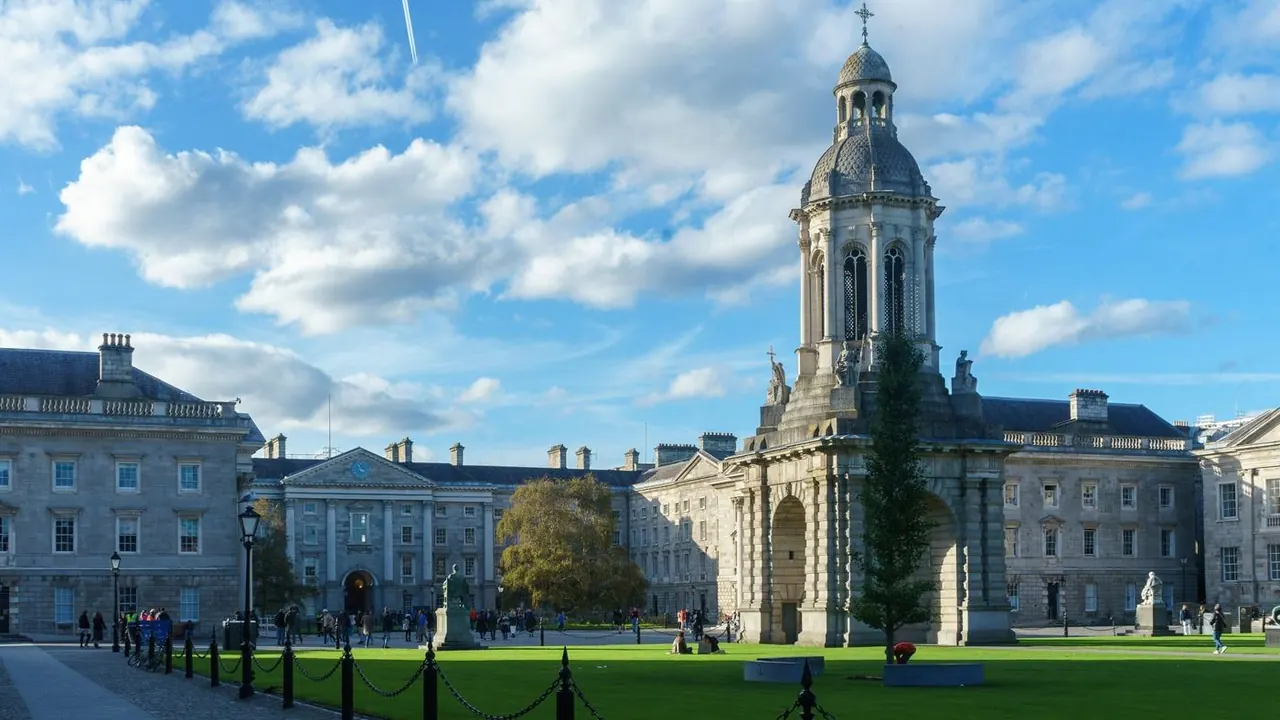
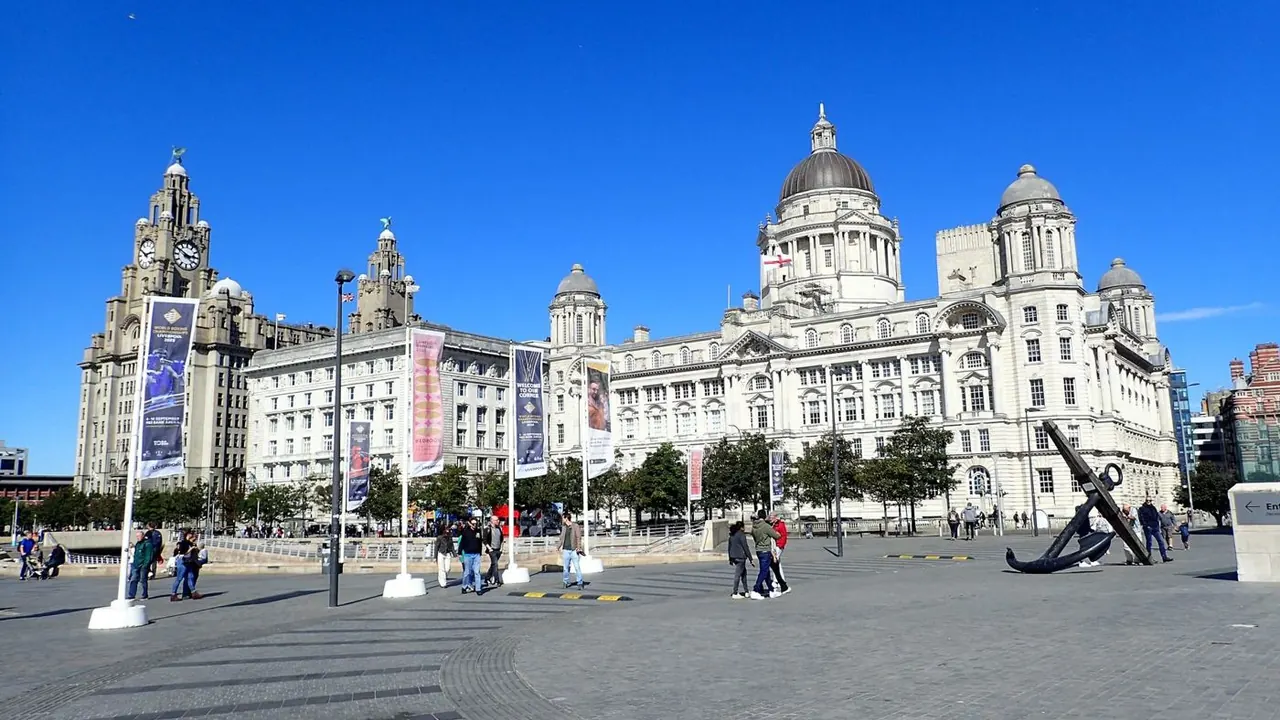
Photos: Dublin by David Kernan, CC BY 4.0, cropped; Liverpool by Marathon, CC BY-SA 2.0, cropped.
Dublin or Liverpool?
Our verdict in twelve categories, each scored against the same fixed benchmark cities, and the climate month by month, so you can choose for your trip.
Choose Dublin for
- nature and the outdoors
- day trips
- beaches
Dublin suits the traveller who wants the countryside close by and old history within a day's reach. The Wicklow Mountains, the Howth cliff path and Phoenix Park are all near the city, and the Boyne Valley's passage tombs and Glendalough's monastic valley make day trips that Liverpool can't match. Evenings revolve around pubs, conversation, traditional music sessions and serious theatre. The catch is cost: rooms and rounds are expensive, so come ready to pay for it.
Choose Liverpool for
- prices
- nightlife
- getting around
Liverpool is the better pick when you want your money to go further and your nights to run later. Hotels cost noticeably less, the big museums on the waterfront and William Brown Street are free, and the clubs around Seel Street and the Baltic Triangle stay open well past the point where Dublin's pubs have emptied. Add the city's live band scene and an easy train to Chester, and it makes a lively, good-value weekend, although the green outdoors needs more of a journey.
Scoreboard
Twelve categories on one fixed scale from 0 to 100. The shaded stretch is the gap between the two.
Your match
Pick a travel style or drag the sliders, and both match scores follow your weighting.
Too close to call, 1 point apart
Wins on nature and the outdoors and day trips with your weighting.
Wins on prices and nightlife with your weighting.
What matters to you?
Category by category
What the scores mean for a trip.
Beaches & swimming
Both cities have sandy shores within a short train ride and a sea too cold for proper swimming, so neither suits a beach trip. The difference is how people use the water. Dublin has a real swimming ritual, with year-round dips at the Forty Foot, Seapoint and the Vico rocks along the DART line.
Liverpool's coast is for looking at rather than getting into. Gormley's iron figures stand on the flats at Crosby and Formby's dunes are backed by pinewoods, but the tide goes out a long way and soft mud makes parts of the shore unsafe. Only West Kirby's marine lake really invites a paddle.
Food & drink
Neither city is a reason to travel for the food, and the two are much the same in quality. Dublin's strength is its produce: Atlantic shellfish, grass-fed lamb and farmhouse cheese cooked well in the bistros of Dublin 2 and Dublin 8. Its drink goes deeper still, with stout and whiskey distilleries, though eating out costs a lot for what you get.
Liverpool is more casual and cheaper. A bowl of scouse with pickled red cabbage is the local dish, Bold Street has its small international kitchens, the Baltic Triangle has street-food halls, and there is a long-established Chinatown. Its Victorian gin palaces match Dublin's old pubs for atmosphere.
Culture & sights
These two are evenly matched, but they tell different stories. Dublin's sights are literary and national: the Book of Kells in Trinity's Long Room, the Chester Beatty's Asian and Islamic manuscripts, Kilmainham Gaol, two medieval cathedrals and the Georgian squares with their painted doors.
Liverpool's sights are about the sea and trade. The Three Graces and the Royal Albert Dock warehouses hold the Maritime and International Slavery museums, the Walker has its Pre-Raphaelites, and the Beatles are never far away. Where Dublin's cathedrals are medieval, Liverpool's two are bold 20th-century buildings facing each other along Hope Street.
Nightlife
A Dublin night usually winds down not long after the pubs close, while in Liverpool many nights run well past 2am. Dublin's evenings are built around conversation. There are old pubs with snugs and coal fires off Grafton and Baggot Streets, younger late bars on Camden and Wexford Streets, and Temple Bar for the crowds. Licensing laws leave the city with few clubs.
Liverpool is more of a city for dancing. Concert Square and Seel Street fill with bars and clubs at weekends, the Baltic Triangle's warehouses hold late electronic nights, and students keep weeknights busy in term time. Stag and hen groups are part of the weekend scene, and the local bars on Lark Lane are the quieter choice.
Nature & outdoors
Here Dublin pulls well ahead. Phoenix Park, with its deer, is inside the city, the DART reaches the cliff path at Howth and the coastal walk from Bray, and the granite hills, bogs and glacial lakes of Wicklow begin at the edge of the suburbs.
Liverpool is flat, and its green space is gentler: Sefton Park's lake and palm house, a breezy walk along the Mersey, red squirrels in Formby's pinewoods and the Wirral Way out to the Dee estuary. The mountains of North Wales and the Lake District are about two hours away, which rules them out for most short visits.
Day trips
Dublin has the more remarkable outings. Newgrange and Knowth in the Boyne Valley are older than the pyramids, Glendalough's round tower sits in a wooded Wicklow valley, and Kilkenny and Belfast are both comfortable by train. Many of the rural sites, though, are much easier with a hire car or a coach tour.
Liverpool's choice is narrower but easier to reach by rail. Chester's Roman walls and timbered Rows are about 45 minutes away by train, Manchester is under an hour, and Port Sunlight and Southport are closer still. After that the list thins out, and Conwy or the Lakes need a long day by car.
Good for families
Both cities are friendly and manageable with children, and there is little to separate them. Dublin's advantage is having its zoo inside Phoenix Park, with room to run and deer to spot, plus the Viking displays at Dublinia. Children are also welcome in many pubs over a daytime family lunch.
Liverpool has the stronger free museum for children, the World Museum with its dinosaurs, aquarium and planetarium. The Mersey ferry makes an easy outing, while the bigger animal days, Chester Zoo and Knowsley Safari Park, are outside the city. Loud weekend nights in the centre are worth planning around.
Getting around
Both centres are compact enough to walk, and neither city has a metro, so the difference lies in the rail lines. Dublin's centre is flat. Two Luas tram lines cross it, and the DART follows the bay to Howth and Dalkey, but the airport and many outer districts depend on buses that get stuck in rush-hour traffic.
Liverpool has a short climb up to Hope Street. Instead of trams it has Merseyrail's underground loop, which runs frequent trains out to Crosby, Formby and the Wirral, and the ferry crosses the river. Places like Sefton Park and Anfield still need a bus or a taxi.
Shopping & style
For high-street shopping the two are much alike, but Dublin is better for things to take home. Grafton Street, Brown Thomas and the Georgian arcade of Powerscourt Townhouse are good places to find Aran knitwear, linen, tweed, crystal and whiskey, with craft and design shops around Drury Street.
Liverpool ONE is the bigger, more modern spread of chains, and Bold Street's vintage clothes, records and independent boutiques have more character than anything on Henry Street. Beyond Beatles and football souvenirs, though, Liverpool has no craft tradition to shop for.
Affordability
This is where the two differ most, and Liverpool comes out well ahead. Its hotels cost far less for most of the year, rising only around big matches, the Grand National and large concerts. Pub meals are good value, and the free museums make a full sightseeing day cheap.
Dublin's hotel rooms are among the most expensive in Europe, and meals and rounds of drinks add up quickly. Its free national museums and gallery help, and staying near a DART or Luas stop outside the centre cuts the bill, but the same trip will cost noticeably more than in Liverpool.
Live music & performing arts
Dublin goes out to the theatre, and Liverpool goes out to hear a band. The Abbey, founded by Yeats and Lady Gregory, stages Irish drama, the Gate is known for its classic productions, and the autumn Dublin Theatre Festival is a fixture of the year. Almost every night there is also a traditional session somewhere, with fiddle, flute and bodhrán, and Liverpool has nothing like it.
In Liverpool, live music runs from the small venues around Seel Street and the Baltic Triangle to the Cavern's cellar on Mathew Street. On the formal side, the Royal Liverpool Philharmonic plays a full season in its art deco hall on Hope Street, and the Everyman and the Playhouse produce their own plays. Neither city has a permanent opera house.
Wellness & relaxation
Neither city is built for a restful break, and spas in both mostly mean hotel spas. Dublin does have one real ritual: a cold dip at the Forty Foot or Seapoint followed by a seafront sauna, which suits anyone who likes the bracing kind of restoration.
Liverpool has nothing comparable, and its centre is loud at weekends. Quieter time comes from Sefton Park, a slow ferry crossing or an afternoon in the free galleries, and anyone who really wants to unwind would do better staying out on the Wirral coast.
When should you go?
Pick your month. The climate figures are measured averages, not a forecast.
Dublin in July
Liverpool in July
Daytime high, °C
Rainfall in the month, mm
Where the figures come from
Liverpool's temperatures are measured 47 km from the centre, at Manchester Airport.
Liverpool has no rain gauge within 25 km of the centre, so its rainfall comes from a gridded climate dataset read at the city rather than from a gauge further away.
Temperature and rainfall are climate normals, averaged over the years shown. Dublin: 1991-2020 normals, Dublin Airport (9.3 km from centre). Liverpool: 1991-2020 normals, Manchester Airport (47.4 km from centre).
Both cities have the same mild, damp Irish Sea climate, and neither gets warm enough for a beach trip. Summer highs reach about 20°C in Dublin and 21°C in Liverpool, which is ideal for walking the streets. Winter days stay near 8°C, short and grey but rarely harsh. The sea stays cold all year and by late summer reaches only 15°C off Dublin and 17°C at Liverpool.
The two differ most at the edges of summer. Dublin is at its best in late spring: May is its sunniest month, and February to May is its driest stretch. Liverpool's sunshine holds up better through July and August. From September onwards Liverpool turns noticeably wetter than Dublin, so Dublin is the safer choice for an autumn trip, while both are dark and damp through midwinter.
Which traveller are you?
On a trip on a tight budget, Liverpool is the clear choice. Hotel rooms cost much less outside big match weekends, the maritime, slavery, world and Walker collections are all free, and pub meals are good value. In Dublin, accommodation alone takes a large share of any budget.
For an outdoors trip, Dublin wins comfortably. The DART runs to the Howth cliff path and the Bray to Greystones coastal walk, deer graze in Phoenix Park, and Glendalough and the Wicklow Way are about an hour away. Liverpool's real hills are two hours off.
On a food and nightlife trip, choose by the kind of night you want. Dublin is for slow pints of stout, whiskey tastings and long talk in Victorian pubs that close fairly early. Liverpool has street-food halls and clubs that keep going past 2am.
Before you go
| Measure | Dublin | Liverpool |
|---|---|---|
| Official language | English, Irish | English |
| Currency | Euro (EUR) | Pound Sterling (GBP) |
| Sockets | G230 V, 50 Hz | G230 V, 50 Hz |
| Driving side | Left | Left |
| Time zone | UTC, UTC+1 in summer | UTC, UTC+1 in summer |
| Emergency number | 112 | 112 or 999 |
| Elevation | 20 m | 70 m |
| Main airport | Dublin Airport (DUB)9 km from centre200 non-stop destinations | Liverpool John Lennon Airport (LPL)12 km from centre75 non-stop destinations |
| Public holidays this year | 11 days | 8 days |
By the numbers
| Measure | Dublin | Liverpool |
|---|---|---|
| City population | 592,713 | 513,441 |
| People per km² | 5,154 | 4,592 |
| Museums within 10 km | 40 | 31 |
| UNESCO World Heritage sites within 50 km | 1 | 2 |
| Swim season, months above 21 °C | None | None |
Where else could you go?
Every comparison below shares a destination with this one, so you can follow Dublin or Liverpool somewhere new.