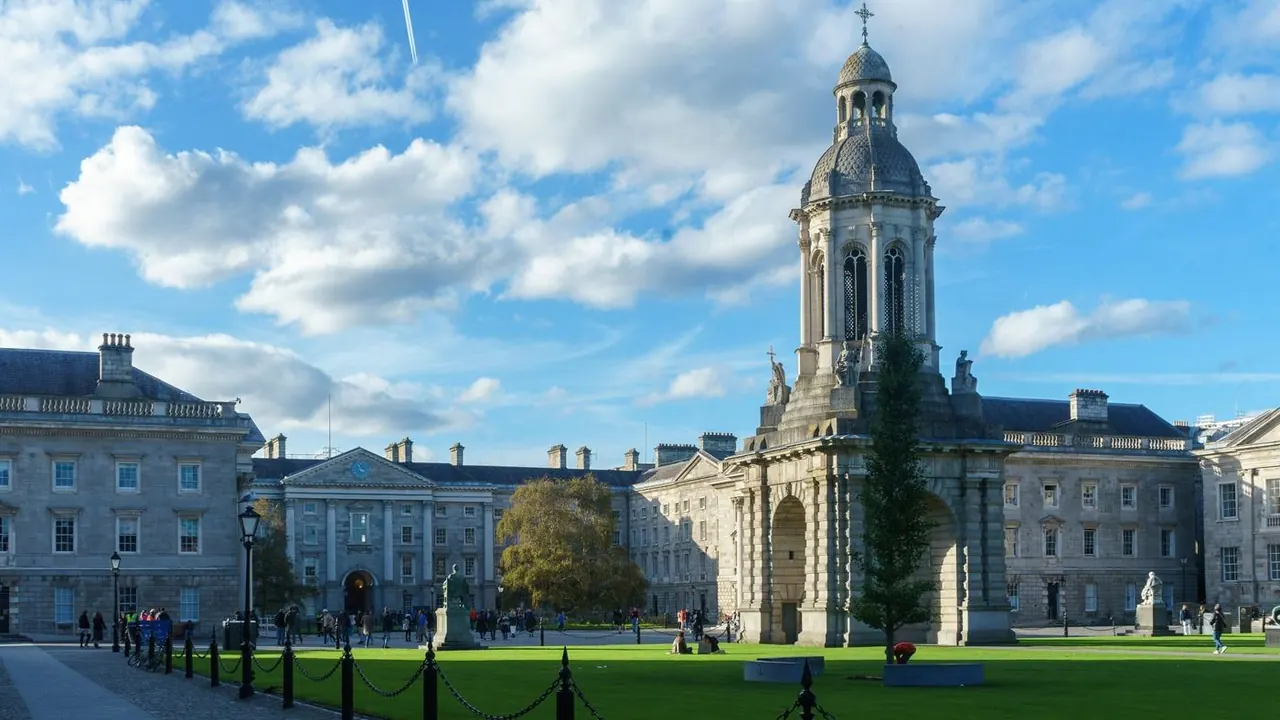
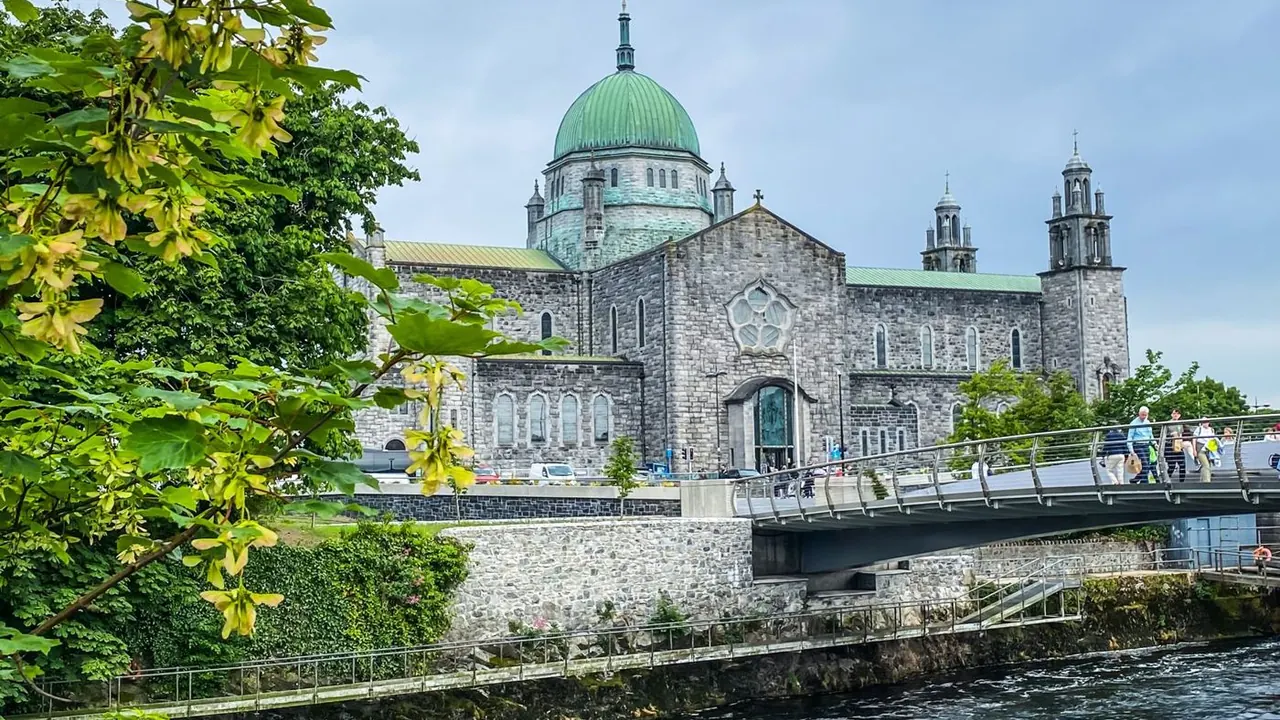
Photos: Dublin by David Kernan, CC BY 4.0, cropped; Galway by Dieglop, CC BY-SA 4.0, cropped.
Dublin or Galway?
Our verdict in twelve categories, each scored against the same fixed benchmark cities, and the climate month by month, so you can choose for your trip.
Choose Dublin for
- culture and sights
- day trips
- shopping
Dublin suits travellers who want a full city: national museums and medieval cathedrals within a short walk of each other, a serious theatre scene, more shopping and more varied nights out, plus a rail line along the bay and the Boyne Valley's passage tombs for day trips. It is also the easier base with children, and the better pick for anyone without a car.
Choose Galway for
- nature and the outdoors
- prices
- wellness
Galway is for people who come to Ireland for the landscape and the music. It is a small, pedestrian, student-filled town with sessions in the Latin Quarter most nights, and it sits on the edge of Connemara, the Burren and the Aran Islands. It costs a little less than Dublin, though it is not cheap, and it gives less to do indoors. It works best when the town is your base for days spent out in the west.
Scoreboard
Twelve categories on one fixed scale from 0 to 100. The shaded stretch is the gap between the two.
Your match
Pick a travel style or drag the sliders, and both match scores follow your weighting.
Wins on culture and sights and day trips with your weighting.
Wins on nature and the outdoors and prices with your weighting.
What matters to you?
Category by category
What the scores mean for a trip.
Beaches & swimming
For warm-water beach days, neither city works. In both, the sea is a cold-water ritual, and what differs is the setting. Dublin has several sandy strands spread around its bay, from Dollymount to Killiney, all reachable on the DART, and its swimming spots are rocky places such as the Forty Foot and the Vico rocks.
Galway's sea life is concentrated on the Salthill prom, a walk from the centre, with the Blackrock diving tower as its landmark and smaller stony strands below. Its finest sand is in the Connemara bays, which are more than an hour away.
Food & drink
The two are broadly level, and both are expensive for what you get, but their strengths differ. Dublin's better side is drink: stout in Victorian pubs, whiskey distilleries and tasting bars, and modern bistros in Dublin 2 and Dublin 8 cooking good Irish meat and fish, with a wider international range.
Galway eats closer to the shore. Galway Bay oysters, mussels and chowder lead the menu, the Saturday market by St Nicholas' is the place to graze, and the September Oyster Festival is the main event of the year. Away from seafood, the choice is thinner than in the capital.
Culture & sights
This is the widest gap between the two cities. Dublin has proper national collections: the Long Room at Trinity, archaeology and art museums with free entry, the Chester Beatty's Asian and Islamic manuscripts, two medieval cathedrals and Kilmainham Gaol. Around them are the Georgian squares and Liffey façades. It is worth three days.
Galway's history comes in fragments, among them the Spanish Arch, Lynch's Castle and St Nicholas' Collegiate Church, which you can see in an afternoon's walk. Its appeal lies in the Latin Quarter lanes rather than in its museums.
Nightlife
Both cities centre their nights on the pub, but Dublin offers more variety. Old snugs around Baggot Street contrast with Camden Street and Wexford Street, which have cocktail bars and late bars for younger crowds. Even so, clubbing is limited.
Galway's nights are louder and smaller in scale. Students fill the centre even midweek, the drinking spills onto the pavements in summer, and a few small clubs take the crowd after closing. There are hardly any cocktail bars. Race week and the arts festival push it to its most crowded, and hen and stag groups are part of the weekend crowd.
Nature & outdoors
Dublin's outdoors is close to hand but gentle. Deer graze in Phoenix Park, wading birds winter on Bull Island, and the DART runs out to the cliff path at Howth. The rounded Dublin and Wicklow hills rise just south of the suburbs, and the wooded valley of Glendalough is about an hour away.
Galway has the wilder country. Connemara's bog and lakes and the quartzite Twelve Bens lie about an hour west, and the bare limestone of the Burren and the Cliffs of Moher are to the south. Lough Corrib, good for kayaking and boat trips, reaches almost into town.
Day trips
Dublin has more to choose from, and more of it is history. Newgrange and Knowth in the Boyne Valley are older than the pyramids, and Tara and Trim Castle are nearby. Medieval Kilkenny and Belfast are both reachable by train.
Galway's outings are mostly landscape and single sites: Dún Aonghasa on Inis Mór, Kylemore Abbey, Cong and Clonmacnoise. Beyond the train lines to Ennis and Limerick, nearly all of them depend on a coach tour or a hire car.
Good for families
Dublin gives children more to do, and much of it is indoors. Families can visit the zoo in Phoenix Park, Dublinia's Viking displays, the natural history museum and the hands-on children's museums, and there is a theme park in Meath.
Galway is relaxed and welcoming, but its attractions are few: the aquarium, playgrounds and the summer funfair at Salthill, plus buskers on Shop Street. A wet day there can be hard to fill.
Getting around
Both centres are compact and easy to walk. Beyond the centre, Dublin is better connected: two Luas lines, the DART along the bay and a single tap-on card, although the airport depends on slow buses.
In Galway, everything from Eyre Square to the Spanish Arch takes minutes on foot. The west beyond it, including Connemara, the Burren and the Aran ferry at Rossaveal, means coaches or driving on narrow, winding roads.
Shopping & style
Dublin has more shops and a wider range. It has Grafton Street with Brown Thomas, the Georgian arcade of the Powerscourt Townhouse, chain stores on Henry Street, and design and craft shops around Drury Street.
Galway's shopping runs along one pedestrian street from Eyre Square to Quay Street. Its strength is independent bookshops and music shops, plus the Claddagh ring, sold in the town where it began. Towards the river, the shops lean more towards souvenirs.
Affordability
Both are expensive by European standards, but Galway is a little easier on the budget. Dublin's hotel rooms are among the priciest in Europe, budget options are thin, and big matches and concerts push prices higher still.
Galway's rooms are expensive all year too, because there are few of them for the number of visitors. They climb further at weekends, in summer and during the arts festival and race week. As for savings, Dublin has free national museums and a free gallery, and staying along a DART or Luas line cuts the room bill. In Galway, the walkable streets and the free entertainment in the pubs help, but coach tours and car hire for the wider region soon add up.
Live music & performing arts
Dublin has the larger stage. The Abbey, the national theatre, and the Gate are joined by large houses for musicals, the National Concert Hall for the symphony orchestra, and arenas that host touring bands.
Galway is smaller but has its own character. Druid is one of Ireland's leading theatre companies, An Taibhdhearc performs in Irish, Latin Quarter sessions run almost every night, and the July arts festival brings street spectacle. It has little classical music.
Wellness & relaxation
Neither city has a bathing culture beyond the cold sea, so the two are about equal here. In Dublin the ritual is a dip at the Forty Foot or Seapoint followed by a seafront sauna, and calm comes from walks in Phoenix Park or around the Georgian squares.
Galway has traditional seaweed baths along the west coast within a drive, and country-house spas in Connemara. For real quiet, stay out on the Aran Islands rather than in the noisy centre.
When should you go?
Pick your month. The climate figures are measured averages, not a forecast.
Dublin in July
Galway in July
Daytime high, °C
Rainfall in the month, mm
Where the figures come from
Galway's temperatures are measured 64 km from the centre, at Shannon Airport.
Temperature and rainfall are climate normals, averaged over the years shown. Dublin: 1991-2020 normals, Dublin Airport (9.3 km from centre). Galway: 1991-2020 (sunshine 1981-2010, rainfall 1981-2010) normals, Shannon Airport (64.2 km from centre).
The two cities share almost the same temperatures. Daytime highs reach about 20°C in July and August and stay in single figures through the winter, so neither is ever too hot for walking the streets, and neither is ever warm enough for a real beach day. Late spring to early autumn is the best time for both. May has the most sunshine in each, and the sea is warmest from July to September at around 15°C to 16°C, cold enough that only a bracing dip makes sense.
Rain is where they differ. Dublin sits in the drier east and gets a fairly steady 50mm to 80mm a month all year. Galway faces the Atlantic and is wetter throughout, worst from October to January, when December brings about 140mm. It is also a little duller than Dublin in winter. For Galway in particular, April to September is the window to aim for, with April and May often the driest months.
Which traveller are you?
For a culture and arts trip, Dublin is the clear choice. The Book of Kells, the Chester Beatty Library, the free national museums and Kilmainham Gaol sit beside the Abbey and the Gate theatres. Galway's heritage takes an afternoon, and it has no major museums.
For an outdoors trip, choose Galway. Connemara's Twelve Bens, the limestone of the Burren and cycling on the Aran Islands all start from the town. Dublin's Howth cliff path and the Wicklow hills are pleasant, but the scenery is gentler and less wild.
On a family trip with children, Dublin has more to fill the days: the zoo in Phoenix Park, Dublinia's Vikings, children's museums and plenty of indoor options when it rains. Galway has the aquarium and Salthill's funfair, but after those families mostly have to drive out of town.
Before you go
| Measure | Dublin | Galway |
|---|---|---|
| Official language | English, Irish | English, Irish |
| Currency | Euro (EUR) | Euro (EUR) |
| Sockets | G230 V, 50 Hz | G230 V, 50 Hz |
| Driving side | Left | Left |
| Time zone | UTC, UTC+1 in summer | UTC, UTC+1 in summer |
| Emergency number | 112 | 112 |
| Elevation | 20 m | 25 m |
| Main airport | Dublin Airport (DUB)9 km from centre200 non-stop destinations | Shannon Airport (SNN)64 km from centre39 non-stop destinations |
| Public holidays this year | 11 days | 11 days |
By the numbers
| Measure | Dublin | Galway |
|---|---|---|
| City population | 592,713 | 83,456 |
| People per km² | 5,154 | 1,563 |
| Museums within 10 km | 41 | 4 |
| UNESCO World Heritage sites within 50 km | 1 | 0 |
| Swim season, months above 21 °C | None | None |
Where else could you go?
Every comparison below shares a destination with this one, so you can follow Dublin or Galway somewhere new.