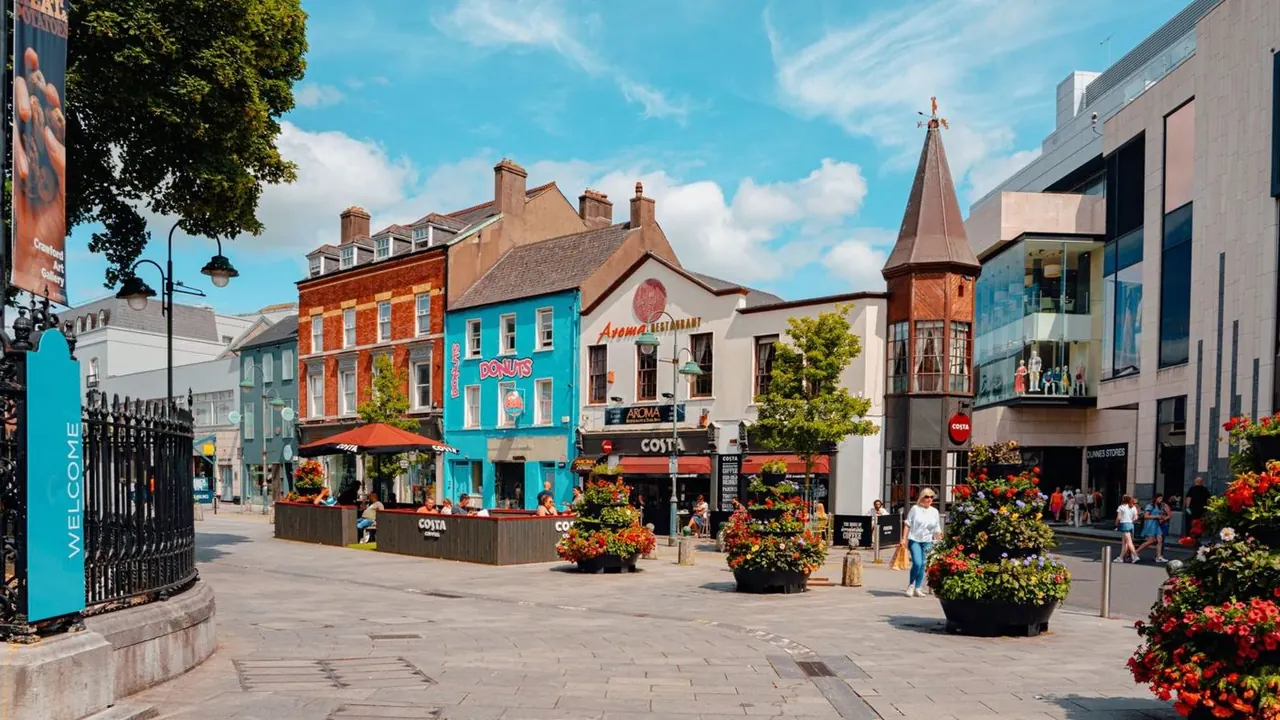
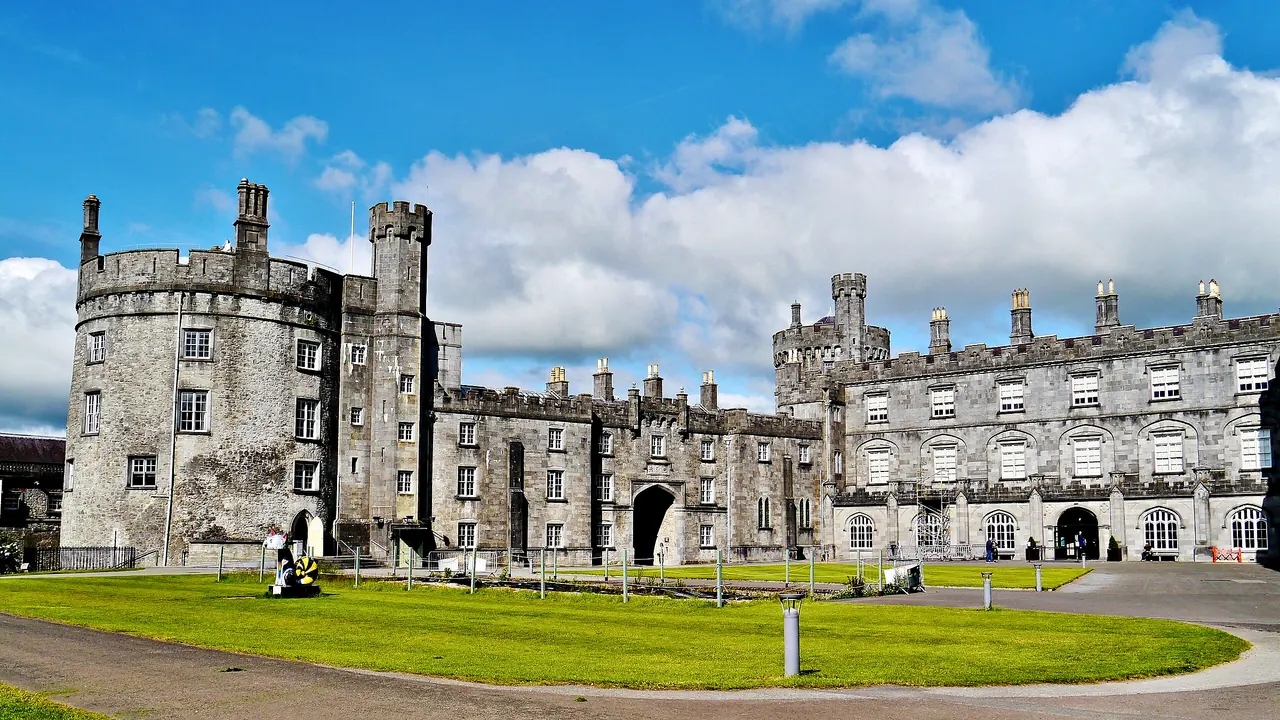
Photos: Cork by Selim Karadayı, Pexels License; Kilkenny by Zairon, CC BY 4.0, cropped.
Cork or Kilkenny?
Our verdict in twelve categories, each scored against the same fixed benchmark cities, and the climate month by month, so you can choose for your trip.
Choose Cork for
- food and drink
- nature and the outdoors
- beaches
Cork suits the traveller who wants a real base with plenty around it. It eats better, from the English Market to the seafood in nearby Kinsale. The harbour and West Cork give it far more coast and open country, and trains reach Cobh, Midleton and Fota without a car. The trade-off is more rain, especially in autumn and winter.
Choose Kilkenny for
- wellness
- culture and sights
Pick Kilkenny for a slower, more concentrated stay in one handsome medieval town, where the castle, the cathedral and the old pubs all sit along a single walkable street. It works best with a hire car for Jerpoint, Kells and the Rock of Cashel, and with a night or two at a country-house hotel. If you can time your visit, the August arts festival is the best reason to go.
Scoreboard
Twelve categories on one fixed scale from 0 to 100. The shaded stretch is the gap between the two.
Your match
Pick a travel style or drag the sliders, and both match scores follow your weighting.
Wins on food and drink and nature and the outdoors with your weighting.
Wins on wellness and culture and sights with your weighting.
What matters to you?
Category by category
What the scores mean for a trip.
Beaches & swimming
Neither is a beach destination, but Cork at least has sand within reach. Myrtleville and Fountainstown on the outer harbour are about half an hour's drive, and Inchydoney is further west. The Atlantic water is cold, but the local crowd who swim all year show it can be done.
From inland Kilkenny the nearest coast is an hour away at Tramore and the Copper Coast, which makes it a scenic drive rather than a beach day. In summer some locals swim in the River Nore instead.
Food & drink
Cork is clearly the stronger place to eat. The English Market sells West Cork farmhouse cheese, smoked fish and spiced beef, and the restaurants around it buy from the same stalls. Kinsale's seafood is half an hour away.
Kilkenny cooks honestly with county lamb and dairy. Its best meals tend to be in gastropubs or in country-house kitchens outside town, and its ale history at the old St Francis Abbey brewery is a real draw. Choice runs out quickly in both, but it runs out sooner in Kilkenny.
Culture & sights
The two are broadly level, but they offer different things. Kilkenny is one coherent medieval town: the Medieval Mile runs from the Norman castle to St Canice's Cathedral, where you can climb the round tower, with Rothe House and the Black Abbey along the way.
Cork's sights are more scattered across a Georgian river city. Highlights are the Shandon bells you can ring yourself, the Crawford Art Gallery's Irish paintings and the prison story at the City Gaol. Each place fills a day or two.
Nightlife
Cork gives you the fuller night out of the two, and its week starts earlier. The student crowd has the centre busy from Thursday, and the trad music in the back rooms of the old bars off Oliver Plunkett Street is mostly locals playing for each other rather than a show put on for visitors.
Kilkenny's big nights are Friday and Saturday, when much of the crowd is out for a wedding or a birthday. That makes the town loud and cheerful rather than varied, and for the rest of the week it has little to offer late in the evening.
Nature & outdoors
Cork has much more to offer outdoors, and most of it is on the water. You can sail and kayak in one of the world's largest natural harbours, walk the cliffs at Ballycotton and the Old Head of Kinsale, and head into West Cork's inlets and islands or up to Gougane Barra's mountain lake.
Kilkenny's country is gentler: the wooded Nore Valley Way, Brandon Hill and quiet back roads for cycling. For anything wilder, such as the Comeraghs' corrie lakes, you need to drive for an hour.
Day trips
Cork has the better range of outings and the easier access. Cobh's Titanic and emigrant history, Fota House and the Midleton distillery are all on the suburban rail line, and Kinsale and Blarney are a short bus ride away.
Kilkenny is closer to the heritage of the southeast. The Rock of Cashel is under an hour, and Jerpoint Abbey and Kells Priory are nearer still. But apart from Waterford and Dublin, nearly every trip from Kilkenny needs a car.
Good for families
Cork gives children more to do, and its best attraction is Fota Wildlife Park, where animals roam with few barriers, a short train ride away. Blackrock Castle's observatory is good for a rainy day.
Kilkenny is small and safe, with castle lawns to run on and zip lines in the forest park near Castlecomer. But it has no zoo or aquarium, and its centre is best avoided with young children on busy weekend nights.
Getting around
Both centres are walkable, so the difference is scale. In Kilkenny almost everything lies along a single kilometre, and the station is a short walk away. Cork's island centre takes about twenty minutes to cross, with a steep climb to Shandon. Both need a car for the countryside, but Cork's rail line to Cobh and Midleton covers more of its outings.
Shopping & style
Cork has more to browse. Patrick Street has the department stores, the Huguenot Quarter and the lanes off Princes Street have independent shops, and the English Market is the place to buy cheese to take home.
Kilkenny is smaller but has a stronger craft identity. The old castle stables sell regional pottery, glass and woollens, and there are makers' studios around the county. Neither suits serious fashion shopping.
Affordability
Both cost what Ireland costs, so the difference is in where the money goes. In Cork, hotel rooms are dear for a city its size, but market lunches and a walkable centre help. Kilkenny's edge-of-town B&Bs are reasonable midweek, but rooms in the centre cost much more at weekends, and a hire car to see the county adds to the bill.
Live music & performing arts
Both have traditional sessions in the pubs most nights, but they differ in what else they offer. Cork has a year-round programme, with touring shows at the Opera House and drama at the Victorian Everyman, and its jazz festival fills the city at the end of October.
Kilkenny relies on its calendar. In August the Arts Festival brings classical concerts to St Canice's Cathedral, and there are comedy and roots music festivals earlier in the year.
Wellness & relaxation
Cork moves at an easier pace than a capital, and it is quiet on weeknights. Even so, it is a working city with a student crowd out from Thursday to Saturday, and it has nothing designed around rest. The calmest place to stay is out of town on Fota Island in the harbour, and a slow walk along the riverside Marina is about as restful as the city itself gets.
Kilkenny has the slight edge, as long as you choose your base and your days carefully. Weekday mornings in the castle park or by the Nore are calm. On weekend nights, though, the centre gets loud, so staying out in the countryside rather than on the Medieval Mile means better sleep. For real quiet, come midweek.
When should you go?
Pick your month. The climate figures are measured averages, not a forecast.
Cork in July
Kilkenny in July
Daytime high, °C
Rainfall in the month, mm
Where the figures come from
Cork's station stands 153 m above the city centre, so the centre is likely a little warmer than the figures say.
Temperature and rainfall are climate normals, averaged over the years shown. Cork: 1991-2020 normals, Cork Airport (5.6 km from centre). Kilkenny: 1991-2020 (sunshine 1981-2010, rainfall 1981-2010) normals, Kilkenny (2.1 km from centre).
Neither place ever gets too hot for walking the streets, and both are at their best from May to September, when highs reach the high teens and the evenings are long. Kilkenny is a little warmer in summer, peaking around 20°C, and clearly sunnier, with May the brightest month. Cork's harbour water is warmest from July to September at about 16°C, which is still a bracing swim for all but the hardy.
The bigger difference is rain. Cork is much wetter, with well over 100mm a month from October to January and October the wettest at around 140mm. Inland Kilkenny gets noticeably less all year, though October and November are damp there too. Winters in both are grey and cool, with highs around 8°C. That is fine for pubs and museums but dull for long walks in the countryside.
Which traveller are you?
For a food and nightlife trip, Cork is the better pick. The English Market and the kitchens around it give you far more to eat than Kilkenny's gastropubs, and a student crowd keeps late bars and small clubs going after the pub sessions end.
On an outdoors trip, choose Cork. You can sail or kayak in the harbour, walk the cliffs at Ballycotton and explore the inlets of West Cork. Kilkenny has gentler river valleys, and its real hills, the Comeraghs and Wicklow, are an hour or more away by car.
For a relaxing and wellness trip, Kilkenny has a slight edge. Country-house hotels with pools and treatment rooms sit in parkland just outside town, and the villages along the Nore are quieter still. Cork offers little beyond a hotel spa and a cold sea swim.
Before you go
| Measure | Cork | Kilkenny |
|---|---|---|
| Official language | English, Irish | English, Irish |
| Currency | Euro (EUR) | Euro (EUR) |
| Sockets | G230 V, 50 Hz | G230 V, 50 Hz |
| Driving side | Left | Left |
| Time zone | UTC, UTC+1 in summer | UTC, UTC+1 in summer |
| Emergency number | 112 | 112 |
| Elevation | 0 m | 60 m |
| Main airport | Cork International Airport (ORK)7 km from centre47 non-stop destinations | Dublin Airport (DUB)109 km from centre200 non-stop destinations |
| Public holidays this year | 11 days | 11 days |
By the numbers
| Measure | Cork | Kilkenny |
|---|---|---|
| City population | 222,333 | 22,179 |
| People per km² | 5,961 | 828 |
| Museums within 10 km | 5 | 4 |
| UNESCO World Heritage sites within 50 km | 0 | 0 |
| Swim season, months above 21 °C | None | None |
Where else could you go?
Every comparison below shares a destination with this one, so you can follow Cork or Kilkenny somewhere new.