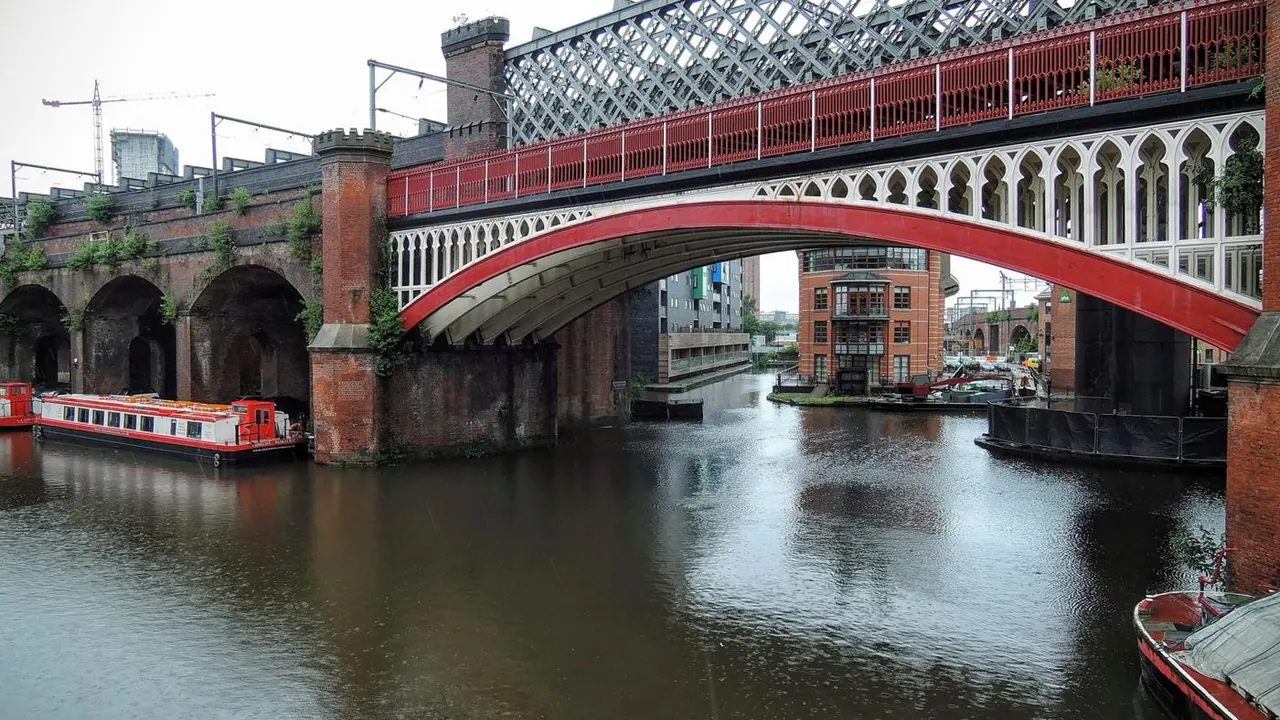
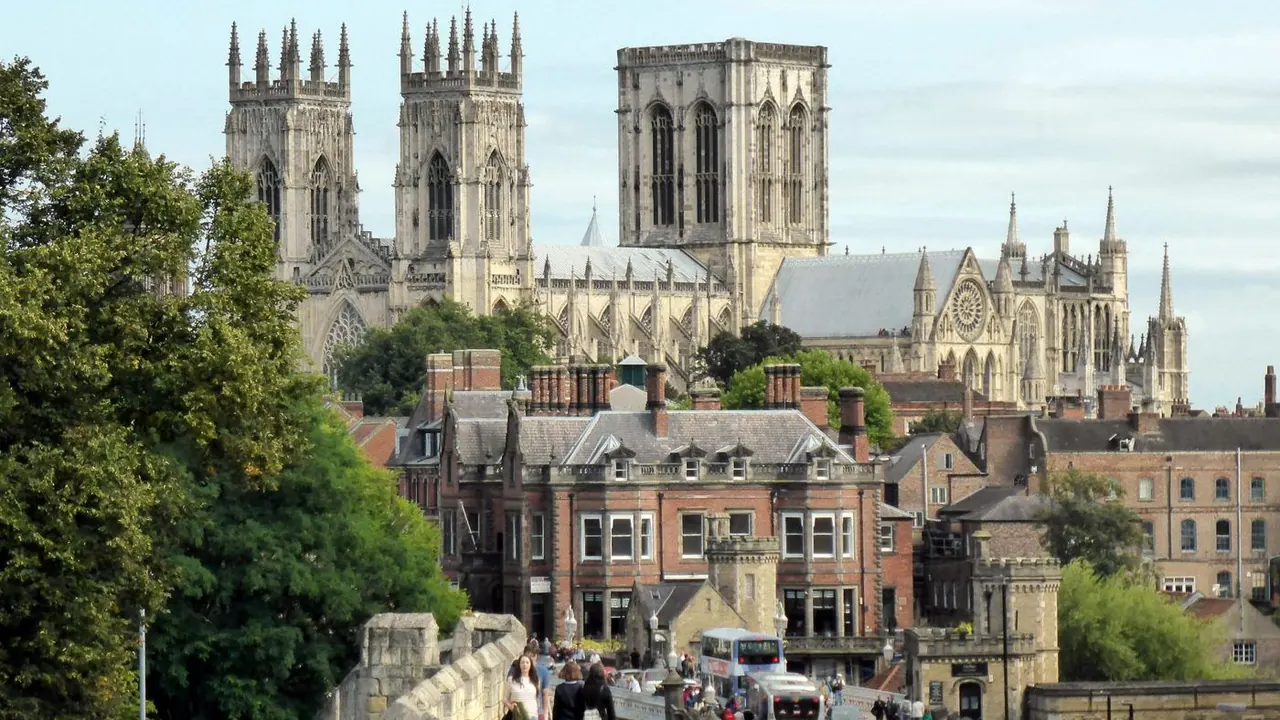
Photos: Manchester by IIya Kuzhekin, CC BY 3.0, cropped; York by PAUL FARMER, CC BY-SA 2.0, cropped.
Manchester or York?
Our verdict in twelve categories, each scored against the same fixed benchmark cities, and the climate month by month, so you can choose for your trip.
Choose Manchester for
- nightlife
- live music and the arts
- shopping
Manchester suits travellers who want a big city's evenings. The Northern Quarter's bars and DJ rooms, a deep gig circuit, two orchestras and the Royal Exchange give it far more to do after dark than York. It also has a wider spread of food and shops. Its sights tell the industrial story well and are mostly free, and the Peak District is a train ride away for a day on the moors.
Choose York for
- culture and sights
- wellness
- beaches
For a first look at English history, York is the better pick. The Minster, the walls, the Shambles and the Roman, Viking and medieval layers all sit in a centre you can cross on foot. The pace is gentler too, with tearooms, riverside paths and Harrogate's Turkish bath close by. Its nights mostly mean old pubs, so anyone after clubs or concerts will find it quiet.
Scoreboard
Twelve categories on one fixed scale from 0 to 100. The shaded stretch is the gap between the two.
Your match
Pick a travel style or drag the sliders, and both match scores follow your weighting.
Wins on nightlife and live music and the arts with your weighting.
Wins on culture and sights and wellness with your weighting.
What matters to you?
Category by category
What the scores mean for a trip.
Beaches & swimming
Neither city is anywhere to come for beaches, and from both the coast is a day out about an hour away by train. Manchester faces the Irish Sea, with the dunes and pinewoods at Formby or the long promenade and rides at Blackpool.
York's coast is the North Sea at Scarborough, where there are two sandy bays, with Filey and clifftop Whitby a little beyond. The water is cold on both sides, so pack for a walk and fish and chips rather than a swim.
Food & drink
Manchester eats better mainly because it has more choice. Chinatown behind the art gallery, the cheap South Asian kitchens along Wilmslow Road and the food halls in old Ancoats mills cover far more ground than York can. Its craft breweries under the railway arches add a drinking scene with real depth.
York's strengths are traditional: afternoon tea with a fat rascal, Yorkshire ale in old inns, Sunday roasts and the stalls of the Shambles Market. Beyond that the range is narrow, and the streets nearest the Minster lean towards tourist fare.
Culture & sights
York has the richer sights. The Minster's medieval glass, a walk along the city walls, the Viking street under Jorvik and the Yorkshire Museum among the ruins of St Mary's Abbey make a sequence few English cities can match, and it fills two or three full days.
Manchester's heritage belongs to the cotton era. The neo-Gothic Town Hall, the John Rylands Library, the Science and Industry Museum and the Pre-Raphaelites at the Manchester Art Gallery reward anyone interested in industry and politics, but none of them is a world-famous sight.
Nightlife
Manchester is the place to go out. The warehouse grid of the Northern Quarter holds cocktail bars, basement dives and small DJ rooms, Canal Street's Gay Village is one of Europe's oldest, and autumn and winter bring big warehouse raves.
In York, a night out means an ale-house crawl through centuries-old inns on Micklegate and Stonegate, which is a pleasure in its own right. Weekends bring stag parties and race-day crowds, weeknights end early, and anyone wanting a proper club takes the train to Leeds.
Nature & outdoors
The two cities give you about the same amount of countryside, but you reach it in different ways. From Manchester the Peak District begins on the city's edge, and trains along the Hope Valley drop you at Edale for Kinder Scout and the Mam Tor ridge, so you can walk the hills without a car. Heaton Park adds a huge green space within the city.
York sits on the flat Vale of York with riverside paths and the open Strays. The North York Moors, purple with heather in late summer and ending in sea cliffs, and the limestone Dales are both close, but mostly easier by car.
Day trips
Both make excellent bases, and the difference is in what lies around them. Manchester's rail links put Liverpool, Chester and York itself within easy reach, plus Buxton and Chatsworth in the Peaks and the Lake District towns further north. Almost all of it is easy by train.
York looks north and east instead. Durham's cathedral, spa-town Harrogate and Scarborough are quick by rail. Castle Howard, Fountains Abbey and Rievaulx are among England's finest outings, but they are best reached by car or on a coach tour.
Good for families
When it rains, Manchester has more to fill a day with children. There are working engines at the Science and Industry Museum, dinosaurs and a vivarium at the Manchester Museum, and an aquarium, a Lego attraction and a real-snow slope at the Trafford Centre. Young football fans can tour Old Trafford or the Etihad, though the centre gets rowdy on weekend nights.
York is the easier city to manage with small children, because its compact centre is largely pedestrianised and safe. The hall of real locomotives at the National Railway Museum, the Victorian street in the Castle Museum and a loop of the walls fill a short stay. Two or three days is usually enough.
Getting around
Manchester needs its trams once you leave the centre, while York can be seen almost entirely on foot. Manchester's flat core is walkable from Castlefield to Piccadilly, and the yellow Metrolink runs on to Salford Quays, Old Trafford and the airport, with a dense bus network filling the gaps. The trams get crowded when big events are on.
York is the slightly easier of the two. Nearly every sight lies inside or just outside the walls, the station is about fifteen minutes' walk from the Minster, and cycling is simple. Further out it falls short, because sparse rural buses leave the moors and country houses to drivers and tours.
Shopping & style
Manchester is a proper shopping city. The big names cluster around Market Street and Exchange Square, King Street and Spinningfields carry designer labels, and the Trafford Centre draws the whole region. The Northern Quarter's record shops, vintage clothing and the multi-storey stalls of Afflecks give it a character York lacks.
York's appeal is the setting: bookshops, jewellers and antiques dealers in the medieval lanes of Stonegate and Petergate. Its December Christmas markets are a draw, but the Shambles is heavy on souvenirs, and serious fashion means a trip to Leeds.
Affordability
Neither is a bargain, and they cost much the same overall, though the savings fall in different places. In Manchester most of the major museums and galleries are free, and Chinatown and the curry houses keep cheap meals easy to find. Hotel rates jump on home match days and big arena nights.
In York the Minster, Jorvik and the castle museums all charge entry, and rooms near the walls climb steeply at weekends, on race days and at Christmas. A midweek stay just outside the centre is the way to keep costs down.
Live music & performing arts
Manchester is far ahead here. The Hallé and the BBC Philharmonic play at the Bridgewater Hall, the Royal Exchange stages theatre-in-the-round inside the old cotton trading hall, and the gig circuit runs from Northern Quarter back rooms to a giant arena. Music is central to how the city sees itself.
York's programme is smaller but has local character. There is pantomime at the Theatre Royal, early music in a medieval church, free choral evensong in the Minster and the occasional revival of the Mystery Plays on street wagons. Big touring shows go to Leeds.
Wellness & relaxation
York is the more restful of the two. Early mornings on the walls, the Museum Gardens and the riverside paths set a gentle pace when the crowds are elsewhere, and Harrogate's Royal Baths, with their Moorish-style Turkish bath, are half an hour away by train.
Manchester is loud and busy, especially at weekends, and Victoria Baths is open as a heritage building rather than for swimming. A calm day there means heading out to Buxton or the Peak District.
When should you go?
Pick your month. The climate figures are measured averages, not a forecast.
Manchester in July
York in July
Daytime high, °C
Rainfall in the month, mm
Where the figures come from
York has no rain gauge within 25 km of the centre, so its rainfall comes from a gridded climate dataset read at the city rather than from a gauge further away.
York's sunshine is measured 48 km from the centre, at Leeming.
Temperature and rainfall are climate normals, averaged over the years shown. Manchester: 1991-2020 normals, Manchester Airport (14.8 km from centre). York: 1991-2020 normals, Linton-On-Ouse (14.9 km from centre).
The two cities have almost the same temperatures through the year. Summer highs reach about 21°C in July, and winter afternoons hover around 7°C. Neither is ever too hot for walking, and both are at their best from May to September, when the days are longest and sunniest. The real difference is rain. Manchester is wetter in every month, and in autumn the gap is wide: October brings about 95mm there against 66mm in York.
For sights and walking, then, York is the safer bet from October to December. In Manchester the wet months matter less, because so much of a visit there is indoors. Neither city is a beach destination. The Irish Sea within reach of Manchester only warms to about 17°C in August, which is cold for anything more than a paddle.
Which traveller are you?
For a culture and arts trip built around history, York is the stronger pick. Two thousand years of building sit within a short walk of each other, enough for two or three full days. Manchester is the better choice only if concerts and theatre matter more than old stones.
On a food and nightlife trip, choose Manchester. A big university city, it has cooking from across the world, a serious craft-beer culture and weekend nights that run late. In York, evenings mostly mean traditional pubs, and midweek they end early.
For a relaxing and wellness trip, York is the gentler base. A small centre with few cars and quiet evenings makes slow days easy, and a historic spa town with a Victorian bathhouse is a short train ride away. Manchester's weekends are too loud for rest.
Before you go
| Measure | Manchester | York |
|---|---|---|
| Official language | English | English |
| Currency | Pound Sterling (GBP) | Pound Sterling (GBP) |
| Sockets | G230 V, 50 Hz | G230 V, 50 Hz |
| Driving side | Left | Left |
| Time zone | UTC, UTC+1 in summer | UTC, UTC+1 in summer |
| Emergency number | 112 or 999 | 112 or 999 |
| Elevation | 38 m | 25 m |
| Main airport | Manchester Airport (MAN)15 km from centre211 non-stop destinations | Leeds Bradford Airport (LBA)39 km from centre69 non-stop destinations |
| Public holidays this year | 8 days | 8 days |
By the numbers
| Measure | Manchester | York |
|---|---|---|
| City population | 547,627 | 208,400 |
| People per km² | 4,737 | 766 |
| Museums within 10 km | 28 | 24 |
| UNESCO World Heritage sites within 50 km | 2 | 2 |
| Swim season, months above 21 °C | None | - |
Where else could you go?
Every comparison below shares a destination with this one, so you can follow Manchester or York somewhere new.