
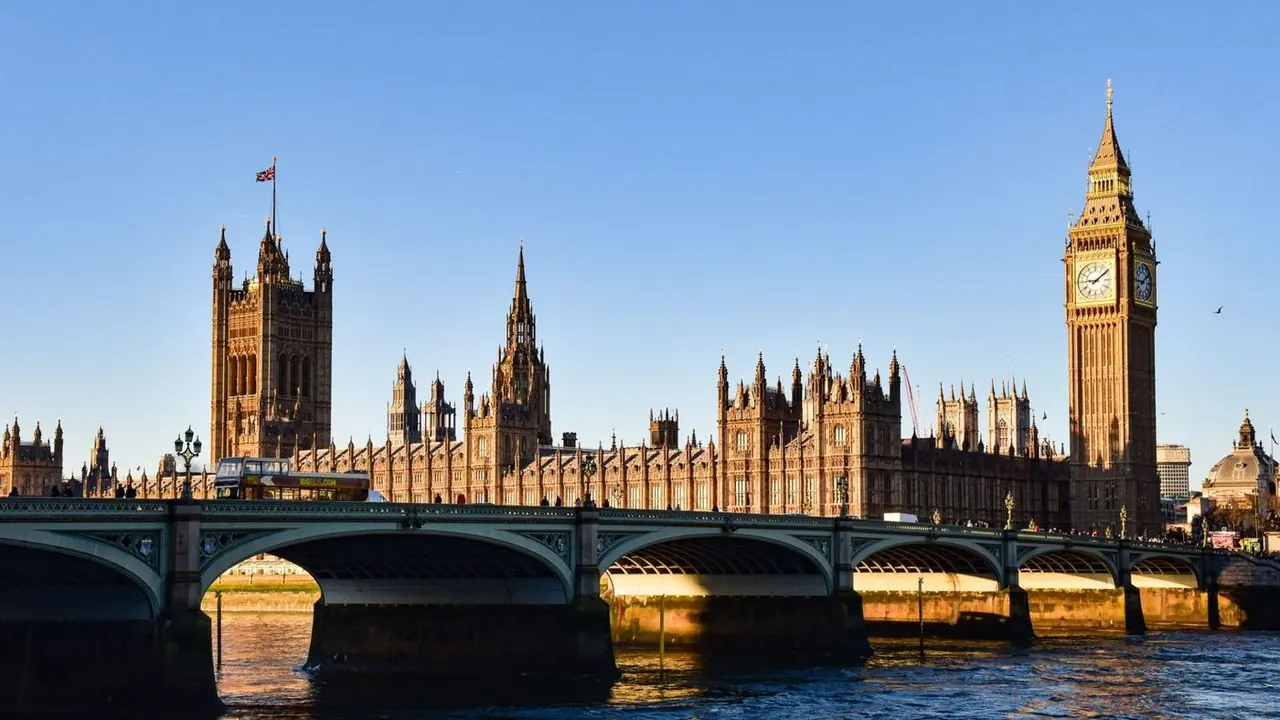
Photos: Aberdeen by Holger Uwe Schmitt, CC BY-SA 4.0, cropped; London by AXP Photography, Pexels License.
Aberdeen or London?
Our verdict in twelve categories, each scored against the same fixed benchmark cities, and the climate month by month, so you can choose for your trip.
Choose Aberdeen for
- prices
- nature and the outdoors
Aberdeen suits travellers who want Scotland's landscape more than a city's attractions. The granite centre and Old Aberdeen fill a couple of days, and then the real reason to be there opens up: Royal Deeside, the Cairngorms, the castle country inland and the cliffs and seal colonies of the coast. Hotel rooms are easier on the budget, the pace is unhurried, and a hired car turns it into a base for a week of walking, whisky and castles.
Choose London for
- shopping
- live music and the arts
- nightlife
London is the choice for anyone who wants as much as possible within reach of a Tube stop. It has free national museums, theatre and concerts every night, food from every community that has settled there, and some of the best shopping anywhere. Its rail links also make Oxford, Bath or Canterbury an easy day out without a car. It costs a great deal more and asks for stamina, but a week there never runs short of things to do.
Scoreboard
Twelve categories on one fixed scale from 0 to 100. The shaded stretch is the gap between the two.
Your match
Pick a travel style or drag the sliders, and both match scores follow your weighting.
Wins on prices and nature and the outdoors with your weighting.
Wins on shopping and live music and the arts with your weighting.
What matters to you?
Category by category
What the scores mean for a trip.
Beaches & swimming
Neither city is a beach destination, but London gives you more actual swimming. Brighton's pebble shore is an hour away by train, and the Channel there gets a few degrees warmer than the North Sea. In the city itself, the lidos at Brockwell Park and Parliament Hill and the Hampstead Heath ponds are full on warm days.
Aberdeen has the better sand, a long beach with dunes right at the edge of the centre and empty strands at Balmedie further up the coast. The cold water and wind make it a place for a bracing walk, not for lying in the sun.
Food & drink
Aberdeen's cooking is about its larder: North Sea fish and shellfish, Aberdeen Angus beef, the salty buttery roll at breakfast, and fish and chips eaten by the harbour at Stonehaven. You eat honestly and well there, with Speyside malts to follow, but there isn't much range.
London is a different scale altogether. Its best cooking comes from its communities: Bangladeshi food on Brick Lane, Turkish grills in Green Lanes, Punjabi cooking in Southall and Caribbean and West African kitchens south of the river. On top of that come fine dining, modern British cooking, Borough Market and the weekend food markets. A food lover could plan a whole trip around it.
Culture & sights
Aberdeen's appeal is its stone. The whole centre is silver-grey granite, Marischal College is the showpiece, and the cobbled lanes of Old Aberdeen around King's College and St Machar's Cathedral feel like a separate small town. The art gallery and the Maritime Museum round it off, and two or three days covers it all.
London works at the level of a world capital. The British Museum, the National Gallery, the V&A and the Tates could each take a day, and the landmarks run from the Tower and Westminster Abbey to St Paul's and Greenwich. A week there still leaves most of it unseen.
Nightlife
In Aberdeen an evening out mostly means pubs with long whisky lists around Belmont Street and Union Street, plus a few clubs that fill with students in term time. Outside term and midweek it goes quiet early.
London gives you whole districts to choose from: Soho for late cocktail bars and its long-established gay scene, Shoreditch, Hackney and Dalston for clubs and warehouse nights, and Brixton and Peckham for big venues and rooftops. Weekends there are a serious night out, even if many local pubs still close at eleven.
Nature & outdoors
This is where Aberdeen pulls ahead. Within about an hour you can be on the high plateau of the Cairngorms, under Lochnagar or among the pine forests around Braemar, with skiing at Glenshee in winter. The coast adds seabird cliffs, the seals at the Ythan estuary and dolphins visible from Torry Battery.
London is green for its size, with deer in Richmond Park and wide views from Hampstead Heath. Beyond the city, though, the Chilterns and the South Downs are gentle chalk country, and there are no mountains within reach.
Day trips
Aberdeen's outings are strong on castles and whisky: Dunnottar on its sea stack, Crathes, Craigievar and Fyvie along the Castle Trail, Balmoral up Deeside and the distilleries of Speyside. Most of them really need a car.
London has more variety and it is easier to reach by train. Oxford, Cambridge and Windsor are each an hour or less away, Bath and Stonehenge make longer days, and Canterbury, Brighton and Portsmouth lie to the south and east. You can fit three or four very different outings into a week without hiring a car.
Good for families
Aberdeen is relaxed and safe with children, but there isn't much there built for them. The Science Centre is the main indoor attraction. After that you have the seaside funfair on the beach esplanade, the glasshouses of the Duthie Park winter garden, the woods and play areas at Hazlehead, and the chance of seeing dolphins at the harbour mouth. In Aberdeen the weather is what limits a family day: when the North Sea wind blows in, an afternoon planned outdoors can end up as a second trip to the same indoor attraction.
London has far more to fill the days, and much of it is free. There are the Natural History Museum's dinosaurs, the hands-on Science Museum, the Young V&A and the pirate ship in the Diana Memorial Playground, plus the zoo in Regent's Park and Legoland and the Harry Potter studios outside the city. London's problem is the opposite of Aberdeen's. There is no shortage of things to do, but getting between them takes effort. Crossing town with small children wears everyone out, a pushchair often has to be carried up and down station steps, and the best-known museums are packed once the schools break up. Riding on the top deck of a bus is usually the easier way to get around.
Getting around
Aberdeen is simple on foot. The station, Union Street, the harbour and the museums are all close together, and the beach and Old Aberdeen are a walk or a short bus ride away. The catch is the countryside, which buses and trains only partly reach.
London never needs a car. The Underground, the Elizabeth line, buses and Thames riverboats all run on one contactless card, so even Greenwich or Hampstead is straightforward. The cost is time and effort, with long journeys across a spread-out city and packed trains at rush hour.
Shopping & style
In Aberdeen shopping is mostly for practical things: two central malls of British chains, a few independents around Belmont Street and Rosemount, and the knitwear, tartan and whisky that are often better bought in the Deeside villages.
London is a destination for shopping in its own right. It has luxury houses on Bond Street, bespoke tailoring on Savile Row, the department stores Harrods, Liberty and Fortnum & Mason, and weekend markets from Portobello Road to Columbia Road.
Affordability
Aberdeen is the cheaper stay, mostly because of its hotels. Rooms built for business travellers are often reasonably priced at weekends and in summer, although meals, drinks and any hire car cost the usual British prices.
In London, central hotel rooms are among Europe's most expensive and small for the money, and theatre seats and drinks quickly add up. The free national museums and parks help a lot, as does staying further out along a good Tube line, but it is never cheap.
Live music & performing arts
Aberdeen has a decent regional programme. His Majesty's Theatre hosts touring drama and visits from the national opera and ballet, the Music Hall welcomes the Scottish orchestras, and there are folk sessions in the pubs.
London is one of the world's great stages. It has the West End musicals, the National Theatre, the Globe and the Royal Court, the Royal Opera House, five major orchestras, the Wigmore Hall and the Proms at the Royal Albert Hall, and you'll find something serious to see every night.
Wellness & relaxation
Aberdeen has no bathing tradition. Pampering means a hotel spa in town or a country-house hotel with treatments out in Deeside. What it offers instead is a slow pace and empty country close by, which can make a stay restful in a quieter way.
London has more ways to take the waters, even though the city itself rarely feels restful. Its historic public Turkish baths in Bayswater and at Ironmonger Row in Islington still have steam rooms and plunge pools under tiled vaults, the grand hotels of Mayfair and Knightsbridge run full spas, and Bath's thermal spa is a train ride away.
When should you go?
Pick your month. The climate figures are measured averages, not a forecast.
Aberdeen in July
London in July
Daytime high, °C
Rainfall in the month, mm
Temperature and rainfall are climate normals, averaged over the years shown. Aberdeen: 1991-2020 normals, Aberdeen / Dyce (9 km from centre). London: 1992-2020 (sunshine 1991-2020, rainfall 1991-2020) normals, London Weather Centre (1.3 km from centre).
Neither city ever gets truly warm, but London is noticeably milder all year. In July and August it reaches about 23°C, comfortable for walking all day, while Aberdeen tops out near 18°C, so even in high summer you need a jumper on the coast. Aberdeen's sea peaks at around 13°C, cold enough that a beach day there means a walk on the sand, not a swim. Late spring is a good time for the north: May is Aberdeen's sunniest month and one of its driest, which suits hill and coastal walks before the summer rain picks up a little.
Autumn is where the two part ways. Aberdeen turns wet and dark from October, its rainiest month at about 101mm, and its winter days are short, grey and cold. London's rain is more evenly spread and lighter, and its winters are damp but rarely bitter, so a museum and theatre trip there works in any month. Aberdeen is best from May to September.
Which traveller are you?
On a culture and arts trip, London is the obvious choice. The British Museum, the National Gallery and the Tates are free, and the West End, the National Theatre and the Proms give you something serious to see every evening. Aberdeen's galleries and touring shows are pleasant but limited.
For an outdoors trip, Aberdeen wins clearly. The Cairngorms and Lochnagar are about an hour up Deeside, there are cliff walks to Stonehaven, and you can see dolphins at the harbour mouth. London's parks and the gentle Downs can't compete with that wilder country.
On a trip with a tight budget, Aberdeen goes further. Its business hotels are often reasonably priced at weekends and in summer, and its museums are free. In London, even with the free collections and market food, a small central room alone uses up much of the budget.
Before you go
| Measure | Aberdeen | London |
|---|---|---|
| Official language | English | English |
| Currency | Pound Sterling (GBP) | Pound Sterling (GBP) |
| Sockets | G230 V, 50 Hz | G230 V, 50 Hz |
| Driving side | Left | Left |
| Time zone | UTC, UTC+1 in summer | UTC, UTC+1 in summer |
| Emergency number | 112 or 999 | 112 or 999 |
| Elevation | 29 m | 4 m |
| Main airport | Aberdeen International Airport (ABZ)8 km from centre29 non-stop destinations | London Heathrow Airport (LHR)23 km from centre224 non-stop destinations |
| Public holidays this year | 10 days | 8 days |
By the numbers
| Measure | Aberdeen | London |
|---|---|---|
| City population | 200,680 | 8,799,728 |
| People per km² | 3,083 | 5,598 |
| Museums within 10 km | 10 | 216 |
| UNESCO World Heritage sites within 50 km | 0 | 4 |
| Swim season, months above 21 °C | None | - |
Where else could you go?
Every comparison below shares a destination with this one, so you can follow Aberdeen or London somewhere new.