
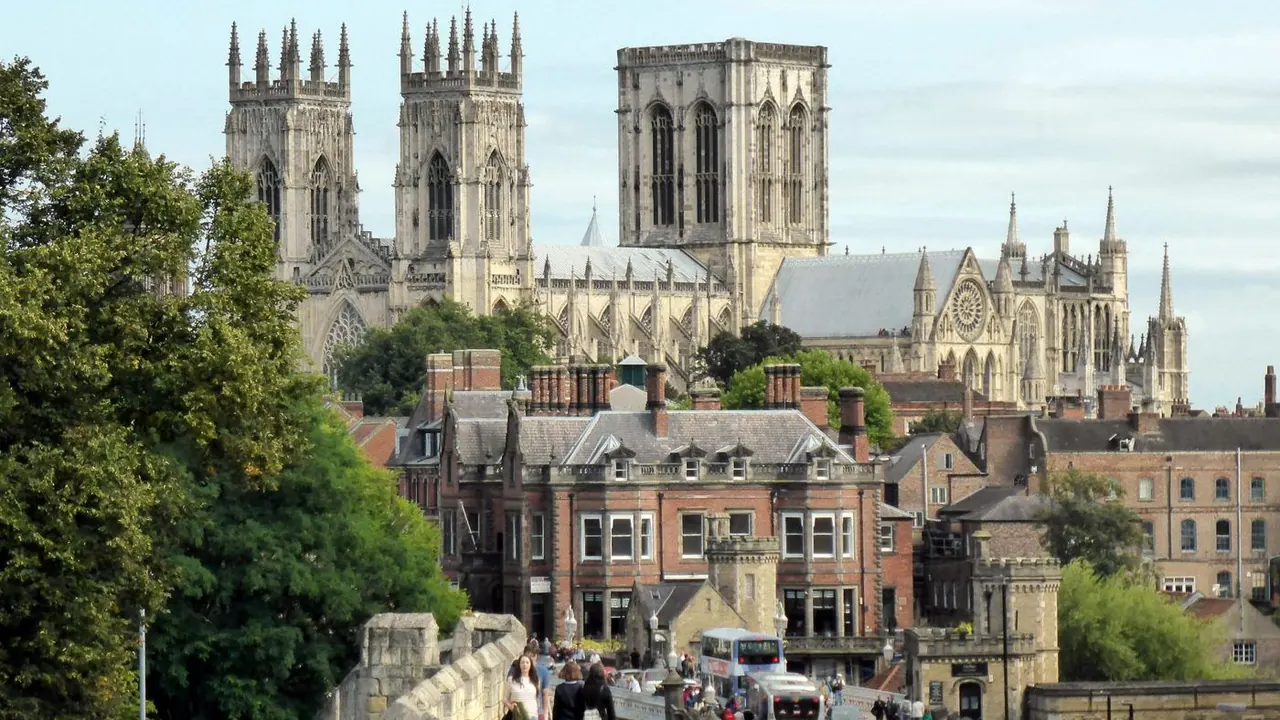
Photos: Aberdeen by Holger Uwe Schmitt, CC BY-SA 4.0, cropped; York by PAUL FARMER, CC BY-SA 2.0, cropped.
Aberdeen or York?
Our verdict in twelve categories, each scored against the same fixed benchmark cities, and the climate month by month, so you can choose for your trip.
Choose Aberdeen for
- nature and the outdoors
- prices
- beaches
Aberdeen suits travellers who come for the landscape more than the city. Royal Deeside and the Cairngorms are about an hour away, the coast has cliff walks, seabirds and dolphins at the harbour mouth, and the castle country inland rewards anyone with a hire car. The granite centre and Old Aberdeen fill a day or two, and the many business hotels often ease the bill at weekends.
Choose York for
- culture and sights
- families
- getting around
For a first trip to northern England, or for anyone who wants history they can walk through, York is the stronger choice. The Minster, the walls and the Roman, Viking and medieval layers sit in a flat, largely pedestrianised centre. Children have the National Railway Museum and Jorvik, and fast trains put Durham, Harrogate and the coast within easy reach without a car.
Scoreboard
Twelve categories on one fixed scale from 0 to 100. The shaded stretch is the gap between the two.
Your match
Pick a travel style or drag the sliders, and both match scores follow your weighting.
Wins on nature and the outdoors and prices with your weighting.
Wins on culture and sights and families with your weighting.
What matters to you?
Category by category
What the scores mean for a trip.
Beaches & swimming
Neither is a beach destination, and swimming off this cold North Sea coast is brief at best. The difference is in reach. Aberdeen has a long sandy beach a twenty-minute walk from the centre, with emptier dunes at Balmedie, so a bracing sea walk fits into any afternoon.
York is inland, so the sand means an hour on the train to Scarborough's two bays, or further to Filey and Whitby. That makes it a proper day out at a traditional seaside resort rather than something you drop into.
Food & drink
The two eat at much the same level, but from different larders. Aberdeen leans on the sea and the farms inland: North Sea fish and shellfish, Aberdeen Angus beef, the buttery at breakfast and fish and chips down the coast at Stonehaven, with Speyside whisky poured everywhere.
York eats like a market town, with afternoon tea and fat rascals in old tearooms, Yorkshire ales, Sunday roasts and pies and cheese at the Shambles Market. Neither has much range beyond its own traditions, and the busiest streets around York's Minster lean towards tourist fare.
Culture & sights
York has far more to see. The Minster's medieval glass, walls you can walk along, the Shambles and Stonegate, Jorvik on its excavated Viking street and the National Railway Museum fill two or three full days without repeating themselves.
Aberdeen's appeal is quieter: the silver granite of Marischal College and Union Street, the cobbled lanes and crowned tower of King's College in Old Aberdeen, and the Maritime Museum's story of fishing and oil. It is handsome and all of a piece, but you get through the highlights sooner.
Nightlife
Both are pub cities that go quiet early on weeknights, with little a visitor would travel for. Aberdeen's evenings are shaped by its two universities, with the bars and a few clubs around Belmont Street at their busiest on term-time weekends. York's draw is its centuries-old inns along Micklegate, Stonegate and the river, ideal for an ale-house crawl, though Micklegate fills with stag and hen parties at weekends and serious clubbers take the train to Leeds.
Nature & outdoors
Aberdeen has the bigger landscapes on its doorstep. An hour up the Dee puts you in the Cairngorms among pine forests and high plateau, with skiing in winter. Close to town, the coast has cliff walks, seabird colonies, the seals of the Ythan estuary and dolphins off Torry Battery.
York's own green space is gentle: the Ouse and Foss paths, the Strays and the Museum Gardens on the flat Vale of York. The North York Moors and the Dales are lovely walking country, but they lie further out and take a car and a full day.
Day trips
York wins on range and on ease. Trains reach Durham's cathedral, spa-town Harrogate, Leeds and Scarborough quickly, and by road Castle Howard, Fountains Abbey, Rievaulx and the Brontë village of Haworth could fill a week of outings.
Aberdeen's excursions are fewer but strong in character: Dunnottar on its sea stack, the Castle Trail of Crathes, Craigievar and Fyvie, Balmoral and the Speyside distilleries. Almost all of them need a car, whereas many of York's best-known trips can be done by rail.
Good for families
York gives children more to do in less space. The National Railway Museum, Jorvik, the Victorian street in the Castle Museum and a walk along the walls cover a few days, and ghost tours suit older children.
Aberdeen is safe and relaxed but has less on offer: the Science Centre, the beach funfair, the Duthie Park glasshouses and dolphin-watching at the harbour. Its cooler, windier weather also means more time spent indoors.
Getting around
Aberdeen's centre is compact, with the station, the harbour, Union Street and the main museums a short walk apart. Old Aberdeen, though, is half an hour north on foot or a bus ride, and there is no tram or metro. Trains reach Stonehaven, Dundee and Inverness, but the castles, Deeside and the distilleries really call for a hire car.
York is simpler still. Nearly every sight lies within or just outside the walls on flat, largely pedestrianised streets, the Minster is fifteen minutes on foot from the station, and cycling is easy. Driving into the centre is more trouble than it is worth, so you can leave the car behind until you head for the moors.
Shopping & style
York is the better place to browse, largely because of the setting: independent bookshops, jewellers and antiques dealers along Stonegate, Petergate and the Shambles, and Christmas markets late in the year. Aberdeen's shopping is mostly chains in two indoor centres and on Union Street, with a few independents around Belmont Street and Rosemount, and its best buys (knitwear, tartan and whisky) are often found out in Deeside or at the distilleries.
Affordability
Neither is cheap, but Aberdeen goes a little easier on the budget. Its many business hotels often have reasonable rates at weekends and in summer, and the museums and art gallery are free, though hiring a car to reach the hills adds up.
York's rooms inside the walls are in heavy demand and climb steeply at weekends, on race days and around Christmas, and the Minster, Jorvik and the castle museums charge admission. Staying midweek, walking everywhere and making the most of the free railway museum keep costs down.
Live music & performing arts
Most of what you see on Aberdeen's stages comes from elsewhere. His Majesty's Theatre, an Edwardian house on Rosemount Viaduct, takes touring drama, musicals and visits from the national opera and ballet, the Music Hall hosts the Scottish orchestras, and an arena near the airport draws the big tours, with traditional music in pub sessions.
York makes more of its own, on a smaller scale. The Theatre Royal, one of England's oldest, puts on its own drama and a famous pantomime, the National Centre for Early Music fills a medieval church, choral evensong at the Minster is free, and the Mystery Plays are revived from time to time on wagons in the streets. The larger touring shows tend to go to Leeds instead.
Wellness & relaxation
Neither city has its own bathing culture, but York has a better answer close by. Harrogate's Royal Baths, with a Victorian Turkish bath in Moorish tiles, is half an hour away by train, and early mornings on the walls or long afternoon teas set a slow pace in town. In Aberdeen relaxation means a hotel spa or a country-house hotel in Deeside, and the quiet of the hills does more than any treatment.
When should you go?
Pick your month. The climate figures are measured averages, not a forecast.
Aberdeen in July
York in July
Daytime high, °C
Rainfall in the month, mm
Where the figures come from
York has no rain gauge within 25 km of the centre, so its rainfall comes from a gridded climate dataset read at the city rather than from a gauge further away.
York's sunshine is measured 48 km from the centre, at Leeming.
Temperature and rainfall are climate normals, averaged over the years shown. Aberdeen: 1991-2020 normals, Aberdeen / Dyce (9 km from centre). York: 1991-2020 normals, Linton-On-Ouse (14.9 km from centre).
Both cities are cool all year, and neither has a real beach season. Aberdeen peaks at around 18°C in July and August, and the North Sea there reaches only about 13°C, so the sand is for walking. May is its sunniest month, with around 190 hours of sunshine, and late spring to early September is the time for the hills and the coast. Autumn brings the heaviest rain, about 101mm in October, with November not far behind.
York is a few degrees warmer in summer, reaching around 21°C in July, so June to September is comfortable for walking the walls and the streets. Its rain is spread more evenly through the year, and late winter and early spring are its driest stretch, so a crisp March or April visit works better there than in Aberdeen. Winters in both are cold and short of daylight, but rarely so harsh that a day on foot is out of the question.
Which traveller are you?
On a culture and arts trip, York is the clear pick. The Minster, the medieval walls, Jorvik and the Yorkshire Museum among abbey ruins pack two thousand years into a compact centre, while Aberdeen's granite streets and Old Aberdeen fill less time.
For an outdoors trip, Aberdeen wins. Royal Deeside and the Cairngorms, with plateau walks, Lochnagar and winter skiing at Glenshee, start about an hour west, and the coast adds cliff paths, seals and dolphins. York's moors and Dales are fine country but further off.
On a family trip with children, York is easier. The National Railway Museum's hall of locomotives, Jorvik and walking the walls hold young attention in a safe, pedestrianised centre. Aberdeen has the Science Centre, a beach funfair and dolphin-spotting, but less built for children.
Before you go
| Measure | Aberdeen | York |
|---|---|---|
| Official language | English | English |
| Currency | Pound Sterling (GBP) | Pound Sterling (GBP) |
| Sockets | G230 V, 50 Hz | G230 V, 50 Hz |
| Driving side | Left | Left |
| Time zone | UTC, UTC+1 in summer | UTC, UTC+1 in summer |
| Emergency number | 112 or 999 | 112 or 999 |
| Elevation | 29 m | 25 m |
| Main airport | Aberdeen International Airport (ABZ)8 km from centre29 non-stop destinations | Leeds Bradford Airport (LBA)39 km from centre69 non-stop destinations |
| Public holidays this year | 10 days | 8 days |
By the numbers
| Measure | Aberdeen | York |
|---|---|---|
| City population | 200,680 | 208,400 |
| People per km² | 3,083 | 766 |
| Museums within 10 km | 10 | 24 |
| UNESCO World Heritage sites within 50 km | 0 | 2 |
| Swim season, months above 21 °C | None | - |
Where else could you go?
Every comparison below shares a destination with this one, so you can follow Aberdeen or York somewhere new.