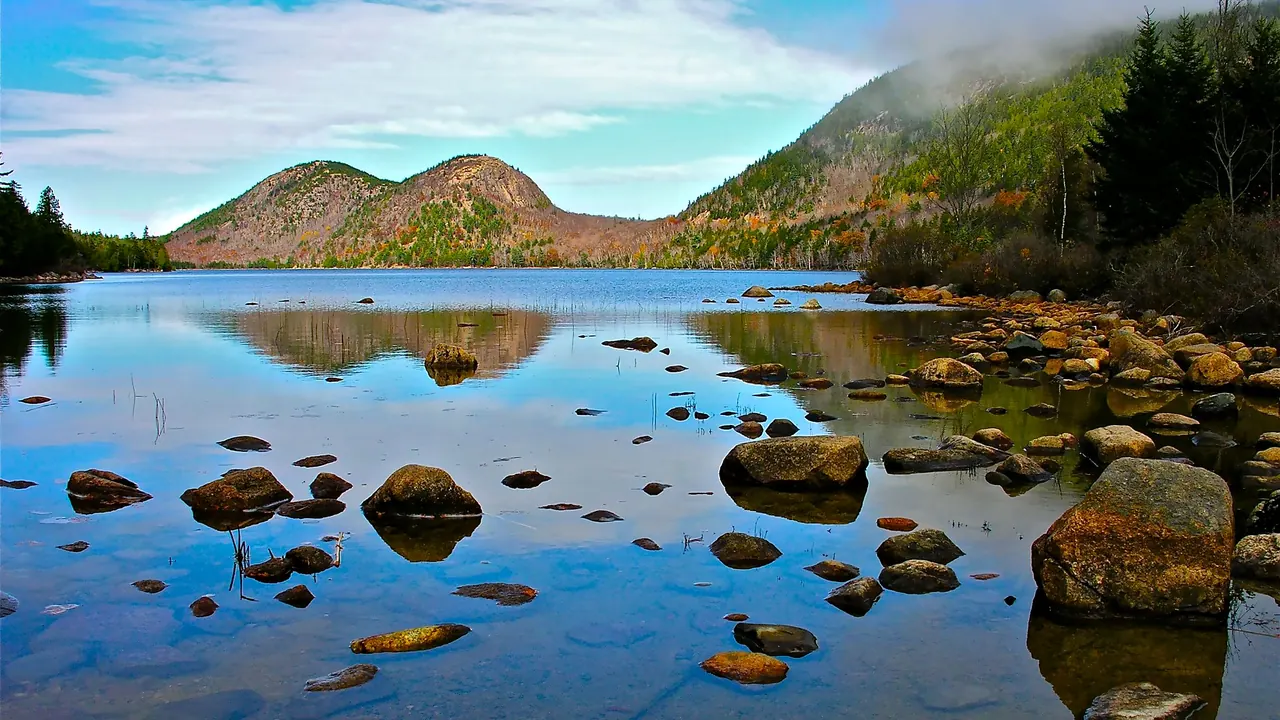
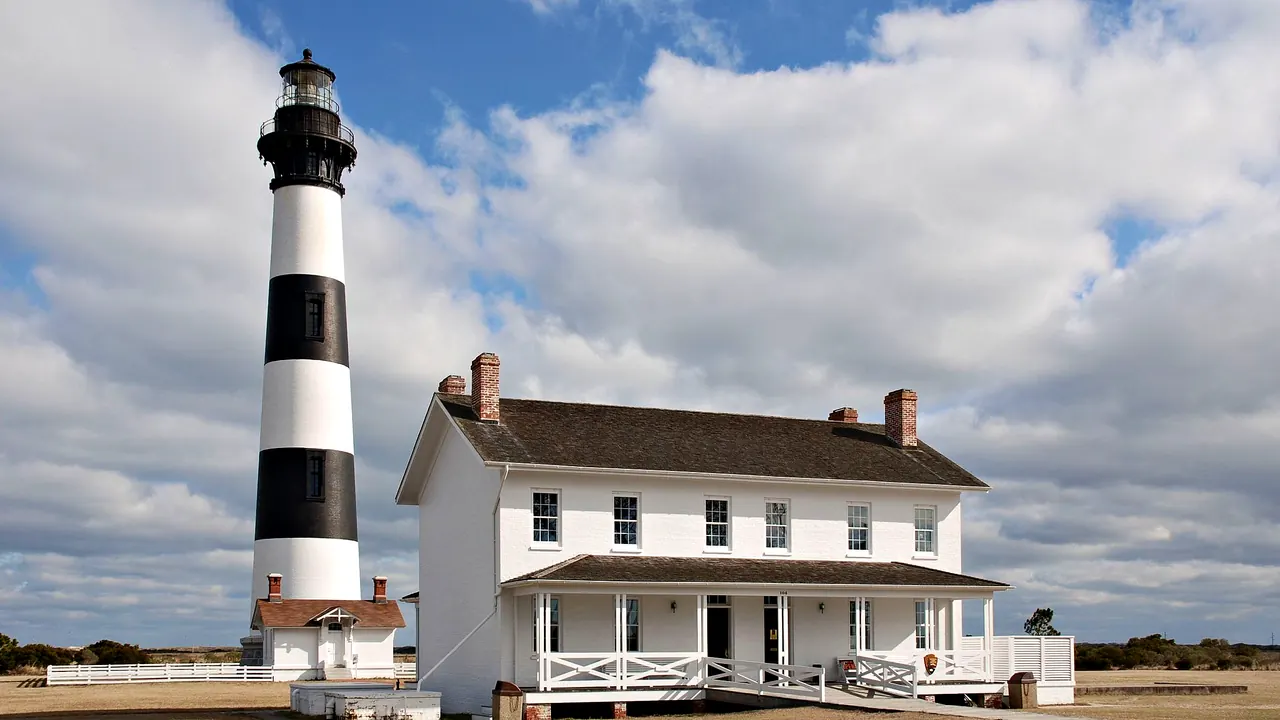
Photos: Acadia by Plh1234us, CC BY-SA 3.0, cropped; Outer Banks by Jarek Tuszyński, CC BY-SA 3.0, cropped.
Acadia or Outer Banks?
Our verdict in twelve categories, each scored against the same fixed benchmark cities, and the climate month by month, so you can choose for your trip.
Choose Acadia for
- nature and the outdoors
- getting around
- day trips
Acadia is the choice if you want the landscape to be the whole point of the trip. Granite summits, glacial lakes and spruce forest rise straight from the sea on Mount Desert Island, and you can scramble up iron rungs before breakfast and cycle the carriage roads after lunch. It suits hikers, cyclists, kayakers and anyone who prefers a cool, foggy summer to a hot one. In return you give up warm-water swimming, and the evenings are very quiet.
Choose Outer Banks for
- beaches
- culture and sights
- families
The Outer Banks suit a slow week in a rented beach house, with warm Atlantic surf, long empty sand and a sound side shallow enough for toddlers. Families, surfers and kiteboarders do best here, and it has a little more history, with the Wright Brothers memorial, the Lost Colony site and the lighthouses. You will drive more, though, and the land is flat, so walking means beach strolls rather than climbs.
Scoreboard
Twelve categories on one fixed scale from 0 to 100. The shaded stretch is the gap between the two.
Your match
Pick a travel style or drag the sliders, and both match scores follow your weighting.
Wins on nature and the outdoors and getting around with your weighting.
Wins on beaches and culture and sights with your weighting.
What matters to you?
Category by category
What the scores mean for a trip.
Beaches & swimming
The Outer Banks win easily. They have well over 100 miles of open Atlantic sand, from the beach-house rows at Kitty Hawk and Nags Head to the empty dunes of Cape Hatteras National Seashore, and in summer the sea is warm enough to stay in for hours. The surf and rip currents need respect, and the calm sound side is the place for small children.
Acadia's shore is pink granite, and Sand Beach is the one real ocean beach, with water too cold for much more than a paddle. The best swimming is in Echo Lake or Lake Wood, which makes for a nice afternoon but not a beach vacation.
Food & drink
Both are seafood coasts with a narrow range, so the difference is in what lands on the plate. In Acadia it is lobster, steamed at picnic tables by the water in Southwest Harbor or Trenton, with chowder and wild blueberry pie, plus the old ritual of popovers at Jordan Pond. Many places close from late autumn to spring.
On the Outer Banks it is steamed shrimp, soft-shell crab and fried baskets with hushpuppies, eaten at dockside shacks. Many visitors buy tuna or flounder at Wanchese or Hatteras and cook it in their rental house, which suits self-catering better.
Culture & sights
The Outer Banks have more to see. The Wright Brothers memorial marks the first powered flight on the dunes at Kill Devil Hills, Fort Raleigh recalls the vanished colony of the 1580s, and the Currituck, Bodie Island and Cape Hatteras lighthouses each make a good morning. The catch is that the sights are spread far along the islands.
Acadia's heritage is mostly woven into its landscape: Rockefeller's carriage roads with their hand-cut granite bridges, the Gilded Age cottages along the Shore Path, and the Abbe Museum's account of the Wabanaki. These are worth seeing, but they fill gaps between hikes rather than whole days.
Nightlife
Neither is a place to go out, but the Outer Banks offer a little more. There are sunset decks on the sound, beach bars and brewery taprooms along the bypass in Kill Devil Hills and Nags Head, and a few spots stay lively on summer weekends.
In Acadia, evenings come down to a handful of pubs and taprooms in Bar Harbor, which go quiet well before midnight, and many people turn in early to catch sunrise on Cadillac Mountain.
Nature & outdoors
Acadia has the more dramatic and varied outdoors. Mountains, lakes, forest and sea are packed tightly together on Mount Desert Island, with Somes Sound cutting through the middle. You can hike to bare summits, scramble up iron rungs above the water, cycle car-free gravel roads, or take a boat out for whales and puffins, and the Schoodic Peninsula adds wilder coast.
The Outer Banks are flat and open, and their strengths lie on the water and in wildlife: world-class flat-water kiteboarding near Rodanthe and Avon, wild mustangs north of Corolla, migrating birds at Pea Island, and nesting turtles. Walkers will find little to climb.
Day trips
Both offer a handful of pleasant small outings, but of different kinds. From Acadia, mail boats run out to the lobster harbours of the Cranberry Isles, and the mainland drives lead to the granite village of Stonington and colonial Castine. There is no city within reach.
From the Outer Banks, the best day out is the free ferry to Ocracoke's sandy lanes. Georgian Edenton is inland, and Norfolk and Virginia Beach give you a taste of city museums if the traffic allows.
Good for families
Acadia keeps children busy with the park itself. There are tide pools at Wonderland and Ship Harbor, ranger programmes made for young visitors, and whale-watching or lobster boat trips, with the small oceanarium as a change of scene. Echo Lake gives a calmer, warmer swim than the sea. Steep routes like the Precipice are no place for little ones, though.
The Outer Banks make the easier family week, because the whole coast is set up for it. Several generations can share one big house with a pool, evenings end at mini-golf, and the Corolla wild-horse tours, the lighthouse climbs and the flight memorial each fill a day. Older children can try kayaking or paddleboarding. The surf and rip currents mean staying close to the lifeguards, and neither coast has a theme park.
Getting around
Acadia is easier. Distances on Mount Desert Island are short, a free summer shuttle connects Bar Harbor with the trailheads and campgrounds, and the carriage roads let cyclists cross the park without traffic. You still need a car for the western side, Schoodic and outside the shuttle season.
On the Outer Banks a car is essential from the start. It takes a couple of hours to drive from Corolla to Hatteras village on a single highway, the bridges jam on Saturdays when rental weeks change over, and Ocracoke can only be reached by ferry.
Shopping & style
Shopping is an afterthought in both places, so what differs is the browsing. In Acadia it is Bar Harbor's Main Street souvenirs and outdoor gear, with better pottery and woodwork in the studios around Blue Hill and Deer Isle. On the Outer Banks it is surf and kite shops along the highway, a small outlet centre in Nags Head, and galleries on the Duck boardwalk and the Manteo waterfront.
Affordability
Both are dear in season, and the savings come in different ways. In Acadia you save by sleeping further out: the park campgrounds and the motels away from Bar Harbor cost far less than rooms in town, which are scarce and priced high from July through the October foliage weeks. Once you are inside the park, the summer shuttle is free and the landscape costs little, though lobster dinners soon mount up.
The Outer Banks favour groups. Many houses let only by the full week, so the bill shrinks when an extended family splits one and cooks fish bought at the docks in Wanchese or Hatteras. The beaches and the national seashore cost nothing, and a late spring or autumn week in the same house is much cheaper, if you are happy to walk the beach rather than swim.
Live music & performing arts
Acadia's summer stage is chamber music. There are long-running classical festivals in churches and small halls around Bar Harbor and Northeast Harbor, and concerts by the students of Kneisel Hall in its wooden hall in the woods at Blue Hill.
The Outer Banks offer outdoor drama instead. The Lost Colony has been played on summer nights since 1937 in a waterside theatre on Roanoke Island, on the ground where the settlers lived, and bar-deck bands and small Manteo concerts make up the rest. Come outside July and August and there is little to see on either coast.
Wellness & relaxation
Rest in Acadia is cool and still. You get fog drifting through the spruce at dawn and inns with porches over the water in Northeast Harbor and Southwest Harbor. The western side and Schoodic give the quietest nights. For treatments there are only a few resort hotels and day spas in Bar Harbor.
On the Outer Banks, rest is warm and runs to the sound of the surf. A beach-house week has no plan, and the evenings pass on the porch. It is most peaceful in the villages of Hatteras Island and Ocracoke, especially in late spring and autumn, and Duck and the central towns add yoga studios and day spas.
When should you go?
Pick your month. The climate figures are measured averages, not a forecast.
Acadia in July
Outer Banks in July
Daytime high, °C
Rainfall in the month, mm
Where the figures come from
Acadia has no rain gauge within 25 km of the centre, so its rainfall comes from a gridded climate dataset read at the destination rather than from a gauge further away.
Outer Banks has no rain gauge within 25 km of the centre, so its rainfall comes from a gridded climate dataset read at the destination rather than from a gauge further away.
Outer Banks's sunshine is measured 77 km from the centre, at Cape Hatteras.
Temperature and rainfall are climate normals, averaged over the years shown. Acadia: 2006-2020 (rainfall 1991-2020) normals, Bar Harbor / Trenton (14.7 km from centre). Outer Banks: 2009-2025 (sunshine 1981-2010, rainfall 1991-2020) normals, Manteo / Sunny Side (7.7 km from centre).
Acadia has a short season. It is pleasant for walking from late May into October, and July and August, with highs around 24°C, are also the driest months. The sea never really warms, peaking at about 13°C, so any swimming happens in the lakes. Rain picks up again in autumn, but the October foliage weeks are often crisp and good for hiking, and from December to March it is freezing.
The Outer Banks run warmer and longer. Highs reach about 30°C in July, and the sea is comfortable for swimming from June to September, at its warmest around 26°C in high summer. June is the sunniest month. Late summer and early autumn bring the heaviest rain, so September is wetter here than in Acadia. Spring and late autumn are mild enough for beach walks and birdwatching but too cool for most people to swim.
Which traveller are you?
On a beach and sun trip, choose the Outer Banks. They have mile after mile of open sand, lifeguarded stretches at Nags Head and Kill Devil Hills, and a summer sea warm enough for long swims. Acadia's ocean stays cold even in August.
For an outdoors trip, Acadia is the stronger choice. It has sunrise climbs on Cadillac Mountain, cliff scrambles on the Precipice, car-free cycling on the carriage roads, and sea kayaking and whale watching around the island. The Outer Banks have mostly flat water and dunes.
On a family trip with children, the Outer Banks work better. A shared beach house, crab-catching, the shallow sound side for toddlers, the aquarium and the Jockey's Ridge dunes fill a week easily. Acadia suits outdoorsy families but offers little on wet days.
Before you go
| Measure | Acadia | Outer Banks |
|---|---|---|
| Currency | US Dollar (USD) | US Dollar (USD) |
| Sockets | AB120 V, 60 Hz | AB120 V, 60 Hz |
| Driving side | Right | Right |
| Time zone | UTC-5, UTC-4 in summer | UTC-5, UTC-4 in summer |
| Emergency number | 911 | 911 |
| Main airport | Hancock County-Bar Harbor Airport (BHB) | Norfolk International Airport (ORF)44 non-stop destinations |
| Public holidays this year | 13 days | 14 days |
By the numbers
| Measure | Acadia | Outer Banks |
|---|---|---|
| Swim season, months above 21 °C | None | 4 months |
Where else could you go?
Every comparison below shares a destination with this one, so you can follow Acadia or Outer Banks somewhere new.
- Virginia Beachvs Outer Banks
- Cape Codvs Acadia
- Nantucketvs Acadia
- Martha's Vineyardvs Acadia
- Shenandoahvs Outer Banks
- Myrtle Beachvs Outer Banks