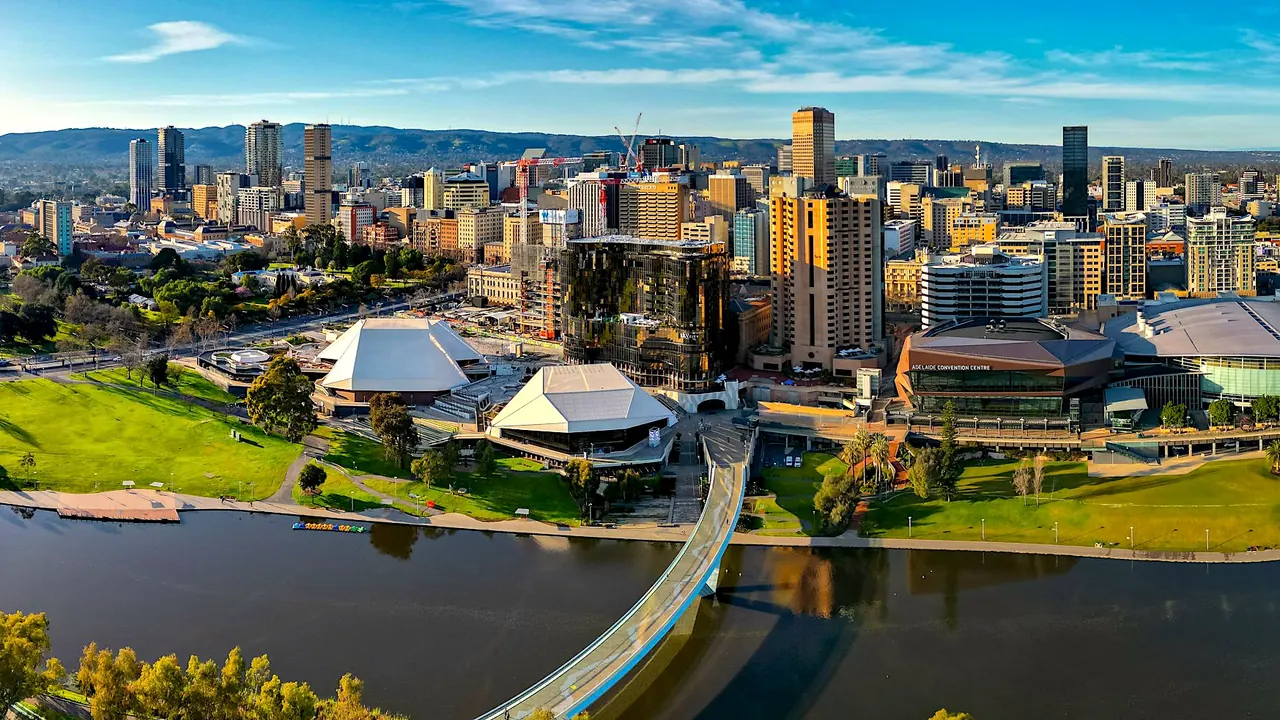
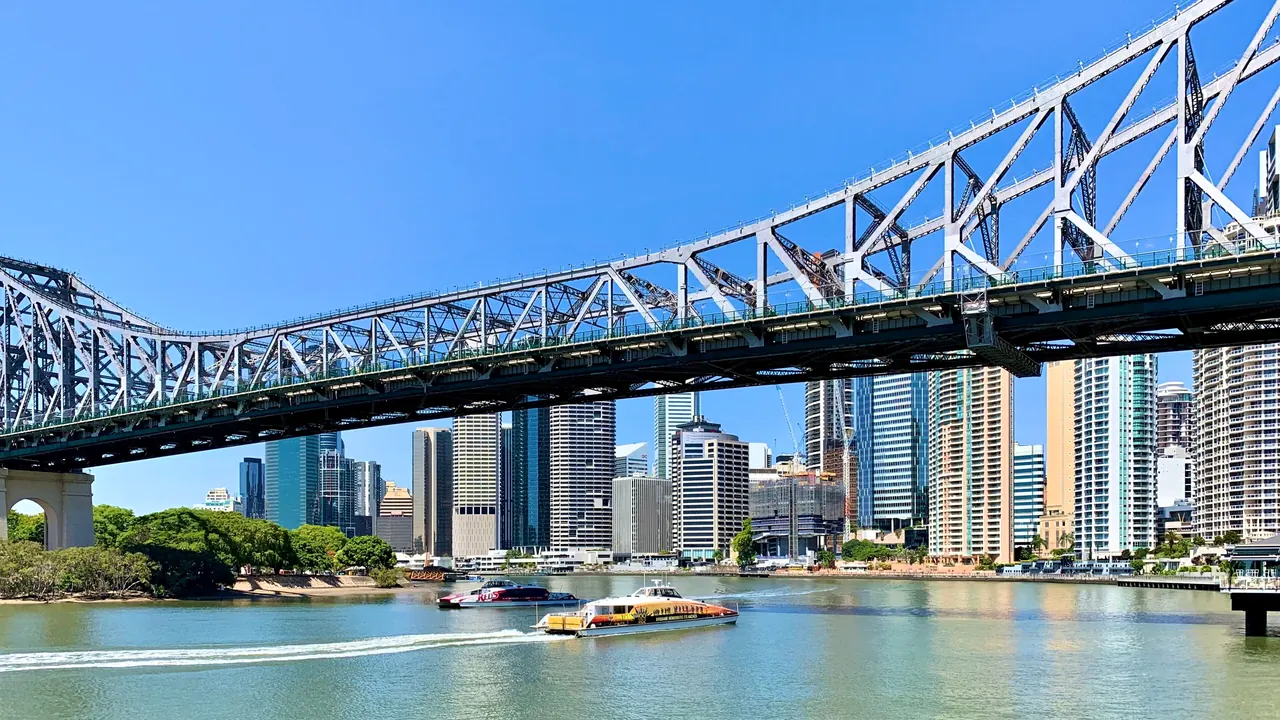
Photos: Adelaide by Ardash Muradian, CC BY-SA 2.0, cropped; Brisbane by Kgbo, CC BY-SA 4.0, cropped.
Adelaide or Brisbane?
Our verdict in twelve categories, each scored against the same fixed benchmark cities, and the climate month by month, so you can choose for your trip.
Choose Adelaide for
- beaches
- food and drink
- day trips
Adelaide suits travellers who plan a trip around the table and the glass. The Central Market, South Australian seafood and wine regions an hour from town give it the stronger food scene and the better day out, and its calm metropolitan beaches are a short tram ride away rather than a drive. Come in late summer and the Fringe and Adelaide Festival add the liveliest arts season of the two, at somewhat lower cost.
Choose Brisbane for
- nightlife
- nature and the outdoors
- families
Brisbane is the better pick for an active, warm-weather trip, especially with children. Rainforest, mountains and Moreton Bay's islands lie within easy reach, the Gold Coast theme parks and Australia Zoo make simple days out, and Fortitude Valley gives a livelier night out. The catch is that its real surf beaches are an hour away and every beach day becomes an excursion.
Scoreboard
Twelve categories on one fixed scale from 0 to 100. The shaded stretch is the gap between the two.
Your match
Pick a travel style or drag the sliders, and both match scores follow your weighting.
Too close to call, 2 points apart
Wins on beaches and food and drink with your weighting.
Wins on nightlife and nature and the outdoors with your weighting.
What matters to you?
Category by category
What the scores mean for a trip.
Beaches & swimming
Adelaide has the advantage of beaches inside the city. A run of sandy suburbs, from Glenelg with its jetty to quieter Henley, Brighton and Semaphore, faces calm Gulf St Vincent, and you can be in the water within half an hour of the centre. The catch is the season: the water is only pleasant from about December to April.
Brisbane has no ocean shore of its own, just the artificial lagoon at South Bank and the muddy, murky edges of Moreton Bay. Its surf beaches on the Gold and Sunshine Coasts, and the islands across the bay, are warmer and grander than anything at Adelaide's door. But each one is a day trip.
Food & drink
Adelaide is the better place to travel for food. The Central Market gives it a real centre, and the meals draw on a clear regional larder of whiting, Spencer Gulf prawns, Hills cheeses and Barossa smallgoods. Wine from regions an hour away turns up on every list. Late dinners are harder to find.
Brisbane eats well but more casually. The local food life revolves around cafés, veranda breakfasts, tropical fruit and Moreton Bay bugs, with the polished restaurants in Fortitude Valley and James Street and cheaper immigrant cooking in West End. There is little you could call a dish of the city itself.
Culture & sights
Adelaide has a slight edge, and its sights are easier to see. North Terrace lines up the Art Gallery, the South Australian Museum with its Aboriginal collections and the State Library in one walk, inside an orderly colonial grid of sandstone and bluestone.
Brisbane groups its galleries at South Bank, where the Gallery of Modern Art adds a strong Asia-Pacific focus. Beyond that its character lies in timber Queenslanders on the hills of Paddington and New Farm, set against a mostly modern centre. Both cities can be covered in a couple of days.
Nightlife
Brisbane gives you the bigger night out. Fortitude Valley packs pubs, rooftop bars and clubs into a few streets, and its weekend crowds give it a momentum Adelaide rarely has outside festival weeks, though licensing rules still close most places before dawn.
Adelaide's evenings are smaller and quieter. They run on laneway wine bars around Peel and Leigh Streets and old corner pubs, with Hindley Street as the only real club strip. In late summer, though, the parkland pop-up bars of festival season change the mood completely.
Nature & outdoors
Brisbane has the more dramatic and varied country around it. You can walk on Mount Coot-tha and in D'Aguilar from the city's edge. Further out are the World Heritage rainforests of Lamington and Springbrook with waterfalls and glow worms, plus the Glass House Mountains, and Moreton Bay has dunes, turtles and whales.
Adelaide's outdoors is gentler. There is eucalypt forest and koalas in the Hills within half an hour, Morialta's gorge, dolphins in the Port River and coastal walks on the Fleurieu. Its hot, dry summers make spring and autumn the time to walk, the reverse of Brisbane's steamy wet season.
Day trips
Adelaide has the better day trips, almost all of them through wine country. The Barossa's Lutheran villages, McLaren Vale's vineyards running down to the sea, the Hills wineries and Prussian-settler Hahndorf all make unhurried days of tasting and lunch, with Victor Harbor for a seaside change.
Brisbane's outings are about scenery rather than heritage. You go to the Gold Coast, chic Noosa, the craft-shop villages of Montville and Maleny, or over the range to Toowoomba. They are pleasant days, but they lack the strong single theme that makes Adelaide's so rewarding.
Good for families
Brisbane gives children more to do. It has the free sandy lagoon at South Bank, the Queensland Museum's hands-on science centre, koalas at Lone Pine and ferry rides, and the Gold Coast theme parks and Australia Zoo are each about an hour away.
Adelaide is calmer and very easy but has fewer big attractions. It suits families who value shallow beaches at Glenelg, the zoo, Cleland's kangaroos and parkland playgrounds over thrill rides. Summer heat calls for planning in both cities: Adelaide's comes as dry heatwaves, Brisbane's as humidity and fierce sun.
Getting around
The two are broadly level, but they move you differently. Adelaide's flat grid is ideal for walking and cycling, and the free loop bus and the tram to Glenelg cover the beach. Brisbane's hills and humidity make walking harder work, but the CityCat ferries make river travel a pleasure, and its rail network reaches further, including a line from the airport to the Gold Coast.
In both, the places outside town that matter most, Adelaide's wine regions and Brisbane's rainforest hinterland, really need a car, and Adelaide's light traffic makes that easy driving.
Shopping & style
Neither city is worth the trip for shopping, and the centres are much alike: a pedestrian mall with department stores and old arcades, Rundle Mall in one and Queen Street in the other. Brisbane has a short luxury strip on Edward Street and Paddington's antique and vintage shops. Adelaide's strength is what you take home: cellar-door wine, opal, Central Market produce and Aboriginal art from desert communities.
Affordability
Adelaide is the less expensive of the two, especially for hotel rooms in the centre, and outside the festival weeks it is easy to find somewhere to stay. Market food and Chinatown eateries keep meals reasonable, though touring the wine country adds car hire or tour costs.
Brisbane costs more overall, and meals out, drinks and taxis are priced at full Australian levels. Free galleries, the free lagoon and cheap ferries and trains help a careful traveller, but neither city is a budget destination.
Live music & performing arts
Adelaide is the stronger choice if you can time your visit. In late summer the Fringe takes over parklands and pubs, while the Adelaide Festival and WOMADelaide bring international theatre, dance and world music, a season Brisbane cannot match. The rest of the year the Festival Centre, the state companies and the symphony keep a steady programme going.
Brisbane's offer is more even through the year. The Queensland Performing Arts Centre houses the orchestra, opera, ballet and theatre companies, and the Powerhouse adds cabaret. Fortitude Valley's original-music circuit is the livelier of the two band scenes, and September brings the Brisbane Festival.
Wellness & relaxation
Both cities are level here, with no bathing tradition, just hotel and day spas and an easy pace. The difference is in how you unwind. In Adelaide, rest means long vineyard lunches, garden walks and retreats in the Hills. In Brisbane, it means open-air swims in heritage pools such as the Spring Hill Baths, warm riverside evenings and mountain spa lodges in the rainforest hinterland.
When should you go?
Pick your month. The climate figures are measured averages, not a forecast.
Adelaide in July
Brisbane in July
Daytime high, °C
Rainfall in the month, mm
Temperature and rainfall are climate normals, averaged over the years shown. Adelaide: 1991-2020 normals, Adelaide (West Terrace / ngayirdapira) (3.1 km from centre). Brisbane: 1991-2020 normals, Brisbane (4.5 km from centre).
Adelaide runs on a dry, sunny summer. From December to March the days are warm to hot, around 30°C at the peak, rain is scarce and the gulf water warms to about 22°C, so this is the beach season and also the hardest time for long afternoon walks. Autumn and spring are the comfortable months for the hills and the streets, while June to August turns cool, grey and wet, with daytime highs near 16°C and the sea too cold for most swimmers.
Brisbane reverses the pattern. Its summer is just as hot but humid and stormy, with February the wettest month at around 151mm, though the sea is properly warm. From May to September the days stay mild, the skies are dry and sunny, and walking in the hinterland is at its best. So Adelaide's best time is high summer, while Brisbane's is the southern winter.
Which traveller are you?
On a beach and sun trip, Adelaide makes it simpler. Glenelg, Henley and Semaphore sit on the city's own sheltered shoreline, reached by tram or bus, and the long dry summer with sunset swims suits days spent mostly by the water.
On a family trip with young children, Brisbane makes the better base. Easy mornings in town can alternate with full days at the big parks to the north and south, all without moving hotel. Mid-year visits avoid the humid summer middays that tire small children.
For an outdoors trip, Brisbane is the stronger choice, best between May and September when the air is dry and mild. Hire a car for the rainforest and plan a night on a bay island. Adelaide's gentler hills suit a slower spring or autumn walk.
Before you go
| Measure | Adelaide | Brisbane |
|---|---|---|
| Official language | English | English |
| Currency | Australian Dollar (AUD) | Australian Dollar (AUD) |
| Sockets | I230 V, 50 Hz | I230 V, 50 Hz |
| Driving side | Left | Left |
| Time zone | UTC+9:30, UTC+10:30 in summer | UTC+10 |
| Emergency number | 000 | 000 |
| Elevation | 1 m | 0 m |
| Main airport | Adelaide International Airport (ADL)6 km from centre35 non-stop destinations | Brisbane International Airport (BNE)13 km from centre88 non-stop destinations |
| Public holidays this year | 12 days | 11 days |
By the numbers
| Measure | Adelaide | Brisbane |
|---|---|---|
| Population | 1,387,290 | 2,706,966 |
| People per km² | 1,071 | 171 |
| Museums within 10 km | 13 | 17 |
| UNESCO World Heritage sites within 50 km | 0 | 0 |
| Swim season, months above 21 °C | 3 months | 9 months |
Where else could you go?
Every comparison below shares a destination with this one, so you can follow Adelaide or Brisbane somewhere new.
- Gold Coastvs Brisbane
- Noosavs Brisbane
- Byron Bayvs Brisbane
- Melbournevs Adelaide
- Sydneyvs Brisbane
- Canberravs Brisbane