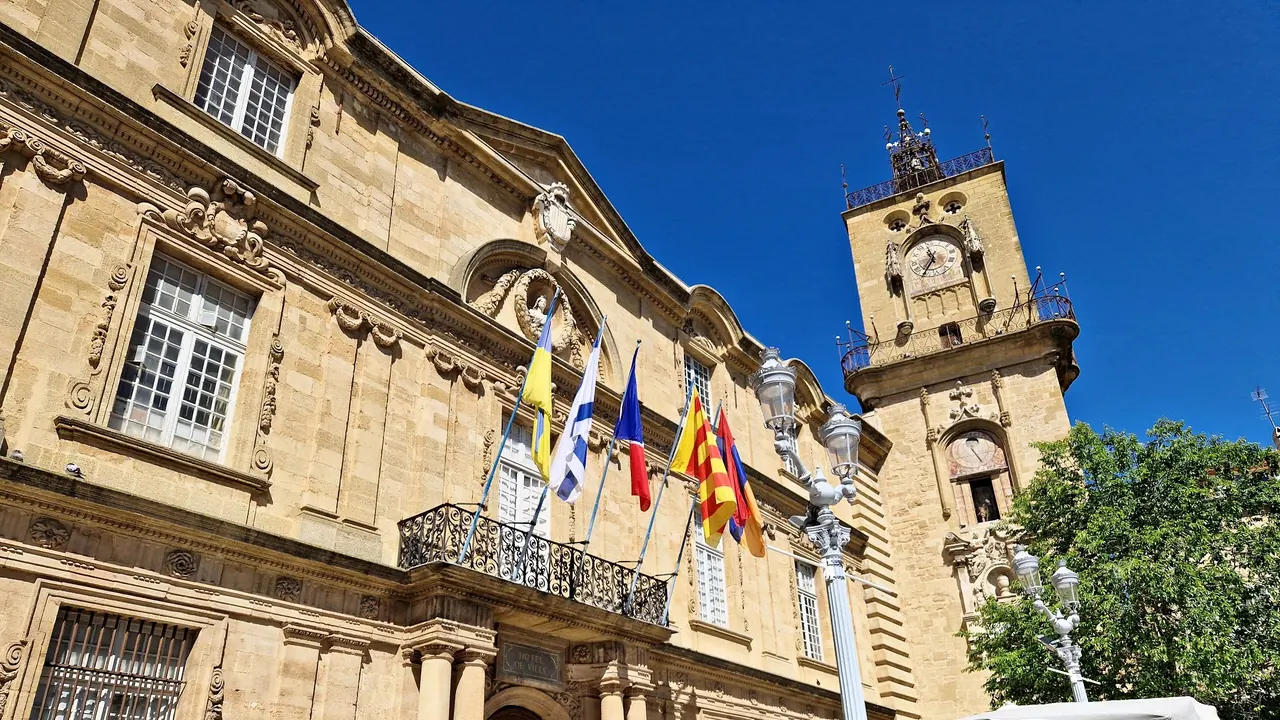
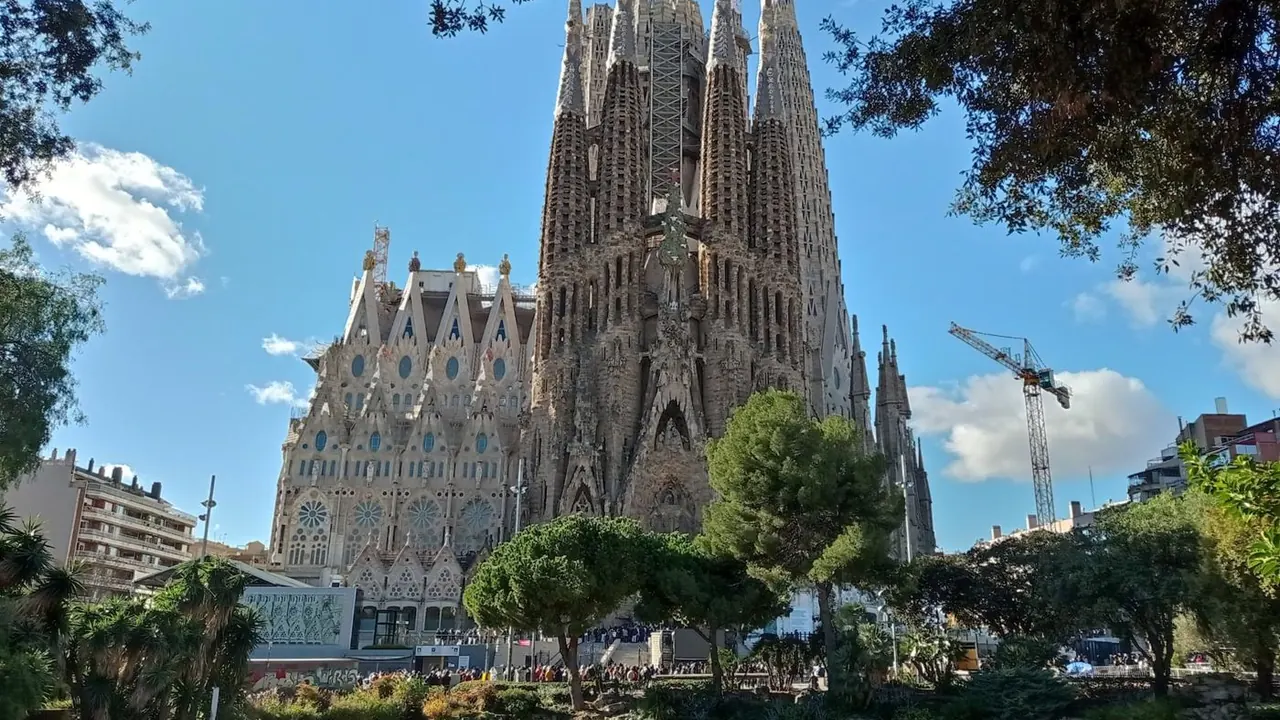
Photos: Aix-en-Provence by Hanay, CC BY-SA 4.0, cropped; Barcelona by Canaan, CC BY-SA 4.0, cropped.
Aix-en-Provence or Barcelona?
Our verdict in twelve categories, each scored against the same fixed benchmark cities, and the climate month by month, so you can choose for your trip.
Choose Aix-en-Provence for
- wellness
- nature and the outdoors
- day trips
Aix-en-Provence suits a slower trip where the region matters more than the town. It is a base for the Luberon villages, Avignon, Arles and the Calanques, with Sainte-Victoire on the doorstep and long market lunches in between. It works best for couples and older travellers with a car who want quiet evenings under the plane trees, and for opera lovers in July.
Choose Barcelona for
- nightlife
- beaches
- families
Barcelona is the choice for a full city vacation. It has Gaudí and the Gothic Quarter, a sandy beach a metro ride from the centre, Catalan food from market counters to tasting menus, and nights that run until dawn. You can manage without a car, children stay busy and a week passes without leaving town, though you give up the calm of Aix for crowds.
Scoreboard
Twelve categories on one fixed scale from 0 to 100. The shaded stretch is the gap between the two.
Your match
Pick a travel style or drag the sliders, and both match scores follow your weighting.
Wins on wellness and nature and the outdoors with your weighting.
Wins on nightlife and beaches with your weighting.
What matters to you?
Category by category
What the scores mean for a trip.
Beaches & swimming
Barcelona has what Aix lacks: a line of sandy city beaches along its own edge, from Barceloneta to Mar Bella. You can reach them on foot or by metro, and the water is warm enough to swim from June. The beaches are man-made and packed in high summer, but Sitges and the Maresme have longer stretches of sand within the hour.
Aix lies about 30km inland, so the sea is always an outing. The choice is the coves of the Cote Bleue or the calanques near Cassis, mostly pebble and rock and easiest by car. Many visitors to Aix make do with a pool.
Food & drink
Both cities eat around markets and long lunches, but Barcelona has much more depth. Catalan cooking, tapas, vermouth, seafood rice and cava come at every level, from cheap set lunches in workers' bars to serious tasting menus. The best of it is spread across Sant Antoni, Poble Sec, Gràcia and the Eixample.
Aix is narrower and more seasonal: morning stalls on Place Richelme, tapenade and daube on a terrace, rosé from the Coteaux d'Aix and calissons to finish. It is lovely at lunchtime, but there is little beyond French and Mediterranean cooking and fewer choices in the evening.
Culture & sights
Aix is a beautiful town to wander for two or three days. There is the Cours Mirabeau, the mansions of the Mazarin quarter and a fountain on almost every square. The Cezanne sites run from his studio at Les Lauves to the Bibemus quarries, and the Musee Granet adds paintings.
Barcelona works on a far larger scale. Gaudí's Sagrada Família, Casa Batlló and Park Güell are unlike anything else, and the Gothic Quarter and Santa Maria del Mar add a medieval layer. With the Picasso Museum, the MNAC and the Fundació Miró as well, the sights fill a week.
Nightlife
This is where the two differ most. Aix has student bars around the Forum des Cardeurs and a few small clubs, and it winds down well before dawn. Anyone wanting a real night out goes to Marseille.
In Barcelona the night has barely started by midnight. There are cocktail bars in medieval cellars in the Born, crowds drinking outdoors in Gràcia's squares and pintxos bars along Blai street, followed by electronic club nights that last until morning.
Nature & outdoors
Both sit between hills and sea and are best outdoors in spring and autumn, but Aix has the stronger landscapes close by. Sainte-Victoire rises at the edge of town, and the Calanques offer some of the Mediterranean's finest coastal walking and kayaking. The Luberon, the Alpilles and the Gorges du Verdon are also within reach, though in summer you need to allow for fire-risk closures and you will want a car.
Barcelona's outdoors starts at the metro. There are the Collserola trails and the Carretera de les Aigües above the city, and sailing and paddleboarding off Mar Bella. Montserrat and the Garraf cliffs are a short trip away.
Day trips
Both make excellent bases, and Aix is slightly the richer one. Marseille is half an hour away and the TGV reaches Avignon in about twenty minutes. Arles, Nimes and the Pont du Gard add Roman heritage, and the Luberon villages of Gordes and Roussillon are within the hour, although you need a car for them.
Barcelona's day trips depend more on the train: Girona and the Dalí museum at Figueres to the north, Tarragona and Poblet to the south. Montserrat, Sitges and the cava cellars of the Penedès are close by. Only the Costa Brava villages really call for a car.
Good for families
Barcelona is much easier with children. The aquarium, CosmoCaixa, the Tibidabo funfair and the beaches on the metro can each fill a day, and children are welcome in restaurants late into the evening. The main nuisances are the crowds and the narrow old-town streets.
Aix is safe and largely pedestrian, with fountains and ice cream to break up a walk, but its sights are mansions and museums. Families there tend to rely on a pool and drive out to the zoo at La Barben, the coast or Sainte-Victoire.
Getting around
Both centres are walkable, but Barcelona is easier to get around as a whole. A clear metro, with buses, trams and local trains on the same tickets, reaches the beaches, the Sagrada Família and the hilltop sights, and a car only gets in the way.
In Aix the compact old town needs nothing but your feet, but leaving it is harder. The TGV station is out on the plateau, and the villages that make Provence worth the trip mostly need a hire car and some patience with parking.
Shopping & style
Barcelona has a range Aix cannot match. Fashion houses line the Passeig de Gràcia between Modernista façades, a big department store stands on Plaça de Catalunya, and there are independent designers in the Born, craft shops in Gràcia and vintage in the Raval.
Aix makes a pleasant browse in the lanes around Rue d'Italie, but it has no luxury shopping and no department store. Its markets and Provencal goods are the real reason to shop: calissons, santons, olive wood and Marseille soap.
Affordability
Neither is cheap, but your money goes a little further in Barcelona. Hotels and Gaudí entry fees add up, but set lunches, tapas bars and transport passes keep daily spending reasonable, and you don't need to hire a car.
In Aix accommodation is scarce and mostly boutique hotels and country houses, July rates rise with the opera festival, and exploring Provence usually means paying for a car. Market picnics and lunch menus in the back streets are the way to save.
Live music & performing arts
Aix has one great moment, the July opera festival in the courtyard of the Archbishop's Palace, which is one of the main events of the opera world. For the rest of the year the Grand Theatre de Provence and Ballet Preljocaj at the Pavillon Noir carry a smaller programme.
Barcelona offers more all year round. There is opera and ballet at the Liceu, concerts under the stained glass of the Palau de la Música Catalana, jazz cellars and flamenco, plus Sónar and Primavera Sound in early summer. Most spoken theatre is in Catalan or Spanish.
Wellness & relaxation
Aix is the better place to unwind. The Romans founded it for its warm springs, the Thermes Sextius still has thermal pools on the site of their baths, and outside July the town keeps a slow, quiet rhythm. Barcelona has a few Arab-style bath houses and hotel spas, but its old town is noisy and late, and finding calm means heading for the Collserola paths or a terrace in a Gràcia square.
When should you go?
Pick your month. The climate figures are measured averages, not a forecast.
Aix-en-Provence in July
Barcelona in July
Daytime high, °C
Rainfall in the month, mm
Temperature and rainfall are climate normals, averaged over the years shown. Aix-en-Provence: 1991-2020 normals, Marseille / Marignane (19.2 km from centre). Barcelona: 1991-2020 normals, Barcelona / Aeropuerto (14.4 km from centre).
Both follow the Mediterranean pattern, but Aix swings harder. Being inland, it climbs to about 31°C in July, so midsummer afternoons are for shade and pools. May, June and September are the comfortable months for walking the old town and the hills. Barcelona stays a few degrees milder in summer and slightly warmer in winter. Its sea is also the warmer of the two, reaching about 25°C in August, so beach days run from June to late September. The coast near Aix is cooler and a drive away.
Rain arrives in both cities in September and October, at around 82mm a month. Aix stays wet through November, while Barcelona dries out sooner. Aix gets more sunshine, especially in high summer. Winter in both is cool, with short days, and suits markets, museums and food more than terraces or beaches.
Which traveller are you?
For a beach and sun trip, Barcelona wins easily. From Aix, every swim is a drive to small pebbly coves. Barcelona has sand from Barceloneta to Mar Bella, a walk or metro ride away, and a sea that stays warm into late September.
On a food and nightlife trip, Barcelona has far more to offer. Aix eats beautifully at lunch but goes quiet early. Barcelona moves from vermouth at the Sant Antoni market counters to tapas in Gràcia, then to cellar cocktail bars in the Born and clubs until dawn.
For a relaxing and wellness trip, choose Aix. Your days can be a country-house hotel with a pool, the market before the heat, a long lunch and early nights, ideally outside July. Barcelona keeps you on the move, and real rest there means a nearby seaside town.
Before you go
| Measure | Aix-en-Provence | Barcelona |
|---|---|---|
| Official language | French | Spanish |
| Currency | Euro (EUR) | Euro (EUR) |
| Sockets | CE230 V, 50 Hz | CF230 V, 50 Hz |
| Driving side | Right | Right |
| Time zone | UTC+1, UTC+2 in summer | UTC+1, UTC+2 in summer |
| Emergency number | 112 | 112 |
| Elevation | 73 m | 9 m |
| Main airport | Marseille Provence Airport (MRS)21 km from centre126 non-stop destinations | Josep Tarradellas Barcelona-El Prat Airport (BCN)13 km from centre235 non-stop destinations |
| Public holidays this year | 11 days | 14 days |
By the numbers
| Measure | Aix-en-Provence | Barcelona |
|---|---|---|
| City population | 149,695 | 1,731,649 |
| People per km² | 804 | 17,094 |
| Museums within 10 km | 8 | 95 |
| UNESCO World Heritage sites within 50 km | 1 | 3 |
| Swim season, months above 21 °C | 2 months | 3 months |
Where else could you go?
Every comparison below shares a destination with this one, so you can follow Aix-en-Provence or Barcelona somewhere new.
- Marseillevs Aix-en-Provence
- Avignonvs Aix-en-Provence
- Gironavs Barcelona
- Saint-Tropezvs Aix-en-Provence
- Montpelliervs Aix-en-Provence
- Cannesvs Aix-en-Provence