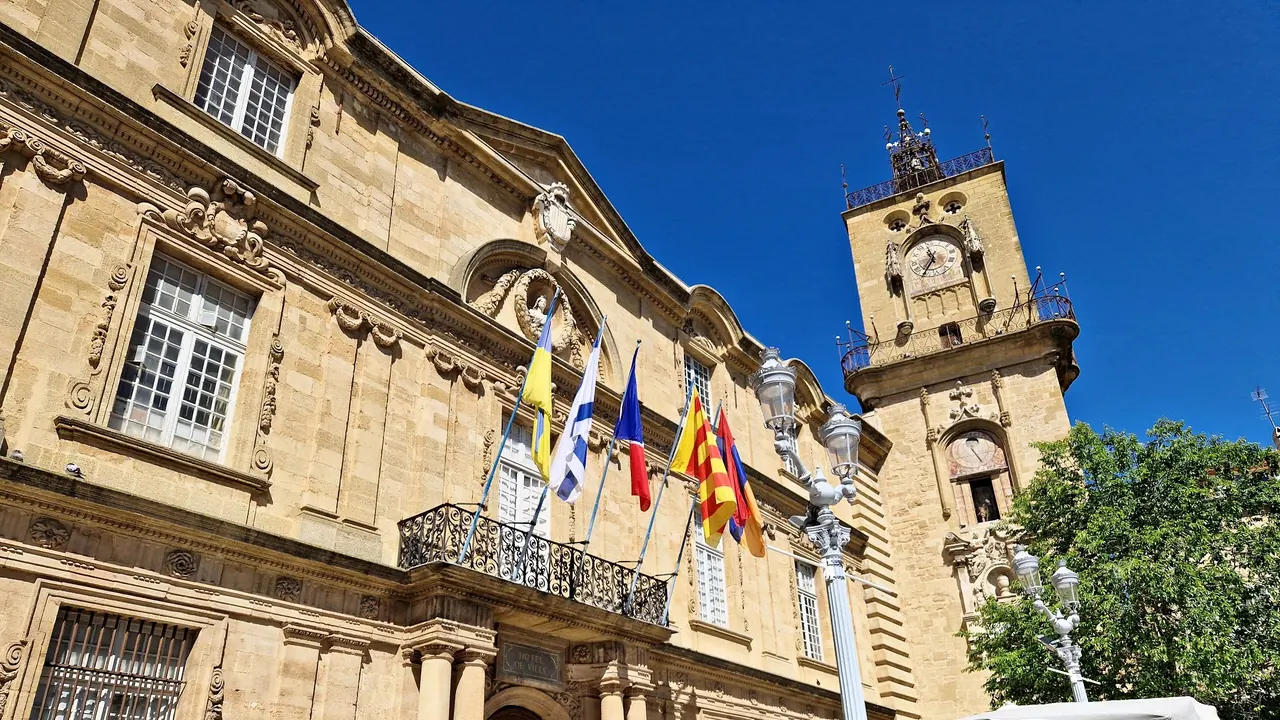
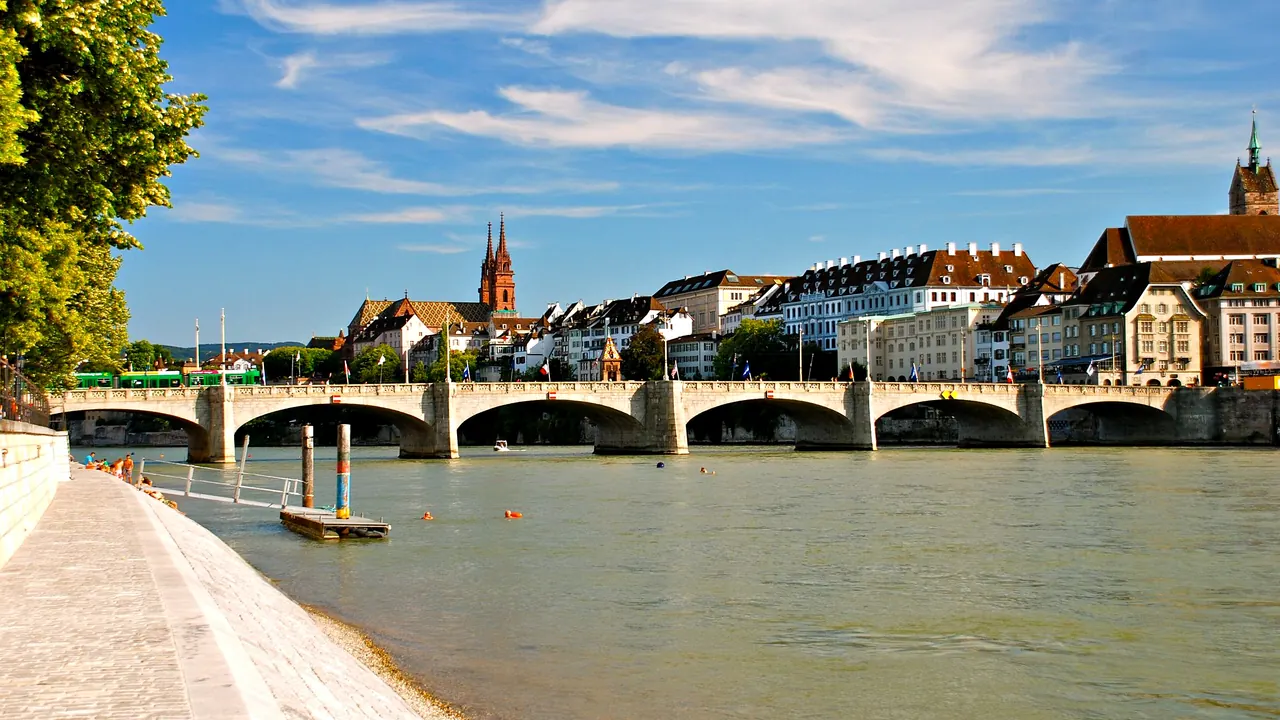
Photos: Aix-en-Provence by Hanay, CC BY-SA 4.0, cropped; Basel by Lucazzitto, CC BY-SA 3.0, cropped.
Aix-en-Provence or Basel?
Our verdict in twelve categories, each scored against the same fixed benchmark cities, and the climate month by month, so you can choose for your trip.
Choose Aix-en-Provence for
- prices
- nature and the outdoors
- food and drink
Aix-en-Provence suits travellers who want sunshine, long market lunches and a base for the Provencal countryside. Its food is more rooted in place, the Calanques and Sainte-Victoire make for far better walking, and while it is not cheap, it costs a good deal less than Basel. It works best for adults with a hire car who are happy to slow down.
Choose Basel for
- getting around
- families
- culture and sights
Basel is for a museum-led trip with children or without a car. Its art collections run deeper, the trams and trains are so good that three countries are within easy reach, and the Zolli gives families a proper day out. You pay Swiss prices for the convenience and get fewer sunny days.
Scoreboard
Twelve categories on one fixed scale from 0 to 100. The shaded stretch is the gap between the two.
Your match
Pick a travel style or drag the sliders, and both match scores follow your weighting.
Too close to call, 1 point apart
Wins on prices and nature and the outdoors with your weighting.
Wins on getting around and families with your weighting.
What matters to you?
Category by category
What the scores mean for a trip.
Beaches & swimming
Neither city has a beach of its own, but Aix is closer to real sea swimming. It is a drive of about an hour to the pebbly coves of the Cote Bleue, the calanques or Cassis, and in August the water is warm, though crowded. Without a car, many visitors settle for the pool.
Basel offers a different pleasure. You walk upstream with a waterproof swim bag and float back through town on the Rhine. It is memorable, but it is a strong current for confident swimmers, possible only in summer, and there is no sand.
Food & drink
Aix eats better for a visitor. Its days are built around the morning markets on Place Richelme, long lunches of daube, tians and Coteaux d'Aix rosé, and calissons from the old confiseries. Food is a reason to go, even if the choice rarely goes beyond Provencal and Mediterranean cooking.
Basel cooks carefully but has few dishes of its own beyond Läckerli and Fasnacht flour soup, and it borrows from Alsace and Baden. Everyday meals feel expensive, so many people cross the border to eat in the wine villages.
Culture & sights
Basel has the greater collections. The Kunstmuseum's Holbeins, the Fondation Beyeler, Tinguely and Vitra just over the German border give it three or four solid days. Around them are a red sandstone Münster and contemporary buildings by Herzog & de Meuron.
Aix appeals more through its setting than its museums. It has the Cours Mirabeau, the honey-coloured mansions of the Mazarin quarter and fountains on almost every square. Its great draw is Cezanne, with his studio at Les Lauves, Bibemus and the Jas de Bouffan, and the Musée Granet adds to that. It fills two or three slower days.
Nightlife
Both cities are quiet at night, and neither is a place for serious clubbing. Aix's evenings are student terraces around Place des Cardeurs that wind down early, and they thin out during term breaks. For anything bigger, people go to Marseille.
Basel goes out by the river, drinking on the Kleinbasel steps in summer, with a few electronic clubs in old harbour buildings. Its one great outburst is Fasnacht, three days of drums and lanterns that begin at four in the morning.
Nature & outdoors
Aix has the more striking scenery right on its doorstep. Sainte-Victoire rises just east of town, the white cliffs and turquoise inlets of the Calanques are within an hour, and the Luberon, the Alpilles and the Gorges du Verdon add cycling and kayaking. The catch is the summer heat and the fire-risk closures, which make spring and autumn the seasons for it.
Basel's countryside is greener and gentler: the Jura ridges, the Black Forest summits and the Vosges, all with well-marked trails, plus flat Rhine cycle paths into two countries. It suits walkers who enjoy forest and hills rather than drama.
Day trips
Both are first-class bases, but the trips are different in kind. From Aix you reach Roman Provence in Arles, Nîmes and the Pont du Gard, Avignon by TGV and Marseille in half an hour. The hilltop villages of the Luberon and Alpilles, which really need a car, are the highlight.
From Basel everything runs by train and crosses borders: Colmar and the Alsace wine route, Freiburg, Strasbourg, then Lucerne, Bern and Zurich, with Augusta Raurica close by. It is the better choice if you want a week of outings without driving.
Good for families
Basel does more for children. Its zoo is one of the best in Europe, and the natural history and toy museums cover a wet morning. Riding the current-driven ferries is a small adventure, and the Lange Erlen animal park is free.
Aix is safe and pedestrian, with fountains and ice cream, but its sights are mansions and painters' studios, and summer afternoons are hot. Families there tend to stay somewhere with a pool and drive to La Barben zoo or the coast.
Getting around
Both centres are small enough to explore on foot, but Basel is far easier once you leave the middle of town. In Aix, nearly everything a visitor comes for is a short stroll away, from the medieval lanes to the mansions south of the Cours Mirabeau, and Cezanne's studio is only a brief climb or bus ride out. Things get harder beyond the town. The TGV station is out on the plateau and needs a shuttle bus, buses barely reach the Luberon villages, and most visitors end up hiring a car and parking underground at the edge of the old town.
Basel needs no car at all. Green trams cover the rest of the city, some lines cross into France and Germany, and hotel guests ride them free. The main station has direct trains into all three countries, and even the airport, which is shared with France, is a short bus ride from the centre.
Shopping & style
Aix is the more enjoyable place to shop because so much of it happens outdoors. There are produce, textile and flower markets on the squares, fashion and deli shops along Rue d'Italie and Rue Fabrot, and good things to take home, such as santons, olive wood, Marseille soap and printed fabrics.
Basel is neater but narrower: Swiss watches, chocolate and chains along Freie Strasse, small design shops on the Spalenberg and a pretty Christmas market by the Münster. Locals often shop in Germany instead.
Affordability
Aix is expensive for the south of France, yet Basel costs a great deal more for almost everything you pay for. In Aix most of the cost is the room. There are few hotels in the old town, many of the beds are in boutique hotels and country houses, and July's opera festival pushes rates higher. Terraces on the Cours Mirabeau charge for the view, and a hire car for the countryside adds to the bill.
In Basel the high prices carry on into museum tickets and evening drinks as well as hotels, and Art Basel and the other trade fairs make rooms scarce. The way to save here is the border. Many visitors sleep on the French or German side, and a short tram ride takes you to cheaper shops.
Live music & performing arts
The two are evenly matched, but their calendars are opposite. Aix peaks in July, when the opera festival fills the courtyard of the Archbishop's Palace and tickets go early. The rest of the year has Ballet Preljocaj, the Grand Théâtre de Provence and the Easter classical festival.
Basel's season runs from autumn to early summer and goes quiet in July and August. It has bold opera and ballet at Theater Basel, the Sinfonieorchester at the Stadtcasino and a strong tradition of early music.
Wellness & relaxation
Both are calm places to unwind rather than spa destinations, and they do it differently. In Aix the warm springs are part of the town's Roman origins. A thermal spa stands on the site of the old baths, and the real restorative is the pace of long lunches under the plane trees.
Basel has no thermal water of its own. Instead it offers quiet Sundays on the river and easy trips to the saline baths at Rheinfelden, about twenty minutes away, or to the German spa towns of southern Baden.
When should you go?
Pick your month. The climate figures are measured averages, not a forecast.
Aix-en-Provence in July
Basel in July
Daytime high, °C
Rainfall in the month, mm
Temperature and rainfall are climate normals, averaged over the years shown. Aix-en-Provence: 1991-2020 normals, Marseille / Marignane (19.2 km from centre). Basel: 1991-2020 (sunshine 1961-1990) normals, Basel / Binningen (1.9 km from centre).
Aix is the warmer and much sunnier of the two. From May to September it is properly summery, and the sea near Marseille warms to about 22°C by August, which makes late summer the time for a swim on the coast. July reaches about 31°C, too hot for comfortable sightseeing in the afternoon, so spring and early autumn are better for walking the town and the hills. The rain arrives in September, at around 82mm, and stays through November. Winters are mild but grey by local standards.
Basel runs several degrees cooler all year. July peaks at about 26°C, which is good weather for the Rhine but never oppressive. Its wettest months are May to August, so summer brings showers as well as river swimming. Winter is cold and dim, with January highs near 5°C. The Christmas market and the late-winter carnival are what draw people then, not the weather.
Which traveller are you?
For an outdoors trip, choose Aix-en-Provence. Montagne Sainte-Victoire starts at the edge of town, the Calanques offer some of the best coastal walking in the Mediterranean, and the Verdon gorge is close enough for a day's kayaking. Plan around the summer fire closures.
On a family trip with young children, Basel is easier. The zoo is one of Europe's best, trams take prams, small ferries cross the Rhine on the current, and a big German theme park is an hour away. In Aix, families mostly drive out for their days.
On a tight budget, Aix is the gentler choice, though neither is cheap. Back-street lunch menus, market picnics and cheap regional buses keep costs down. In Basel, meals, drinks and rooms cost Swiss prices, even with the free tram pass that hotel guests get.
Before you go
| Measure | Aix-en-Provence | Basel |
|---|---|---|
| Official language | French | French, German, Italian, Romansh |
| Currency | Euro (EUR) | Swiss Franc (CHF) |
| Sockets | CE230 V, 50 Hz | CJ230 V, 50 Hz |
| Driving side | Right | Right |
| Time zone | UTC+1, UTC+2 in summer | UTC+1, UTC+2 in summer |
| Emergency number | 112 | 112 |
| Elevation | 73 m | 247 m |
| Main airport | Marseille Provence Airport (MRS)21 km from centre126 non-stop destinations | EuroAirport Basel–Mulhouse–Freiburg (BSL)7 km from centre112 non-stop destinations |
| Public holidays this year | 11 days | 10 days |
By the numbers
| Measure | Aix-en-Provence | Basel |
|---|---|---|
| City population | 149,695 | 176,329 |
| People per km² | 804 | 7,378 |
| Museums within 10 km | 8 | 61 |
| UNESCO World Heritage sites within 50 km | 1 | 2 |
| Swim season, months above 21 °C | 2 months | - |
Where else could you go?
Every comparison below shares a destination with this one, so you can follow Aix-en-Provence or Basel somewhere new.
- Marseillevs Aix-en-Provence
- Freiburgvs Basel
- Colmarvs Basel
- Bernvs Basel
- Avignonvs Aix-en-Provence
- Zurichvs Basel