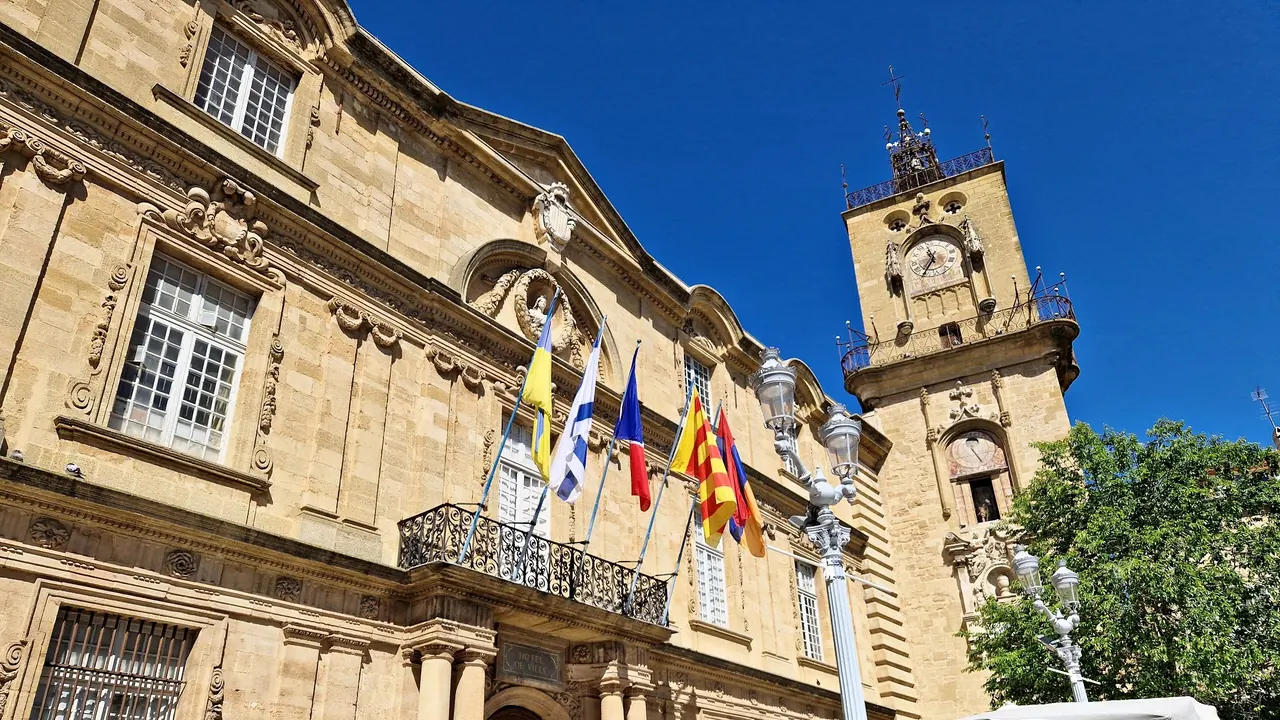
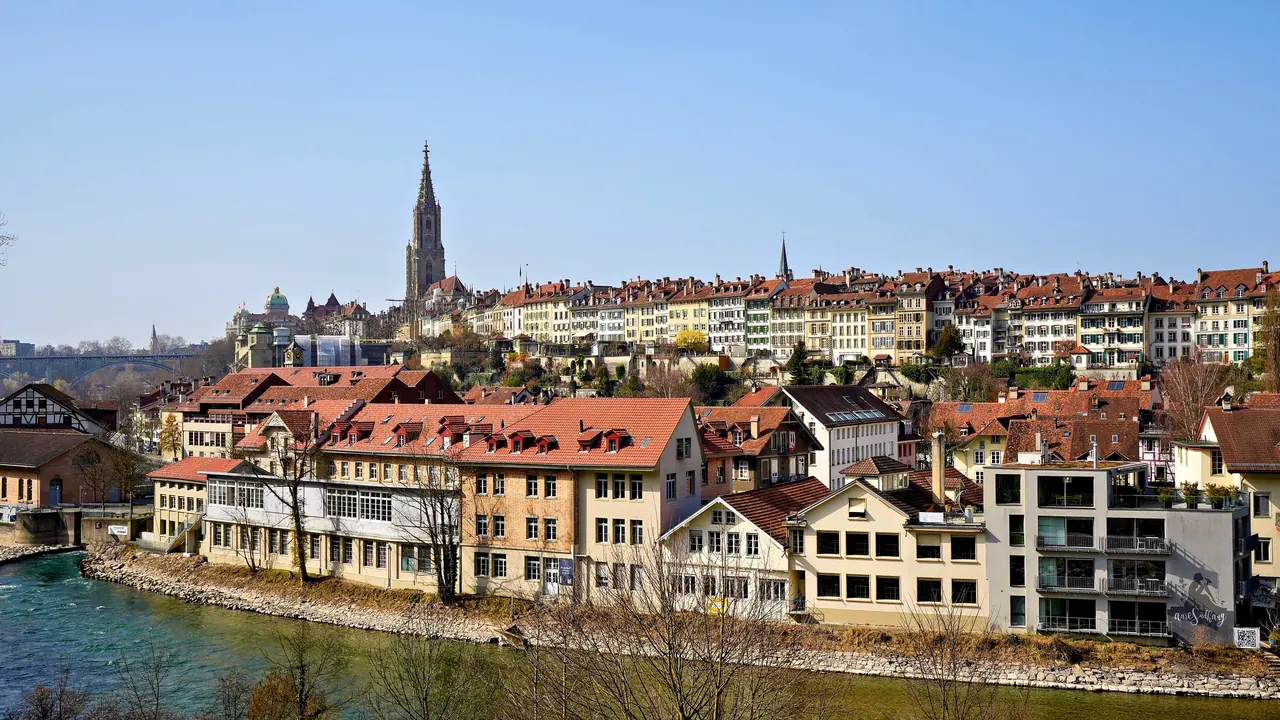
Photos: Aix-en-Provence by Hanay, CC BY-SA 4.0, cropped; Bern by Beat Bieri, Pexels License.
Aix-en-Provence or Bern?
Our verdict in twelve categories, each scored against the same fixed benchmark cities, and the climate month by month, so you can choose for your trip.
Choose Aix-en-Provence for
- prices
- food and drink
- live music and the arts
Aix-en-Provence suits travellers who want the south of France at table and in the sun: long market lunches with local rosé, a town built for lingering on terraces, opera in the courtyards each July, and the Luberon villages and the Calanques within reach. It costs a good deal less than Bern, though a hired car is close to essential once you leave town.
Choose Bern for
- getting around
- families
- nature and the outdoors
Bern is the better pick for anyone who would rather not drive at all. Its station sits at the top of the old town, trains reach the Alps and half of Switzerland within an hour, and children get bears, a riverside zoo and a funicular up to a playground. You pay heavily for it, and the cooking is hearty rather than memorable.
Scoreboard
Twelve categories on one fixed scale from 0 to 100. The shaded stretch is the gap between the two.
Your match
Pick a travel style or drag the sliders, and both match scores follow your weighting.
Too close to call, 1 point apart
Wins on prices and food and drink with your weighting.
Wins on getting around and families with your weighting.
What matters to you?
Category by category
What the scores mean for a trip.
Beaches & swimming
Only Aix needs a proper outing for a swim. The sea is about 30km away, so it means a drive, or a bus and train via Marseille, to the small pebbly coves of the Côte Bleue, the city beaches or Cassis, where the Mediterranean is warmer in high summer but the coves fill quickly in August.
In Bern, swimming is part of everyday summer life. Locals walk up the Aare from the Marzili baths and drift back on the cold, fast current past the Federal Palace, and the riverside lidos have lawns and pools. The river is for confident swimmers only, and Lake Thun, a short train ride away, offers calmer water.
Food & drink
Aix is clearly the better place to eat. Its daily markets on Place Richelme feed a lunch culture of tapenade, daube, vegetable tians and local rosé, and calissons are on sale all over the centre. The cooking is firmly French and Mediterranean, and the best tables tend to be in the back streets rather than on the Cours Mirabeau.
Bern's food is honest but heavy: the Berner Platte, rösti and fondue served in guildhall rooms and vaulted cellars, with Emmental cheese and very good chocolate as its strengths. The choice is narrower, and a meal out costs considerably more.
Culture & sights
The two are well matched as compact, handsome old towns that take two or three unhurried days. Aix's appeal is its townscape, with the plane-shaded Cours Mirabeau, the Mazarin quarter's mansions and fountains on almost every square, and Cézanne's studio, family house and quarries as a thread to follow.
Bern's UNESCO-listed old town of sandstone arcades and the Zytglogge is just as rewarding, and its museums go a little deeper. The Zentrum Paul Klee, the Kunstmuseum and the Einstein material give art and science lovers more to see indoors.
Nightlife
Neither is a going-out town, and anyone after real club nights heads elsewhere, from Aix to Marseille. Aix's evenings are about student crowds drinking on terraces around the Forum des Cardeurs and quiet down outside term time.
Bern does its drinking underground, in cellar bars below the arcades and along Aarbergergasse, with the Reitschule for late, rough-edged parties and riverside bars in summer. It is also very quiet on weeknights.
Nature & outdoors
Both have superb country on the doorstep, but of very different kinds. From Aix it is limestone and sea: the trails of Montagne Sainte-Victoire, coastal walking and kayaking in the Calanques, cycling through the Luberon's vineyards and lavender, and the Gorges du Verdon further on. Summer fire closures and heat push the best of it into spring and autumn, and a car helps.
Bern looks towards the high Alps. The Jungfrau region, with cable cars, mountain hiking and winter skiing, is about an hour away by train, Lake Thun is closer still, and the Gurten and the Aare paths start in town, all reachable without a car.
Day trips
Both are first-rate bases, and what differs is how you travel and what you see. Aix opens up Roman and Provençal France: Marseille, Avignon's papal palace, Arles, Nîmes and the Pont du Gard, plus hilltop villages such as Gordes and Roussillon that really need a car.
Bern does it all by train. Lucerne, Basel, Zurich, Fribourg, Gruyères, Murten and Lake Geneva's Lavaux terraces are an easy run from the station, so you can leave without a booking or a map.
Good for families
Bern is noticeably better with children. The bear park, the Dählhölzli zoo along the river, the Natural History Museum's dioramas and the playground at the top of the Gurten funicular fill several days, and trams make getting around simple.
Aix is safe and pleasantly car-free in the centre, with fountains and ice cream, but its sights are mansions and museums, and summer afternoons are hot. Families usually lean on a pool and drive out to La Barben zoo or the coast.
Getting around
Inside town both are walkable, but beyond the centre Bern is in another league. Its main station sits at the top of the old town, trams and buses share one fare system, and funiculars handle the climb from the river, so a car is never needed.
Aix is a pleasure on foot, but its TGV station is out on the plateau, buses and local trains only really serve Marseille, and the Provençal villages almost require a hired car and a hunt for parking.
Shopping & style
Aix makes slightly better browsing. French fashion and shoe boutiques line Rue d'Italie and Rue Fabrot, and the markets add flowers, fabrics and bric-a-brac to the produce. Calissons, santons, olive wood and Marseille soap make distinctive things to take home.
Bern's arcaded streets are tidier but more predictable: Swiss chains, watches and chocolate, with antiques, books and design in the cellar shops further down. Neither offers real luxury shopping.
Affordability
Aix costs a great deal less than Bern, though it is dear by the standards of southern France. Its expense lies mainly in the scarce central hotels and the overpriced terraces on the Cours Mirabeau, while back-street lunch menus and market picnics keep daily spending reasonable. A hire car is the main extra.
Bern is expensive across the board, from plain guesthouses to a beer on a terrace. The tram and bus pass most hotels give guests, the free bear park and river walks, and supermarket lunches all help, but they only go so far.
Live music & performing arts
Aix has the bigger draw in the Festival d'Aix-en-Provence, whose July opera in the Archbishop's Palace courtyard is worth planning a trip around. Ballet Preljocaj at the Pavillon Noir and the Grand Théâtre de Provence keep up a good programme through the year.
Bern offers a solid evening rather than a reason to come: German-language opera and drama at the Stadttheater, its symphony orchestra at the Casino, and new music at the Dampfzentrale. The spring jazz festival and the Gurtenfestival suit those who prefer jazz, rock and pop to opera.
Wellness & relaxation
Both are good for slowing down rather than spa-centred stays. Aix has the deeper bathing story: a Roman spa town whose fountains still run warm, with the Thermes Sextius on the site of the ancient baths.
Bern has no such heritage, but it offers a large modern thermal complex on the western edge and quiet Sundays, and the mountain spa hotels of the Bernese Oberland are within easy reach for serious pampering.
When should you go?
Pick your month. The climate figures are measured averages, not a forecast.
Aix-en-Provence in July
Bern in July
Daytime high, °C
Rainfall in the month, mm
Where the figures come from
Bern has no rain gauge within 25 km of the centre, so its rainfall comes from a gridded climate dataset read at the city rather than from a gauge further away.
Bern's sunshine is measured 41 km from the centre, at Payerne.
Temperature and rainfall are climate normals, averaged over the years shown. Aix-en-Provence: 1991-2020 normals, Marseille / Marignane (19.2 km from centre). Bern: 2010-2020 (sunshine 1961-1990, rainfall 1991-2020) normals, Bern / Bern - Belp Airport (5.5 km from centre).
Aix has the warmer and sunnier year. From May to August it is dry and bright, July reaches about 31°C and the sea near Marseille is warmest in August at about 22°C, so June to early September is the time to swim. Midsummer afternoons are too hot for long walks around the streets, which makes late May, June and early autumn the most comfortable months for sightseeing. September brings the first heavy rain, about 82mm, and October and November stay wet. Winters are mild and still fairly sunny, though cool for sitting out.
Bern runs cooler and wetter. Summer highs peak at about 26°C, pleasant for walking all day, but May to August is also its rainiest stretch, and the covered arcades come into their own. From November to February the city is cold and dull, with very little sunshine, while the mountains above are often brighter. Aix wins easily for warmth and sun, but in July and August Bern is comfortable for sightseeing when Aix is too hot.
Which traveller are you?
On a family trip with children, Bern is the easier choice. The bear park, the Dählhölzli zoo, the Gurten playground and shallow lido pools are all close by tram or funicular. In Aix families tend to rely on a villa pool and drives out.
For a food and nightlife trip, Aix comes out ahead. It has market mornings, long Provençal lunches and Coteaux d'Aix wine, then student terraces around the Forum des Cardeurs. Evenings are modest in both towns, but Bern's cellar restaurants are heavier and much dearer.
On a tight budget, Aix stretches money further. It is not cheap, but back-street lunch menus, market picnics and cheap regional buses go a long way. In Bern even plain guesthouses and simple dinners strain a budget, although the free tram pass helps.
Before you go
| Measure | Aix-en-Provence | Bern |
|---|---|---|
| Official language | French | French, German, Italian, Romansh |
| Currency | Euro (EUR) | Swiss Franc (CHF) |
| Sockets | CE230 V, 50 Hz | CJ230 V, 50 Hz |
| Driving side | Right | Right |
| Time zone | UTC+1, UTC+2 in summer | UTC+1, UTC+2 in summer |
| Emergency number | 112 | 112 |
| Elevation | 73 m | 542 m |
| Main airport | Marseille Provence Airport (MRS)21 km from centre126 non-stop destinations | Zürich Airport (ZRH)101 km from centre226 non-stop destinations |
| Public holidays this year | 11 days | 10 days |
By the numbers
| Measure | Aix-en-Provence | Bern |
|---|---|---|
| City population | 149,695 | 136,988 |
| People per km² | 804 | 2,655 |
| Museums within 10 km | 8 | 30 |
| UNESCO World Heritage sites within 50 km | 1 | 2 |
| Swim season, months above 21 °C | 2 months | - |
Where else could you go?
Every comparison below shares a destination with this one, so you can follow Aix-en-Provence or Bern somewhere new.
- Marseillevs Aix-en-Provence
- Interlakenvs Bern
- Lucernevs Bern
- Baselvs Bern
- Avignonvs Aix-en-Provence
- Lausannevs Bern