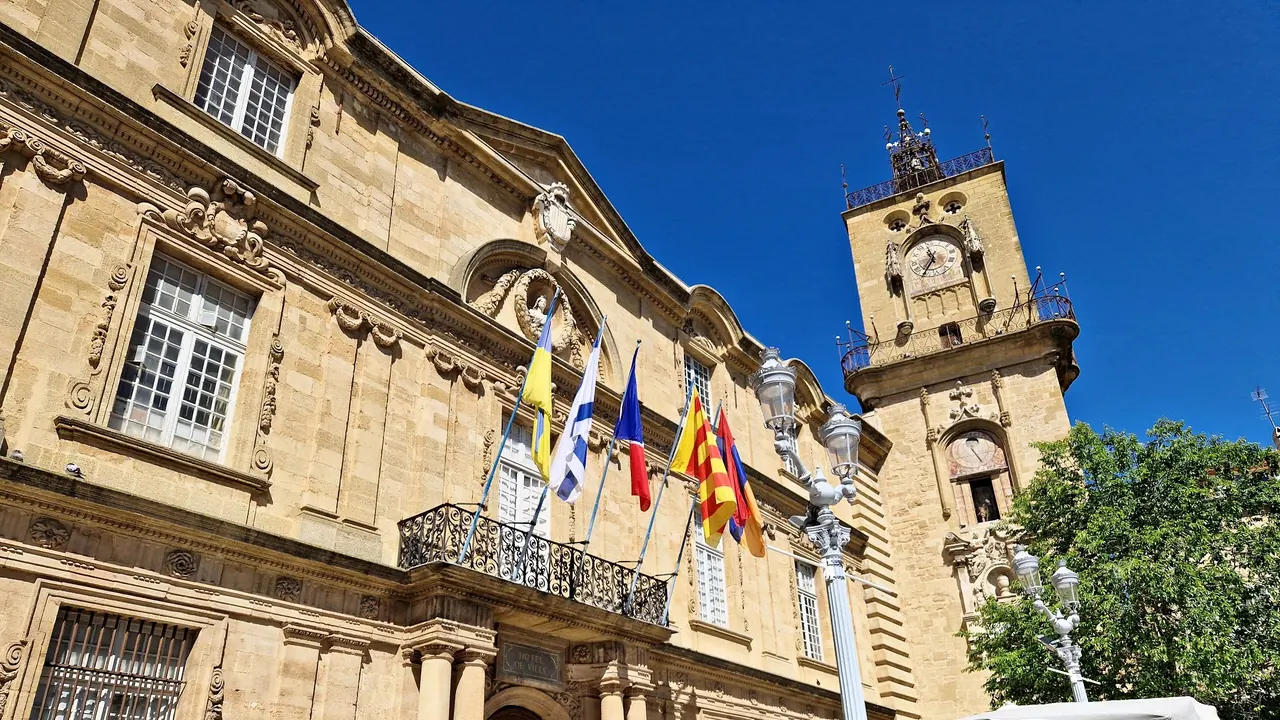
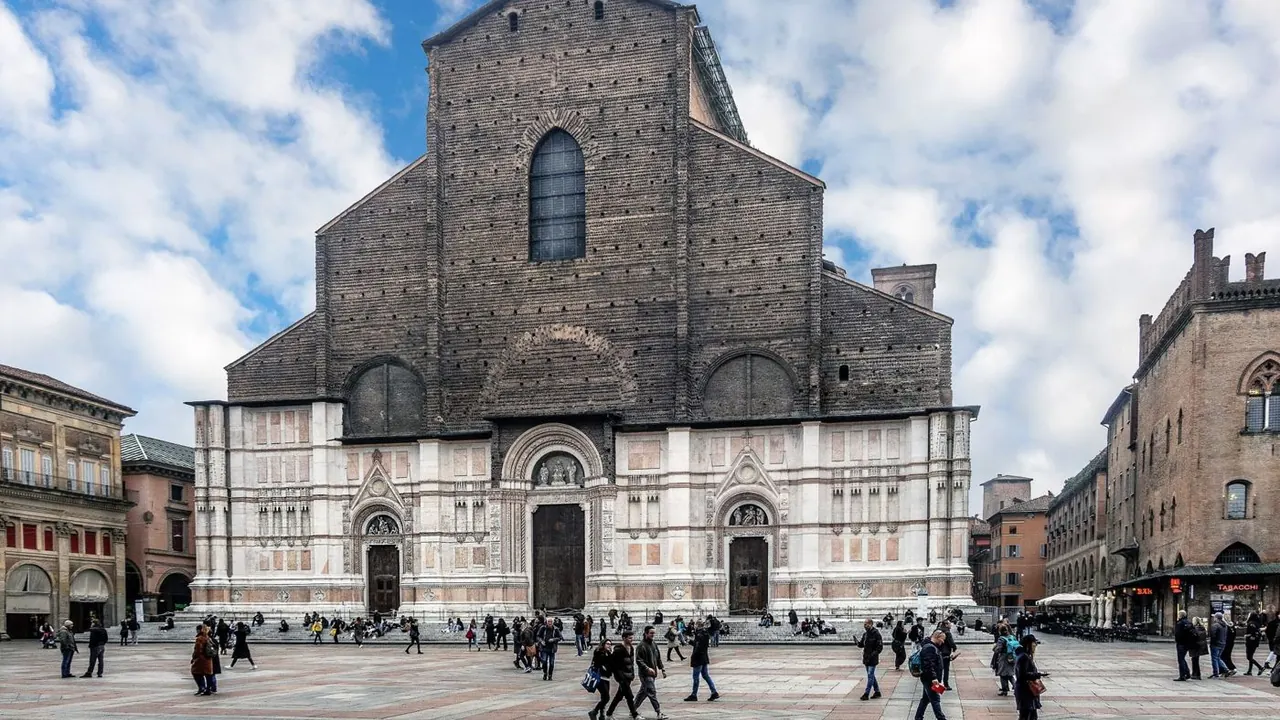
Photos: Aix-en-Provence by Hanay, CC BY-SA 4.0, cropped; Bologna by Vanni Lazzari, CC BY-SA 4.0, cropped.
Aix-en-Provence or Bologna?
Our verdict in twelve categories, each scored against the same fixed benchmark cities, and the climate month by month, so you can choose for your trip.
Choose Aix-en-Provence for
- nature and the outdoors
- beaches
- wellness
Aix-en-Provence suits travellers who want Provence as much as the town itself. Montagne Sainte-Victoire, the Calanques and the Luberon villages are all close, the coast is near enough for a swim, and a warm-spring spa and long market lunches set an unhurried pace. It works best with a car, a comfortable budget and a liking for slow days outdoors.
Choose Bologna for
- food and drink
- nightlife
- culture and sights
Bologna is the better choice for anyone who travels to eat and to walk a real working city. Its cooking is the reason many people come, its arcaded medieval centre is larger and more complete, and evenings run later thanks to the students. The central station puts Florence, Ravenna and Venice within easy reach without a car, and the city is cheaper day to day.
Scoreboard
Twelve categories on one fixed scale from 0 to 100. The shaded stretch is the gap between the two.
Your match
Pick a travel style or drag the sliders, and both match scores follow your weighting.
Wins on nature and the outdoors and beaches with your weighting.
Wins on food and drink and nightlife with your weighting.
What matters to you?
Category by category
What the scores mean for a trip.
Beaches & swimming
Neither city is on the coast, but Aix gets you to better water. The Côte Bleue coves, Marseille and the calanques around Cassis are all within an hour by car, with clear Mediterranean water, though the beaches are small, pebbly and crowded in August. Without a car the trip takes two connections, and many visitors in Aix simply use their hotel or villa pool.
From Bologna the train to Rimini takes about an hour, so the coast is easy to reach without a car. The Adriatic there is warmer and shallower, but the shore is lined with organised lidos and rows of sunbeds, and the water is often greenish. It is best kept for a single day away from the summer heat in the city.
Food & drink
Bologna is a food destination in its own right, and Aix is not quite that. Tagliatelle al ragù, tortellini in brodo and hand-rolled pasta are made with care in old osterie, the Quadrilatero lanes are packed with delicatessens, and Parmigiano and Parma ham come from towns nearby.
Aix eats well in a lighter, Provençal style: market produce on Place Richelme, tapenade, daube and rosé over a long terrace lunch, and calissons to finish. Its best terraces trade more on the setting than on the cooking. Neither city offers much beyond its own regional food.
Culture & sights
Bologna gives the sightseer more. Its brick medieval centre is large and remarkably intact, with UNESCO-listed porticoes running for kilometres, the Two Towers, the seven churches of Santo Stefano, and the Archiginnasio of Europe's oldest university with its wooden anatomical theatre.
Aix is smaller and prettier than it is grand. The Cours Mirabeau, the honey-coloured mansions of the Mazarin quarter and its many fountains are the main pleasure, along with Cézanne's studio, Bibemus and the Musée Granet. Either city fills two or three days, but Bologna's days are fuller.
Nightlife
Both are student towns, but Bologna goes out properly. Crowds spill out of the cheap bars around Piazza Verdi, and Via del Pratello's taverns stay busy late, though the city goes very quiet in August when the students leave.
Aix spends its evenings on the terraces around Place des Cardeurs, with a few wine bars and small clubs that close well before dawn. Anyone in Aix who wants a real club night ends up in Marseille.
Nature & outdoors
Aix has much the stronger landscape on its doorstep. Sainte-Victoire's limestone ridge has summit trails, the Calanques offer some of the finest coastal walking in the Mediterranean, and the Luberon, the Alpilles and the Verdon gorge add cycling, kayaking and hiking. In midsummer fire risk can close the massifs, and a car helps.
Bologna's outdoors is gentler. There are arcaded walks up to San Luca, the Colli Bolognesi and the gypsum caves of the Parco dei Gessi, and the Via degli Dei trail to Florence starts in Piazza Maggiore. Its one advantage is modest winter skiing at Corno alle Scale, which Aix cannot match.
Day trips
Both make excellent bases, and Bologna edges ahead because the train does the work. Florence is barely half an hour away, and Ravenna's mosaics, Ferrara, Modena and Parma are short rides, with Venice, Verona and Padua all within reach for a day.
Aix offers Marseille, Avignon's Palais des Papes, Roman Arles and Nîmes, and Cassis. Its finest outings, the hill villages of Gordes, Roussillon and Les Baux, really need a car.
Good for families
Neither city is built around children, and both are easy and safe with them, with traffic-free centres and plenty of ice cream. What differs is how families fill the days. In Aix that usually means a villa or hotel pool, the zoo at La Barben and trips to the coast.
In Bologna it means climbing the Asinelli tower, walking in the shade of the porticoes, and a day out at the Mirabilandia theme park or the beach at Rimini. Summer heat is hard on small children in both.
Getting around
On foot both centres are easy, but Bologna connects better. Its flat centre has shaded porticoes, and the main station sits at the edge of the old town with fast trains across northern Italy, so a car is more of a burden than a help.
Aix's compact old town is just as walkable, but its TGV station is out on the plateau and needs a shuttle bus. Buses to the villages are sparse, so most visitors exploring Provence end up hiring a car and hunting for parking.
Shopping & style
Shopping is a pleasant sideline in both cities, and the difference is in what you carry home. Aix has morning markets and flower stalls, plus calissons, santons, olive wood, Marseille soap and printed Provençal fabrics, with French boutiques in the old lanes but no luxury.
Bologna's haul is edible: mortadella, aged Parmigiano and balsamic vinegar from the Quadrilatero. It also has a small, polished cluster of fashion houses around Via Farini and the Galleria Cavour, and an antiques market on Piazza Santo Stefano.
Affordability
Bologna is easier on the budget. Its trattorias, aperitivo with food included and local wine by the glass cost less than in Italy's big tourist cities, most churches are free, and walking replaces transport. Old-town rooms can still be costly, especially during the large trade fairs.
Aix has few hotels and leans towards boutique and country-house stays, which fill up in July. Its terrace meals are overpriced, and hiring a car for the countryside adds a further cost. Back-street lunch menus and market picnics help.
Live music & performing arts
The two are evenly matched, but their scenes peak differently. Aix's high point is July, when its opera festival stages productions in the Archbishop's Palace courtyard. Through the year it also has Ballet Preljocaj at the Pavillon Noir and touring orchestras at the Grand Théâtre de Provence.
Bologna's music runs steadily through the year, with the historic Teatro Comunale's opera and concert season, basement jazz clubs most nights and student gigs. In summer there are free concerts and screenings on Piazza Maggiore. Most of its theatre is in Italian.
Wellness & relaxation
Aix has thermal water in the town itself. The Romans founded it as Aquae Sextiae for its warm springs, and the Thermes Sextius spa on the site of their baths still offers thermal pools and treatments. Several country-house hotels in the surrounding countryside add good spas of their own, though there is no wider bathing culture beyond that one spa.
In Bologna, wellness mostly means a hotel spa or a long, slow lunch under the porticoes. For spring-fed pools you have to leave town, either twenty minutes out to Castel San Pietro Terme or by train up the green valley to the old spa town of Porretta Terme. Either makes a calm half day.
When should you go?
Pick your month. The climate figures are measured averages, not a forecast.
Aix-en-Provence in July
Bologna in July
Daytime high, °C
Rainfall in the month, mm
Where the figures come from
Bologna has no rain gauge within 25 km of the centre, so its rainfall comes from a gridded climate dataset read at the city rather than from a gauge further away.
Bologna's sunshine is measured 82 km from the centre, at Cervia.
Temperature and rainfall are climate normals, averaged over the years shown. Aix-en-Provence: 1991-2020 normals, Marseille / Marignane (19.2 km from centre). Bologna: 1991-2020, 14 years observed normals, Bologna / Borgo Panigale (5.5 km from centre).
Aix is the milder and brighter of the two through the cooler months. January afternoons reach about 12°C there against 7°C in Bologna, and from December to February Aix is clearly sunnier, so walking its streets in winter is far more pleasant. Spring warms both at a similar pace, and although April brings Aix a few wet spells, it gets noticeably less rain than Bologna through March, April and May, when Bologna's rain is steadily building. In July and August both are hot. Aix is almost as hot as Bologna but has hardly any rain in July, and its sea reaches about 22°C in August, so July to September are the months for swimming from Aix. Bologna is humid and tiring by early afternoon in high summer.
In autumn the difference is timing. In Aix the rain arrives as soon as summer ends: September is its wettest month at about 82mm, and October and November stay fairly wet. In Bologna the rain builds more slowly and is heaviest in October and November, which are also dull and grey. For time outdoors, Aix is at its best in May and June. Bologna is best in late spring and again in September, before the wettest stretch.
Which traveller are you?
On an outdoors trip, Aix is the clear pick. Within a short drive you have mountain, sea cliff and gorge country, enough for a week of walking, cycling and paddling in spring or autumn. Beyond its nearby hills, Bologna's surroundings are much tamer.
For a food and nightlife trip, choose Bologna. Fresh pasta, mortadella and the Quadrilatero delicatessens make every meal an event. Aperitivo leads on to wine bars, and the student streets around Piazza Verdi and Via del Pratello stay lively long after Aix's terraces have emptied.
On a relaxing and wellness trip, Aix is the more restful choice. It is a small, sunny town that moves at the pace of the morning market and the long lunch, and it is quiet outside the July festival. Bologna is a larger city with busier student streets.
Before you go
| Measure | Aix-en-Provence | Bologna |
|---|---|---|
| Official language | French | Italian |
| Currency | Euro (EUR) | Euro (EUR) |
| Sockets | CE230 V, 50 Hz | CFL230 V, 50 Hz |
| Driving side | Right | Right |
| Time zone | UTC+1, UTC+2 in summer | UTC+1, UTC+2 in summer |
| Emergency number | 112 | 112 |
| Elevation | 73 m | 54 m |
| Main airport | Marseille Provence Airport (MRS)21 km from centre126 non-stop destinations | Bologna Guglielmo Marconi Airport (BLQ)6 km from centre98 non-stop destinations |
| Public holidays this year | 11 days | 13 days |
By the numbers
| Measure | Aix-en-Provence | Bologna |
|---|---|---|
| City population | 149,695 | 387,971 |
| People per km² | 804 | 2,754 |
| Museums within 10 km | 8 | 68 |
| UNESCO World Heritage sites within 50 km | 1 | 3 |
| Swim season, months above 21 °C | 2 months | - |
Where else could you go?
Every comparison below shares a destination with this one, so you can follow Aix-en-Provence or Bologna somewhere new.
- Marseillevs Aix-en-Provence
- Avignonvs Aix-en-Provence
- Florencevs Bologna
- Luccavs Bologna
- Saint-Tropezvs Aix-en-Provence
- Veronavs Bologna