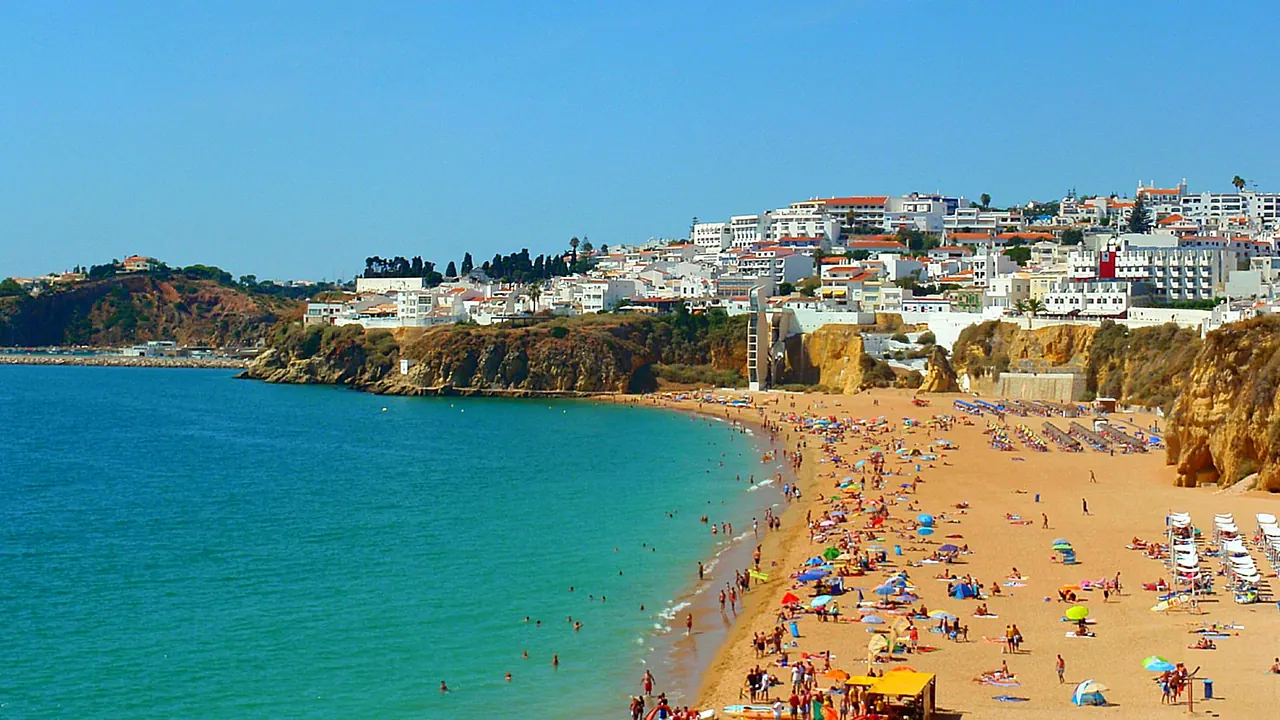
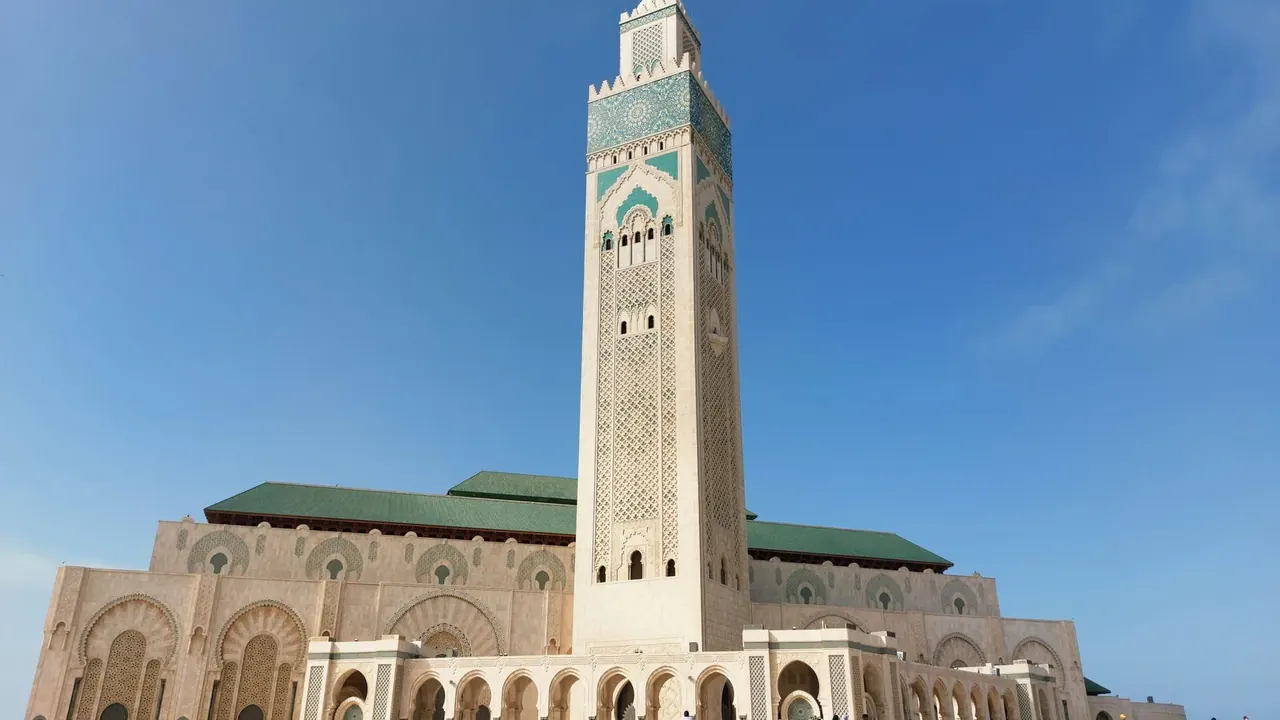
Photos: Albufeira by Jose A., CC BY 2.0, cropped; Casablanca by Samir Bakkah, Pexels License.
Albufeira or Casablanca?
Our verdict in twelve categories, each scored against the same fixed benchmark cities, and the climate month by month, so you can choose for your trip.
Choose Albufeira for
- families
- nature and the outdoors
- beaches
Albufeira suits a sun-and-sand vacation that needs little planning. It has golden beaches with calm water right below the old town, cliff walks and cave boat trips close by, family resorts with pools and kids' clubs, and a loud, cheerful bar scene on the Strip for anyone who wants one. Culture and food are thin, so the town works best if you plan to spend your days outdoors rather than in museums.
Choose Casablanca for
- culture and sights
- shopping
- live music and the arts
If you want a city with a story, pick Casablanca. The Hassan II Mosque, the Art Deco boulevards from the French protectorate and the Habous quarter give it real sightseeing. Seafood at the Marché Central, the neighbourhood hammams and the fast train to Rabat fill out a few interesting days. The rough Atlantic makes it a poor beach base, and it is at its best as the first stop on a longer trip through Morocco.
Scoreboard
Twelve categories on one fixed scale from 0 to 100. The shaded stretch is the gap between the two.
Your match
Pick a travel style or drag the sliders, and both match scores follow your weighting.
Too close to call, level with your weighting
Wins on families and nature and the outdoors with your weighting.
Wins on culture and sights and shopping with your weighting.
What matters to you?
Category by category
What the scores mean for a trip.
Beaches & swimming
Albufeira is built around its beaches. They run from Praia dos Pescadores below the old town to the long sands of Falésia and the coves of São Rafael and Coelha, all backed by ochre cliffs. Most have lifeguards, and the water is usually calm and clear from June to early October.
Casablanca's beach at Ain Diab is wide, but the open Atlantic brings a strong swell and dangerous currents, and water quality along the city front varies. Many people swim in the beach clubs' pools instead. A proper beach day means driving out to Dar Bouazza or Bouznika, so it becomes an outing rather than a stroll down to the sand.
Food & drink
You will eat better in Casablanca. At the Marché Central you can pick a fish and have it grilled next door. Friday couscous, harira and street snacks such as msemen in the Old Medina give a real taste of Moroccan home cooking, and Maarif and Gauthier add brasseries and pâtisseries with a French influence.
Albufeira can match it for a grilled sardine or a cataplana near the fishermen's beach. Much of the town, though, serves package tourists full breakfasts and pizza, so the good meals take some finding. Drinking is easier: local wine is on every table, while in Casablanca alcohol stays inside licensed venues.
Culture & sights
Casablanca simply has more to see. The Hassan II Mosque is worth the trip in its own right and is open to non-Muslims on guided tours. The Art Deco and neo-Moorish streets from the protectorate era around Boulevard Mohammed V, the Habous quarter and the Museum of Moroccan Judaism fill two or three days.
Albufeira's old town, with its whitewashed lanes, fragments of Moorish wall and clock tower, makes a pleasant early-evening wander. It is done in a morning, though, and history lovers end up driving to Silves or Faro.
Nightlife
Albufeira is the place for a big night out, as long as the style suits you. In summer the Strip in Montechoro is full of neon bars, karaoke and clubs open until dawn, with a young, largely British and Irish crowd. Oura and the old town square have calmer terraces. Much of the Strip shuts in winter.
Casablanca goes out in a smarter, quieter way. At weekends a well-dressed local crowd fills the lounges and beach clubs on the Corniche at Ain Diab, and downtown has hotel and cocktail bars. You take taxis between them, because there is no street of bars to wander.
Nature & outdoors
Albufeira has the more striking scenery on its doorstep. Its eroded limestone coast of arches, sinkholes and sea caves includes the Seven Hanging Valleys trail and boat trips into the domed cave at Benagil. The cork-oak hills of Monchique are about an hour inland.
Casablanca sits on a flat plain, so being outdoors there means running along the Corniche to the El Hank lighthouse, shaded trails in the Bouskoura forest and surfing at Ain Diab and Dar Bouazza. The surf is the one thing that is easier to reach in Casablanca, since Albufeira's surfers have to drive west to Sagres.
Day trips
Both cities offer a good spread of day trips, but of very different kinds. From Albufeira you visit a string of small Algarve towns: Silves with its red castle, Loulé with its market hall, Faro, Lagos and Tavira. They are pleasant rather than grand, and easiest to reach with a hire car.
Casablanca's best day out is a capital city. Rabat is about an hour away by train, with the Kasbah des Oudayas and the Chellah, and El Jadida's Portuguese cistern is a UNESCO site down the coast. Marrakech and Fes are tempting but too far to go there and back in a day.
Good for families
Albufeira is made for a family summer. It has Zoomarine, several water parks, calm lifeguarded beaches at Oura, Galé and Falésia, and resort hotels with kids' clubs and shallow pools. Families should stay away from the Strip and expect plenty of steps in the old town.
Casablanca is welcoming to children. The Corniche mall with its aquarium, the amusement park at Ain Diab and the beach-club pools fill a few days. Beyond those, heavy traffic, broken pavements and a dangerous sea make it better for older children on a stop during a longer trip.
Getting around
Neither city is easy to get around, but Casablanca has more options. Tram and busway lines link downtown, the stations and the Corniche, red petits taxis are everywhere, and fast trains run to Rabat and beyond. The drawbacks are dense traffic and big roundabouts that are hard to cross on foot.
Albufeira's old town is compact but steep, and the resort stretches for kilometres through Montechoro, Oura and Galé, with only patchy local buses. The railway station is about 6km inland, so most visitors rely on taxis and a hire car.
Shopping & style
Casablanca is Morocco's modern shopping city. It has a large mall on the Corniche, fashion streets and local designers in Maarif, and craft shops in the Habous selling leather, brass lamps and babouches without much pressure from sellers. Derb Ghallef's flea market is good for a rummage.
Albufeira sells beachwear, football shirts and souvenirs. Painted pottery, cork and medronho are the things worth taking home, and anyone shopping for clothes drives to the mall at Guia.
Affordability
Day to day, Casablanca costs less. Taxis, the tram, fish at the market and café terraces are all cheap, and the Hassan II Mosque is the only notable entry fee. Rooms are the exception: many hotels are aimed at business travellers, and good guesthouses are scarce.
Albufeira is reasonable for Western Europe. Competition keeps set menus and beer cheap, and self-catering apartments are plentiful. July and August push up the cost of rooms and car hire, but from October to May it becomes a bargain for long winter stays.
Live music & performing arts
Casablanca has a real, if modest, live scene. A large theatre on Place Mohammed V hosts concerts and dance, and the French and other cultural institutes run small programmes. There is a long-running jazz festival and an urban music festival that grew out of the city's hip-hop scene, and chaabi and gnawa are played at cultural centres.
Live entertainment in Albufeira means cover bands, hotel cabaret and fado shows for tourists, plus free summer concerts on the square above the fishermen's beach. For real fado you need to go elsewhere.
Wellness & relaxation
Casablanca has a bathing culture that Albufeira lacks. A scrub with black soap and a kessa glove in a neighbourhood hammam, a smarter hammam spa in Maarif or a seawater treatment at a Corniche thalassotherapy centre can be part of the trip, even though the city outside is loud and full of traffic.
In Albufeira, wellness means a hotel spa, and the setting helps. A cliff-top resort near Galé or Falésia is restful in the quiet, mild winter, and Caldas de Monchique has real thermal waters about an hour inland.
When should you go?
Pick your month. The climate figures are measured averages, not a forecast.
Albufeira in July
Casablanca in July
Daytime high, °C
Rainfall in the month, mm
Where the figures come from
Albufeira's temperatures are measured 26 km from the centre, at Faro / Aeroporto.
Albufeira has no rain gauge within 25 km of the centre, so its rainfall comes from a gridded climate dataset read at the city rather than from a gauge further away.
Temperature and rainfall are climate normals, averaged over the years shown. Albufeira: 1991-2020 normals, Faro / Aeroporto (26.4 km from centre). Casablanca: 1991-2020 normals, Casablanca (5.6 km from centre).
Both cities have dry, sunny summers and wetter winters, but the seasons in Albufeira are more extreme. From June to September it is reliably hot and almost rainless, with highs of 29°C in July and August and the sunnier summer skies of the two. Those are the beach months, although the sea is still cool Atlantic water of about 20°C at best. Rain returns in October and peaks in December at 95mm. Winter days stay mild and bright enough for walking the cliffs, and spring is the most pleasant time to walk the coast.
Casablanca is milder all year. Summer highs stay around 27°C, comfortable enough for walking the boulevards even in August. The sea gets a little warmer, reaching 23°C, though the swell means you still need to swim with care. Winter days are slightly warmer and sunnier than in Albufeira, and November and December are the wettest months. In either city, April, May and October are a pleasant middle ground for sightseeing.
Which traveller are you?
For a beach and sun trip, Albufeira is the clear choice. Its golden coves and long sandy beaches have lifeguards and usually calm water. At Ain Diab in Casablanca the swell is strong, and many locals swim in beach-club pools instead.
On a culture and arts trip, Casablanca has far more to do. The Hassan II Mosque, the Art Deco downtown and the Habous quarter fill two or three days, and a jazz festival and a large theatre offer evenings that Albufeira's resort entertainment cannot match.
On a family trip with young children, Albufeira is easier. Zoomarine, the water parks, the calm lifeguarded beaches and hotels with kids' clubs make the days simple. Casablanca's traffic, broken pavements and dangerous sea make it suitable only for a short stay with older children.
Before you go
| Measure | Albufeira | Casablanca |
|---|---|---|
| Official language | Portuguese | Arabic, Standard Moroccan Tamazight |
| Currency | Euro (EUR) | Moroccan Dirham (MAD) |
| Sockets | CF230 V, 50 Hz | CE50 Hz |
| Driving side | Right | Right |
| Time zone | UTC, UTC+1 in summer | UTC+1 |
| Emergency number | 112 | Police 19/112, ambulance 15, fire 15 |
| Elevation | 22 m | 115 m |
| Main airport | Faro - Gago Coutinho International Airport (FAO)26 km from centre91 non-stop destinations | Mohammed V International Airport (CMN)26 km from centre112 non-stop destinations |
| Public holidays this year | 14 days | 11 days |
By the numbers
| Measure | Albufeira | Casablanca |
|---|---|---|
| City population | 44,168 | 3,215,935 |
| People per km² | 314 | 8,375 |
| Museums within 10 km | 1 | 3 |
| UNESCO World Heritage sites within 50 km | 0 | 0 |
| Swim season, months above 21 °C | None | 5 months |
Where else could you go?
Every comparison below shares a destination with this one, so you can follow Albufeira or Casablanca somewhere new.
- Farovs Albufeira
- Lagos, Portugalvs Albufeira
- Rabatvs Casablanca
- Cadizvs Albufeira
- Jerez de la Fronteravs Albufeira
- Lisbonvs Albufeira