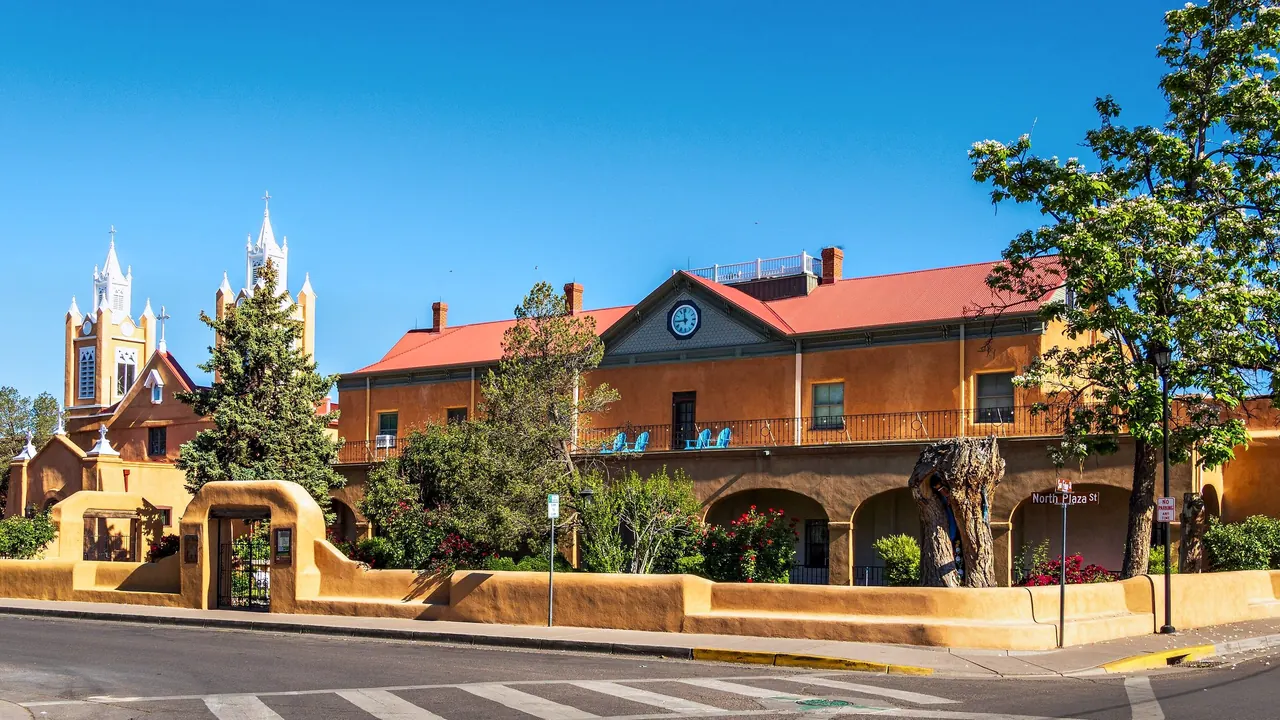
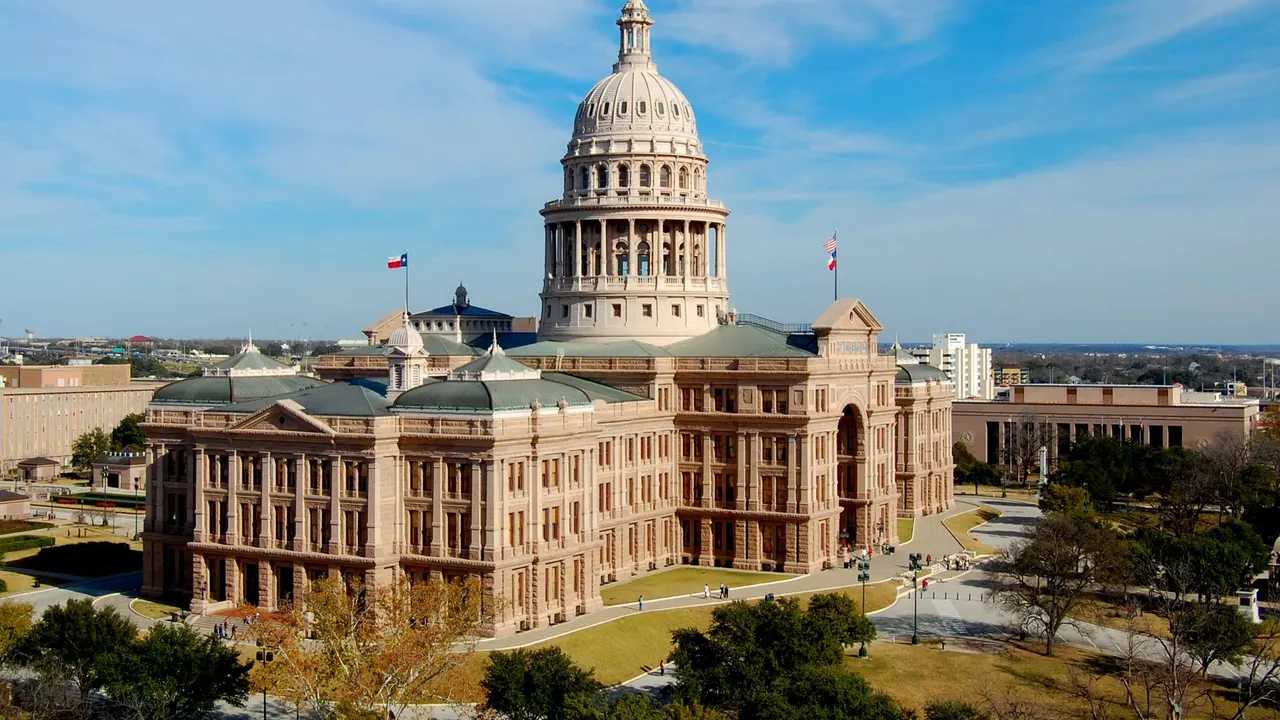
Photos: Albuquerque by dconvertini, CC BY-SA 2.0, cropped; Austin by LoneStarMike, CC BY 3.0, cropped.
Albuquerque or Austin?
Our verdict in twelve categories, each scored against the same fixed benchmark cities, and the climate month by month, so you can choose for your trip.
Choose Albuquerque for
- nature and the outdoors
- prices
- families
Albuquerque suits travellers who come for landscape and the older cultures of the Southwest. The Sandia crest rises above the suburbs, petroglyphs are carved into lava on the edge of town, the Pueblo heritage is close at hand and the chile cooking is unlike anything else in the country. It is also the cheaper and quieter of the two. Evenings end early, so it rewards people who get up with the light and drive out to mesas, canyons and Santa Fe.
Choose Austin for
- live music and the arts
- nightlife
- beaches
Pick Austin if your evenings matter as much as your days. Bands play in clubs and honky-tonks every night, the bar streets run late, and brisket, breakfast tacos and spring-fed pools fill the hours between. It is the more social and musical trip of the two. It also costs more, and its outdoors is gentle hill country and lakes rather than mountains.
Scoreboard
Twelve categories on one fixed scale from 0 to 100. The shaded stretch is the gap between the two.
Your match
Pick a travel style or drag the sliders, and both match scores follow your weighting.
Wins on nature and the outdoors and prices with your weighting.
Wins on live music and the arts and nightlife with your weighting.
What matters to you?
Category by category
What the scores mean for a trip.
Beaches & swimming
Neither city is a beach destination, but Austin at least has real places to swim. Albuquerque's Rio Grande is too silty and fast for swimming, so cooling off means a hotel pool or a drive out to a reservoir such as Cochiti Lake.
Austin has built a summer culture around its water. Barton Springs stays at about 20°C all year and has a lawn for spreading out on. Deep Eddy is gentler, and Lake Travis has rocky coves for boat days. None of it is sand and sea, but it shapes a summer afternoon in a way Albuquerque cannot match.
Food & drink
Both cities run on a strong regional cuisine, and Austin's food scene is the broader and more rewarding of the two. Albuquerque's draw is New Mexican cooking: red or green chile, carne adovada, blue corn enchiladas and sopaipillas with honey. Much of the best of it is served in long-running family places in the South and North Valleys, and in late summer the whole city smells of roasting chile.
Austin pairs post-oak brisket with Tex-Mex and a daily round of breakfast tacos, and has food trucks in nearly every beer garden. East Austin and South Congress also hold more ambitious kitchens than anything Albuquerque offers. Both cities have a good craft beer scene. Albuquerque's is spread through converted industrial buildings, Nob Hill and downtown.
Culture & sights
The two are evenly matched here and each fills two or three days, but their stories are very different. Albuquerque's sights are rooted in the ground: the adobe plaza of Old Town around a church from 1793, the Indian Pueblo Cultural Center run by the state's nineteen Pueblos, and thousands of petroglyphs on the western mesa. The nuclear science museum and the neon of Route 66 add more recent history.
Austin's culture is civic and academic. The pink granite State Capitol anchors downtown, and the university museums hold the real treasures, including the Blanton's art and the Gutenberg Bible at the Harry Ransom Center. Choose Albuquerque for living heritage and Austin for collections behind glass.
Nightlife
Going out is a main reason to visit Austin and an afterthought in Albuquerque. Austin has the noisy shot bars of Sixth Street, bungalow bars with big yards on Rainey Street, and mezcal bars and dives on the east side. During the big spring and autumn festival weeks the whole centre becomes one party.
Albuquerque's evenings centre on Central Avenue. Downtown bars fill and can turn rowdy on weekends, while Nob Hill offers calmer cocktails and taprooms, and midweek the city goes quiet. It suits a beer on a patio rather than a long night out.
Nature & outdoors
Albuquerque has the bigger, wilder setting. The Sandia Mountains form the city's eastern edge, and the aerial tramway rises to a crest above 3,000m, with forest trails and a vast view over the desert. Below, the bosque along the Rio Grande gives shaded paths and winter cranes, and the Jemez Mountains and canyon country lie within a couple of hours.
Austin's outdoors is gentler and starts closer to its centre. You can paddle Lady Bird Lake in the morning, hike the Barton Creek Greenbelt and watch the bats leave the Congress Avenue Bridge at dusk, with Enchanted Rock and Pedernales Falls further out. There are no mountains, and summer heat limits activity to early mornings.
Day trips
The day trips are equally good, but they lead into different histories. From Albuquerque, Santa Fe is the highlight, and the commuter train makes it the one outing that does not need a car. Beyond it lie ancient Native sites: Acoma's Sky City on its mesa, the cliff dwellings of Bandelier and the mission ruins of Salinas.
Austin's outings run to Spanish and German Texas. San Antonio has the Alamo and its UNESCO-listed missions, and Fredericksburg has wineries and peach orchards along the road. Gruene, New Braunfels and the barbecue town of Lockhart are easy stops too. In both cities nearly everything else needs a hire car.
Good for families
Both cities are relaxed with children, and Albuquerque has slightly more purpose-built attractions. The BioPark combines a zoo, an aquarium and a botanic garden, Explora sits beside the dinosaur halls, and the tramway ride is an adventure in itself. The October Balloon Fiesta, with hundreds of balloons rising at dawn, is a memory few cities can offer.
Austin's family days revolve around Zilker Park, with its miniature train and spring-fed pool, plus the Thinkery and the evening bat flight. The big theme parks and waterparks are an hour or so away in San Antonio and New Braunfels. Both cities mean a lot of driving. In summer, Albuquerque's problem is strong sun at altitude, while Austin's is the heat.
Getting around
A few days without a car are realistic in Austin and hardly possible in Albuquerque. Albuquerque's only area made for walking is Old Town, and the one useful bus line runs along Central Avenue to downtown, the university and Nob Hill. The mountain, the petroglyphs and almost every outing need a hire car, although the airport is close to the centre and driving and parking are easy.
In Austin you can walk downtown, the Capitol and Rainey Street, and rental bikes, scooters and the lakeside trail cover the short trips to South Congress and East Austin. Beyond the centre a car is close to essential here too, and the main highway through town clogs at peak hours.
Shopping & style
Neither is a fashion city, and the gap between them is small. The difference is in what you bring home. In Albuquerque it is Native and Southwestern craft: silver and turquoise jewellery, Pueblo pottery and Navajo weaving, best bought around Old Town or from the artists themselves.
Austin's speciality is western wear and vintage. Cowboy boots, hats and pearl-snap shirts line South Congress, and the east side has small design shops. Luxury brands are confined to a big mall on the city's northern edge.
Affordability
Albuquerque is the cheaper of the two, though neither is a bargain by American standards. The biggest difference is the hotel. Except during the October Balloon Fiesta, a room in Albuquerque is easy to find at a fair rate. Austin's central hotels stay expensive all year and get scarcer and dearer still during its music, film and motor racing weeks. Many of Albuquerque's best days, among the petroglyphs on the mesa or on the trails above the suburbs, cost you little more than fuel.
Austin wins some of that back at the table, where breakfast tacos, trucks and Tex-Mex make everyday meals cheaper than its hotels would suggest. The Capitol tour, the Greenbelt and the bat flight ask almost nothing. You can't avoid hiring a car in either city, and parking costs more often in Austin. In both cities, tips and sales tax add to every restaurant bill.
Live music & performing arts
Austin is one of America's great live music cities, and Albuquerque cannot compete on that front. On any night of the year there are several acts across the clubs of Red River and Sixth Street and the bars of South Congress, along with honky-tonks where couples two-step. The festival weeks bring hundreds of bands at once.
Albuquerque's strengths are narrower but distinctive. It has a real flamenco tradition with its own institute and festival, and Pueblo dances at the cultural centre on weekends. Touring musicals play at Popejoy Hall, and the KiMo Theatre has a Pueblo Deco interior. Santa Fe's open-air opera is within reach on summer evenings.
Wellness & relaxation
Austin is the easier place to unwind without leaving town. It has a strong yoga culture, day spas across the city and spa resorts on Lake Austin and in the Hill Country, and away from the bar streets its shaded patios and parks set a slow pace.
Albuquerque's own options are mostly resort spas, several on Pueblo lands with mountain views. For more, you have to drive: the mineral pools of Jemez Springs are a little over an hour away, and the bathhouses around Santa Fe are further. That suits a road trip better than a lazy stay in town.
When should you go?
Pick your month. The climate figures are measured averages, not a forecast.
Albuquerque in July
Austin in July
Daytime high, °C
Rainfall in the month, mm
Temperature and rainfall are climate normals, averaged over the years shown. Albuquerque: 1991-2020 normals, Albuquerque International Airport (7.3 km from centre). Austin: 1991-2020 normals, Camp Mabry/Austin City Asos (3.7 km from centre).
Albuquerque is dry and very sunny all year, and spring and autumn are its best times. April, May, September and October bring warm, clear days that suit hiking and walking around Old Town. From June to August highs reach about 33°C, and the sun at altitude is fierce. July and August add short afternoon storms, though even then rain is light. Winter days are bright but cold, around 9°C in January.
Austin is warmer in winter, with about 17°C in January, so it works as a mild winter escape. Its summers are hotter, around 36°C in July and August. That is the season for Barton Springs and Lake Travis, but the streets are hard work by midday. It is also far wetter and cloudier than Albuquerque, with heavy downpours in May (about 130mm) and again in October. March, April and late October into November are the most comfortable months for a city visit.
Which traveller are you?
On an outdoors trip, base yourself in Albuquerque and plan around early starts: mornings high on the mountain, afternoons by the river, and two or three days driving north into canyon country. Austin suits paddlers and gentle walkers better than serious hikers.
For a food and nightlife trip, Albuquerque gives you a few memorable chile dinners and early nights. Austin lets you plan whole days around eating and spend each evening in a different bar district, keeping Friday and Saturday for the busiest one.
On a tight budget, Albuquerque is the safer choice. Plan mostly self-guided days with little to pay beyond fuel, avoid October, and spend on one guided outing such as Acoma. In Austin the same money means staying outside downtown and eating mostly from trucks.
Before you go
| Measure | Albuquerque | Austin |
|---|---|---|
| Currency | US Dollar (USD) | US Dollar (USD) |
| Sockets | AB120 V, 60 Hz | AB120 V, 60 Hz |
| Driving side | Right | Right |
| Time zone | UTC-7, UTC-6 in summer | UTC-6, UTC-5 in summer |
| Emergency number | 911 | 911 |
| Elevation | 1,619 m | 149 m |
| Main airport | Albuquerque International Sunport (ABQ)6 km from centre27 non-stop destinations | Austin Bergstrom International Airport (AUS)13 km from centre91 non-stop destinations |
| Public holidays this year | 13 days | 13 days |
By the numbers
| Measure | Albuquerque | Austin |
|---|---|---|
| City population | 564,559 | 961,855 |
| People per km² | 1,150 | 1,217 |
| Museums within 10 km | 10 | 21 |
| UNESCO World Heritage sites within 50 km | 0 | 0 |
Where else could you go?
Every comparison below shares a destination with this one, so you can follow Albuquerque or Austin somewhere new.
- Santa Fevs Albuquerque
- San Antoniovs Austin
- Taosvs Albuquerque
- Houstonvs Austin
- Durango, Coloradovs Albuquerque
- Dallasvs Austin