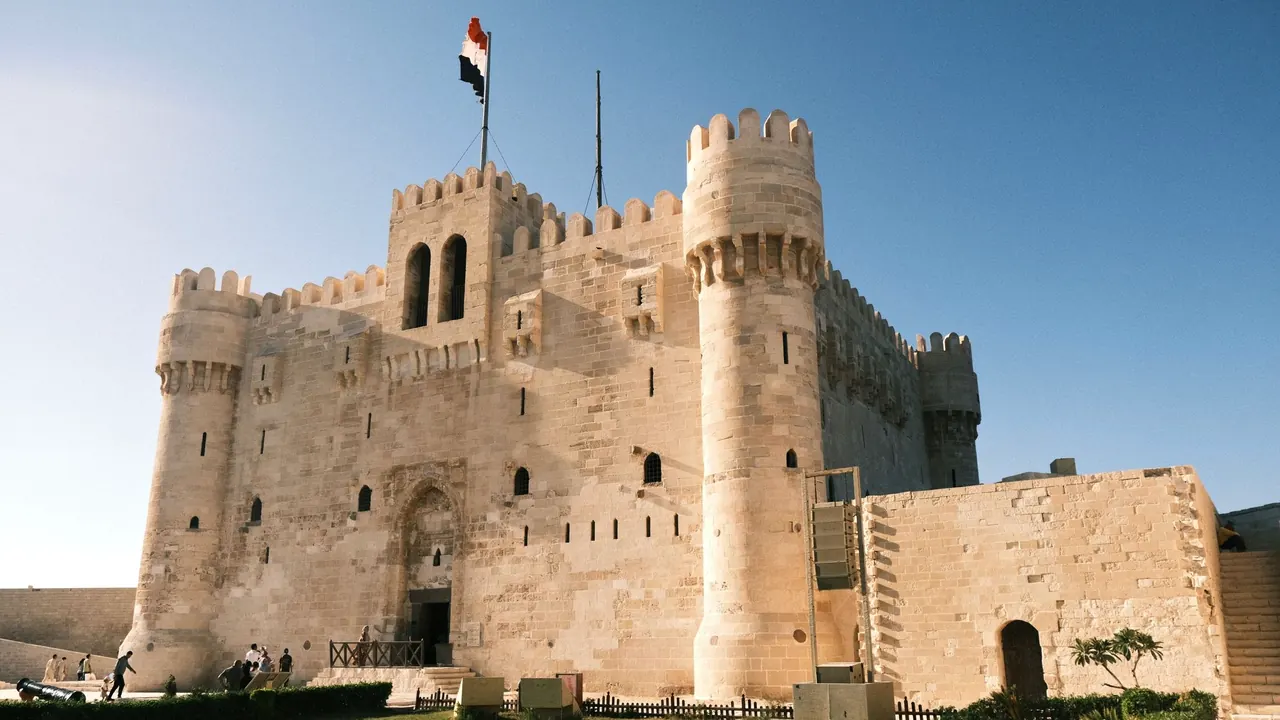
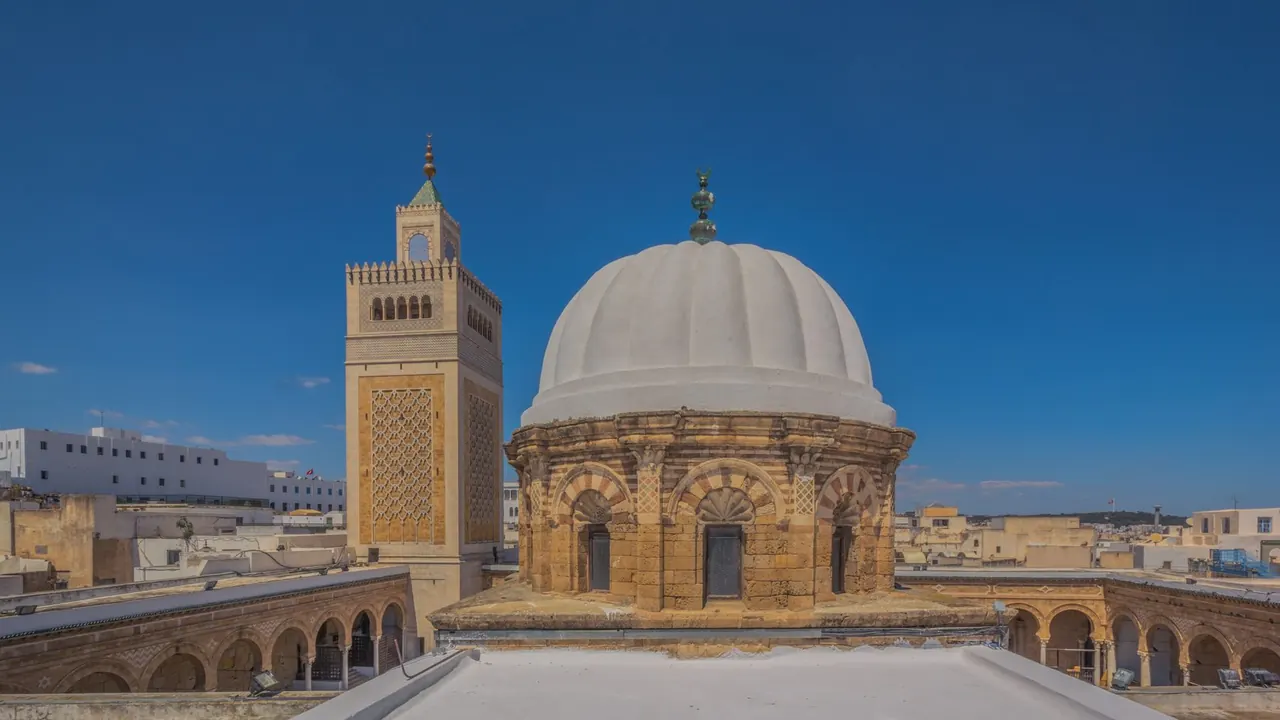
Photos: Alexandria by Muhammed Fatih Beki, Pexels License; Tunis by IssamBarhoumi, CC BY-SA 4.0, cropped.
Alexandria or Tunis?
Our verdict in twelve categories, each scored against the same fixed benchmark cities, and the climate month by month, so you can choose for your trip.
Choose Alexandria for
- prices
Alexandria suits a traveller who likes history in fragments and a city with a faded cosmopolitan air: the catacombs, the Qaitbay Citadel on the site of the Pharos, belle époque cafés and fish dinners by the harbour. It is the cheaper of the two, its sea stays warm into autumn, and its summer is drier and less fierce. That makes it good for a slow few days of sightseeing with a swim or two.
Choose Tunis for
- wellness
- nature and the outdoors
- day trips
Tunis is the better choice for a fuller trip. Its intact medina, the Bardo mosaics and Carthage give it a richer core, and day trips to Dougga, Kairouan and Cap Bon can fill a week. It also has thalassotherapy at Gammarth, local hammams, easier beaches on the suburban train and proper souk shopping. For anyone who wants variety beyond the city itself, it makes the better base.
Scoreboard
Twelve categories on one fixed scale from 0 to 100. The shaded stretch is the gap between the two.
Your match
Pick a travel style or drag the sliders, and both match scores follow your weighting.
Wins on prices with your weighting.
Wins on wellness and nature and the outdoors with your weighting.
What matters to you?
Category by category
What the scores mean for a trip.
Beaches & swimming
Neither city makes a beach vacation, but Tunis gives you the easier swim. In Alexandria the Corniche beaches are narrow and crowded, the better sand at Montaza and Mamoura sits behind the gates of paid clubs, and outside those clubs most women swim covered.
From Tunis the suburban train takes you to the long sandy beaches of La Marsa and Gammarth, and Hammamet and Cap Bon are about an hour away for wider, calmer water. Alexandria's sea stays warm a little later into autumn, but its clearer North Coast beaches are too far for a day out.
Food & drink
Both cities eat best cheaply and both are good for fish, but the flavours are different. Alexandria is all about the catch: you pick it from the ice in Anfushi, it is weighed and then grilled or baked in clay. Add liver sandwiches and fiteer from late-night counters and the old Greek patisseries downtown.
Tunis cooks hotter, with harissa in everything from brik to the lablabi eaten at breakfast and the Friday couscous, and its Marché Central is the better market to wander. A drink is easier to find in Tunis too, where licensed restaurants serve local wine. In Alexandria alcohol is mostly limited to hotels and a few old bars.
Culture & sights
Tunis gives you more to walk through. Its UNESCO-listed medina around the Zitouna Mosque is still a lived-in old city, set beside the French boulevards of the Ville Nouvelle. The Bardo's Roman mosaics are among the finest anywhere, and Carthage and Sidi Bou Said are a short train ride away.
Alexandria's past is greater on paper, but most of it lies underground or underwater, so you visit pieces of it: the catacombs of Kom el Shoqafa, the Roman theatre at Kom el-Dikka, Qaitbay on the Pharos site and the Bibliotheca. The real pleasure is its faded belle époque mood, which rewards a slower pace.
Nightlife
Neither city is for a big night out, and in both the evening means tea and shisha. Alexandria's version is the summer Corniche, where seafront coffee houses stay busy past midnight and a drink means a hotel lounge or one of the few Greek-era bars. Tunis has a little more choice in summer, when the lounges and beach clubs of La Marsa and Gammarth stay open late at weekends with a younger, mixed crowd, though the downtown bars are rough and mostly male.
Nature & outdoors
Alexandria's natural scenery is the sea and the sunsets over the Eastern Harbour. Beyond the Corniche lie flat farmland, the reed beds of Lake Mariout and desert, with no hills to walk, and its one outdoor speciality is diving on the sunken Pharos.
Tunis has far more within reach: flamingos on the Lake of Tunis, short climbs on Bou Kornine above the bay and clifftop walks at Sidi Bou Said. Further out are the wetlands of Ichkeul and mountain walking on Djebel Zaghouan, best done in spring or autumn.
Day trips
This is where Tunis is far ahead. Dougga, one of Africa's best-preserved Roman towns, and Kairouan with its Great Mosque are each about two hours away. Hammamet, the potteries of Nabeul, Kerkouane and Sousse fill more days, ideally with a driver or a louage.
Alexandria's list is shorter: the Ottoman houses of Rosetta, the war cemeteries at El Alamein and the ancient monasteries of Wadi Natrun. Cairo and the pyramids are possible by express train but make a very long day, and most people give them a stay of their own.
Good for families
Both cities are warm towards children and difficult with them in the same ways: heavy traffic, broken pavements and little built for young ones. Alexandria's draw is the summer seafront, with paddling, ice cream and carriage rides, plus Montaza's gardens. Tunis has Belvedere Park and its small zoo, the open ruins of Carthage and the cleaner beaches of La Marsa. Many families there stay on the coast and visit the city for the day.
Getting around
Tunis is the easier city to get around. The medina and downtown are close enough to walk between, and the TGM railway crosses the lagoon to Carthage, Sidi Bou Said and La Marsa on one simple line.
Alexandria spreads its sights along about 20km of coast, so you rely on taxis and ride-hailing that often get stuck in traffic, and the old tram is more charming than useful. Crossing the multi-lane Corniche on foot is the hazard visitors remember.
Shopping & style
Tunis gives you more to bring home. Its medina souks are still partly arranged by trade, with chechia makers, perfumers by the Zitouna Mosque, kilims and brass, and Nabeul ceramics and Sidi Bou Said birdcages are the classic buys.
Alexandria's shops serve the people who live there rather than visitors. The exception is the Attarin quarter, whose dusty antique dealers sell relics of the cosmopolitan era and are worth a browse if you like old furniture and curios.
Affordability
Both are very cheap by Mediterranean standards, but your money goes a little further in Alexandria. Taxis, street food and a grilled fish dinner at the harbour cost little, and seafront hotels are modest, with only the busy summer weeks pushing room prices up.
Tunis is nearly as cheap if you eat where locals eat. The smart hotels and seafood restaurants of Gammarth and La Marsa, and imported alcohol, charge closer to European rates.
Live music & performing arts
Neither city has a stage busy every night, but the two work to different rhythms. In Alexandria a performance is something you happen upon. The Sayed Darwish Theatre, its early twentieth-century opera house, puts on opera, ballet, Arabic music and orchestral concerts, and the Bibliotheca's arts centre adds concerts and film, but the programme is irregular and mostly in Arabic.
Tunis follows a calendar. In summer the Carthage International Festival fills the restored Roman theatre with concerts, and in the cooler months the Carthage theatre and film festivals take over, so the timing of your trip matters. The rest of the year, the Art Nouveau Municipal Theatre stages plays and concerts in Arabic or French. In Sidi Bou Said the palace of Ennejma Ezzahra holds recitals of malouf, Tunisia's classical music with Andalusian roots, though an ordinary weeknight may offer very little.
Wellness & relaxation
Tunis is the better place to unwind. The resort hotels of Gammarth have full thalassotherapy spas, the medina still has plain neighbourhood hammams, and the hot springs of Korbous on Cap Bon are about an hour away.
Alexandria has no bathing tradition, so relaxing means a hotel spa or the slow rhythm of old cafés and harbour walks, best enjoyed outside the busy summer.
When should you go?
Pick your month. The climate figures are measured averages, not a forecast.
Alexandria in July
Tunis in July
Daytime high, °C
Rainfall in the month, mm
Temperature and rainfall are climate normals, averaged over the years shown. Alexandria: 1991-2020 normals, Alexandria / Nouzha (5.5 km from centre). Tunis: 1991-2020 normals, Tunis-Carthage (6 km from centre).
Alexandria is almost rainless from April to October. Summer highs reach about 31°C, and the sea is swimmable from June into October, warmest in August and September at 27°C. Rain comes in winter and is heaviest in January at 77mm, when days are mild but often grey. Spring and late autumn are the most comfortable seasons for walking the streets.
Tunis gets hotter, close to 35°C in August, which makes midday sightseeing hard work, and it has long hours of sunshine through the summer. Its sea is a degree or two cooler but still good for swimming from June into October. Rain returns in September with about 57mm and continues through winter. May and October are its best months for exploring the city and the ruins.
Which traveller are you?
On a relaxing and wellness trip, Alexandria offers little beyond slow café mornings, and its summer crowds undo even those. Tunis suits this traveller far better: spa and bathing culture is part of local life there, and it fits easily between days of sightseeing.
For an outdoors trip, Alexandria really works only for divers, because its flat hinterland gives walkers nothing. Tunis is the better base for spending part of each day outside, with hills, wetlands and coast all a short journey away.
On a trip on a tight budget, Alexandria is the safer bet, because nearly everything a visitor pays for stays cheap, comforts included. Tunis comes close if you stay central and eat where locals do rather than in the smart northern suburbs.
Before you go
| Measure | Alexandria | Tunis |
|---|---|---|
| Official language | Arabic | Arabic |
| Currency | Egyptian Pound (EGP) | Tunisian Dinar (TND) |
| Sockets | CF220 V, 50 Hz | CE230 V, 50 Hz |
| Driving side | Right | Right |
| Time zone | UTC+2, UTC+3 in summer | UTC+1 |
| Emergency number | Police 122, ambulance 123, fire 180 | Police 197, ambulance 190, fire 198 |
| Elevation | -1 m | 4 m |
| Main airport | Alexandria International Airport (HBE)35 km from centre23 non-stop destinations | Tunis Carthage International Airport (TUN)7 km from centre56 non-stop destinations |
| Public holidays this year | 15 days | 8 days |
By the numbers
| Measure | Alexandria | Tunis |
|---|---|---|
| City population | 5,362,517 | 602,560 |
| People per km² | 2,125 | 2,834 |
| Museums within 10 km | 13 | 16 |
| UNESCO World Heritage sites within 50 km | 1 | 3 |
| Swim season, months above 21 °C | 7 months | 5 months |
Where else could you go?
Every comparison below shares a destination with this one, so you can follow Alexandria or Tunis somewhere new.
- Cairovs Alexandria
- Tel Avivvs Alexandria
- Sharm el-Sheikhvs Alexandria
- Hurghadavs Alexandria
- Luxorvs Alexandria
- Aswanvs Alexandria