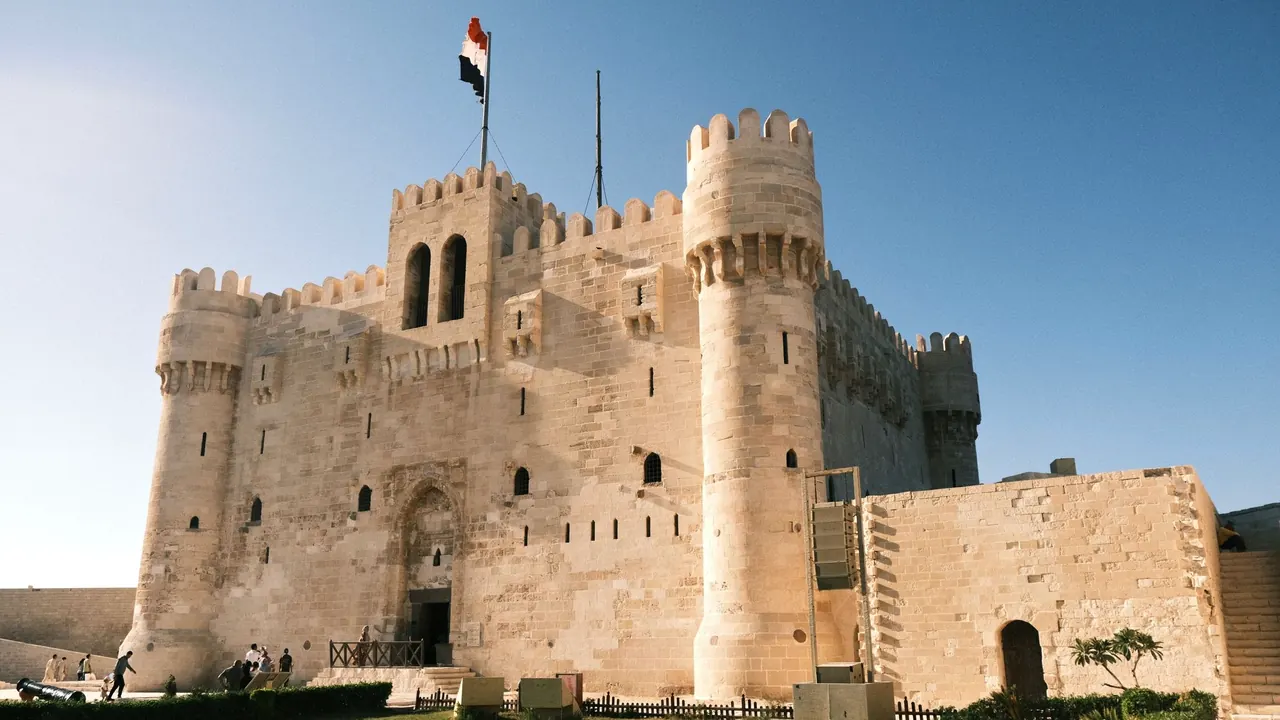
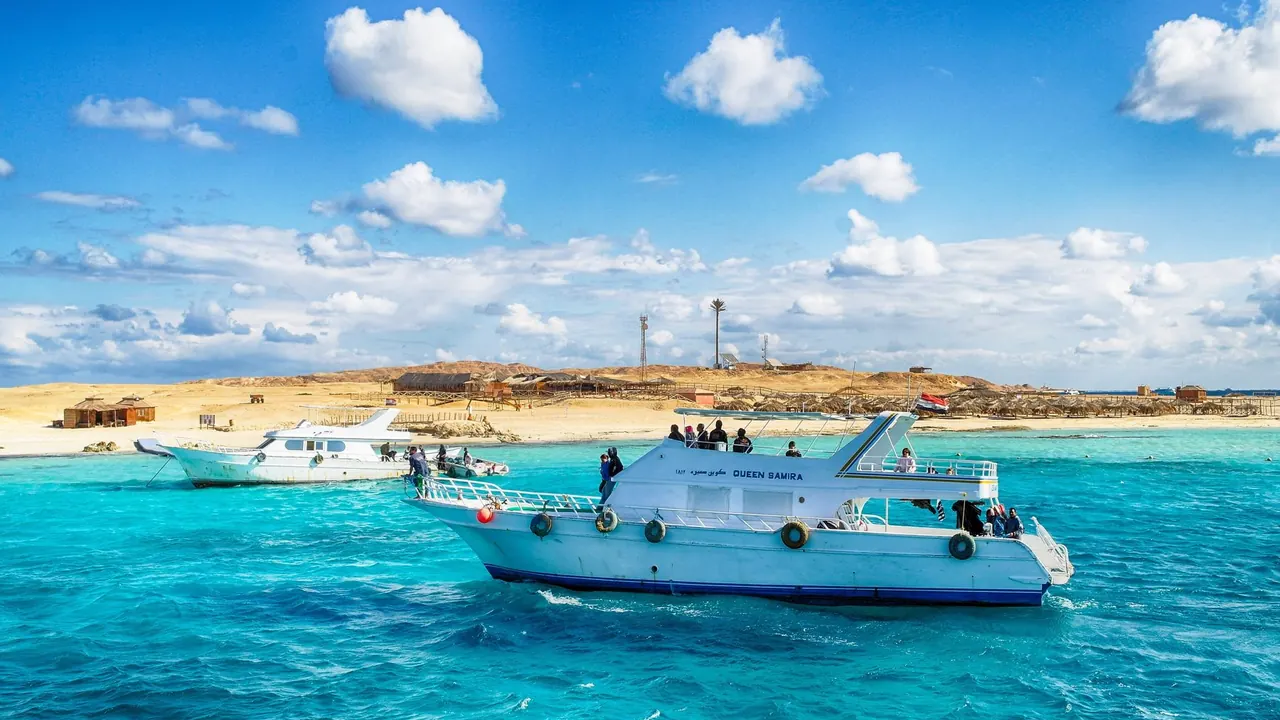
Photos: Alexandria by Muhammed Fatih Beki, Pexels License; Hurghada by Andrey Korchagin, CC BY-SA 2.0, cropped.
Alexandria or Hurghada?
Our verdict in twelve categories, each scored against the same fixed benchmark cities, and the climate month by month, so you can choose for your trip.
Choose Alexandria for
- culture and sights
- food and drink
- live music and the arts
Alexandria suits travellers who want an Egyptian city with a long past and an everyday life of its own. Its Roman catacombs and theatre, the Qaitbay Citadel on the site of the Pharos, the Bibliotheca and the faded belle époque downtown fill two or three unhurried days. Fish dinners by the harbour, Rosetta and El Alamein within reach, and very low everyday costs complete the picture. Swimming is a side pleasure here and not the point of the trip.
Choose Hurghada for
- nature and the outdoors
- beaches
- families
Hurghada is for the trip built around warm, clear water. Reefs start just offshore, the Giftun islands are a short boat ride out, and the sea stays warm enough to swim through the winter. Resorts with kids' clubs and slides make it easy with children, and you can dive, snorkel or kitesurf. What you give up is history and good food, and seeing ancient Egypt here means a long day on the road to Luxor.
Scoreboard
Twelve categories on one fixed scale from 0 to 100. The shaded stretch is the gap between the two.
Your match
Pick a travel style or drag the sliders, and both match scores follow your weighting.
Too close to call, 1 point apart
Wins on culture and sights and food and drink with your weighting.
Wins on nature and the outdoors and beaches with your weighting.
What matters to you?
Category by category
What the scores mean for a trip.
Beaches & swimming
These are two very different seas. Alexandria is Egypt's traditional summer seaside, but the public beaches along the Corniche are narrow and crowded. Most local women swim covered, and the nicer sand at Montaza and Mamoura is behind the gates of paid clubs. You come here for a few swims between sights.
Hurghada's 40km of Red Sea coast is the whole point of going. The water is clear and warm enough to swim in most months, although the sand belongs to the resorts and reef flats often mean you get in from a jetty. For the best beaches, take a boat to the Giftun islands or stay in the quieter bays towards Makadi and Sahl Hasheesh.
Food & drink
Alexandria is the better place to eat, mainly for its seafood. In Anfushi and around the Eastern Harbour you pick fish off the ice and have it grilled or baked in clay. The city also has its own spiced liver sandwiches, and Greek and Italian patisseries survive on the downtown squares.
Hurghada's eating is mostly the hotel buffet. The best meals are simple ones: koshary and taameya in El Dahar, or fish by the harbour. The international menus in Sakkala and the marina are aimed at tourists. In both cities alcohol is mostly limited to hotels and a few venues.
Culture & sights
Alexandria has far more to see. Much of its ancient city is buried or under the sea, but the Kom el Shoqafa catacombs, Kom el-Dikka's theatre and baths, Pompey's Pillar, Qaitbay and the Bibliotheca Alexandrina make a full itinerary. The cosmopolitan downtown adds character between the sights.
Hurghada grew from a fishing village into a resort, so it has little history to show. The Hurghada Museum's pharaonic pieces, the El Mina mosque and a walk through El Dahar's markets fill half a day at most.
Nightlife
Hurghada is the place for a night out. Sheraton Road and the marina have bars, shisha lounges and big beach clubs that stay open into the small hours, with foam parties in high season. It is built for visitors and has little local flavour.
Alexandria's evenings are long but involve little drinking. Families and friends fill the seafront coffee houses and juice stalls after sunset, and a handful of old Greek-era bars and hotel lounges are about the only places to drink. It is good for people-watching but has no clubs at all.
Nature & outdoors
Hurghada has the far richer outdoors, nearly all of it underwater. Reefs with turtles, dolphins and sometimes dugongs are a short boat ride away, there are famous wreck dives, and the steady north wind brings kitesurfers to El Gouna and Soma Bay. Inland, the bare Red Sea mountains are good for jeep trips and stargazing.
Alexandria has the sea, sunsets over the Eastern Harbour and dives to the sunken remains of the Pharos, but little else. Behind the city there is only flat farmland, the reed beds of Lake Mariout and then desert.
Day trips
Alexandria has more good day trips within easy reach. Rosetta and its Ottoman merchant houses are about an hour away, and the war cemeteries at El Alamein, the ancient monasteries of Wadi Natrun and the ruins of Abu Mena all fit comfortably into a day. Cairo is possible by express train, but it makes a long day.
From Hurghada, the nearby options are El Gouna's lagoon marina and the Roman granite quarries out in the desert. Luxor's temples and tombs are far better than anything else on offer, but the road takes about four hours each way, so many people stay overnight.
Good for families
Hurghada works better with children because the resorts are designed around them, with splash pools, water parks and kids' clubs. Outside the hotel there are glass-bottom boats, semi-submarines, calm lagoons for snorkelling and an aquarium. Avoid the midday heat in summer, and come in winter or spring with small children.
Alexandria is warmly welcoming to children, and the summer seafront is full of local families eating ice cream and riding in horse carriages. Montaza's gardens give children space to run, but there is little else aimed at them. Older children who enjoy catacombs and forts will get the most from it.
Getting around
Both cities stretch along the coast, but Alexandria is easier to get around. Downtown around Raml Station can be explored on foot, the old yellow tram is slow but fun, and cheap ride-hailing cars link Qaitbay with Montaza, traffic permitting. In both cities, crossing the main seafront road is the hard part.
Hurghada's hotels are spread over tens of kilometres of a single coast road. You get around by shared minibus, by taxi with the fare agreed before you set off, or on hotel shuttles, and many visitors leave the resort only on excursions that include transfers.
Shopping & style
Neither city is a shopping destination, but Alexandria's shops have more character. The Attarin quarter's dusty antique dealers sell furniture and objects from the cosmopolitan era, and the souks around Manshiyya sell fabrics and spices to local people rather than tourists.
Hurghada's shopping is almost all souvenirs, such as papyrus, alabaster, perfume oils and galabeyas in El Dahar and along Sheraton Road. You have to haggle, and the sellers can be pushy.
Affordability
Both are cheap, but Alexandria is cheaper day to day. Taxis, street food, tea in coffee houses and seafront hotels all cost very little, and entry fees to the sites are the main expense. Rooms get more expensive only in the few summer weeks when Egyptians head for the coast.
Hurghada keeps costs low mainly through all-inclusive packages, and diving courses and boat trips are good value. The extras are what push up the bill: imported drinks, meals at the marina, and excursions booked through the hotel rather than locally.
Live music & performing arts
Alexandria at least has a real stage. The Sayed Darwish Theatre, an early twentieth-century hall, puts on opera, ballet and Arabic music, and the Bibliotheca has concerts and films. The programme is irregular, so treat any performance as a bonus if it falls during your stay.
In Hurghada, the only performances are put on for tourists: belly dancing, hotel shows and spinning tanoura dancers at desert-camp dinners. They are fun for one evening.
Wellness & relaxation
Hurghada is the easier place to do nothing: a sunbed, the pool, and an inexpensive hotel spa with hammam, steam room and Red Sea salt treatments. The quality of these spas varies a lot, and the town outside the resort is noisy.
Alexandria has little beyond the spas in its bigger seafront hotels. Here relaxing means slow mornings in old cafés and evening walks by the harbour, which are most pleasant outside the crowded summer months.
When should you go?
Pick your month. The climate figures are measured averages, not a forecast.
Alexandria in July
Hurghada in July
Daytime high, °C
Rainfall in the month, mm
Temperature and rainfall are climate normals, averaged over the years shown. Alexandria: 1991-2020 normals, Alexandria / Nouzha (5.5 km from centre). Hurghada: 1991-2020 normals, Hurguada (15.2 km from centre).
Alexandria has a Mediterranean year. Winters are mild but grey and wet, with rain from November to February that peaks at about 77mm in January, so spring and autumn are the best seasons for walking the city. Summer is hot but tempered by the sea breeze. The water is only really warm from July to October, when it reaches 27°C, and that is when Egyptians crowd onto the beaches.
Hurghada barely sees rain at any time of year, and the sea never drops much below 22°C, so you can swim even in January. The difficulty is summer heat. From June to August days reach 37°C, too hot for anything but early mornings and evenings. Late autumn through spring is the comfortable stretch, and that is exactly when Alexandria is at its rainiest.
Which traveller are you?
For a beach and sun trip, Hurghada is the clear choice. It has clear Red Sea water that is warm almost all year, reefs just off the hotel jetties and island sand at Giftun. Alexandria's beaches are crowded, narrow and conservative, and only good for swimming in high summer.
On a culture and arts trip, choose Alexandria. Its catacombs, Roman theatre, Graeco-Roman collections, Bibliotheca and Cavafy's old downtown give you days of sightseeing. Hurghada has one museum and a couple of landmarks, and its great ancient sites are four hours away in Luxor.
On a family trip with children, Hurghada is easier. Resorts with water slides, kids' clubs and shallow beaches, plus glass-bottom boats and dolphin trips, keep children busy. Alexandria welcomes children warmly, but its busy Corniche traffic and crowded sand make it harder work.
Before you go
| Measure | Alexandria | Hurghada |
|---|---|---|
| Official language | Arabic | Arabic |
| Currency | Egyptian Pound (EGP) | Egyptian Pound (EGP) |
| Sockets | CF220 V, 50 Hz | CF220 V, 50 Hz |
| Driving side | Right | Right |
| Time zone | UTC+2, UTC+3 in summer | UTC+2, UTC+3 in summer |
| Emergency number | Police 122, ambulance 123, fire 180 | Police 122, ambulance 123, fire 180 |
| Elevation | -1 m | 11 m |
| Main airport | Alexandria International Airport (HBE)35 km from centre23 non-stop destinations | Hurghada International Airport (HRG)9 km from centre113 non-stop destinations |
| Public holidays this year | 15 days | 15 days |
By the numbers
| Measure | Alexandria | Hurghada |
|---|---|---|
| City population | 5,362,517 | 214,247 |
| People per km² | 2,125 | - |
| Museums within 10 km | 13 | 1 |
| UNESCO World Heritage sites within 50 km | 1 | 0 |
| Swim season, months above 21 °C | 7 months | 12 months |
Where else could you go?
Every comparison below shares a destination with this one, so you can follow Alexandria or Hurghada somewhere new.
- Sharm el-Sheikhvs Hurghada
- Cairovs Alexandria
- Luxorvs Hurghada
- Aswanvs Hurghada
- Petravs Hurghada
- Cairovs Hurghada