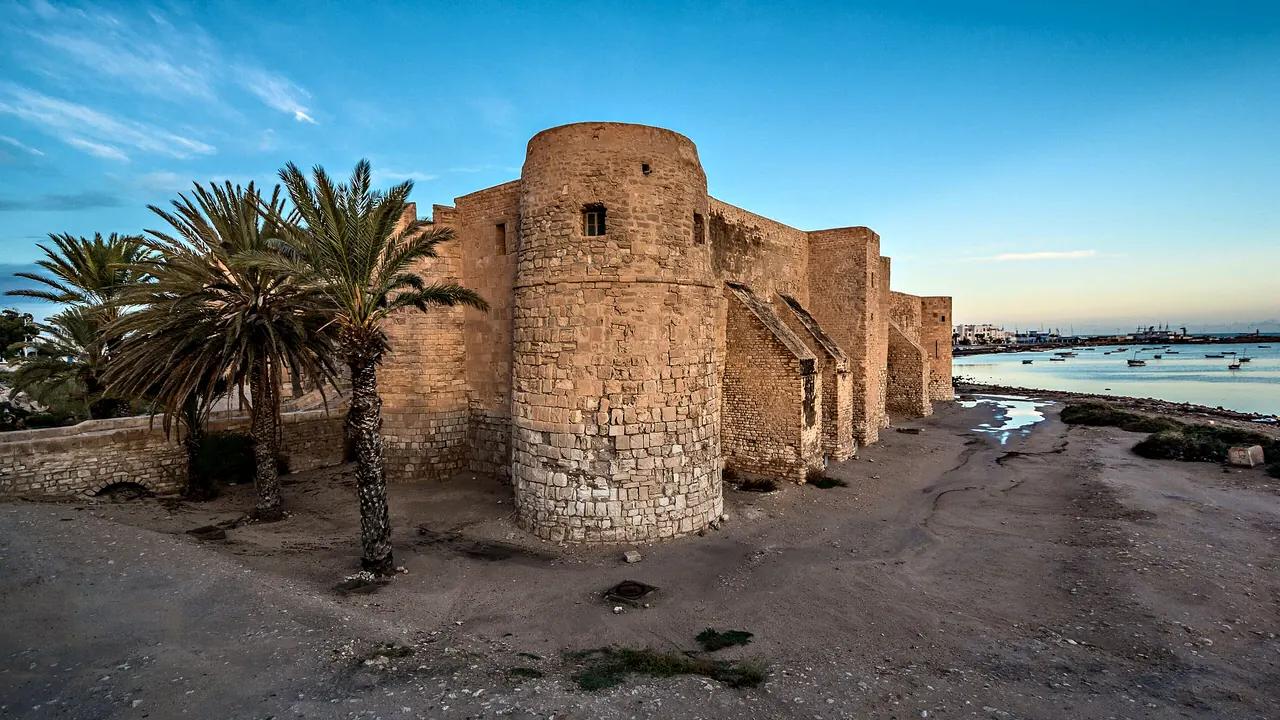
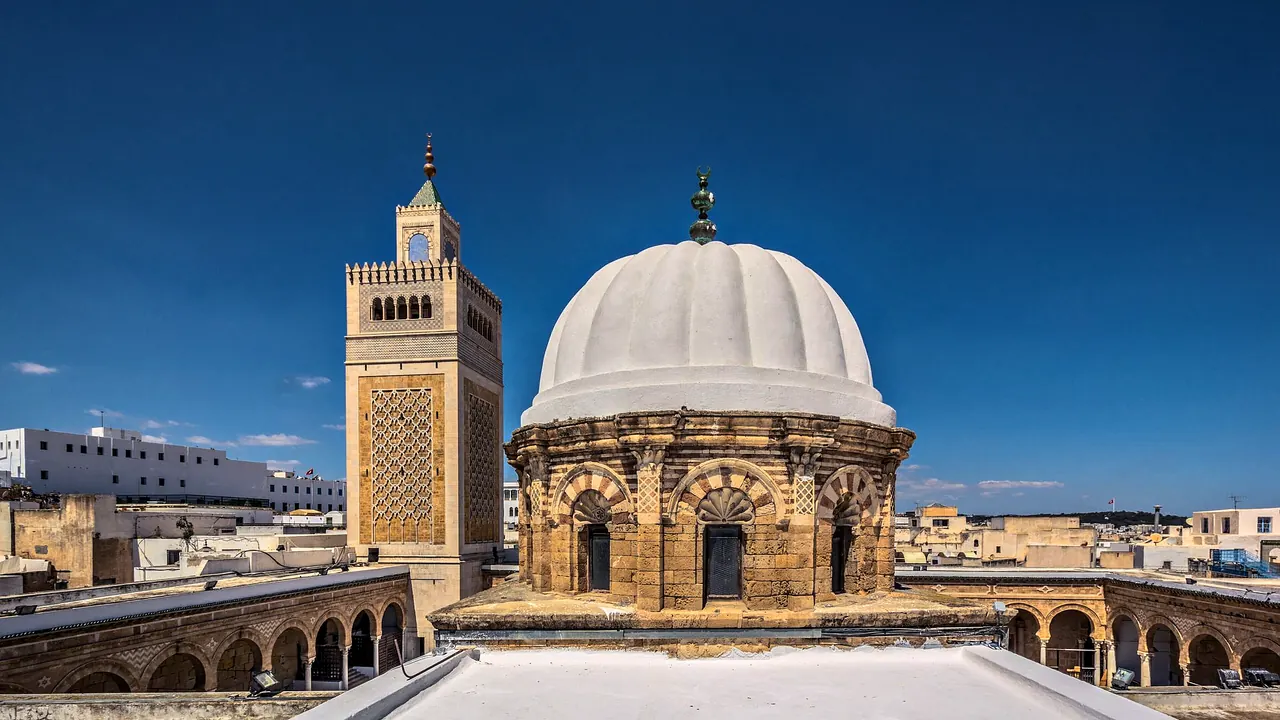
Photos: Djerba by IssamBarhoumi, CC BY-SA 4.0, cropped; Tunis by IssamBarhoumi, CC BY-SA 4.0, cropped.
Djerba or Tunis?
Our verdict in twelve categories, each scored against the same fixed benchmark cities, and the climate month by month, so you can choose for your trip.
Choose Djerba for
- families
- beaches
- wellness
Djerba is the choice for a beach and rest vacation. Its northeast coast has pale, fine sand and calm, shallow water, and behind it a line of resort hotels with pools, children's clubs and large thalassotherapy centres. Families with small children and anyone who wants a week of sun, sea and treatments will find it easier going than the capital. The trade-off is that there is little to see or do beyond the beach and a couple of days of sights.
Choose Tunis for
- day trips
- culture and sights
- live music and the arts
If you would rather spend your days exploring, go to Tunis. The UNESCO-listed medina, the Roman mosaics at the Bardo and the ruins of Carthage give it far more history than the island, and Dougga and Kairouan are both within a day's reach. The food is livelier and the evenings and concerts have more to them. The beaches out in the northern suburbs are good for a swim, but they are not why people stay.
Scoreboard
Twelve categories on one fixed scale from 0 to 100. The shaded stretch is the gap between the two.
Your match
Pick a travel style or drag the sliders, and both match scores follow your weighting.
Wins on families and beaches with your weighting.
Wins on day trips and culture and sights with your weighting.
What matters to you?
Category by category
What the scores mean for a trip.
Beaches & swimming
Djerba is the beach destination. Along the northeast coast the sand is pale and fine and the sea shelves so gently that you can wade a long way out. If the resort strip feels too busy, there is wilder sand at Sidi Jmour and a boat trip out to the spit at Ras Rmel. Wind can cloud the water and leave seaweed on the shore, but the swimming is still why people go.
In Tunis the beach is a side trip. You take the TGM out to La Marsa or Gammarth, where the strands fill with local families at summer weekends, and you avoid the water near the port. For a proper beach day, Hammamet is about an hour away.
Food & drink
The same dishes turn up in both, brik, couscous and harissa with plenty of olive oil, but in Tunis they are much easier to find. Its streets serve lablabi for breakfast, fricassé sandwiches and ojja. There is the fish at the Marché Central, the sweet shops in the medina, and seafood restaurants in La Goulette and La Marsa for a longer meal.
On Djerba, most visitors eat at hotel buffets. The local cooking is in Houmt Souk, at simple grills selling fish from the morning auction and in dishes such as riz djerbien. It is good, but there is not much of it.
Culture & sights
Djerba's heritage is modest and spread around the island. The painted Ghriba synagogue at Erriadh, the fort and funduqs of Houmt Souk, and the fortified Ibadite mosques and domed menzels in the countryside are distinctive, and together they fill a couple of days.
Tunis has far more. Its UNESCO-listed medina centres on the Zitouna Mosque, and the French-built boulevards around it are lined with Art Nouveau facades. The Bardo holds one of the great collections of Roman mosaics, and Carthage and Sidi Bou Said are a short train ride away. You could spend several full days sightseeing here.
Nightlife
Neither is a place to go out. On Djerba, evenings mostly stay inside the resort, with entertainment programmes, the pool bar and a hotel disco, while Houmt Souk is quiet after dinner. Tunis has a little more. Its café evenings last late during Ramadan and in summer, and La Marsa and Gammarth have lounges and seasonal beach clubs where young Tunisians go out at weekends.
Nature & outdoors
Djerba is flat: palm and olive groves, salt flats, and flamingos on the Ras Rmel lagoon. The steady wind and shallow water suit kitesurfers and windsurfers, and the interior is easy to ride by bike or horse, but there is no hiking.
Tunis has a little more variety. Bou Kornine rises above the southern suburbs for short climbs with views of the bay, the clifftops at Sidi Bou Said make a good walk, and Ichkeul's bird marshes, Cap Bon and Djebel Zaghouan are within reach for longer walks.
Day trips
Every trip from Djerba starts by crossing to the mainland on the Roman causeway or the Ajim ferry. Gightis is just across the water and the fortified granaries of Medenine are about an hour and a half away. The ksour around Tataouine, the Berber village of Chenini and the cave houses of Matmata all mean long drives across dry country, and the Sahara at Douz needs a night away.
Tunis makes a much better base for touring. Dougga's hillside Roman town and the holy city of Kairouan are each about two hours away, and you can stop at Testour on the road west. Hammamet's walled medina and the potters of Nabeul are only about an hour off. Kerkouane, Bizerte, Zaghouan's water temple and Sousse add more good days out than most stays can fit in.
Good for families
Djerba suits families better. Small children can paddle safely in its shallow sea, and the resorts are built for them, with pools, kids' clubs and simple food. The crocodile farm and camel rides add a few outings. The midsummer heat and the long drives south are the hard parts.
Tunisians make children very welcome, and Belvedere Park and the open ruins at Carthage are good outings. Getting around the city with children is the problem. With heavy traffic and blocked pavements, many families stay at a beach hotel outside the city and come in for the day.
Getting around
Getting around is about as easy in both, though Tunis has more choice. On Djerba you take taxis from the hotel zone to Houmt Souk or Midoun, or hire a bike or quad for the coast road, because the buses are of little use to visitors. In Tunis the medina and downtown are walkable, and the TGM runs to Carthage, Sidi Bou Said and La Marsa. Traffic away from those routes is chaotic, and taxi drivers need reminding to use the meter.
Shopping & style
In both places you shop in the souks and bargain. Tunis has a little more to buy. Its medina souks are still partly organised by trade, with felt chechia makers and perfumers near the Zitouna Mosque, and Nabeul ceramics and Sidi Bou Said birdcages are easy to find.
Houmt Souk sells rugs, leather and jewellery, though the selling can be pushy. Guellala's potters sell straight from their workshops, and the village markets feel more local.
Affordability
Both are cheap by Mediterranean standards, and Tunis is slightly cheaper still. Street food, train rides and medina guesthouses cost very little there, as long as you stay out of the smart end of Gammarth. Djerba's savings come mostly from all-inclusive resorts, which cost far less than similar hotels elsewhere on the Mediterranean, while excursions south and hotel bars push the total up.
Live music & performing arts
Tunis is the only one of the two with a stage worth planning around. There is the Municipal Theatre on Avenue Habib Bourguiba, and malouf concerts at Ennejma Ezzahra in Sidi Bou Said. The Carthage festivals fill the Roman theatre in summer and bring theatre and film in the cooler months. Off-season weeknights are thin, but Djerba offers little beyond hotel folk shows and the music at village weddings.
Wellness & relaxation
Djerba is the better place to relax. Thalassotherapy is one of its main draws, and the big hotels on the northeast coast have large seawater spas where people book a whole stay around treatments. Add a slow, quiet pace and dry, sunny winters, and resting there is easy.
Tunis has good spas in Gammarth, plain neighbourhood hammams in the medina and the hot springs of Korbous on Cap Bon. But the city is loud and congested, so calm means getting out to its edges.
When should you go?
Pick your month. The climate figures are measured averages, not a forecast.
Djerba in July
Tunis in July
Daytime high, °C
Rainfall in the month, mm
Where the figures come from
Djerba has no rain gauge within 25 km of the centre, so its rainfall comes from a gridded climate dataset read at the destination rather than from a gauge further away.
Djerba's sunshine is measured 73 km from the centre, at Gabes.
Temperature and rainfall are climate normals, averaged over the years shown. Djerba: 1991-2020 normals, Djerba Mellita (14.2 km from centre). Tunis: 1991-2020 normals, Tunis-Carthage (6 km from centre).
The two share a summer, hot and almost rainless, with afternoons around 34°C in July and August. That is beach weather in both, but it makes walking the streets hard work, and that matters more in Tunis, where the medina and the ruins are the point of the trip. The sea is warm enough to swim from June to October in both. Djerba's water is a little warmer, reaching about 28°C in late summer, so the island's swimming season feels longer at either end.
They part in winter. Djerba stays fairly dry and sunny the whole year, so a mild spring or autumn stay built around spa treatments works well there. Tunis gets much more rain from September onwards, peaking at about 68mm in December, and its winter days are greyer. For sightseeing in the capital, the best months are April, May and October, when it is warm but not hot.
Which traveller are you?
For a beach and sun trip, Djerba wins clearly. The sand between Sidi Mahrez and Aghir is fine, the sea is shallow and calm, and the hotels open straight onto it. In Tunis you take the suburban train out to La Marsa or Gammarth to swim.
On a culture and arts trip, Tunis is the obvious base. The medina, the Bardo mosaics, Carthage and the summer festival in the Roman theatre give you days of sightseeing, and Dougga and Kairouan make strong day trips. Djerba's Ghriba synagogue and Houmt Souk fill about two days.
On a family trip with young children, Djerba is the easier choice. Children can paddle safely in its shallow water, and resorts with pools, kids' clubs and the crocodile farm near Midoun keep them busy. Tunis is welcoming to children, but its traffic, broken pavements and medina lanes make the days tiring.
Before you go
| Measure | Djerba | Tunis |
|---|---|---|
| Official language | Arabic | Arabic |
| Currency | Tunisian Dinar (TND) | Tunisian Dinar (TND) |
| Sockets | CE230 V, 50 Hz | CE230 V, 50 Hz |
| Driving side | Right | Right |
| Time zone | UTC+1 | UTC+1 |
| Emergency number | Police 197, ambulance 190, fire 198 | Police 197, ambulance 190, fire 198 |
| Elevation | - | 4 m |
| Main airport | Djerba Zarzis International Airport (DJE)34 non-stop destinations | Tunis Carthage International Airport (TUN)7 km from centre56 non-stop destinations |
| Public holidays this year | 8 days | 8 days |
By the numbers
| Measure | Djerba | Tunis |
|---|---|---|
| Population | 175,820 | 602,560 |
| People per km² | 342 | 2,834 |
| Museums within 10 km | - | 16 |
| UNESCO World Heritage sites within 50 km | - | 3 |
| Swim season, months above 21 °C | 6 months | 5 months |
Where else could you go?
Every comparison below shares a destination with this one, so you can follow Djerba or Tunis somewhere new.