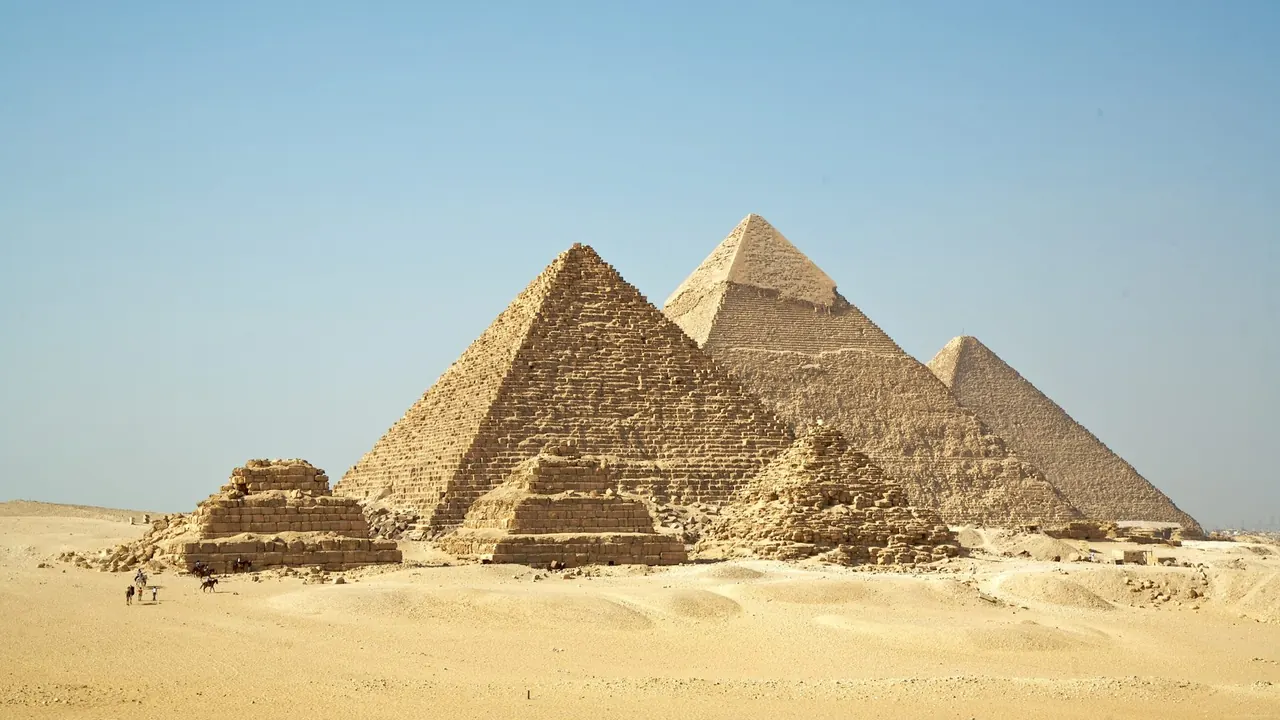
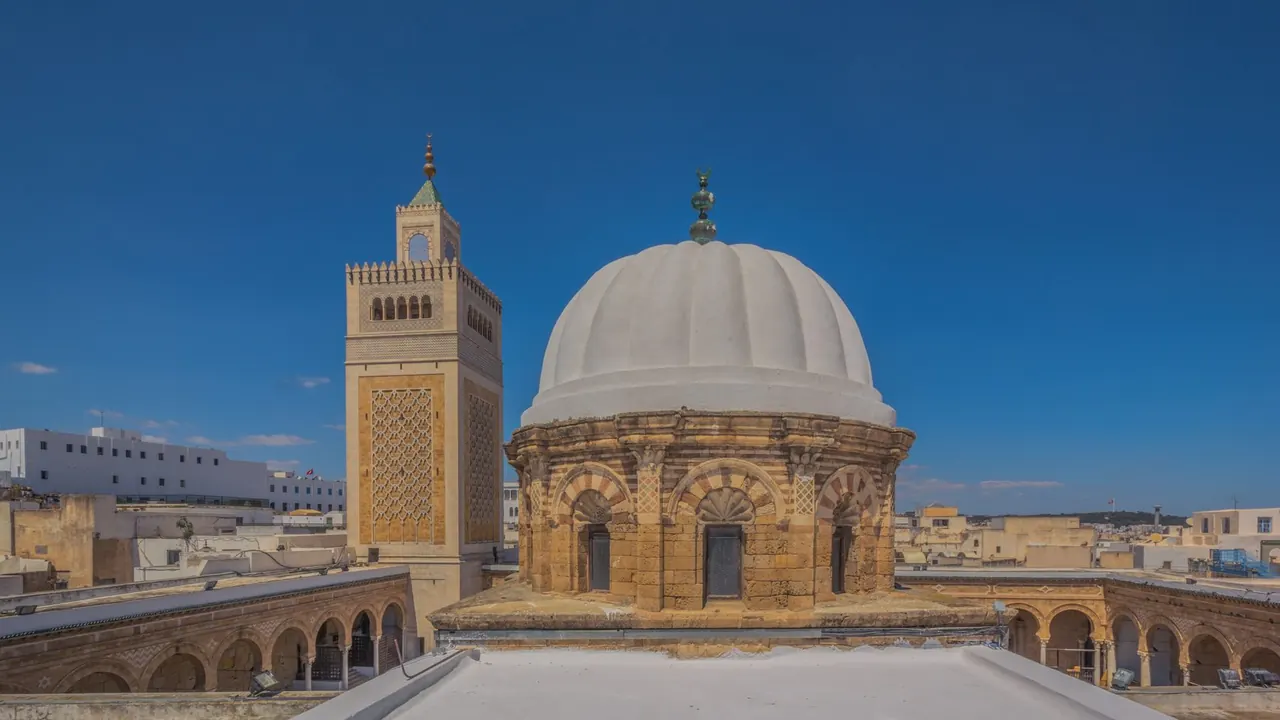
Photos: Cairo by Ricardo Liberato, CC BY-SA 2.0, cropped; Tunis by IssamBarhoumi, CC BY-SA 4.0, cropped.
Cairo or Tunis?
Our verdict in twelve categories, each scored against the same fixed benchmark cities, and the climate month by month, so you can choose for your trip.
Choose Cairo for
- culture and sights
- nightlife
- live music and the arts
Choose Cairo if the point of the trip is to stand in front of the ancient world. The pyramids, the great museums and the medieval mosques of Islamic Cairo make it one of the richest sightseeing cities anywhere, and it is cheaper still than Tunis. The price is a hard city: heavy traffic, poor pavements, persistent touts and almost nowhere to rest. Go with patience, plenty of days and a driver.
Choose Tunis for
- beaches
- wellness
- nature and the outdoors
Tunis is the gentler, more varied choice. It has fewer headline sights, but the medina, the Bardo mosaics and Carthage are easy to reach, and sandy beaches, seawater spas and clifftop Sidi Bou Said lie a short train ride away. Its day trips to Dougga and Kairouan are also stronger. It suits a traveller who wants history mixed with sea air and slower days.
Scoreboard
Twelve categories on one fixed scale from 0 to 100. The shaded stretch is the gap between the two.
Your match
Pick a travel style or drag the sliders, and both match scores follow your weighting.
Wins on culture and sights and nightlife with your weighting.
Wins on beaches and wellness with your weighting.
What matters to you?
Category by category
What the scores mean for a trip.
Beaches & swimming
Here the two are far apart. Cairo sits inland on the Nile, which no one swims in, so the nearest sea is the resort strip at Ain Sokhna, a couple of hours' drive east. In the city itself you are limited to a hotel pool.
Tunis has sand within reach of the TGM train, with family beaches at La Marsa and quieter ones at Gammarth, plus the wider bays of Hammamet about an hour away. These are not world-class beaches, but you can fit a swim into an ordinary sightseeing day, which Cairo never allows.
Food & drink
Both are cheap, street-first food cities of a similar standard, but the flavours differ. Cairo is about filling staples: ful and green taameya for breakfast, koshari for lunch, feteer and stuffed pigeon, with the ahwa coffeehouse as the social hub.
Tunis cooks with more heat and more sea. Harissa runs through brik, lablabi and ojja, and the seafood restaurants of La Goulette and La Marsa offer a better sit-down meal than most of Cairo. Local wine is also easier to find there.
Culture & sights
Cairo is in a different league. The Giza pyramids, three major antiquities museums, the medieval lanes of Al-Muizz Street, Saladin's Citadel and Coptic Cairo together amount to weeks of sightseeing, and few places on earth can match them.
Tunis is rich too, just on a smaller scale. Its intact medina around the Zitouna Mosque and the Bardo's Roman mosaics are outstanding, and Carthage and Sidi Bou Said round out several good days. The Carthage ruins, though, are scattered and ask more of your imagination than the Sphinx does.
Nightlife
Neither is a party city, but Cairo has more going on after dark. Its streets stay crowded late, the corniche and the ahwas of downtown are full past midnight, and Zamalek offers rooftop bars and party boats on the Nile.
In Tunis evenings mostly end in cafés. Outside the summer lounges and beach clubs of La Marsa and Gammarth, there is little beyond a few rough downtown beer bars.
Nature & outdoors
Cairo has little green on its doorstep: Al-Azhar Park above the old city, a felucca on the Nile at sunset and the dry limestone canyons of Wadi Degla on the eastern edge. Its real landscapes are desert ones, the lakes and dunes of the Fayoum and the whale fossils of Wadi Al-Hitan. They are striking but take a long day out, and although you can go in summer, the heat makes it hard going. October to April is the time for them.
Tunis gives you more of the outdoors close at hand. Flamingos feed on the lagoon, Bou Kornine has short hikes with views over the bay, and the clifftops of Sidi Bou Said and Gammarth make easy coastal walks. Ichkeul's bird-filled wetlands and the walking on Cap Bon are within a day's reach, though marked trails are few there too.
Day trips
Both make good bases, but Tunis offers more variety. Within two hours you can reach Roman Dougga on its hillside, the holy city of Kairouan, Andalusian Testour and the pottery of Nabeul, and there is a coast to pair with them.
From Cairo, the outings are mostly more pyramids: Saqqara, Dahshur and Meidum, which are superb for anyone who wants depth on ancient Egypt. Further afield there are the Wadi Natrun monasteries and a long day to Alexandria. Nearly all of them need a driver.
Good for families
Neither city is easy with children, and both have hostile traffic and broken pavements. Tunis is a little more manageable because of its beaches, Belvedere Park and the amusement areas near Hammamet, and many families base themselves on the coast.
Cairo offers bigger moments, such as camel rides by the pyramids and Tutankhamun's gold, but little else for children. Its summer heat and pushy touts make early starts and a winter visit essential.
Getting around
Tunis is the easier city to move around. The medina and the downtown boulevards are close enough to walk, and the TGM line strings together Carthage, Sidi Bou Said and the beaches, so most visitor sights are on one simple route.
Cairo is spread out, and its metro misses the pyramids and Islamic Cairo. Most visitors end up in ride-hailing cars stuck in some of the worst traffic anywhere, and walking only works in short stretches such as Zamalek or Al-Muizz Street.
Shopping & style
Both are bazaar cities, and Cairo's is the larger and deeper. Khan el-Khalili and its surrounding lanes sell lamps, inlay, silver and spices, with the Street of the Tentmakers' appliqué and the coppersmiths' alley nearby. Zamalek's design boutiques add a contemporary layer.
The Tunis medina is calmer and still partly arranged by trade, with chechia makers, perfumers, kilims and carpets. Nabeul ceramics and Sidi Bou Said birdcages make good souvenirs, but beyond the souks there is less to browse.
Affordability
Both are very cheap by Mediterranean standards, and Cairo stretches money a little further on food, transport and mid-range hotels. Its catch is the foreigner pricing at the big sites, together with constant small tips and touts.
In Tunis, sightseeing is gentler on the wallet, with modest entry to the Bardo and Carthage. Costs rise mainly in the smart coastal suburbs of Gammarth and La Marsa.
Live music & performing arts
Cairo offers more on an ordinary evening. The Opera House on Gezira has a symphony orchestra, ballet and Arabic music through the season, and the tanoura whirling dance in the Wikala of al-Ghouri is a memorable night out for any visitor.
The Tunis calendar is seasonal. Its highlights are malouf concerts at Ennejma Ezzahra and the Carthage festival in the Roman theatre, and outside those dates the choice thins out quickly.
Wellness & relaxation
This is where Tunis pulls well ahead. Gammarth has proper thalassotherapy spas, the medina's neighbourhood hammams are still in use, and the Roman-era springs at Korbous are an hour away.
Cairo's old hammams have largely gone out of use, so relaxing there means a hotel spa or a felucca at dusk. Most visitors who want rest finish the trip with a few days elsewhere.
When should you go?
Pick your month. The climate figures are measured averages, not a forecast.
Cairo in July
Tunis in July
Daytime high, °C
Rainfall in the month, mm
Temperature and rainfall are climate normals, averaged over the years shown. Cairo: 1991-2020 normals, Helwan (21.9 km from centre). Tunis: 1991-2020 normals, Tunis-Carthage (6 km from centre).
Cairo is a dry desert city, and almost no rain falls in any month. Heat is what decides the season: from May to September afternoons reach 33°C to 36°C, which makes walking around the pyramids or Islamic Cairo punishing. The best months are October to April, when days are warm and sunny without being harsh. December and January are the mildest, at around 19°C to 21°C.
Tunis is cooler in winter and wetter, with most of its rain falling from September to March, so winter days can be grey and damp. The sea is warm enough for swimming from June into October and peaks near 26°C in August, but July and August are hot for sightseeing in the medina. Late May, June and late September to October give the best mix of beach and walking weather. Cairo is the better pick from November to March, when Tunis is at its wettest.
Which traveller are you?
On a beach and sun trip, Tunis is the clear choice. The suburban train reaches the sand at La Marsa and Gammarth, and Hammamet is an hour away. Cairo has no beach at all, and the Red Sea is a separate excursion.
For a culture and arts trip, Cairo wins. Giza, the Grand Egyptian Museum, the royal mummies and the medieval mosques of Islamic Cairo outweigh even the Bardo and Carthage, and the Opera House and the Sufi tanoura dancers add evenings worth planning.
For a relaxing and wellness trip, Tunis is far easier. Gammarth's thalassotherapy spas, working medina hammams and quiet café terraces in Sidi Bou Said give you real rest. In Cairo the noise and traffic leave little to work with beyond a hotel spa.
Before you go
| Measure | Cairo | Tunis |
|---|---|---|
| Official language | Arabic | Arabic |
| Currency | Egyptian Pound (EGP) | Tunisian Dinar (TND) |
| Sockets | CF220 V, 50 Hz | CE230 V, 50 Hz |
| Driving side | Right | Right |
| Time zone | UTC+2, UTC+3 in summer | UTC+1 |
| Emergency number | Police 122, ambulance 123, fire 180 | Police 197, ambulance 190, fire 198 |
| Elevation | 23 m | 4 m |
| Main airport | Cairo International Airport (CAI)17 km from centre127 non-stop destinations | Tunis Carthage International Airport (TUN)7 km from centre56 non-stop destinations |
| Public holidays this year | 15 days | 8 days |
By the numbers
| Measure | Cairo | Tunis |
|---|---|---|
| City population | 9,801,536 | 602,560 |
| People per km² | 18,564 | 2,834 |
| Museums within 10 km | 48 | 16 |
| UNESCO World Heritage sites within 50 km | 2 | 3 |
| Swim season, months above 21 °C | - | 5 months |
Where else could you go?
Every comparison below shares a destination with this one, so you can follow Cairo or Tunis somewhere new.