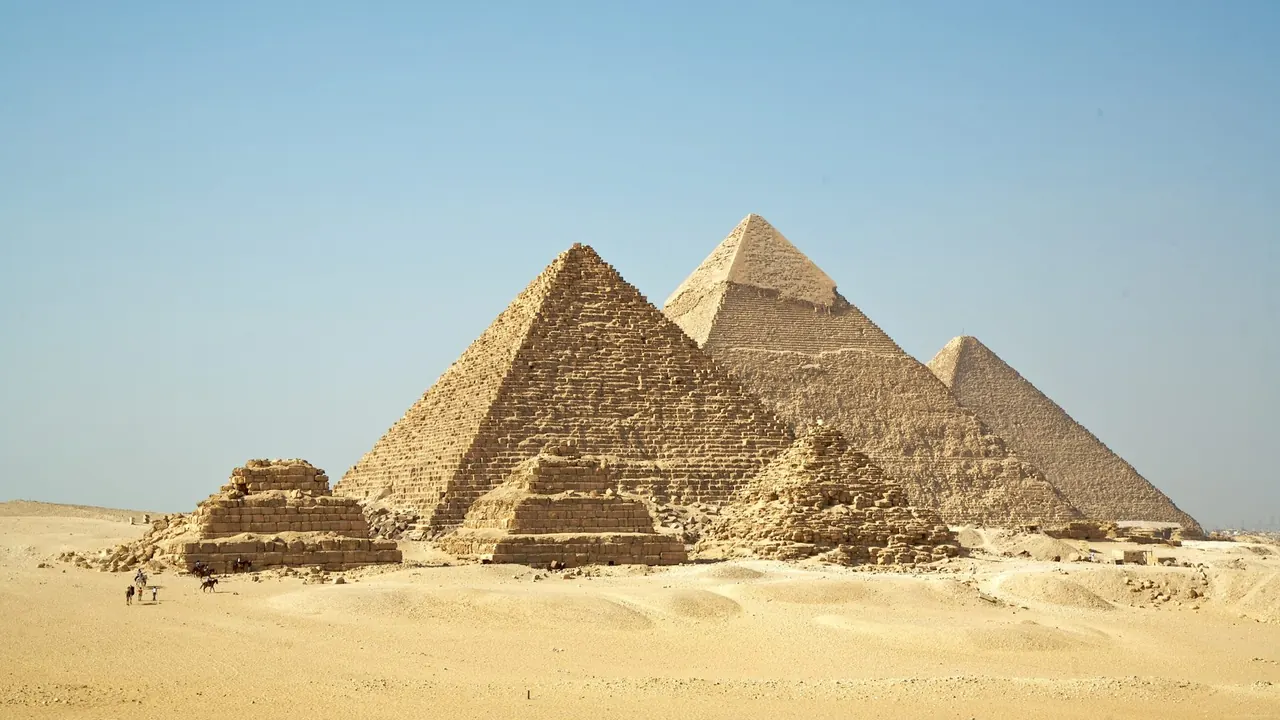
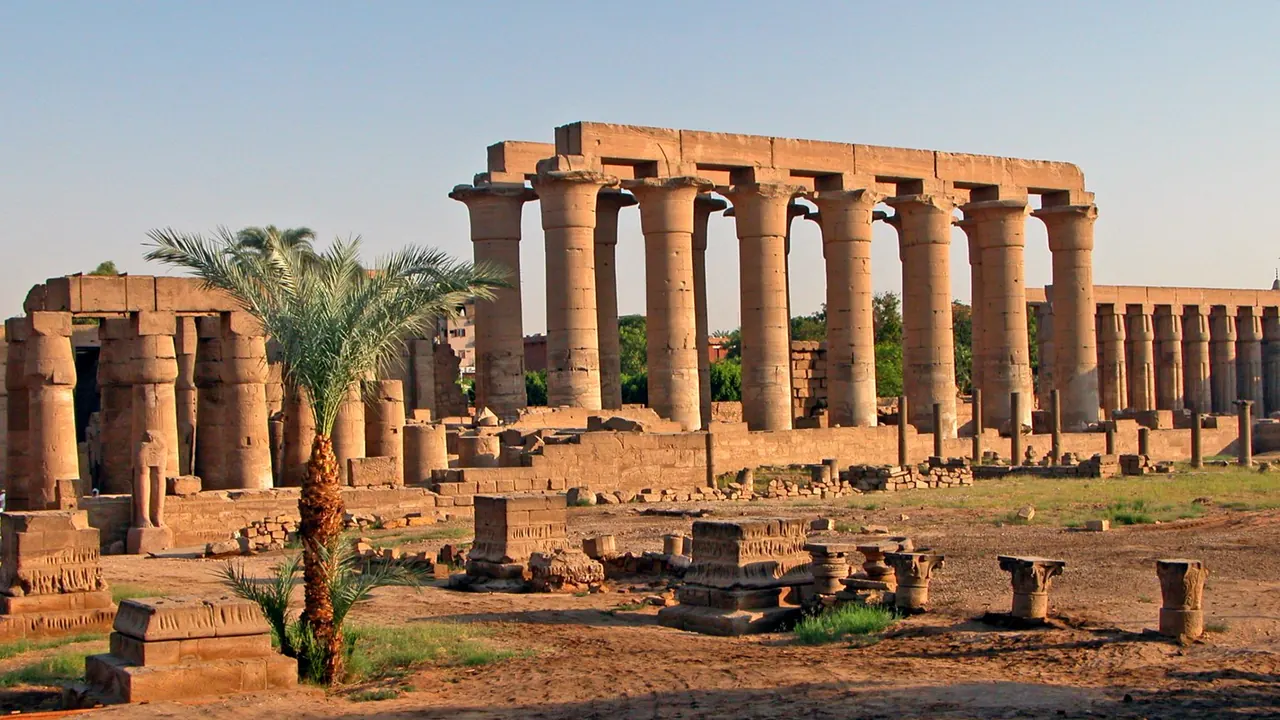
Photos: Cairo by Ricardo Liberato, CC BY-SA 2.0, cropped; Luxor by Dennis G. Jarvis, CC BY-SA 2.0, cropped.
Cairo or Luxor?
Our verdict in twelve categories, each scored against the same fixed benchmark cities, and the climate month by month, so you can choose for your trip.
Choose Cairo for
- live music and the arts
- nightlife
- shopping
Cairo suits the traveller who wants a whole civilisation in one stay, from the pyramids and the great antiquities museums to the medieval lanes of Islamic Cairo and the faded downtown. It is also the better pick if your evenings matter: the food is richer, the coffeehouses stay full past midnight, and there is opera, Sufi dance and a bazaar worth hours of browsing. The price is noise, traffic and a city that rarely lets you switch off.
Choose Luxor for
- wellness
- nature and the outdoors
Luxor is for those who came to Egypt for the pharaohs and want them close together, with Karnak, Luxor Temple and the Valley of the Kings all within a short crossing of the Nile. Days start early at the tombs and end by a pool or on a felucca at sunset, and a guesthouse on the West Bank among the cane fields gives a calmer stay than anything in Cairo. Expect quiet nights, simple food and a town that matters less than its monuments.
Scoreboard
Twelve categories on one fixed scale from 0 to 100. The shaded stretch is the gap between the two.
Your match
Pick a travel style or drag the sliders, and both match scores follow your weighting.
Wins on live music and the arts and nightlife with your weighting.
Wins on wellness and nature and the outdoors with your weighting.
What matters to you?
Category by category
What the scores mean for a trip.
Beaches & swimming
Neither city is a beach destination, and in both the swimming happens in a hotel pool. The difference is how far the sea is: from Cairo, Ain Sokhna on the Red Sea is under two hours away and makes a workable weekend escape, while from Luxor the Hurghada coast is about four hours off and really a separate leg of the trip. Luxor's riverside hotels make up for it with good pools that feel essential in the heat.
Food & drink
Cairo eats far better. Its street food goes well beyond the basics, with koshari shops, feteer, stuffed pigeon, sweets shops selling konafa and basbousa, and juice stands on every corner, and Zamalek and Heliopolis add a small international layer. The ahwa culture gives the whole day a social rhythm around tea and coffee.
Luxor shares the same staples but in simpler form, and visitor meals lean on hotel buffets and rooftop terraces where the temple view outshines the plate. The best meal is often home cooking at a West Bank guesthouse.
Culture & sights
These are two of the great heritage destinations anywhere, and the difference is in range rather than weight. Cairo spans millennia: the Giza pyramids and the Grand Egyptian Museum, then the medieval city along Al-Muizz Street with Sultan Hassan, Al-Azhar and the Citadel, then Coptic churches and belle époque downtown.
Luxor concentrates on one era at an overwhelming scale. Karnak's hypostyle hall, Luxor Temple floodlit at night and the painted tombs of the Valley of the Kings are all close at hand, which makes sightseeing easier to organise, but the modern town itself adds nothing.
Nightlife
Cairo has a real night: streets fill after dark, families walk Qasr el-Nil bridge, and the downtown and Islamic Cairo coffeehouses run past midnight. For alcohol, Zamalek's bars, rooftop terraces and the party boats on the river give a small but genuine scene.
Luxor goes to bed early. Beyond tea and shisha in street cafés and a stroll on the corniche, a drink means a hotel bar, and most visitors are asleep ahead of a dawn start.
Nature & outdoors
Neither is a nature trip, but the outdoors feels different. In Luxor the landscape is right in front of you: the green strip of palms and cane against the Theban cliffs, egrets along the river islands, easy cycling through West Bank villages and a dawn balloon over it all.
Cairo's green space is mostly Al-Azhar Park, so the real landscapes take a journey, to the canyons of Wadi Degla or two hours out to the lakes and dunes of the Fayoum and the whale fossils of Wadi Al-Hitan.
Day trips
Both have strong excursions, and the difference is variety. From Cairo you can reach Saqqara, Dahshur and Memphis in under an hour, but also the Wadi Natrun monasteries, the Fayoum oasis and a long day in Alexandria by the sea.
Luxor's trips are all temples, though superb ones: Dendera's painted ceilings to the north, Esna and Edfu to the south, and Abydos for a long day. If you are tired of monuments, Cairo offers more change of scene.
Good for families
Both are hard work with small children, and both reward older ones who love mummies. Cairo offers the pyramids, camel rides and Tutankhamun's gold, set against relentless traffic and broken pavements.
Luxor is less chaotic but involves long walks over hot, shadeless ground, offset by tomb crawling, felucca rides and a balloon flight. In either city, a pool, a driver and a winter visit make the difference.
Getting around
Getting around is a chore in both, for different reasons. Cairo is huge and its traffic among the worst anywhere; the metro helps for Coptic Cairo and Heliopolis but skips the pyramids, so most visitors rely on ride-hailing or a driver.
Luxor is small, and its East Bank sights are within walking or calèche range, but the West Bank tombs are spread over kilometres of desert, so a hired driver or a bicycle in the cool months is the norm. Fares there must be agreed in advance, and the Nile ferry is the easy part.
Shopping & style
Cairo is the place to shop. Khan el-Khalili has traded since the fourteenth century, and close by artisans still stitch appliqué panels and hammer copper, while Zamalek's boutiques sell contemporary Egyptian design and cotton linens.
Luxor's options are the tourist souk, stalls outside the sites and the West Bank alabaster workshops, where watching the hand carving is more interesting than most of the stock.
Affordability
Both are among the cheapest places you can travel, with low-cost hotels, street food and transport. In Cairo the extras that add up are alcohol, luxury Nile-view rooms and tours. In Luxor the biggest cost is the entry fees at every temple and tomb over several days, plus drivers and balloon flights, so a long sightseeing stay there can cost more than the cheap rooms suggest.
Live music & performing arts
Cairo has a real stage. The Cairo Opera House on Gezira Island hosts the symphony orchestra, ballet and Arabic music ensembles, and tanoura whirling in the Wikala of al-Ghouri is one of the most memorable evenings in Egypt, with small venues for zar and jazz besides.
Luxor offers the sound-and-light show at Karnak and hotel or cruise-boat dance shows, and nothing in the way of theatre or concerts.
Wellness & relaxation
Luxor is the easier place to slow down. Its days fall naturally into early starts, a long rest by the pool through the heat and sunset on the water, and the mud-brick guesthouses of the West Bank are genuinely peaceful.
Cairo offers spas in the big Nile hotels, a felucca evening or a quiet courtyard in a historic house, but the noise and dust rarely let up, which is why so many visitors add the Red Sea or an oasis afterwards.
When should you go?
Pick your month. The climate figures are measured averages, not a forecast.
Cairo in July
Luxor in July
Daytime high, °C
Rainfall in the month, mm
Where the figures come from
Luxor has no rain gauge within 25 km of the centre, so its rainfall comes from a gridded climate dataset read at the city rather than from a gauge further away.
Temperature and rainfall are climate normals, averaged over the years shown. Cairo: 1991-2020 normals, Helwan (21.9 km from centre). Luxor: 1998-2020 (rainfall 1991-2020) normals, Luxor (6.5 km from centre).
Both cities are dry and sunny all year, so the question is heat rather than rain. Cairo is pleasant for walking from November to March, when days sit around 19°C in January, and spring and autumn are warm but workable. From May to September the city reaches 36°C at its peak and sightseeing shifts to early mornings and evenings. The few showers come in winter and barely register.
Luxor runs several degrees hotter through the whole year and has no recorded rain at all. Its winter, around 22°C in January, is the ideal time for the West Bank tombs, cycling and long temple days, and February and November are still comfortable. By April the heat is serious, and June to August reach 41°C, which turns most visits into a dawn start and an afternoon by the pool. If you are combining the two, a winter trip suits both, and Luxor is the one to avoid in high summer.
Which traveller are you?
On a food and nightlife trip, Cairo is the clear choice. You can eat well and cheaply on the street from breakfast to late, and the city stays up long after dark, with a drink to be found if you look. Luxor eats simply and sleeps early.
For a shopping trip, Cairo is far ahead. Its bazaar quarter can fill a whole day, with genuine handmade craft among the souvenirs and contemporary Egyptian design elsewhere in the city. In Luxor, shopping is something done in passing between temples.
On a relaxing and wellness trip, Luxor is the gentler pick. It is a small town where the heat itself sets a slow pace, and quiet places to stay are easy to find. Cairo rarely lets up, so rest there usually means staying inside your hotel.
Before you go
| Measure | Cairo | Luxor |
|---|---|---|
| Official language | Arabic | Arabic |
| Currency | Egyptian Pound (EGP) | Egyptian Pound (EGP) |
| Sockets | CF220 V, 50 Hz | CF220 V, 50 Hz |
| Driving side | Right | Right |
| Time zone | UTC+2, UTC+3 in summer | UTC+2, UTC+3 in summer |
| Emergency number | Police 122, ambulance 123, fire 180 | Police 122, ambulance 123, fire 180 |
| Elevation | 23 m | 89 m |
| Main airport | Cairo International Airport (CAI)17 km from centre127 non-stop destinations | Luxor International Airport (LXR)7 km from centre29 non-stop destinations |
| Public holidays this year | 15 days | 15 days |
By the numbers
| Measure | Cairo | Luxor |
|---|---|---|
| City population | 9,801,536 | 202,232 |
| People per km² | 18,564 | 486 |
| Museums within 10 km | 48 | 4 |
| UNESCO World Heritage sites within 50 km | 2 | 1 |
Where else could you go?
Every comparison below shares a destination with this one, so you can follow Cairo or Luxor somewhere new.