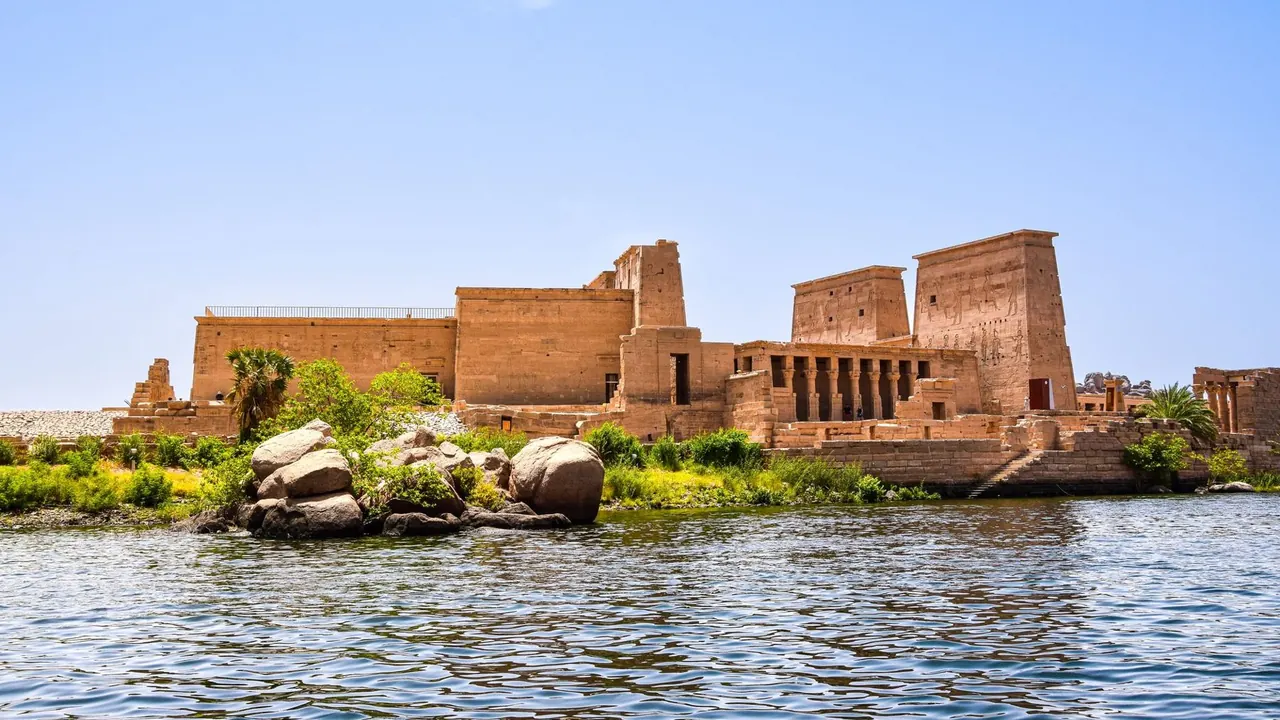
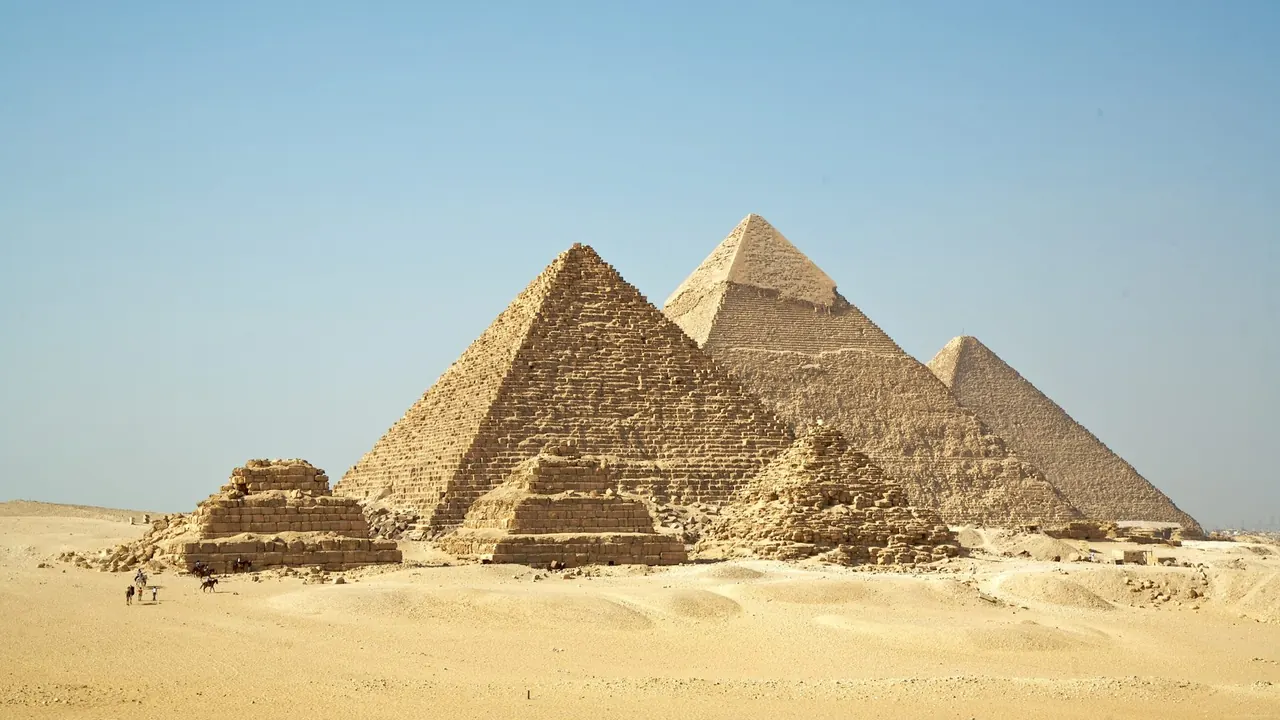
Photos: Aswan by AXP Photography, Pexels License; Cairo by Ricardo Liberato, CC BY-SA 2.0, cropped.
Aswan or Cairo?
Our verdict in twelve categories, each scored against the same fixed benchmark cities, and the climate month by month, so you can choose for your trip.
Choose Aswan for
- wellness
- nature and the outdoors
- getting around
Aswan suits a slower trip built around the river. Philae, Elephantine Island and the Tombs of the Nobles fill two or three unhurried days, and the rest is felucca sails among granite islands, tea on a terrace as the dunes turn gold, and quiet nights in a Nubian guesthouse. Pick it if you want winter sun and rest more than food, shopping or evenings out.
Choose Cairo for
- nightlife
- live music and the arts
- culture and sights
Travellers who want ancient Egypt on its full scale should go to Cairo. The pyramids, the great museums and the medieval streets of Islamic Cairo could fill a week, and Saqqara and Dahshur are close by. It also has far more to eat, buy and do after dark, from koshari shops to the Opera House. The price is noise, traffic and very little calm.
Scoreboard
Twelve categories on one fixed scale from 0 to 100. The shaded stretch is the gap between the two.
Your match
Pick a travel style or drag the sliders, and both match scores follow your weighting.
Wins on wellness and nature and the outdoors with your weighting.
Wins on nightlife and live music and the arts with your weighting.
What matters to you?
Category by category
What the scores mean for a trip.
Beaches & swimming
Neither city is a beach destination, and they differ only in what you can do instead. In Aswan, boatmen will take you to sandbanks below the west-bank dunes, where you can swim in the cool, clear Nile if you watch for the current and passing boats.
Cairo's stretch of the river is not for swimming. The nearest sea is the Red Sea at Ain Sokhna, about 130km away and lined with resort compounds, so it is better added as a few extra days than visited in a day.
Food & drink
Aswan's best meals are Nubian: clay-pot stews, Nile fish and hibiscus drinks on a terrace or at a village table. They are good, but there is little else beyond the souk stalls and simple grill houses, and the same menus come up again and again.
Cairo has much more to eat. Breakfast is ful and taameya, koshari shops make nothing but koshari, and feteer, stuffed pigeon, molokhia and konafa all have their specialists. Its coffeehouses shape the day, and Zamalek adds some international cooking, although fine dining is thin in both cities.
Culture & sights
Aswan's sights are excellent but few. Philae's Temple of Isis on its island, the ruins of Yebu on Elephantine and the Nubian Museum's account of the lands flooded by Lake Nasser fill two or three days, and most of them need a boat.
Cairo works on a different scale. You have the Giza pyramids and the Sphinx, Tutankhamun's treasures at the Grand Egyptian Museum, the royal mummies at Fustat, and then the whole medieval city of Al-Muizz Street, Sultan Hassan and the Citadel, plus Coptic Cairo. You could spend a week and still leave things unseen.
Nightlife
Aswan barely has a nightlife. Evenings mean a walk on the Corniche, the lit souk, and perhaps a drink on a hotel terrace over the Nile, with no clubs at all.
Cairo comes alive after dark. Families fill the Qasr el-Nil bridge, the ahwas of downtown and Islamic Cairo are busy with shisha and backgammon well past midnight, and Zamalek has rooftop bars, with a few clubs and party boats on the river. Drinking is a small part of it, but the city itself stays up late.
Nature & outdoors
Aswan has the better landscape. At the First Cataract, black granite boulders break up the river, palms line the banks and the Sahara dunes come down to the water, so a felucca sail or a morning of birdwatching among herons and kingfishers is part of every visit. Kitchener's Island adds a shady botanical garden.
Cairo's nature is in small pockets: Al-Azhar Park overlooking the minarets and the dry canyons of Wadi Degla. For real scenery you have to go about two hours away to the lakes and dunes of the Fayoum.
Day trips
From Aswan, the main day out is a long run north to the river temples of Kom Ombo and Edfu, with Kalabsha on Lake Nasser closer to town. Abu Simbel is the one everyone wants, but it means a pre-dawn desert drive or a flight, which makes it an expedition rather than a day trip.
Cairo has more within easy reach. Saqqara's Step Pyramid, the Bent and Red Pyramids at Dahshur and the ruins of Memphis are all under an hour south, and Alexandria and the monasteries of Wadi Natrun lie the other way. Most of these trips need a hired driver.
Good for families
Both are hard work with children and very rewarding at times, but in different ways. Aswan is calmer: boat rides to Philae, a camel up the dunes and a Nubian village with baby crocodiles suit school-age children, although most of the sights are ruins.
Cairo has the memories that last, with the pyramids and Tutankhamun's gold, and Egyptians are warm towards families. However, the traffic, missing pavements and crowds of touts take more out of parents. In both cities, a winter visit and a hotel pool matter a lot.
Getting around
Getting around is about equally awkward in both, for different reasons. Aswan's centre is small enough to walk along the Corniche, and public ferries cross to Elephantine. Nearly everything else means hiring a boat or taxi and agreeing the fare first.
Cairo has a cheap metro that reaches Coptic Cairo and Heliopolis, but not the pyramids. Ride-hailing removes the haggling, yet heavy traffic can turn short distances into long journeys, and walking only works in short stretches.
Shopping & style
Aswan has one long souk street, where hibiscus, dates and henna sit beside the souvenirs. The best buys are Nubian baskets, beadwork and the pottery sold in the west-bank villages.
Cairo has much more choice. Khan el-Khalili and the lanes around it offer brass lamps, inlaid boxes and silver, and craftsmen still work on the Street of the Tentmakers and in the coppersmiths' alley. Zamalek's boutiques sell contemporary Egyptian design, and the suburban malls carry international brands.
Affordability
Both are very cheap, so the difference is in where the extra costs come from. In Aswan, local meals, the public ferry and Nubian guesthouses cost little, but chartered boats and drivers for Philae and the islands add up, and so does the trip to Abu Simbel.
In Cairo, street food, the metro and mid-range hotels in Zamalek are bargains. The extras are high entry fees for foreigners at the big sites, constant small tips and alcohol.
Live music & performing arts
Aswan's live culture is Nubian drumming and singing at village evenings or hotel folklore shows, plus the sound-and-light show at Philae. There is no theatre or concert season.
Cairo has a real stage. The Opera House on Gezira Island hosts the symphony orchestra, ballet and Arabic music ensembles, and the whirling tanoura dancers perform in the Wikala of al-Ghouri. Since most theatre is in Arabic, music and dance are what visitors will enjoy most.
Wellness & relaxation
Aswan is the place to slow down. Visitors have come for its dry winter air since the nineteenth century, and a felucca afternoon, a quiet guesthouse on the west bank or the villages' hot-sand cure for aching joints are genuinely restful, even if touts on the Corniche break the calm.
Cairo offers little rest. Its noise and traffic rarely stop, the old hammams are no longer in use, and relaxation mostly means a hotel spa or an hour in a historic courtyard.
When should you go?
Pick your month. The climate figures are measured averages, not a forecast.
Aswan in July
Cairo in July
Daytime high, °C
Rainfall in the month, mm
Temperature and rainfall are climate normals, averaged over the years shown. Aswan: 1991-2020 normals, Asswan (18 km from centre). Cairo: 1991-2020 normals, Helwan (21.9 km from centre).
Neither city gets meaningful rain, so the choice is about heat. Aswan is a winter destination. From November to February days are warm and dry, around 24°C in January, with long sunny hours that are perfect for boat trips and walking. By April it is already hot, and from May to September highs reach 40°C or more, which leaves only the early morning for sightseeing.
Cairo is cooler all year. Winter days are mild, around 19°C in January, with an occasional shower between December and March. Spring and autumn are its most comfortable seasons for walking the streets. Summer peaks around 36°C, which is tiring but still easier than Aswan, so a trip in late autumn or early spring works best if you want to see both.
Which traveller are you?
On a relaxing and wellness trip, Aswan is the clear choice. It has been a winter retreat for well over a century, and its slow felucca afternoons, quiet west-bank guesthouses and dry warm air are far more restful than Cairo's noise and dust.
For a culture and arts trip, Cairo wins easily. You get the Giza pyramids, the Grand Egyptian Museum and Islamic Cairo's mosques and madrasas, and in the evening there is the Opera House or tanoura dancing in a medieval hall. Aswan's fine sights run out after a few days.
On a food and nightlife trip, Cairo gives you much more. Koshari shops, feteer and juice stands feed you all day, and the ahwas stay full past midnight, with Zamalek's bars for a drink. In Aswan the menus repeat and most evenings end early.
Before you go
| Measure | Aswan | Cairo |
|---|---|---|
| Official language | Arabic | Arabic |
| Currency | Egyptian Pound (EGP) | Egyptian Pound (EGP) |
| Sockets | CF220 V, 50 Hz | CF220 V, 50 Hz |
| Driving side | Right | Right |
| Time zone | UTC+2, UTC+3 in summer | UTC+2, UTC+3 in summer |
| Emergency number | Police 122, ambulance 123, fire 180 | Police 122, ambulance 123, fire 180 |
| Elevation | 99 m | 23 m |
| Main airport | Aswan International Airport (ASW)16 km from centre2 non-stop destinations | Cairo International Airport (CAI)17 km from centre127 non-stop destinations |
| Public holidays this year | 15 days | 15 days |
By the numbers
| Measure | Aswan | Cairo |
|---|---|---|
| City population | 401,890 | 9,801,536 |
| People per km² | 1,072 | 18,564 |
| Museums within 10 km | 3 | 48 |
| UNESCO World Heritage sites within 50 km | 1 | 2 |
Where else could you go?
Every comparison below shares a destination with this one, so you can follow Aswan or Cairo somewhere new.