Photos: Djerba by IssamBarhoumi, CC BY-SA 4.0, cropped; Marrakech by Jorge Franganillo, CC BY 2.0, cropped.
Djerba or Marrakech?
Our verdict in twelve categories, each scored against the same fixed benchmark cities, and the climate month by month, so you can choose for your trip.
Choose Djerba for
- beaches
- families
- day trips
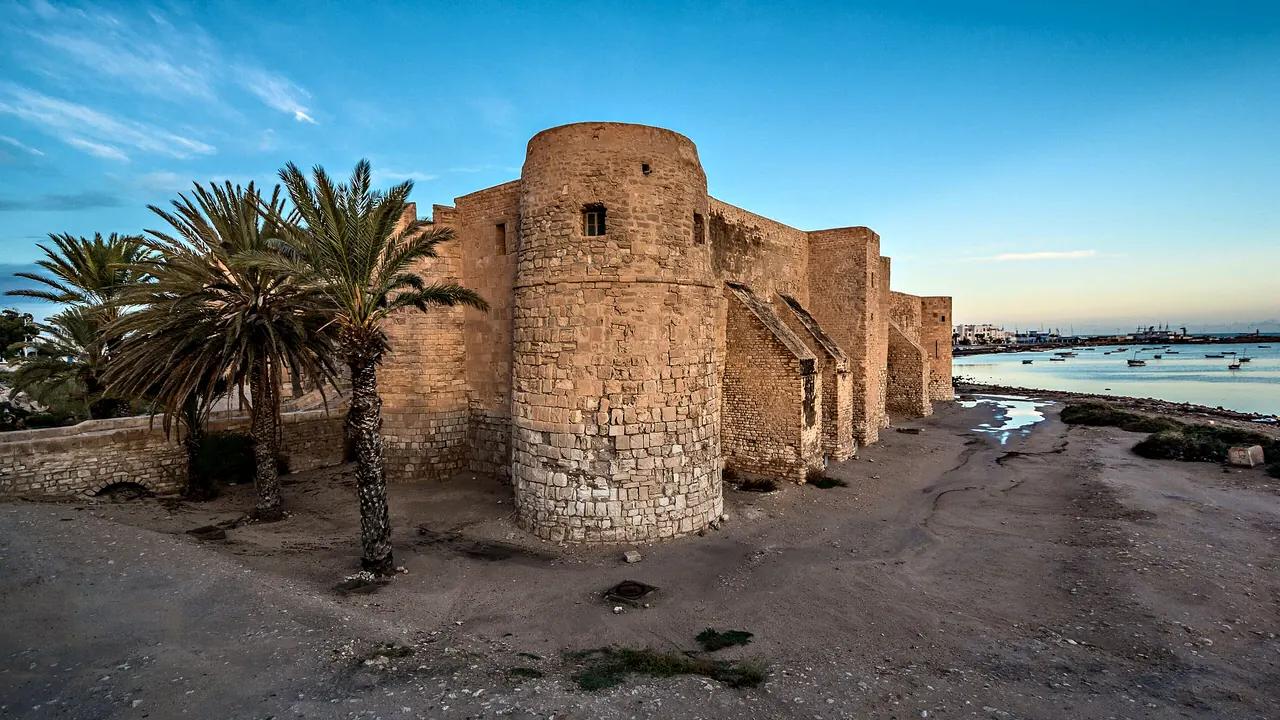
Djerba is the choice for a beach vacation that asks little of you. It has pale sand on the northeast coast, shallow calm water that small children can wade into, family resorts and thalassotherapy centres, and all of it costs little. Its food and sights are thin, so it suits people who want rest more than sightseeing, with the Ghriba synagogue or the Houmt Souk market as an occasional outing.
Choose Marrakech for
- nature and the outdoors
- shopping
- culture and sights
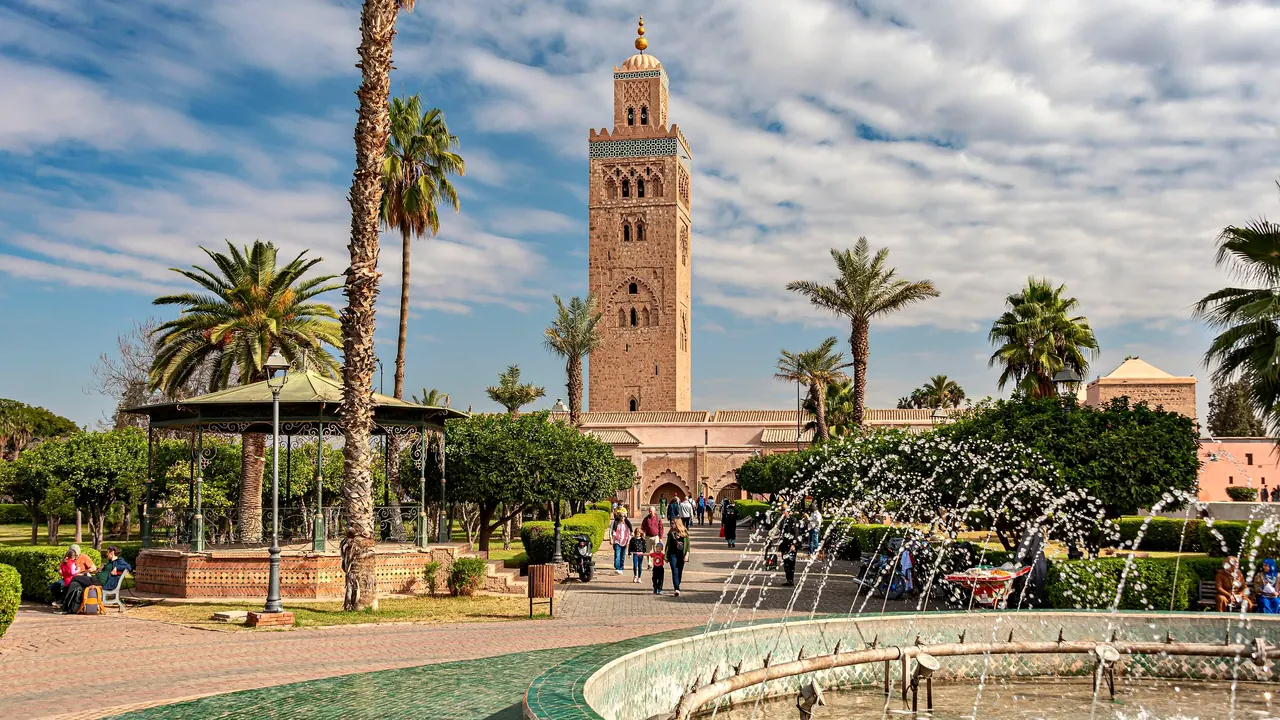
Go to Marrakech for the medina itself: the palaces, madrasa and souks, the evening food stalls of Jemaa el-Fna, and the High Atlas close enough for walking. There is no sea, the summer heat is fierce and the lanes are hard going with young children. It rewards adults on an active city trip in spring or autumn far more than anyone who wants to lie by the water.
Scoreboard
Twelve categories on one fixed scale from 0 to 100. The shaded stretch is the gap between the two.
Your match
Pick a travel style or drag the sliders, and both match scores follow your weighting.
Too close to call, 2 points apart
Wins on beaches and families with your weighting.
Wins on nature and the outdoors and shopping with your weighting.
What matters to you?
Category by category
What the scores mean for a trip.
Beaches & swimming
This is where the two differ most. Djerba's northeast coast, from Sidi Mahrez to Aghir, is a long run of fine pale sand, and the water is so shallow and calm that you can wade a long way out. For something wilder there is Sidi Jmour, and the sandy spit at Ras Rmel is a boat trip away. The drawbacks are cloudy water on windy days and some seaweed.
Marrakech is inland, so swimming there means a riad plunge pool or a hotel pool. The nearest sea is the cool, windy Atlantic at Essaouira, a long drive away. The Lalla Takerkoust reservoir makes a pleasant lakeside afternoon, but it is not a beach.
Food & drink
Marrakech eats far better. You can have tanjia, pastilla and slow tagines in small local places, eat at the grill stalls that fill Jemaa el-Fna at dusk, and find lamb pulled from the ovens at medina counters. Eating becomes part of the sightseeing, even if menus start to repeat after a few days.
On Djerba most meals are hotel buffets, so the island's own cooking takes some seeking out. In Houmt Souk you can try riz djerbien, or fish from the morning auction cooked at a simple grill. In both places alcohol is served only in hotels and licensed restaurants.
Culture & sights
Marrakech is by far the better cultural trip. The walled medina, the Koutoubia minaret, the Ben Youssef Madrasa, the Bahia and El Badi palaces and the Saadian Tombs are all within walking distance of each other. Add the blue villa of the Jardin Majorelle and you have two or three full days.
Djerba's heritage is spread out and quieter. The painted Ghriba synagogue at Erriadh is the main sight, alongside the Borj el Kebir and the old funduqs of Houmt Souk, small fortified Ibadite mosques and domed menzels among the olive groves. It makes a good outing from the beach, not a reason to go.
Nightlife
Neither is a place for a big night out, but Marrakech has more to offer after dark. Jemaa el-Fna at dusk is a show in itself, and Hivernage and Gueliz have rooftop bars, hotel lounges and a few large clubs with DJs and dinner shows.
On Djerba evenings stay inside the resort hotels, with entertainment programmes, the pool bar and perhaps a disco. A few coastal clubs open late in high summer, and in Houmt Souk the evening means tea on a café terrace.
Nature & outdoors
Marrakech has mountains on its doorstep and Djerba has none. From Marrakech you can reach the Ourika valley, village walks from Imlil, the climb of Jebel Toubkal and winter skiing at Oukaimeden. The stony Agafay desert, with its camel rides and dawn balloon flights, is closer still.
Djerba is flat, with palm and olive groves, salt flats and the Ras Rmel lagoon, where flamingos feed in winter and spring. Its outdoor strength is wind and water, with steady conditions for kitesurfing and windsurfing, along with easy rides by bike, horse or camel. For hills or desert you have to leave the island.
Day trips
Djerba is the better base for day trips, and it has easy ones as well as long ones. The Roman ruins of Gightis are just across the water by the causeway or the short Ajim ferry, and the fortified granaries at Medenine are about an hour and a half away. The south takes much longer. The hilltop ksour and the Berber village of Chenini near Tataouine, or Matmata's underground cave houses, mean a full day of driving across dry country, and the Sahara at Douz is better done with a night away.
From Marrakech, Essaouira and Ait Benhaddou are the places most people want to see, but both are far enough away that a night there makes more sense. Close to the city there are only the weekly village souks at Asni and Amizmiz and the twelfth-century Almohad mosque at Tinmel. Its best excursions go to mountains and desert, not to other towns.
Good for families
With children, Djerba is far easier. It offers calm, shallow water on the northeast coast, resorts with pools and children's clubs, the crocodile farm at the heritage park near Midoun, and camel rides on the sand. The hard parts are the midsummer heat and the long drives south.
Marrakech asks a lot of young families. The lanes are crowded and shared with motorbikes, the sellers are insistent, little is built for children, and summer middays are punishing. A riad with a plunge pool makes it manageable, and older children who enjoy markets and a sense of adventure cope best.
Getting around
Both rely on taxis, and in both the local buses are hard for visitors to use, so the difference is in the layout. Djerba is small and flat. From the hotel strip on the northeast coast, Houmt Souk and Midoun are a short taxi ride away, and a hired bike or quad works well on the coast road.
In Marrakech you walk, because only feet get you into most of the medina's maze of unnamed alleys. Petit taxis connect it with Gueliz and the Majorelle garden, and you often have to agree the fare first. In both places, a trip to the mountains or the mainland south needs a driver or a tour.
Shopping & style
In Marrakech shopping is a reason to go in its own right. The souks north of Jemaa el-Fna are laid out by trade, with lanes of dyers, leatherworkers, metalworkers and babouche makers, and the Mellah has its spice stalls. Gueliz and Sidi Ghanem add design boutiques and showrooms that rework Moroccan crafts.
On Djerba shopping fills an afternoon. Houmt Souk's covered souks sell rugs, leather and jewellery, a trade long tied to the island's Jewish craftsmen. You can also buy pottery straight from the Guellala workshops or browse the weekly village markets. In both places haggling is expected and pushy sellers can wear you out.
Affordability
Both are cheap by European standards, and Djerba is the cheaper of the two. Its all-inclusive resorts cost far less than similar Mediterranean beach hotels, and taxis, fish lunches and entry to the sights cost little. Only alcohol and the excursions south push the bill up.
Marrakech is cheap for the food stalls, petit taxis and palace entry. But its boutique riads, palace hotels and smart restaurants charge international prices, and in the souks the final price depends on how patiently you bargain.
Live music & performing arts
Neither has a concert or theatre season, but Marrakech has a living tradition in the open air. Every evening gnawa musicians, drummers and storytellers fill Jemaa el-Fna, and the Marrakech Popular Arts Festival brings together folk troupes from across Morocco. On Djerba, performance means folk shows staged in the hotels, plus the music of summer weddings and village festivals.
Wellness & relaxation
Both make rest a reason to come, in different ways. On Djerba it is thalassotherapy. Large hotel centres on the northeast coast offer seawater pools, hydrotherapy and wraps, often booked as a whole stay in the mild months, and the slow pace of the resort coast does the rest.
In Marrakech it is the hammam, ranging from neighbourhood baths with black soap and a kessa glove to marble spas with argan oil massages, followed by quiet hours in a riad courtyard. Because the medina outside is loud, you rest by retreating from the city, whereas on Djerba the whole island is calm.
When should you go?
Pick your month. The climate figures are measured averages, not a forecast.
Djerba in July
Marrakech in July
Daytime high, °C
Rainfall in the month, mm
Where the figures come from
Djerba has no rain gauge within 25 km of the centre, so its rainfall comes from a gridded climate dataset read at the destination rather than from a gauge further away.
Djerba's sunshine is measured 73 km from the centre, at Gabes.
Temperature and rainfall are climate normals, averaged over the years shown. Djerba: 1991-2020 normals, Djerba Mellita (14.2 km from centre). Marrakech: 1991-2020 normals, Marrakech (5.1 km from centre).
On Djerba's resort coast the beach season runs from June to October. The sea is warm enough for long swims through those months and reaches 28°C in August and September. July and August are hot, around 34°C, but a day split between the sand and the water makes that heat easier to bear than in a city. Rain is scarce all year and falls mostly from October to January, in small amounts. Winter stays mild enough for walks and thalassotherapy stays, though the sea is too cool for most swimmers.
Marrakech is best in spring and autumn. March to May and October to November bring warm, sunny days for walking the medina, and spring is the slightly wetter of the two seasons. From June to September the plain bakes, reaching 38°C in July, so sightseeing moves to early morning and evening. Winter days are mild and bright at around 19°C. Both places get plenty of sunshine all year, and Marrakech is the hotter of the two in high summer.
Which traveller are you?
For a beach and sun trip, Djerba wins outright. The northeast coast has fine pale sand and warm, shallow water from June to October. Marrakech offers only hotel and riad pools, and the cool Atlantic at Essaouira is a long drive away.
On a culture and arts trip, Marrakech is the clear choice. The walled medina, the Bahia Palace, the Ben Youssef Madrasa and the nightly musicians and storytellers of Jemaa el-Fna fill several full days. Djerba's scattered sights take a couple of days at most.
On a family trip with young children, Djerba is much easier. It has calm water for paddling, resorts with pools and children's clubs, and short taxi rides. Marrakech's crowded lanes, insistent sellers and hot middays suit only older children who like adventure.
Before you go
| Measure | Djerba | Marrakech |
|---|---|---|
| Official language | Arabic | Arabic, Standard Moroccan Tamazight |
| Currency | Tunisian Dinar (TND) | Moroccan Dirham (MAD) |
| Sockets | CE230 V, 50 Hz | CE50 Hz |
| Driving side | Right | Right |
| Time zone | UTC+1 | UTC+1 |
| Emergency number | Police 197, ambulance 190, fire 198 | Police 19/112, ambulance 15, fire 15 |
| Elevation | - | 465 m |
| Main airport | Djerba Zarzis International Airport (DJE)34 non-stop destinations | Marrakesh Menara Airport (RAK)6 km from centre112 non-stop destinations |
| Public holidays this year | 8 days | 11 days |
By the numbers
| Measure | Djerba | Marrakech |
|---|---|---|
| Population | 175,820 | 1,002,697 |
| People per km² | 342 | 4,360 |
| Museums within 10 km | - | 14 |
| UNESCO World Heritage sites within 50 km | - | 1 |
| Swim season, months above 21 °C | 6 months | - |
Where else could you go?
Every comparison below shares a destination with this one, so you can follow Djerba or Marrakech somewhere new.
- Atlas Mountainsvs Marrakech
- Essaouiravs Marrakech
- Agadirvs Marrakech
- Casablancavs Marrakech
- Rabatvs Marrakech
- Tunisvs Djerba