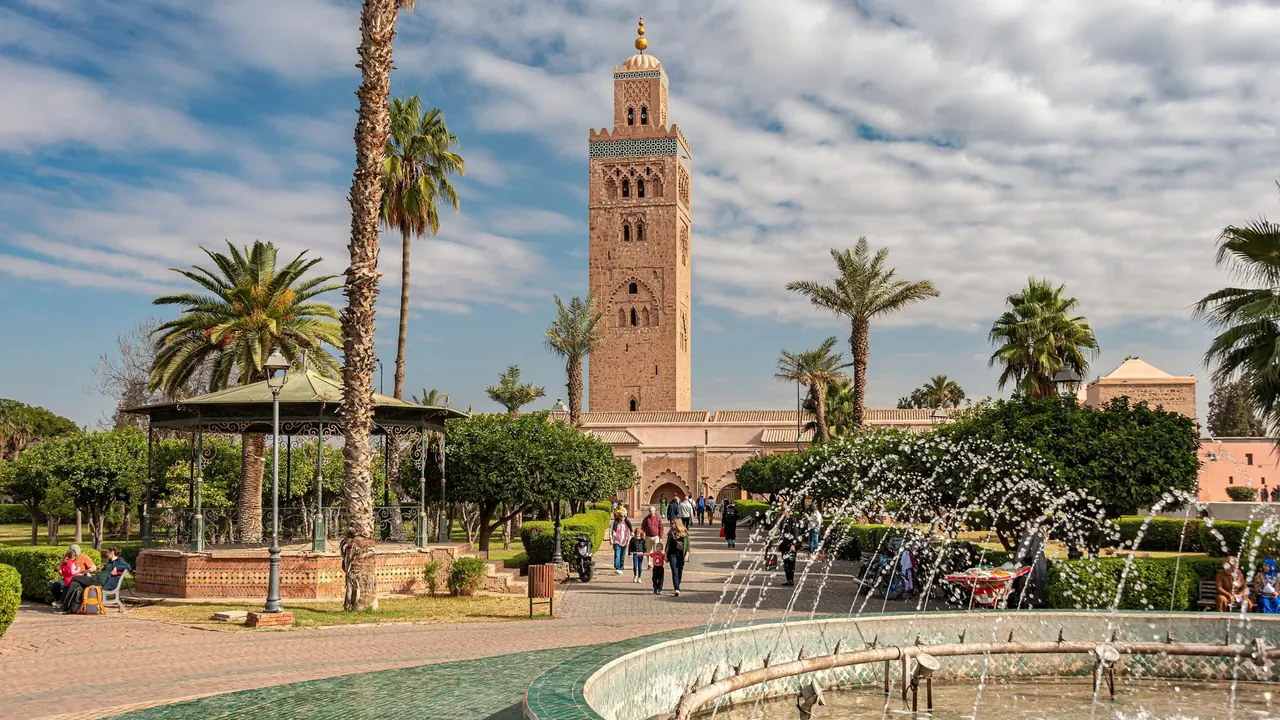
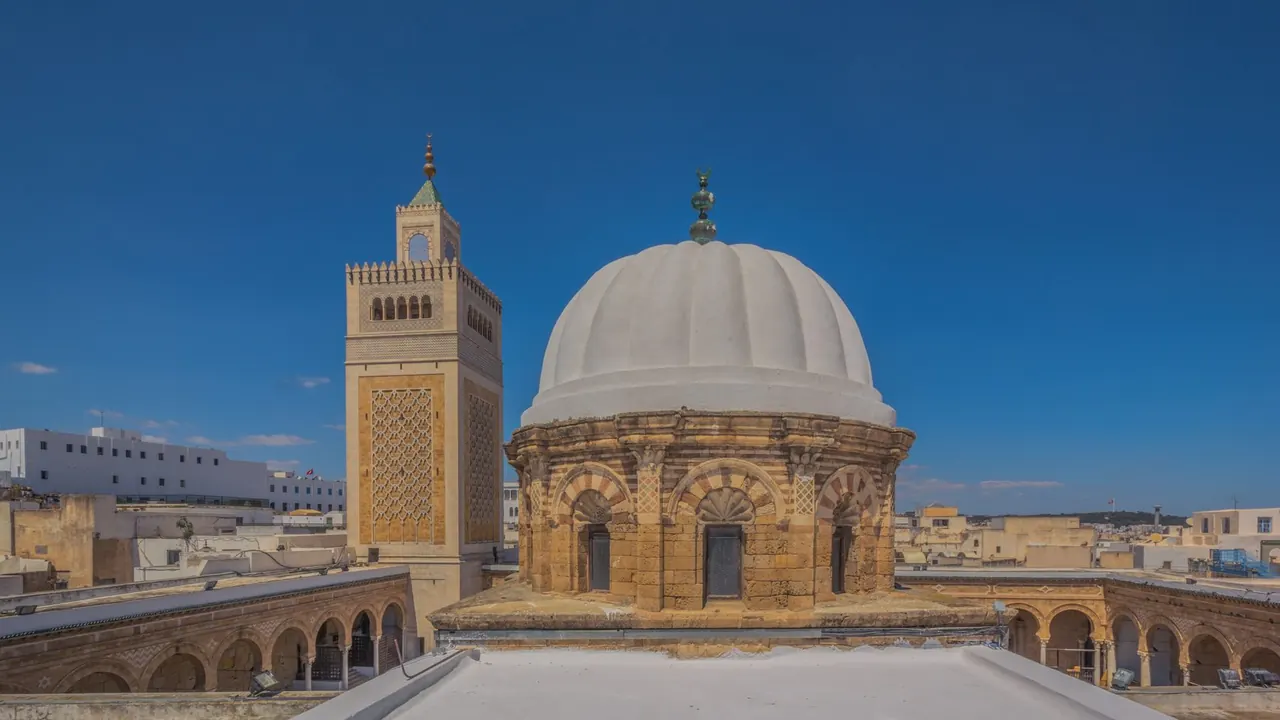
Photos: Marrakech by Jorge Franganillo, CC BY 2.0, cropped; Tunis by IssamBarhoumi, CC BY-SA 4.0, cropped.
Marrakech or Tunis?
Our verdict in twelve categories, each scored against the same fixed benchmark cities, and the climate month by month, so you can choose for your trip.
Choose Marrakech for
- nature and the outdoors
- shopping
- wellness
Marrakech suits a traveller who wants one intense, self-contained place: the souks, a riad built around a courtyard, a hammam at the end of the day, and the High Atlas and Agafay desert close at hand. It is the stronger choice for shopping, bathing rituals and mountain outings, as long as you are happy to stay in and around the city rather than tour the region.
Choose Tunis for
- beaches
- day trips
- prices
Pick Tunis if you want the sea a train ride from the old town, a lower daily spend and a base for exploring. Its sights are as rich as Marrakech's but cover more periods of history, from the Bardo's Roman mosaics and Carthage to the medina, and Dougga, Kairouan and Hammamet make easy day trips. Families and summer swimmers will also find it the gentler of the two.
Scoreboard
Twelve categories on one fixed scale from 0 to 100. The shaded stretch is the gap between the two.
Your match
Pick a travel style or drag the sliders, and both match scores follow your weighting.
Wins on nature and the outdoors and shopping with your weighting.
Wins on beaches and day trips with your weighting.
What matters to you?
Category by category
What the scores mean for a trip.
Beaches & swimming
Marrakech has no beach at all. Swimming means a riad plunge pool or a hotel pool, the Atlantic at Essaouira is a long drive to cool, windy water, and the Lalla Takerkoust reservoir gives a lakeside afternoon and nothing more.
Tunis has sand on its suburban train line, at La Marsa, Gammarth and around the bay towards Carthage, with warm water through summer and the broader beaches of Hammamet about an hour away. It is not a beach resort, but a morning in the medina followed by an afternoon in the sea is easy here and impossible in Marrakech.
Food & drink
Both cities eat well and cheaply, but in different styles. Marrakech is about slow cooking: tagines, tanjia baked in the embers of a hammam furnace, mechoui lamb and the evening grill stalls of Jemaa el-Fna, though riad menus can start to repeat after a few days.
Tunis cooks hotter and faster, with harissa and olive oil, and its best eating is brik, lablabi and fricassé from street counters. Its best sit-down meals are seafood at La Goulette and La Marsa, something inland Marrakech cannot match. In both, alcohol stays in licensed restaurants and hotels.
Culture & sights
Each city is built around a large UNESCO-listed medina, so the difference lies in what goes with it. Marrakech's great monuments are Islamic and royal, and most stand inside the walls: the Koutoubia minaret, the tilework of the Ben Youssef Madrasa, the Saadian Tombs and the Bahia and El Badi palaces. Beyond the walls, the Jardin Majorelle and the Yves Saint Laurent museum add a twentieth-century chapter.
Tunis has more variety and takes longer to see. The Bardo's Roman mosaics go far beyond anything in Marrakech's small museums, and the Art Nouveau facades of the Ville Nouvelle put a European city right beside the medina. Its ancient sites also ask more of you. El Badi is a single ruined palace you can see in one visit, but Carthage is spread over several sites in a seaside suburb, and you have to piece the Punic and Roman city together in your head.
Nightlife
Neither is a city for a long night out, and in both the evening is built around something other than drinking. In Marrakech that means the spectacle of Jemaa el-Fna and a rooftop cocktail, with lounge bars and dinner-show clubs in Hivernage and Gueliz at resort prices.
Tunis spends its evenings in cafés over coffee and shisha, and its only relaxed bar scene is the lounges and beach clubs of La Marsa and Gammarth, which come alive on summer weekends. Marrakech's handful of clubs keep going all year, while Tunis is quiet out of season.
Nature & outdoors
Marrakech has the mountains. The snowy High Atlas is visible from town, and within about an hour and a half you can be in the Ourika valley, walking between Berber villages from Imlil or starting the climb of Toubkal. The stony Agafay desert and dawn balloon flights are even closer.
Tunis offers gentler scenery: flamingos on the lagoon, short hikes on Bou Kornine, clifftop walks at Sidi Bou Said and the birdlife of Ichkeul further out. It is pleasant rather than dramatic, and in both cities the outdoors is best outside high summer.
Day trips
Tunis is much the better base. Dougga and Kairouan, two of the finest sites in North Africa, are each about two hours away, and Hammamet, Nabeul, Kerkouane, Bizerte and Sousse make a long list of towns within a day's reach.
From Marrakech most outings head into landscape rather than to other towns. Essaouira makes a long day at best, Ait Benhaddou needs a night away, and closer in there are only the village souks of the foothills and the Almohad mosque at Tinmel.
Good for families
Neither is easy with children, but Tunis asks less of parents. The beaches of La Marsa and Gammarth make simple summer days, Carthage's open ruins are good for exploring, Belvedere Park has a small zoo, and staying on the coast with day visits into town works well.
Marrakech is harder going, with crowded lanes shared with motorbikes, persistent sellers and fierce summer heat. A riad with a plunge pool makes it workable, and older children who love markets and adventure get the most from it.
Getting around
Tunis has rail lines and Marrakech has none. The TGM runs from downtown across the lagoon to La Goulette, Carthage, Sidi Bou Said and La Marsa, a light-rail network covers other districts, and metered taxis are plentiful.
Marrakech depends on walking the medina's unnamed alleys and on petit taxis, where the fare often has to be agreed first. In both cities traffic is hard on pedestrians, and excursions are easiest with a driver.
Shopping & style
Marrakech is the shopping city of the two. Its souks are larger and more specialised, with whole lanes of leatherworkers, dyers, metalworkers and carpet sellers, and Gueliz and Sidi Ghanem add design boutiques and showrooms reworking Moroccan crafts. The cost is long bargaining sessions and pushy sellers.
The Tunis medina has its own trades, notably the chechia makers and the perfumers near the Zitouna Mosque, and Nabeul ceramics and Sidi Bou Said birdcages make good souvenirs. Beyond the souks there is little worth seeking out.
Affordability
Both are inexpensive by European standards, but your money goes further in Tunis. Street food, cafés, taxis, train rides and comfortable hotels all cost very little, and only Gammarth's smart hotels, imported drinks and organised tours come close to European rates.
Marrakech has cheap stalls, taxis and simple riads too, but its large luxury tier of boutique riads and palace hotels pushes many stays upwards. Prices in the souks depend on how patiently you bargain.
Live music & performing arts
Tunis has more you can buy a ticket for: the Municipal Theatre on Avenue Habib Bourguiba, malouf concerts at Ennejma Ezzahra in Sidi Bou Said, and the Carthage International Festival filling the Roman theatre in summer. Outside the festival seasons, weeknights can still be thin.
In Marrakech the performances mostly happen in the open. Gnawa musicians, drummers and storytellers gather in Jemaa el-Fna every evening, which is memorable to wander through, but beyond folk festivals and tourist dinner shows there is little to book.
Wellness & relaxation
Marrakech is the better place to unwind. Hammams range from neighbourhood baths to marble spas with argan oil massages and rhassoul wraps, and a riad courtyard with its fountain and orange trees is built for shutting out the noise.
Tunis offers a different kind of rest: seawater thalassotherapy at the Gammarth resorts, the Roman-era hot springs of Korbous on Cap Bon, and plainer local hammams. Its calm lies at the edges of the city, on a café terrace above the bay in Sidi Bou Said.
When should you go?
Pick your month. The climate figures are measured averages, not a forecast.
Marrakech in July
Tunis in July
Daytime high, °C
Rainfall in the month, mm
Temperature and rainfall are climate normals, averaged over the years shown. Marrakech: 1991-2020 normals, Marrakech (5.1 km from centre). Tunis: 1991-2020 normals, Tunis-Carthage (6 km from centre).
Marrakech is dry and sunny for most of the year. Winter days are mild at around 20°C with only light rain, and spring and autumn are the best seasons for walking the medina. The heat builds from late May and peaks in July at 38°C, when sightseeing shrinks to early mornings and evenings and the afternoons are for the pool. June and September are a little less fierce but still hot.
Tunis is cooler in winter and clearly wetter. Rain sets in from September, is heaviest in December at about 68mm, and comes with noticeably fewer sunny hours than Marrakech gets. Summer is when Tunis is at its best: the sea is swimmable from June into October and reaches 26°C in August, though the streets are hot by midday. September is the best month for mixing beach days with sightseeing, with the sea still around 25°C and the worst heat gone, though the first autumn showers arrive then. May is pleasant for walking, but the sea is still too cool for most swimmers.
Which traveller are you?
On a beach and sun trip, Tunis is the clear choice. The sandy strands of La Marsa and Gammarth are a suburban train ride from the medina, the sea stays warm through summer, and Hammamet's wider beaches are an hour away. Marrakech offers only pools.
For an outdoors trip, Marrakech wins. The High Atlas begins within about an hour and a half, with village walks from Imlil, the climb of Toubkal and winter skiing at Oukaimeden, while the Agafay desert brings camel rides and starlit nights. Tunis has gentler walks.
On a shopping trip, take Marrakech and an empty suitcase. You could spend days browsing babouches, brass lanterns, Berber jewellery, argan oil and woven baskets, as long as you enjoy haggling over glasses of tea. Tunis has less to browse and fewer things to carry home.
Before you go
| Measure | Marrakech | Tunis |
|---|---|---|
| Official language | Arabic, Standard Moroccan Tamazight | Arabic |
| Currency | Moroccan Dirham (MAD) | Tunisian Dinar (TND) |
| Sockets | CE50 Hz | CE230 V, 50 Hz |
| Driving side | Right | Right |
| Time zone | UTC+1 | UTC+1 |
| Emergency number | Police 19/112, ambulance 15, fire 15 | Police 197, ambulance 190, fire 198 |
| Elevation | 465 m | 4 m |
| Main airport | Marrakesh Menara Airport (RAK)6 km from centre113 non-stop destinations | Tunis Carthage International Airport (TUN)7 km from centre56 non-stop destinations |
| Public holidays this year | 11 days | 8 days |
By the numbers
| Measure | Marrakech | Tunis |
|---|---|---|
| City population | 1,002,697 | 602,560 |
| People per km² | 4,360 | 2,834 |
| Museums within 10 km | 14 | 16 |
| UNESCO World Heritage sites within 50 km | 1 | 3 |
| Swim season, months above 21 °C | - | 5 months |
Where else could you go?
Every comparison below shares a destination with this one, so you can follow Marrakech or Tunis somewhere new.