Photos: Agadir by michiel1972, CC BY-SA 3.0, cropped; Djerba by IssamBarhoumi, CC BY-SA 4.0, cropped.
Agadir or Djerba?
Our verdict in twelve categories, each scored against the same fixed benchmark cities, and the climate month by month, so you can choose for your trip.
Choose Agadir for
- nature and the outdoors
- nightlife
- food and drink
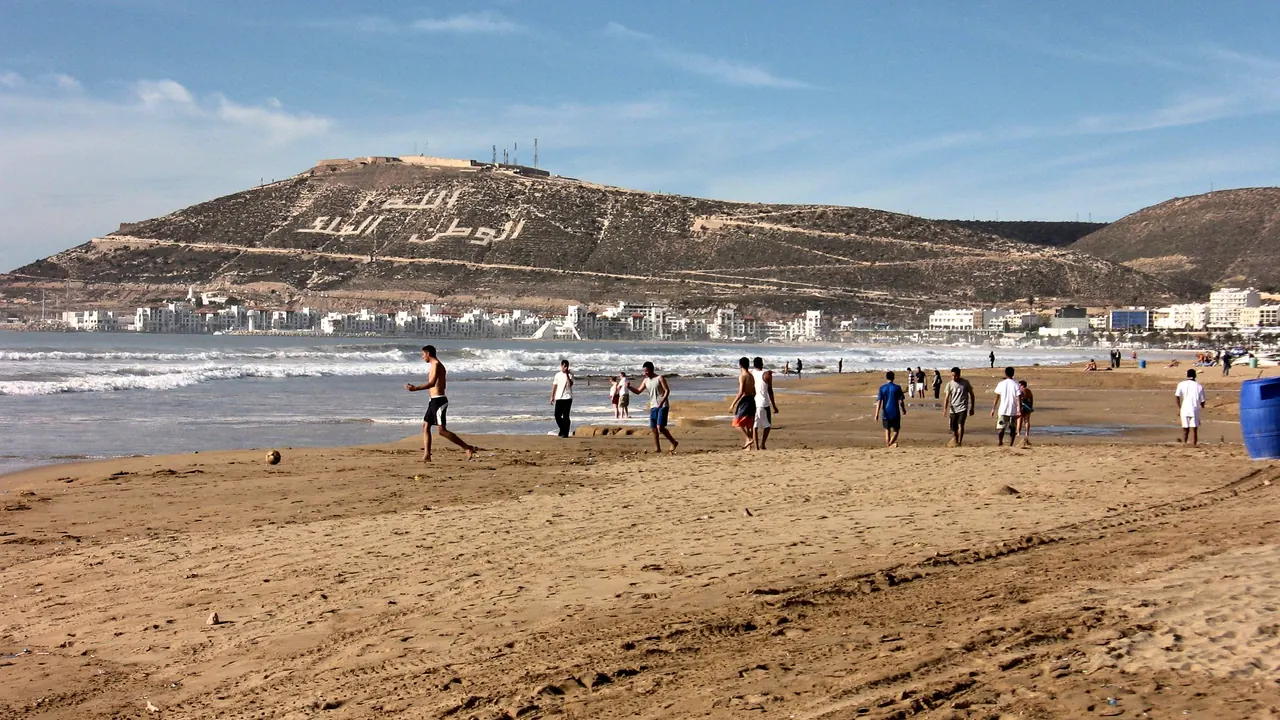
Agadir suits travellers who want reliable sun with something active around it. The sheltered town bay has the surf villages to the north, the palm gorge of Paradise Valley and the argan plains inland, and the evenings offer a little more, with marina lounges, beach clubs and grilled fish at the port. It is the better pick for winter sun, a surf trip or a beach stay with hiking and birdwatching on the side. The town itself has little history to show.
Choose Djerba for
- culture and sights
- prices
- wellness
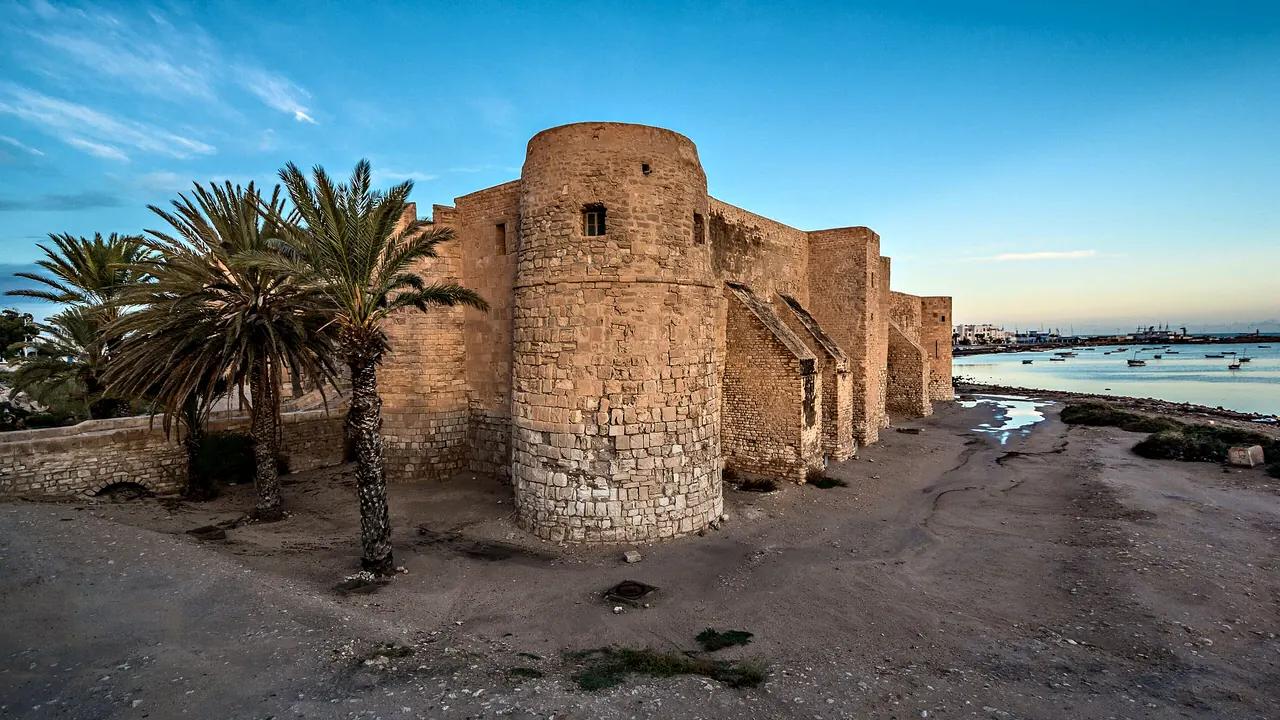
If the aim is a cheaper, slower beach vacation in warm, shallow water, Djerba is the stronger choice, above all from June to October. Here you move around an island rather than staying in a town: thalassotherapy hotels on the northeast coast, the Ghriba synagogue, the whitewashed lanes of Houmt Souk and domed farmsteads among the olive groves. The trade-off is flat scenery and very quiet nights.
Scoreboard
Twelve categories on one fixed scale from 0 to 100. The shaded stretch is the gap between the two.
Your match
Pick a travel style or drag the sliders, and both match scores follow your weighting.
Too close to call, level with your weighting
Wins on nature and the outdoors and nightlife with your weighting.
Wins on culture and sights and prices with your weighting.
What matters to you?
Category by category
What the scores mean for a trip.
Beaches & swimming
Both are beach places first, but Djerba's swimming is better. Agadir has a single wide crescent of fine sand, close to 10km long, sheltered by its bay, with surf beaches a short drive north. The water stays cool all year, though, so it feels brisk even at the end of summer.
Djerba's best sand runs along the northeast coast from Sidi Mahrez to Aghir. The sea there shelves so gently that you can wade a long way out, and in summer it is far warmer than Agadir's Atlantic. Windy days can stir up seaweed and cloudy water, but the boat trip to the sandy spit at Ras Rmel and the quieter shore at Sidi Jmour add variety.
Food & drink
Agadir eats a little better. Its fishing port has stalls grilling the morning's sardines at shared tables, and the Souss adds argan oil, amlou and slow Amazigh tagines, with Souk El Had piled high with olives, dates and spices.
Djerba's local cooking is worth seeking out in Houmt Souk, where grills serve fish and squid from the auction and riz djerbien is the dish to try. The choice is narrower, though, and most visitors eat at hotel buffets. In both places alcohol mostly stays inside hotels and licensed restaurants.
Culture & sights
Djerba has clearly more heritage. Besides the tiled Ghriba synagogue, the island has old merchants' funduqs in Houmt Souk, the seafront Borj el Kebir, small fortified Ibadite mosques and domed menzels spread through the countryside, which is enough for a couple of days.
Agadir lost almost all its old fabric in the 1960 earthquake. The kasbah walls on Agadir Oufella are worth the climb mainly for the view, and with Medina Polizzi and the small Amazigh museum, one day covers the lot.
Nightlife
Neither is a place to choose for going out, but Agadir has more on offer. Its beachfront and marina have lounge bars, sunset beach clubs and a few nightclubs that stay open late in summer.
Djerba's evenings mostly stay inside the resorts, with a poolside bar, the hotel entertainment and sometimes a disco. A few coastal clubs open late in high summer, and in Houmt Souk the evening means tea on a café terrace.
Nature & outdoors
The landscapes are completely different, and Agadir's are much richer. This is where the High Atlas meets the Atlantic, with long right-hand point breaks along the coast, the palm gorge of Paradise Valley, argan trees with goats in the branches and the dunes and river mouths of Souss-Massa National Park, a refuge of the northern bald ibis.
Djerba is low and flat, with olive groves, palms and salt flats. Its high points are the flamingos on the Ras Rmel lagoon and steady wind for kitesurfing over shallow water. There is no hiking, and desert scenery means crossing to the mainland.
Day trips
The day trips are about equally good, but they differ in kind. From Agadir the best outings are walled market towns nearby: Taroudant with its ochre ramparts and calm souks, and Tiznit with its silver. Marrakech and Essaouira are too far for a day.
From Djerba you cross the causeway to more dramatic sights: Roman Gightis, the granaries at Medenine, the hilltop Berber village of Chenini and the cave houses of Matmata. Most of them mean long, hot drives, and the Sahara needs an overnight stay.
Good for families
Both work well for beach-focused families, with family resorts, kids' clubs and a crocodile park outside town. Djerba's shallow, calm water along the northeast coast is easier for toddlers who want to paddle.
Agadir's advantages are a long, flat promenade for buggies and scooters and gentler summer heat, plus the Vallée des Oiseaux in the centre. Away from the main beach, watch for currents.
Getting around
Getting around is much the same in both, and taxis do most of the work. In Agadir you can walk the seafront promenade end to end, but the souk, the port and the kasbah hill are spread out, so orange petit taxis fill the gaps.
On Djerba most people stay in the northeast hotel zone and take yellow taxis to Houmt Souk or Midoun. Hired bikes and quads work well on the flat coast road. Trips beyond the island mean the causeway or the Ajim ferry.
Shopping & style
Shopping in both comes down to markets and crafts rather than fashion or design. In Agadir it centres on Souk El Had, a huge walled market where locals buy their produce and household goods and the selling is low-key. The things to take home are argan oil and cosmetics from the Souss women's cooperatives, Amazigh silver and woven rugs, with seafront souvenir shops and a modern mall for the rest.
Djerba spreads its shopping more widely. The covered souks and small squares of Houmt Souk sell rugs, blankets and silver and gold jewellery, a trade long tied to the island's Jewish craftsmen, though the haggling can be wearing. In the south you can buy pottery straight from the workshops at Guellala, and the weekly village markets are more local.
Affordability
Both are cheap, but Djerba is cheaper. Its all-inclusive hotels on the northeast coast cost far less than comparable resorts, even in summer, and island taxis and entry to the sights cost little.
Agadir is also good value, especially out of season and away from the promenade. Prices climb on the seafront strip and during European school breaks. In both places alcohol and hotel bars are the expensive part.
Live music & performing arts
Neither offers much, but Agadir has one real event: Timitar, the long-running summer festival of Amazigh music, with large free stages. Outside that, both have little more than folk shows in the hotels. On Djerba you might hear traditional music at a summer wedding or village festival, but there is no venue to plan an evening around.
Wellness & relaxation
Djerba is the more natural choice for a stay built around treatments. Many large hotels on the northeast coast have big thalassotherapy centres, and some visitors plan a whole stay around a programme of seawater pools and hydrotherapy in the mild months.
Agadir does well too, with hotel hammams offering black-soap scrubs and argan-oil massage, plus thalasso centres along the bay. It also suits a more active kind of rest, with yoga and surf retreats on the coast to the north.
When should you go?
Pick your month. The climate figures are measured averages, not a forecast.
Agadir in July
Djerba in July
Daytime high, °C
Rainfall in the month, mm
Where the figures come from
Djerba has no rain gauge within 25 km of the centre, so its rainfall comes from a gridded climate dataset read at the destination rather than from a gauge further away.
Djerba's sunshine is measured 73 km from the centre, at Gabes.
Temperature and rainfall are climate normals, averaged over the years shown. Agadir: 1945-2025, 15 years observed (sunshine 1981-2010, rainfall 1981-2010) normals, Agadir (4.5 km from centre). Djerba: 1991-2020 normals, Djerba Mellita (14.2 km from centre).
Agadir's weather barely changes through the year. Daytime highs climb only from the low twenties in winter to about 28°C in July and August, it is practically dry from May to September, and the modest rain falls between November and February. Sunshine is steady in every month, so winter sun is its real strength. The catch is the Atlantic, which never gets much above 20°C, so swimming always feels fresh.
Around Djerba's northeast resort coast the year has much sharper seasons. Summer gets hot, reaching around 34°C in August, which makes the middle of the day too hot for exploring, though the sea warms to about 28°C and July and August are the sunniest months. Spring and October are the comfortable months for walking around Houmt Souk and the villages. In winter, highs fall to around 17°C, the light rain comes between October and January, and the water is too cold for most swimmers.
Which traveller are you?
On an outdoors trip, Agadir is far ahead. It has surf breaks at Taghazout and Imsouane, walks among the rock pools of Paradise Valley, bald ibis in Souss-Massa National Park and treks in the Anti-Atlas, while flat Djerba mostly offers cycling, kitesurfing and flamingos.
For a culture and arts trip, Djerba has more to see. The Ghriba synagogue, the Borj el Kebir fort, fortified Ibadite mosques and the pottery village of Guellala fill a couple of days. In Agadir the 1960 earthquake left little beyond the kasbah hill.
On a relaxing and wellness trip, Djerba is the better fit. Large thalassotherapy centres along the northeast coast are built for stays planned around treatments, and the island's slow days of siesta and tea suit people who want calm more than sights.
Before you go
| Measure | Agadir | Djerba |
|---|---|---|
| Official language | Arabic, Standard Moroccan Tamazight | Arabic |
| Currency | Moroccan Dirham (MAD) | Tunisian Dinar (TND) |
| Sockets | CE50 Hz | CE230 V, 50 Hz |
| Driving side | Right | Right |
| Time zone | UTC+1 | UTC+1 |
| Emergency number | Police 19/112, ambulance 15, fire 15 | Police 197, ambulance 190, fire 198 |
| Elevation | 74 m | - |
| Main airport | Al Massira Airport (AGA)20 km from centre75 non-stop destinations | Djerba Zarzis International Airport (DJE)34 non-stop destinations |
| Public holidays this year | 11 days | 8 days |
By the numbers
| Measure | Agadir | Djerba |
|---|---|---|
| Population | 538,000 | 175,820 |
| People per km² | - | 342 |
| Museums within 10 km | 1 | - |
| UNESCO World Heritage sites within 50 km | 0 | - |
| Swim season, months above 21 °C | None | 6 months |
Where else could you go?
Every comparison below shares a destination with this one, so you can follow Agadir or Djerba somewhere new.